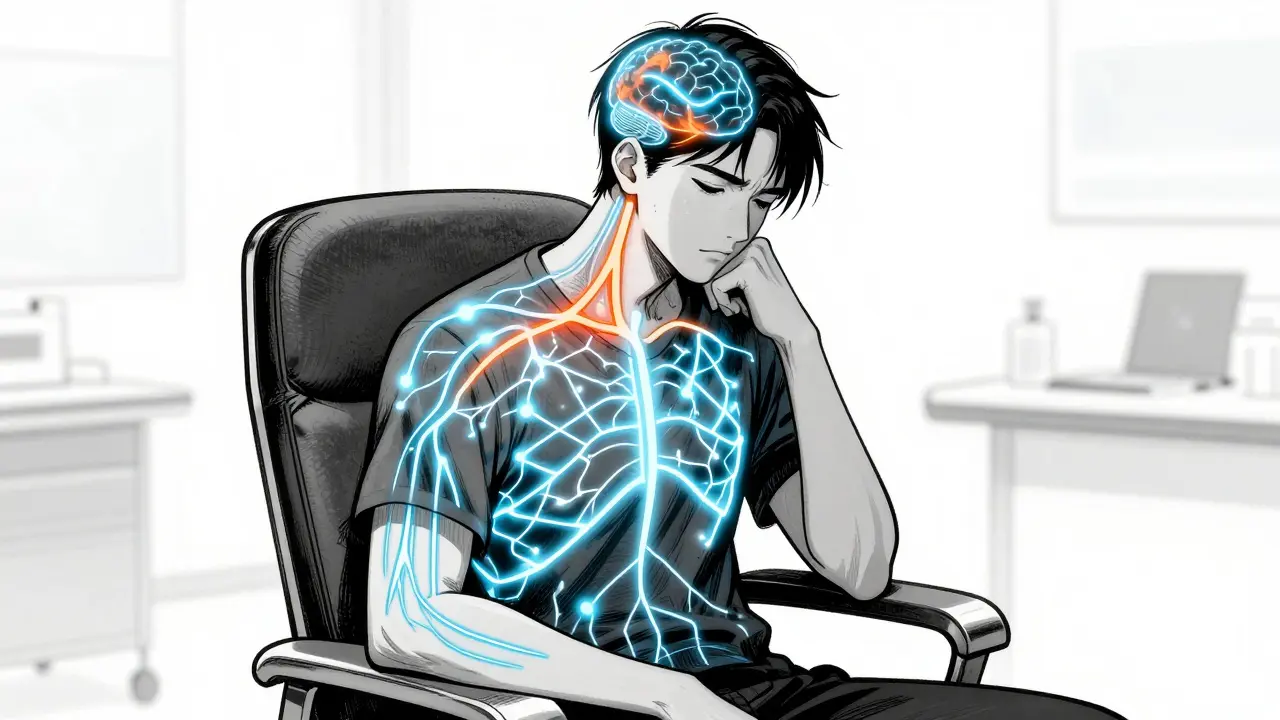
Imagine your back hurts. You’ve seen scans, you’ve had treatments, but the pain stays. Now imagine being told that your brain is turning up the volume on those pain signals, not because your tissues are damaged, but because they’re overly sensitive. This shift in perspective isn’t just comforting-it’s clinically proven to reduce pain and disability. This is pain neuroscience education, or PNE.
PNE is a therapeutic approach that teaches patients how the nervous system processes pain. Instead of focusing solely on structural damage like a herniated disc or torn ligament, PNE explains pain as a protective output generated by the brain. It moves away from the old idea that pain equals tissue damage and toward a modern understanding of neurobiology. For millions living with persistent pain, this knowledge changes everything.
What Is Pain Neuroscience Education?
Pain Neuroscience Education (PNE) is an evidence-based educational intervention that helps individuals understand the neurobiological mechanisms of their pain, thereby reducing fear and improving function. Developed in the early 2000s, it emerged when researchers realized traditional biomedical models failed to explain why many people continued to feel pain long after injuries healed.
The core concept is simple: pain is not just a signal from injured tissue; it’s an experience created by the brain based on multiple inputs. These include sensory data, emotions, past experiences, and even context. When the brain perceives threat-even if there’s no actual danger-it can amplify pain signals. PNE helps patients recognize this process and regain control.
This approach was pioneered by physical therapists and pain scientists like Adriaan Louw, whose work laid the foundation for what we now call PNE. Today, it’s recognized globally as a first-line non-pharmacological treatment for chronic pain conditions.
Why Traditional Pain Models Fall Short
For decades, pain was viewed through a biomedical lens: injury causes pain, fix the injury, stop the pain. But this model doesn’t hold up for chronic pain. Many patients have normal imaging results yet still suffer intensely. Others report severe pain despite minor structural issues.
The problem? The body has a complex alarm system. Think of it like a smoke detector. If it’s too sensitive, it goes off when you toast bread-not because there’s a fire, but because the sensor is overactive. In chronic pain, the nervous system becomes hypersensitive due to factors like stress, poor sleep, or repeated movement avoidance. This is called central sensitization.
Traditional education often reinforces fear by emphasizing tissue damage. Patients avoid movement, leading to deconditioning, which worsens pain-a vicious cycle. PNE breaks this loop by reframing pain as a false alarm rather than proof of harm.
How PNE Works: The Science Behind the Shift
PNE works by changing how the brain interprets pain signals. Studies using fMRI scans show that after PNE sessions, areas like the amygdala (which processes fear) become less active, while the prefrontal cortex (involved in rational thought) gains more influence over pain pathways.
Here’s how it typically unfolds:
- Peripheral Sensitization: Nerves near an injury site may become extra responsive, sending stronger signals than necessary.
- Central Sensitization: The spinal cord and brain start amplifying these signals, making even light touch feel painful.
- Neuroplasticity: The brain rewires itself based on experience. If you believe movement is dangerous, your brain learns to protect you by causing pain during movement.
PNE uses metaphors-like the smoke alarm example-to make these concepts relatable. Visual aids, diagrams, and real-life analogies help patients grasp abstract ideas without needing a medical degree.
Key Components of Effective PNE Delivery
Not all pain education is equal. To be effective, PNE must follow specific principles:
- One-on-One Sessions: Research shows individualized delivery yields better outcomes than group settings. A standard session lasts 30-45 minutes.
- Metaphor-Based Teaching: Using everyday comparisons makes complex science accessible. For instance, comparing nerve sensitivity to a car engine running hot.
- Integration with Movement: PNE alone reduces pain, but combining it with exercise or manual therapy boosts results by 30-40%.
- Early Intervention: Starting PNE within the first three visits maximizes benefit, according to European Pain Federation guidelines.
Clinicians deliver PNE using frameworks like the “Explain Pain” method developed by David Butler and Lorimer Moseley, or Adriaan Louw’s Therapeutic Neuroscience Education model. Both emphasize cognitive-behavioral techniques alongside neurophysiological explanations.

Who Benefits Most From PNE?
PNE shines brightest for people dealing with chronic musculoskeletal pain-especially low back pain, fibromyalgia, and widespread pain syndromes. It’s less useful for acute injuries where tissue damage is clearly present and healing is ongoing.
| Pain Type | Effectiveness Rate | Primary Benefit |
|---|---|---|
| Chronic Low Back Pain | 82% | Reduced disability and fear-avoidance |
| Fibromyalgia | 76% | Lowered medication use and improved sleep |
| Acute Post-Surgical Pain | 11% | Limited impact; better suited for recovery phase |
| Migraine | 65% | Better coping strategies and reduced catastrophizing |
PNE also struggles with patients who have low health literacy or cognitive impairments. Simplified language and visual tools can help bridge this gap, but success rates drop significantly if comprehension isn’t achieved.
Real-World Impact: What Patients Experience
Let’s talk about real stories. On Reddit’s r/ChronicPain community, user PainWarrior87 shared how PNE changed their life. After six months of avoiding movement due to fear of worsening back pain, they learned about the “sensitive smoke alarm” metaphor. Suddenly, pain didn’t mean danger anymore. They started hiking again and cut opioid use by 75%.
Another case involved a 42-year-old nurse with fibromyalgia. She went from taking six pills daily to one every three days after completing a six-session PNE program paired with graded activity. Her story reflects broader trends: PNE empowers patients to take action instead of retreating.
But it’s not magic. Some patients expect instant relief and quit early. About 28% discontinue before seeing benefits because they misunderstand the goal. PNE isn’t about eliminating pain overnight-it’s about rebuilding confidence and function over time.
Combining PNE With Other Treatments
PNE works best when layered with other therapies. Here’s why:
- Exercise: Strengthens muscles, improves circulation, and proves to the brain that movement is safe.
- Manual Therapy: Provides immediate symptom relief while reinforcing new beliefs about safety.
- Cognitive Behavioral Therapy (CBT): Addresses emotional components like anxiety and depression that fuel pain cycles.
A 2022 study found that adding PNE to usual physiotherapy increased pain reduction by nearly double compared to standard care alone. That’s powerful stuff.

Challenges in Implementing PNE
Despite its benefits, PNE faces hurdles. Only 28% of practicing physical therapists feel confident delivering it, according to a 2023 survey. Why? Time constraints, lack of training, and patient resistance.
Some patients reject non-structural explanations. They want answers tied to visible damage. Clinicians must navigate this carefully, using terms like “pain biology” instead of “neuroscience” to lower barriers to understanding.
Training takes 3-6 months of dedicated study. Programs like the International Spine and Pain Institute’s 24-hour certification course cost around $495 USD and boast an 85% completion rate. Still, access remains uneven across regions.
The Future of Pain Neuroscience Education
We’re entering exciting times for PNE. Digital apps like Pain Revolution have reached over 186,000 users, offering interactive lessons and progress tracking. Virtual reality trials are testing immersive PNE experiences, showing 30% higher knowledge retention than traditional methods.
Researchers are expanding PNE into acute care settings. Dr. Jo Nijs leads an NIH-funded trial exploring whether PNE can reduce post-surgical pain. Early signs look promising, though protocols aren’t standardized yet.
Insurance coverage is improving too. Since 2021, Medicare reimburses PNE under physical therapy evaluation codes. Employers are adopting PNE principles in workplace injury programs, cutting workers’ comp claim durations by 22%, per Liberty Mutual’s 2022 report.
Getting Started With PNE: Tips for Patients
If you’re considering PNE, here’s what to do:
- Find a Trained Provider: Look for physical therapists certified in PNE or familiar with Explain Pain materials.
- Set Realistic Expectations: Progress happens gradually. Focus on function, not just pain scores.
- Combine With Movement: Pair PNE with gentle exercises to reinforce learning through action.
- Track Your Journey: Keep a journal noting changes in mood, activity levels, and pain perception.
Remember, PNE isn’t a cure-all. It’s a tool to help you reclaim agency over your body and life.
Is pain neuroscience education covered by insurance?
Yes, in many cases. As of 2021, Centers for Medicare & Medicaid Services reimburse PNE as part of physical therapy evaluation and management codes (CPT 97160-97164). Private insurers vary, so check with your provider beforehand.
Can I learn PNE on my own without a therapist?
While self-study resources exist-including books like *Explain Pain* and apps like Pain Revolution-working with a trained clinician ensures personalized guidance and accountability. Self-directed PNE may lack the nuance needed for complex cases.
How long does it take to see results from PNE?
Most patients notice shifts in mindset within 1-2 weeks, but meaningful improvements in function and pain intensity typically emerge after 4-6 sessions combined with movement therapy. Patience and consistency are key.
Does PNE work for everyone?
No. PNE is most effective for chronic pain conditions where central sensitization plays a role. It’s less helpful for acute injuries, severe cognitive impairment, or cases requiring surgical intervention. Individual response varies widely.
What should I ask my doctor before starting PNE?
Ask: “Do you offer pain neuroscience education?” “How many hours of specialized training have you completed?” “Will PNE be combined with exercise or manual therapy?” These questions ensure you’re working with someone qualified and integrated into a comprehensive plan.


It is frankly insulting that we are still treating pain as a simple mechanical failure in 2024. The average person lacks the intellectual capacity to grasp neuroplasticity, so they cling to their MRI scans like religious texts. PNE is not just education; it is a necessary correction for the willful ignorance of patients who refuse to accept that their suffering is largely self-perpetuated through fear and avoidance. You cannot fix a broken mindset with a lumbar support pillow.