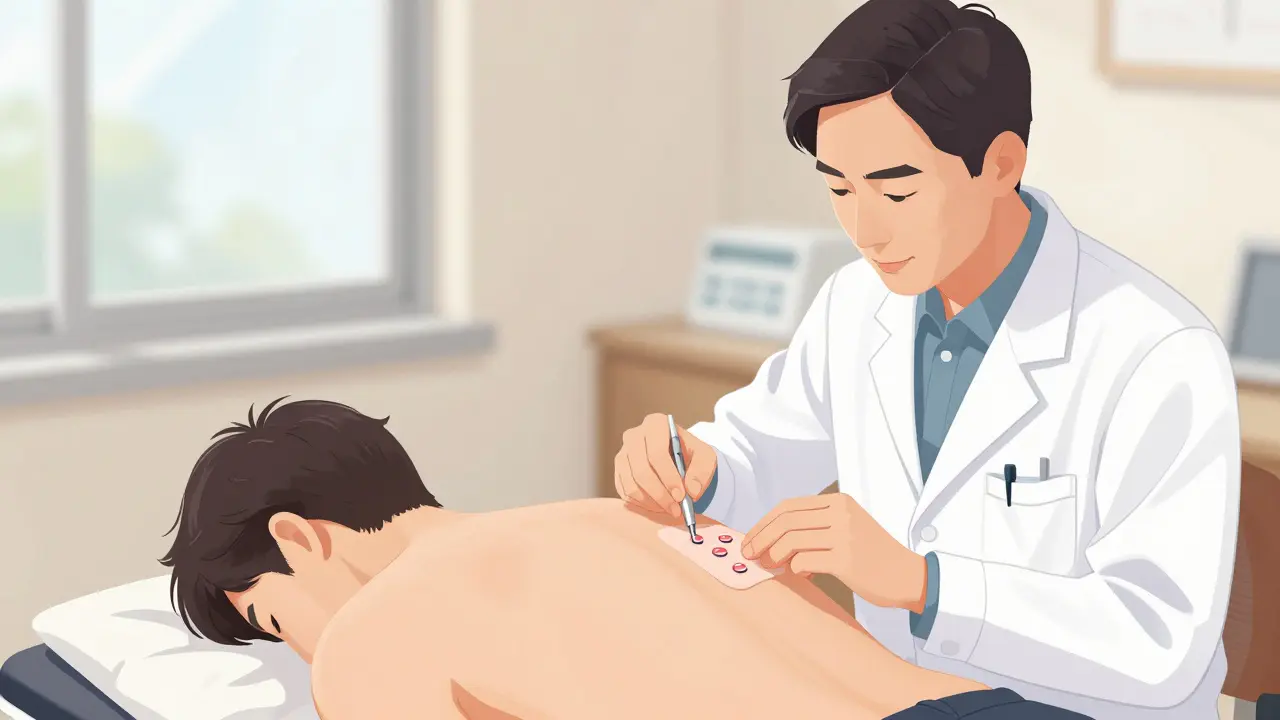
If your skin breaks out after using certain products, patch testing could be the key to finding out why. This simple procedure is the gold standard for diagnosing allergic contact dermatitis, helping millions identify hidden allergens causing rashes and irritation. Patch testing pinpoints specific substances triggering reactions, allowing you to avoid them and prevent future flare-ups.
How Patch Testing Works
When you visit a dermatologist for patch testing, the process starts with applying small amounts of allergens to your skin. These allergens are placed in tiny chambers called Finn chambers, which are attached to adhesive patches. The patches are usually applied to your back because it's a large, flat area that's easy to cover. During the first appointment, a healthcare provider places the patches, which contain anywhere from 30 to over 100 different allergens. Each chamber holds a specific substance, like nickel or fragrance mix, in a precise concentration.
You'll wear these patches for exactly 48 hours. It's crucial to keep the area dry-no showering, sweating, or swimming. Moisture can cause false results or make the patches fall off. After 48 hours, you return to have the patches removed. The provider checks for any reactions at this point. A second reading happens 48 hours later (total of 96 hours), as some reactions take longer to appear.
The American Academy of Dermatology confirms this method is the most reliable way to diagnose allergic contact dermatitis. Unlike skin prick tests that check for immediate allergies, patch testing specifically identifies delayed-type hypersensitivity reactions. This means it's the only way to detect allergies caused by substances that take days to react.
Common Contact Allergens
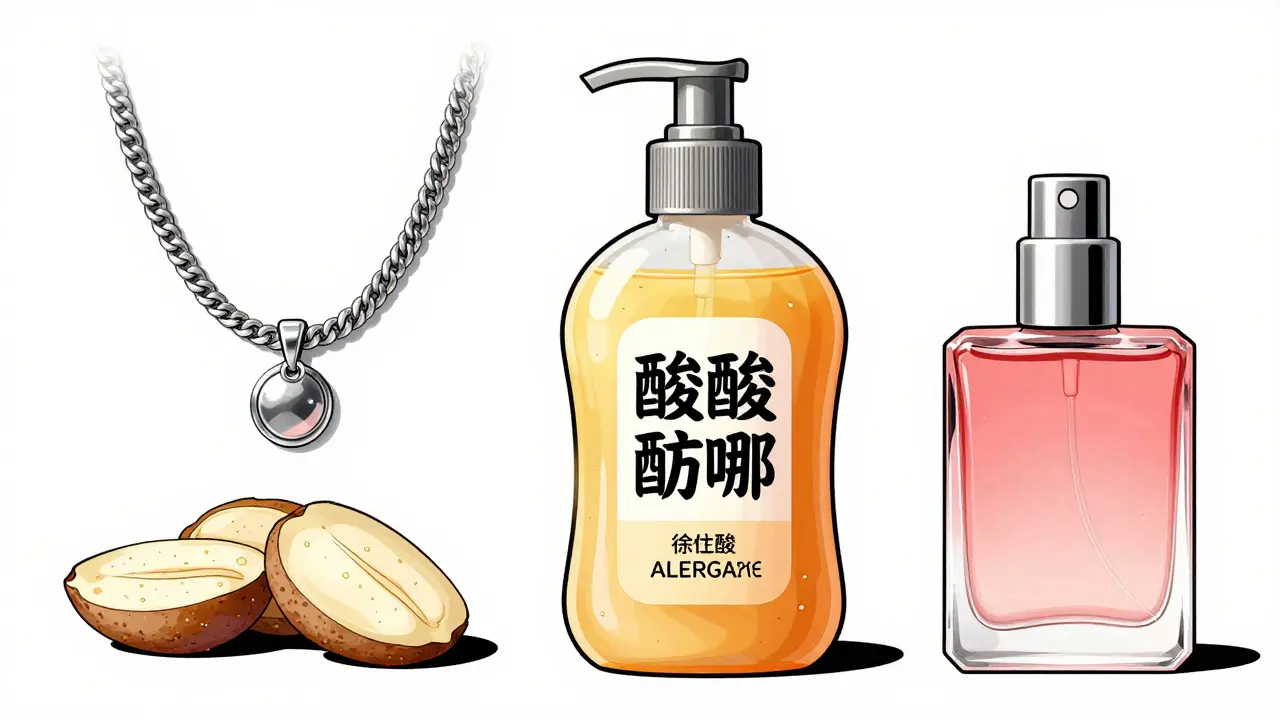
Thousands of substances can cause allergic contact dermatitis, but certain allergens appear more frequently. Here are some of the most common ones:
- Nickel: Found in jewelry, buttons, zippers, and coins. It's the top cause of contact allergies worldwide.
- Formaldehyde: Used as a preservative in makeup, nail polish, and hair products. Also appears in some adhesives and fabrics.
- Fragrances: Present in perfumes, lotions, and detergents. Many people react to fragrance mixtures rather than single scents.
- Preservatives: Like methylisothiazolinone (MI) and formaldehyde releasers. Common in shampoos, moisturizers, and baby wipes.
- Cobalt: Often found in metal alloys, paints, and some cosmetics. Frequently paired with nickel allergies.
| Allergen | Common Sources | Typical Products |
|---|---|---|
| Nickel | Metals, coins, jewelry | Watchbands, earrings, belt buckles |
| Formaldehyde | Preservatives | Makeup, nail polish, hair straighteners |
| Fragrance Mix | Perfumes, lotions | Shampoo, conditioner, body wash |
| Methylisothiazolinone | Preservatives | Moisturizers, baby wipes |
| Cobalt | Metal alloys | Tool handles, some cosmetics |
These allergens are included in standard patch test panels. However, specialized tests for specific industries-like florists or dental technicians-can uncover less common triggers. For example, a florist might react to chrysanthemum extract, while a dental technician could be sensitive to mercury or acrylates.
Preparing for Your Patch Test
Before your test, avoid applying creams or lotions to your back for at least 24 hours. This ensures the patches stick properly. You should also avoid taking oral steroids or immunosuppressants unless instructed otherwise, as they can interfere with results.
During the test, keep the patch area dry. Wear loose clothing to prevent rubbing. If you need to shower, cover the patches with plastic wrap-but avoid getting them wet. Avoid activities that cause sweating, like exercise or hot baths. If a patch starts to peel off, contact your provider immediately-they may reapply it.
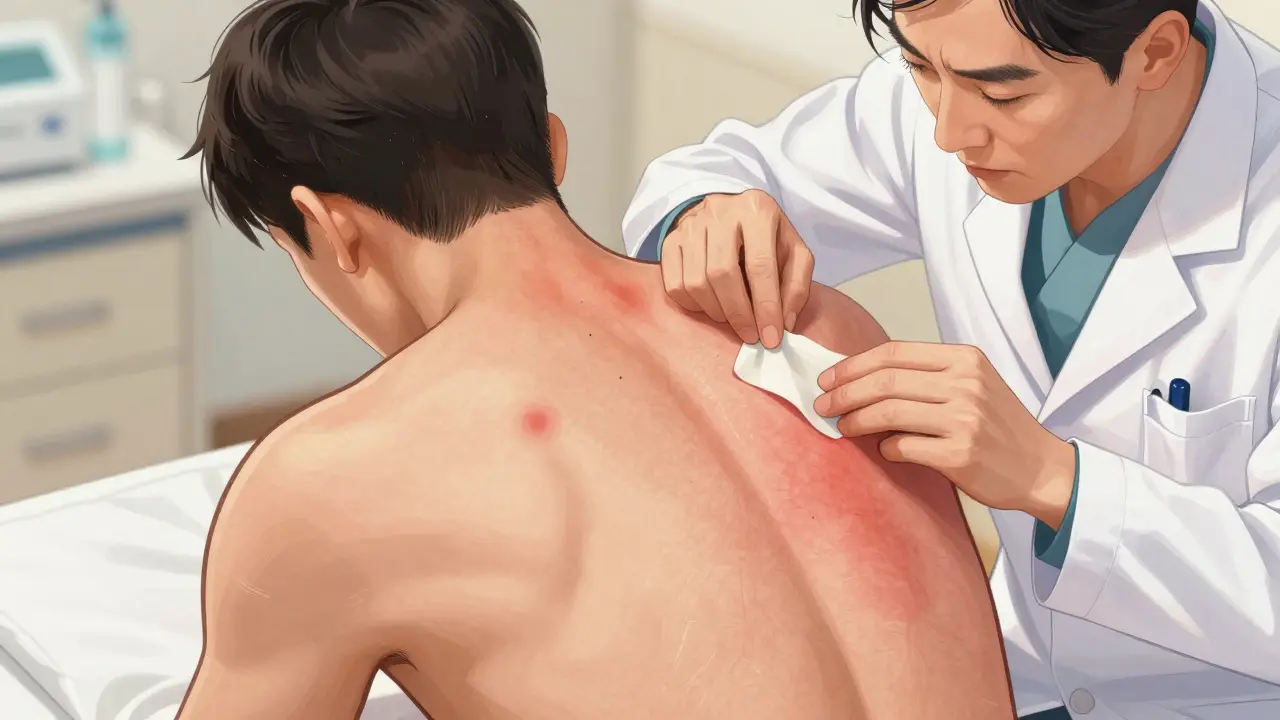
After the patches are removed, the provider will mark the test sites. You'll return in 48 hours for the final reading. At this point, they'll check for redness, swelling, or blisters. A positive reaction means the substance caused an allergic response.
After the Test: Next Steps
If the test shows a positive reaction, your dermatologist will explain which allergens triggered the response. The next step is avoiding those substances. This might mean switching to fragrance-free products, choosing nickel-free jewelry, or using protective gloves at work.
For example, if you're allergic to formaldehyde, you'll need to read product labels carefully. Many cosmetics and personal care items contain formaldehyde-releasing preservatives. Your provider can recommend safe alternatives. In severe cases, they may prescribe topical corticosteroids to reduce inflammation.
Remember, avoiding the allergen is the most effective treatment. As noted by UC Davis Health, "knowing your triggers allows us to guide you in avoiding them and reducing future flare-ups." Consistent avoidance can lead to significant improvement, often eliminating symptoms entirely.
How long does the patch testing process take?
The entire process takes about one week. You'll have three office visits: one to apply the patches (usually on Monday), one to remove them (Wednesday), and one for the final reading (Friday). The patches stay on your skin for 48 hours total.
Can I shower during the patch test?
No. You must keep the patch area completely dry. Showering, sweating, or getting the patches wet can cause false results or make the adhesive fail. If you need to wash, cover the area with plastic wrap-but avoid getting it wet. Always follow your provider's specific instructions.
What if my patch test is negative?
A negative result means none of the tested allergens caused your reaction. However, this doesn't rule out contact dermatitis entirely. Some allergens aren't included in standard panels, or your rash might be due to irritants rather than allergies. Your dermatologist may recommend additional testing or explore other causes like eczema or fungal infections.
Are there side effects from patch testing?
Common side effects include mild itching or redness at the test sites. In rare cases, a strong reaction might cause blistering or soreness. However, these usually clear up within a few days. Removing patches early can lead to inaccurate results, so it's important to keep them on for the full duration.
Can I take antihistamines during patch testing?
Yes. Unlike other allergy tests, patch testing isn't affected by antihistamines because it measures delayed-type hypersensitivity (Type IV). You can continue taking your regular antihistamines without affecting the results. However, always check with your dermatologist before making changes to your medication.


The standard patch test panel includes nickel, formaldehyde, and fragrance mix as the top three allergens. Research shows these account for over 80% of allergic contact dermatitis cases. Methylisothiazolinone (MI) is another common culprit, especially in leave-on products like moisturizers. Formaldehyde releasers are present in many shampoos and cosmetics. Cobalt often co-occurs with nickel allergies. It's crucial to test for these substances to identify the root cause. The process takes about a week with three visits. Patches stay on for 48 hours total. Keeping the area dry is essential-no showering or sweating. A positive reaction means avoiding that allergen. For example, nickel-free jewelry can prevent rashes. Fragrance-free products are necessary if you react to fragrances. It's worth the time to get tested. Knowing your triggers allows you to manage symptoms effectively. Consistent avoidance leads to significant improvement over time.