
Most people with IgA deficiency never know they have it. They don’t get sick more than anyone else. They go to school, work, exercise, and live full lives. But for about 5 to 10% of those with this condition, a simple blood transfusion can turn life-threatening - not because of infection, but because their immune system attacks the very blood meant to save them.
What Is IgA Deficiency?
IgA deficiency means your body doesn’t make enough immunoglobulin A, a type of antibody that lines your respiratory tract, gut, and other mucous membranes. It’s the first line of defense against germs entering through your nose, mouth, and lungs. Without it, you’re more vulnerable to infections - but only if your body is already struggling in other ways.
This isn’t rare. In Caucasian populations, it affects 1 in every 300 to 700 people, making it the most common primary immunodeficiency. Yet most doctors never test for it unless someone keeps getting sick. The diagnosis is simple: a blood test shows IgA levels below 7 mg/dL, while IgG and IgM levels stay normal. If you’ve had a vaccine and your body responded normally to it, that rules out broader immune problems.
It’s usually genetic. If a parent has it, your risk jumps 50 times higher. But it’s not contagious. You can’t catch it. You’re born with it.
Who Gets Symptoms?
Nine out of ten people with IgA deficiency never have a single problem. But for the rest, symptoms pile up. The most common? Recurrent infections.
- Ear infections (otitis media) - 32% of symptomatic cases
- Sinus infections - 28%
- Bronchitis - 24%
- Pneumonia - 18%
Then there’s the gut. About 1 in 5 people with IgA deficiency have chronic diarrhea, often from parasites like giardia. One in 10 also has celiac disease - an autoimmune reaction to gluten that damages the small intestine. Others develop inflammatory bowel disease or rheumatoid arthritis. Allergies are common too: asthma, eczema, hay fever. It’s not that IgA deficiency causes these - it’s that the immune system, already unbalanced, starts attacking the body’s own tissues.
There’s no cure. But if you’re one of the lucky ones with no symptoms, you don’t need treatment. Just stay alert. Get your annual flu shot. Watch for recurring infections. And if you ever need blood - that’s when things get serious.
The Hidden Danger: Transfusion Reactions
This is where IgA deficiency becomes dangerous. About 20 to 40% of people with this condition develop anti-IgA antibodies. These are like landmines in the immune system. They’re harmless until they meet IgA - the protein they’re trained to destroy.
Most blood products contain IgA. Even a small amount can trigger a reaction. And it happens fast - within minutes. In 85% of severe cases, symptoms appear in the first 15 minutes of a transfusion.
Reactions range from mild to deadly:
- Urticaria (hives) - 25%
- Low blood pressure - 60% of severe cases
- Wheezing, bronchospasm - 45%
- Cardiovascular collapse - 10%
Up to 10% of these reactions are fatal. That’s not a guess. It’s documented by the Cleveland Clinic and Merck Manuals. And it’s preventable.
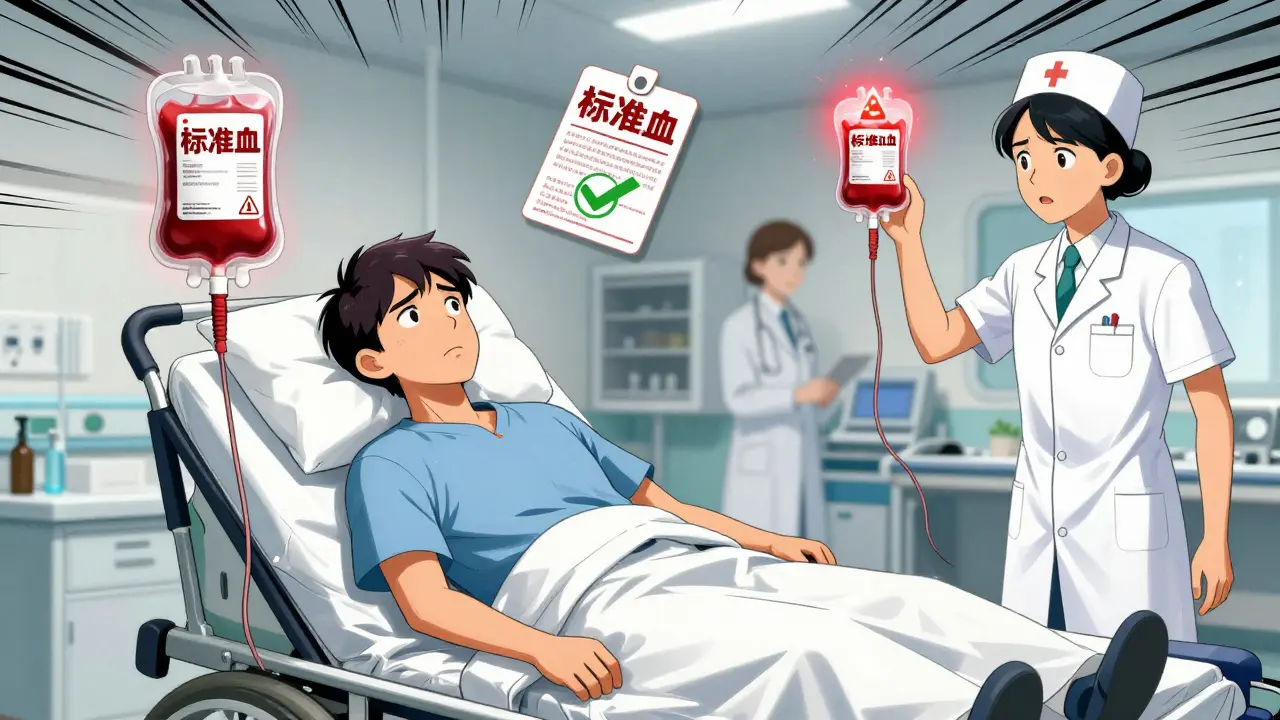
How to Stay Safe During a Transfusion
If you’ve been diagnosed with IgA deficiency, you must take action before any surgery, injury, or illness that might require blood.
First: get tested for anti-IgA antibodies. An ELISA blood test is 95% accurate. But don’t rely on it alone - false negatives happen in 5 to 10% of cases. So if you know you have IgA deficiency, assume you have antibodies unless proven otherwise.
Second: insist on IgA-depleted blood or washed red blood cells. These are specially processed to remove over 98% of IgA. Standard blood? Not safe. Even a single unit can kill.
Third: carry proof. A medical alert card or bracelet that says: “Selective IgA Deficiency - Requires IgA-Depleted Blood or Washed Red Blood Cells.” Why? Because 78% of severe reactions happen in emergency rooms, where no one knows your history.
Fourth: tell every doctor, nurse, and EMT. Don’t assume they’ve heard of it. Most haven’t. A 2023 survey by the Immune Deficiency Foundation found 42% of patients had been treated by providers who didn’t know the right precautions.
Washed cells take 30 to 45 minutes to prepare. IgA-depleted products need 48 to 72 hours to order. Plan ahead. Don’t wait for an emergency.
What About Routine Blood Tests?
You don’t need special precautions for routine blood draws. Those tubes don’t contain enough IgA to trigger a reaction. The risk is only with transfusions - when large volumes of blood enter your system.
Same goes for IVIG (intravenous immunoglobulin) therapy. Most IVIG products contain IgA. If you need it, your doctor must use an IgA-depleted version. Ask. Don’t assume.

What’s the Long-Term Outlook?
Good news: most people with IgA deficiency live normal lifespans. A 20-year study in Clinical Immunology found 95% of patients had no reduction in life expectancy. The other 5% - those with severe complications like bronchiectasis (permanent lung damage from repeated infections) or aggressive autoimmune disease - face higher risks.
That’s why monitoring matters. Get checked annually for celiac disease with a tissue transglutaminase antibody test. Do pulmonary function tests every six months if you’ve had repeated lung infections. Watch for joint pain, rashes, or unexplained fatigue - signs of autoimmune trouble.
There’s no magic drug. But for those needing frequent transfusions, pre-treatment with methylprednisolone and diphenhydramine cuts reaction rates by 75%. It’s not perfect, but it helps.
Researchers are testing recombinant human IgA therapy - a lab-made version that could replace what the body can’t make. So far, only 12 people worldwide have received it. It’s promising, but still experimental.
What Should You Do?
If you’ve been diagnosed:
- Carry a medical alert card or bracelet.
- Keep a copy of your diagnosis in your phone and wallet.
- Give a copy to your primary care doctor, dentist, and any specialist.
- Ask your blood bank if they stock IgA-depleted products.
- Don’t wait for an emergency to learn this.
If you’ve had unexplained reactions during a transfusion - even mild hives - get tested for IgA deficiency. It might explain everything.
If you’re a parent of a child with IgA deficiency: educate teachers, coaches, and school nurses. Make sure they know what to do if your child needs emergency care.
IgA deficiency isn’t a death sentence. It’s a condition that demands awareness. The right knowledge, the right precautions, and the right communication can turn a silent risk into a manageable reality.
Can IgA deficiency be cured?
No, there is no cure for selective IgA deficiency. It’s a lifelong condition. But most people live normally without treatment. Management focuses on preventing infections, monitoring for autoimmune or allergic complications, and using safe blood products during transfusions.
Is IgA deficiency hereditary?
Yes. It often runs in families. If one parent has it, a child’s risk increases by about 50 times compared to the general population. Genetic testing isn’t routinely done, but family history is a key clue for diagnosis.
Can I donate blood if I have IgA deficiency?
Yes, you can donate blood. Your blood is safe for others. The risk is only when you receive blood - not when you give it. Blood banks do not screen donors for IgA deficiency unless they have symptoms or a known diagnosis.
Why don’t all hospitals use IgA-depleted blood for everyone with IgA deficiency?
Because not every IgA-deficient person develops anti-IgA antibodies. Screening for antibodies isn’t universal, and IgA-depleted products are expensive and hard to stock. Guidelines vary by country: the U.S. recommends testing everyone, while Europe often tests only those with prior reactions. This leads to inconsistent care.
Can vaccines cause problems for someone with IgA deficiency?
No. Vaccines are safe and recommended. In fact, they’re crucial. People with IgA deficiency can respond normally to vaccines like tetanus, flu, and pneumococcal shots. These help prevent infections that their weakened mucosal defenses can’t handle on their own.
Does IgA deficiency increase the risk of severe COVID-19?
Current evidence suggests not significantly. Most people with IgA deficiency have normal IgG and IgM, which handle systemic infections like COVID-19. Vaccination and standard precautions are sufficient. No special protocols are needed beyond what’s recommended for the general population.


So I just found out my cousin has this and never knew it until she had a transfusion after her surgery. Scary stuff. Glad I read this.