
Urinary Retention Risk Estimator
Patient Profile & Factors
Estimated Retention Risk Level
Select factors to begin
Enter your profile details and click 'Analyze Risk Profile' to see your estimated urinary retention risk.
*This tool is for educational purposes only. Always consult a healthcare provider for medical advice.
You know that feeling of urgency? The sudden, overwhelming need to find a bathroom immediately. For millions of men, this is daily life. Doctors often prescribe anticholinergics, which are medications designed to calm an overactive bladder by blocking nerve signals that trigger contractions. These drugs work well for many. But for men with prostate issues, specifically benign prostatic hyperplasia (BPH), or non-cancerous enlargement of the prostate gland, these same medications can cause a dangerous problem: urinary retention, defined as the inability to empty the bladder completely, leading to trapped urine and potential kidney damage. This isn't just a minor side effect like dry mouth. It’s a mechanical failure of your body’s plumbing system. When you block the muscle that squeezes out urine while simultaneously having an enlarged prostate blocking the exit, you create a perfect storm. Understanding this interaction is critical for anyone managing both bladder urgency and prostate health.
The Mechanics of Bladder Control and Blockage
To understand why this happens, we have to look at how urination works. Your bladder is made of a muscle called the detrusor muscle, which is the smooth muscle layer in the bladder wall responsible for contracting to expel urine. Normally, when your bladder fills, nerves send signals via a chemical messenger called acetylcholine. This tells the detrusor muscle to contract. At the same time, the sphincter relaxes, allowing urine to flow out through the urethra. Anticholinergic drugs, such as oxybutynin or tolterodine, work by blocking those acetylcholine receptors. They essentially tell the detrusor muscle to stay relaxed. This stops the involuntary spasms that cause urgency and leakage. However, if your prostate is enlarged, it already compresses the urethra, creating a physical obstruction. You now have two problems:
- The Engine Problem: The anticholinergic drug weakens the squeeze (the engine) needed to push urine out.
- The Roadblock Problem: The enlarged prostate narrows the path (the road) the urine must travel.
Identifying High-Risk Medications
Not all bladder medications carry the same risk profile, but most traditional anticholinergics do. If you have been diagnosed with BPH, you need to be aware of the specific drugs commonly prescribed for overactive bladder that can trigger retention.
| Drug Name (Generic) | Brand Examples | Primary Use | Retention Risk Level |
|---|---|---|---|
| Oxybutynin | Oxytrol, Gelnique | Overactive Bladder | High |
| Tolterodine | Detrol, Detrol LA | Overactive Bladder | High |
| Solifenacin | Vesicare | Overactive Bladder | Moderate-High |
| Darifenacin | Enablex | Overactive Bladder | Moderate-High |
| Fesoterodine | Toviaz | Overactive Bladder | Moderate-High |
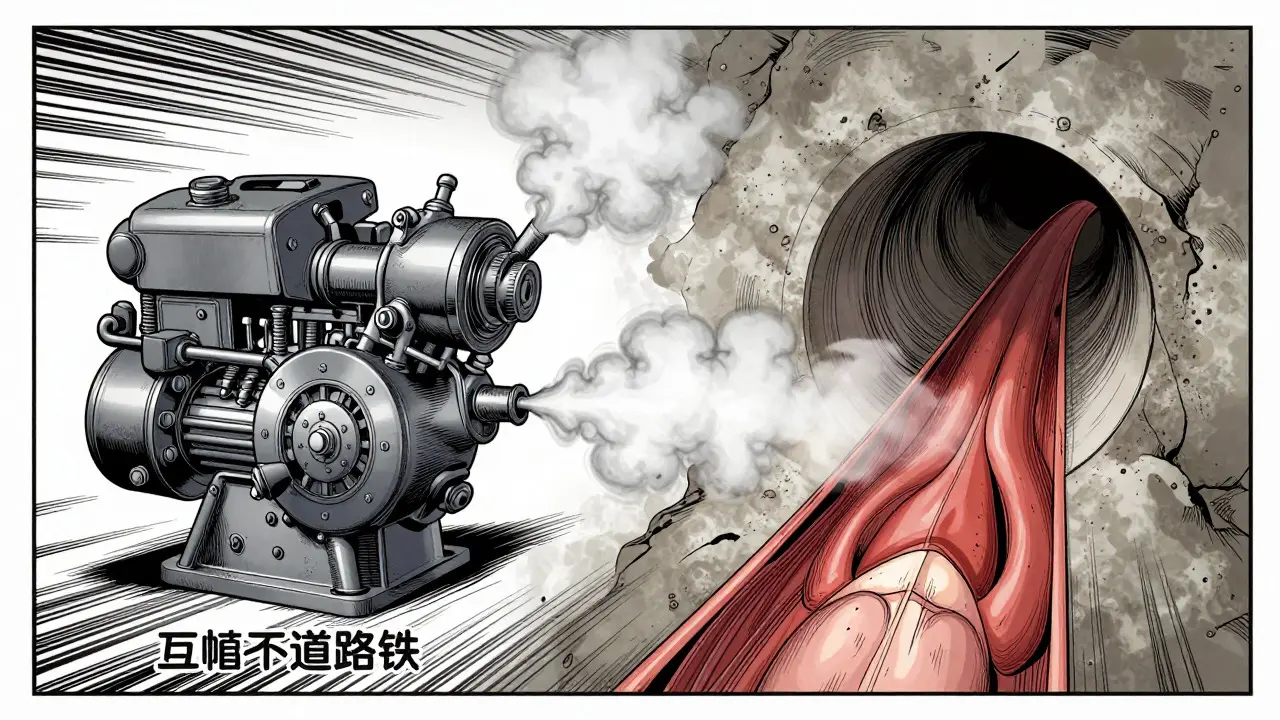
The Double Hit: Why BPH Amplifies the Danger
Why does BPH make this so much worse? Think of it as a pressure cooker. A healthy bladder generates significant pressure to overcome resistance. An aging bladder, however, may already be struggling. According to expert urologists, the detrusor muscle in men with BPH is often working at maximum capacity just to push urine past the obstruction. Adding an anticholinergic is like cutting the fuel line to an engine that is already straining. Dr. Jerry Blaivas, a noted urodynamics expert, has compared this to removing the engine from a car trying to climb a steep hill. The result is immediate stalling. Data supports this concern. Research shows that men with BPH who take anticholinergics face a 2.3-fold increased risk of acute urinary retention compared to those who do not. Furthermore, the American Urological Association (AUA) guidelines explicitly warn against using these drugs in patients with high symptom scores (greater than 20 on the AUA scale) or large prostate volumes (over 30 grams). Ignoring these markers significantly increases the likelihood of ending up in the emergency room with a catheter.
Safer Alternatives for Men with Prostate Issues
If anticholinergics pose such a high risk, what are the options? Fortunately, modern urology offers several alternatives that target the root causes of urinary symptoms without compromising bladder emptying.
- Beta-3 Adrenergic Agonists: Drugs like mirabegron (Myrbetriq) and vibegron (Gemtesa) work differently. Instead of blocking contraction, they help the bladder muscle relax during the filling phase. Clinical trials show vibegron reduces urgency episodes by 92% in patients with BPH, with a retention rate of only 4%, compared to 18% for traditional anticholinergics.
- Alpha-Blockers: Medications like tamsulosin (Flomax) or alfuzosin (Uroxatral) relax the muscles in the prostate and bladder neck. This widens the urethra, reducing the obstruction. While they don't stop urgency directly, they improve flow and reduce the strain on the bladder, which can indirectly help symptoms.
- 5-Alpha Reductase Inhibitors: Drugs like finasteride (Proscar) or dutasteride (Avodart) shrink the prostate itself over time. Long-term use (4-6 years) can reduce the risk of acute urinary retention by 50%. They are slower acting but address the anatomical problem permanently.

Red Flags: When to Seek Immediate Help
Urinary retention is a medical emergency. If you start taking a new bladder medication and experience any of the following, seek care immediately:
- Inability to urinate despite a full bladder sensation.
- Severe pain or pressure in the lower abdomen.
- Dribbling urine instead of a steady stream.
- Nausea or vomiting accompanying bladder discomfort.
Navigating Your Prescription with Your Doctor
Communication is your best defense. Many doctors prescribe anticholinergics because they are standard first-line treatments for overactive bladder. They may not always fully assess prostate status unless prompted. Here is how to advocate for yourself:
"I have been told I have an enlarged prostate. Given the risk of urinary retention, are there non-anticholinergic options like Mirabegron or Vibegron that might be safer for me?"
This simple question shifts the conversation toward personalized safety. Additionally, review all your medications. Other common drugs, including certain antidepressants, antihistamines (like diphenhydramine/Benadryl), and muscle relaxants, also have anticholinergic properties. Combining these with a prescription anticholinergic creates a cumulative effect that further paralyzes the bladder. The landscape of bladder treatment is changing. With newer drugs offering better safety profiles for men with prostate issues, there is less reason to accept the high risk of retention. By understanding the mechanics of your own body and asking the right questions, you can manage your symptoms without sacrificing your ability to empty your bladder safely.