
When pain sticks around for more than three months, it stops being a warning sign and becomes a disease in its own right. This isn’t just "bad luck" or "getting older." It’s a medically recognized condition called chronic pain, defined by the International Association for the Study of Pain (IASP) and adopted globally in the WHO’s ICD-11 classification system as of January 2022. Over 51 million adults in the U.S. live with it - and for most, it doesn’t just hurt. It reshapes everything.
It’s Not Just Pain - It’s a System-Wide Disruption
Chronic pain doesn’t live in your knee, back, or head alone. It hijacks your sleep, your mood, your relationships, and your ability to work. The IASP requires three things to diagnose it: pain lasting longer than three months, emotional distress or interference with daily life, and no better explanation from another condition. That last part matters. Many people are told their pain is "just stress" or "all in their head." But research shows it’s not. A 2021 study of over 12,000 patients found that 76.2% were misclassified as having a symptom instead of a disease - and that meant delayed care, denied insurance, and untreated suffering.
There are four main types, each with different triggers and treatments:
- Musculoskeletal pain (45.7% of cases): Think arthritis, back injuries, or fibromyalgia. It often responds well to physical therapy - with 60-70% of patients seeing real improvement.
- Neuropathic pain (22.3%): Caused by nerve damage. It feels like burning, tingling, or electric shocks. Medications like gabapentin help about 40-50% of people.
- Visceral pain (18.1%): Comes from internal organs. Often hard to pinpoint - think IBS or chronic pancreatitis.
- Nociplastic pain (13.9%): No clear tissue damage, but the nervous system is stuck in overdrive. Fibromyalgia and chronic headaches fall here. This type needs a full team: physical therapy, counseling, and sometimes medication.
One person might have osteoarthritis in their hips (musculoskeletal). Another might have nerve damage from diabetes (neuropathic). A third might have widespread pain with no injury (nociplastic). Treating them the same way is like using a hammer for every broken thing - it doesn’t work.
Your Body Isn’t the Only Thing That Suffers
Chronic pain doesn’t just make you ache. It steals your nights. According to analysis of 3,247 Reddit posts from chronic pain sufferers in 2023, 82.4% reported sleep disruption. Over 60% got fewer than five hours of quality sleep per night. That’s not just tiredness - it’s a cycle. Poor sleep lowers your pain threshold, which makes the pain worse, which makes sleep harder.
Work becomes a battleground. The 2022 National Health Interview Survey found that people with chronic pain missed an average of 9.2 workdays a year - more than double the 4.1 days missed by those without it. For those with severe pain, it jumps to 16.7 days. One Reddit user, u/TiredOfPain, shared: "I’ve had to quit two jobs because I couldn’t stand for more than 20 minutes. Now I work remotely as a content editor, but I still miss 2-3 days a month when flares hit."
It’s not just jobs. Household chores? 78.3% of patients on PatientsLikeMe said it interfered with their ability to clean, cook, or care for themselves. Social life? 65.2% cut back on hanging out with friends. Personal hygiene? 54.6% struggled to shower or dress without help.
And then there’s the emotional toll. A 2023 survey of 4,820 patients found that 68.7% felt misunderstood by doctors. Over half said they were labeled "drug-seeking" in emergency rooms - which led to delays in treatment averaging 7.3 months from first symptom to proper care. That kind of stigma doesn’t just hurt. It isolates.
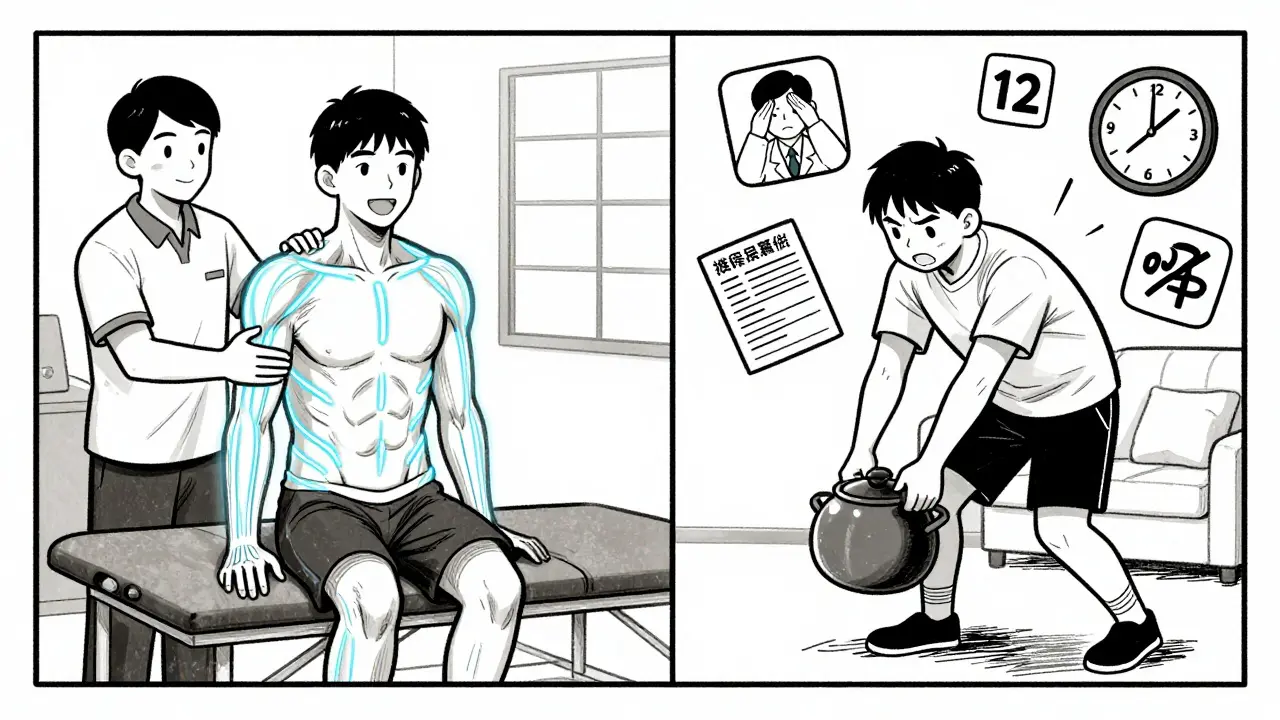
What Actually Works? It’s Not Just Pills
For years, the go-to answer was pills - especially opioids. But the data doesn’t support it. The CDC’s 2022 guidelines show opioids give only 10-15% more pain relief than non-opioid options - but carry an 8-12% risk of addiction after just 90 days. In 2023, opioids made up only 10.2% of prescriptions but accounted for $15.3 billion in spending. That’s not a solution. It’s a trap.
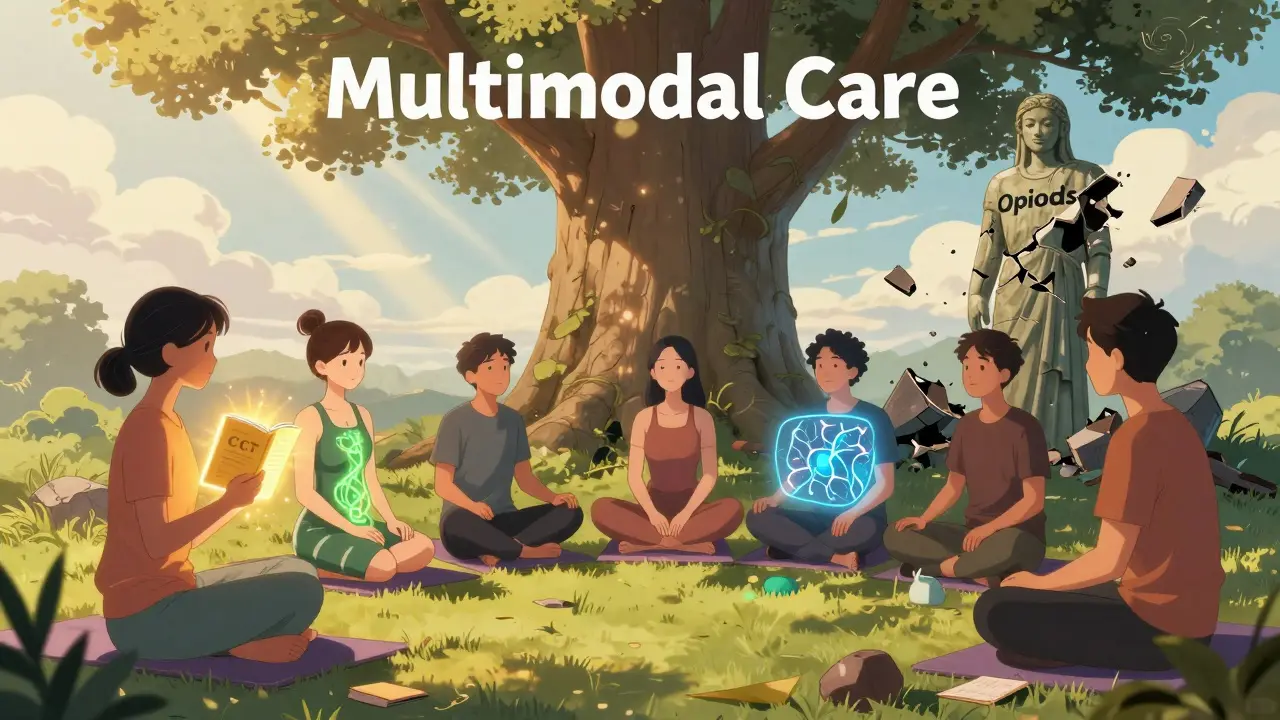
Experts agree: monotherapy fails. Dr. Elliot Krane of Stanford says 68-82% of chronic pain cases don’t improve with single treatments. The answer? Multimodal care.
Non-drug first:
- Cognitive Behavioral Therapy (CBT): 65% of patients report 30-50% pain reduction after 12 weekly sessions. It doesn’t erase pain - it rewires how your brain reacts to it.
- Physical therapy: 70% of patients see 25-40% improvement in daily function after 8-12 weeks. It’s not just stretching - it’s retraining movement patterns that have gone wrong.
- Interdisciplinary pain programs: These are intensive, 3-4 week programs combining physical therapy, psychology, and occupational therapy. One patient, u/PainFreeSince2022, spent $12,500 out-of-pocket to attend one at Mayo Clinic. Result? Pain dropped from 8/10 to 3/10. They returned to teaching full-time.
The American Pain Society gives these non-drug options the strongest recommendation - Category 1. Strong evidence. No side effects. But they’re underused.
Why Most People Don’t Get the Care They Need
There’s a massive gap between what works and what’s available. Only 3,200 physicians in the U.S. are board-certified in pain medicine - that’s 0.3% of all doctors. Meanwhile, rural areas have one specialist for every 500,000 people. Urban areas? One per 75,000. That means 41.2% of rural patients drive over 50 miles just to get a consultation.
Insurance doesn’t help much either. While Medicare now covers 80% of costs for digital pain programs (thanks to a November 2022 decision), most private insurers still limit physical therapy to 10-20 visits a year - even though studies show you need 8-12 weeks of consistent care to see results.
And the system isn’t built for long-term management. Most doctors see patients for 15-minute slots. Chronic pain needs time - for listening, for tracking patterns, for adjusting plans. That’s why programs like Kaiser Permanente’s Chronic Pain Initiative are groundbreaking. Since launching in January 2023, they’ve cut opioid prescriptions by 47.3% by expanding access: 52 physical therapy visits per year, 12 CBT sessions, and more interventional procedures.
The Future Is Personalized - But It’s Not Here Yet
Research is moving fast. The NIH’s HEAL Initiative poured $1.8 billion into non-addictive pain treatments in 2024 alone. $427 million is going to new non-opioid drugs. $315 million is funding digital tools and behavioral therapies.
The All of Us Research Program is enrolling 125,000 chronic pain patients to build personalized treatment algorithms based on genetics, lifestyle, and brain activity. The goal? Clinical applications by 2027.
But here’s the hard truth: we’re going to need 7,500 more pain specialists by 2030 just to keep up. And right now, the system isn’t ready.
What You Can Do Right Now
If you’re living with pain over three months:
- Stop assuming pills are the answer. Ask your doctor about CBT and physical therapy first.
- Track your pain. Use a simple app or notebook: rate intensity (1-10), note triggers (weather, stress, sleep), and record what helped.
- Find a pain specialist. Look for someone board-certified in pain medicine. They’ll ask about your sleep, mood, and daily function - not just your pain level.
- Join a support group. Reddit’s r/ChronicPain has over 1.2 million members. Talking to people who get it changes everything.
- Push for coverage. If your insurance denies physical therapy or CBT, appeal. Cite the IASP guidelines and the CDC’s 2022 recommendations.
Chronic pain isn’t a life sentence. But it won’t get better by waiting. It takes action - and the right kind of care.
Is chronic pain the same as acute pain?
No. Acute pain is your body’s alarm system - it usually goes away after an injury heals, within a few days or weeks. Chronic pain lasts longer than three months and often continues even after the original injury has healed. It’s not just "long-lasting" acute pain - it’s a separate condition where the nervous system itself becomes overactive.
Can chronic pain be cured?
For most people, chronic pain can’t be completely erased - but it can be managed well enough to live a full life. The goal isn’t zero pain. It’s reducing pain enough to sleep, move, work, and enjoy relationships. Many people cut their pain in half or more with the right combination of therapies.
Why are opioids not recommended for chronic pain?
Opioids offer only small, short-term benefits - about 10-15% more pain relief than non-opioid options - but carry serious risks. After 90 days, 8-12% of users develop opioid use disorder. They also cause constipation, drowsiness, and tolerance (needing higher doses). The CDC and American Pain Society now rank opioids as a last-resort option due to these risks outweighing the benefits.
How do I know if I have neuropathic pain?
Neuropathic pain often feels like burning, shooting, tingling, or electric shocks. It may follow a nerve pathway - like numbness in your foot that turns into a sharp, stabbing pain. It can happen after diabetes, shingles, surgery, or spinal injury. If you have these symptoms, ask your doctor about nerve-specific tests and medications like gabapentin or pregabalin.
What’s the difference between fibromyalgia and other chronic pain?
Fibromyalgia is a type of nociplastic pain - meaning there’s no visible tissue damage, but the nervous system amplifies pain signals. It’s diagnosed by widespread pain lasting over three months, affecting both sides of the body and above and below the waist. It often comes with fatigue, brain fog, and sleep problems. Unlike arthritis, it doesn’t cause joint damage - but it can be just as disabling.


this pain thing is just weak people not trying hard enough. if you can walk, you can work. no one cares about your excuses.