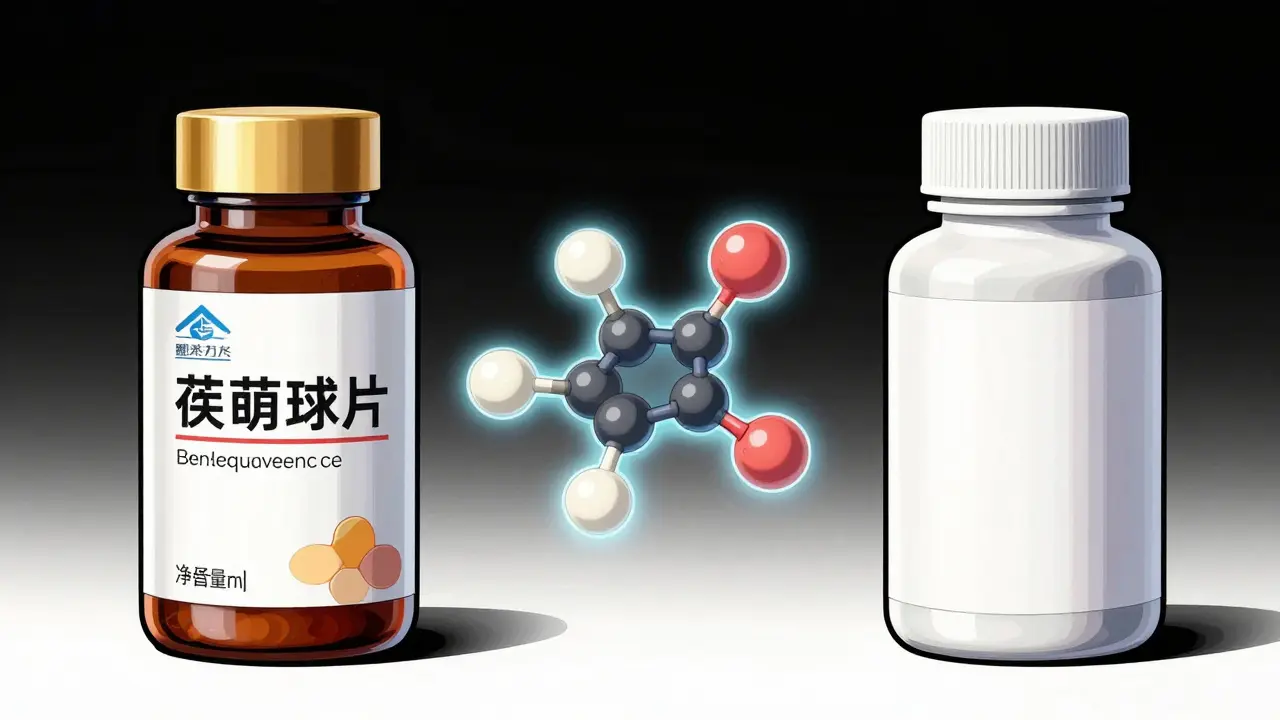
You've probably been there: you're at the pharmacy counter, and the pharmacist tells you they have a cheaper version of your prescription. Suddenly, a voice in the back of your head asks, "Is this just a cheap copy?" It's a common worry. We often associate the word "generic" with lower quality-like generic-brand cereal or off-brand batteries. But when it comes to your health, the stakes are much higher. The reality is that generic drugs aren't just "copies" in the way a knock-off handbag is; they are scientifically validated mirrors of the original medicine.
The "Copy" Myth vs. Scientific Reality
When people call a generic drug a "copy," they usually imply it's an imitation that might not work as well. In the pharmaceutical world, the term used is Bioequivalence is the requirement that a generic drug delivers the same amount of active ingredient into the bloodstream in the same amount of time as the brand-name drug. It's not about looking the same; it's about performing exactly the same way inside your body.
To get approved, a generic manufacturer doesn't have to repeat the massive, decade-long clinical trials the original company did. Instead, they use the Abbreviated New Drug Application (ANDA) process, established by the Hatch-Waxman Act of 1984. This allows them to prove the drug is the same without spending billions on redundant tests. According to FDA testing, generic drugs typically maintain an average active ingredient concentration of 99.2%, proving they aren't "watered down" versions of the original.
What Actually Changes Between Brand and Generic?
If the active ingredient is identical, why does the pill look different? This is where the "copy" myth gets a bit of truth. While the Active Pharmaceutical Ingredient (API)-the part that actually treats your condition-must be identical, the "inactive" ingredients can vary. These are called Excipients, which include fillers, binders, colors, and preservatives.
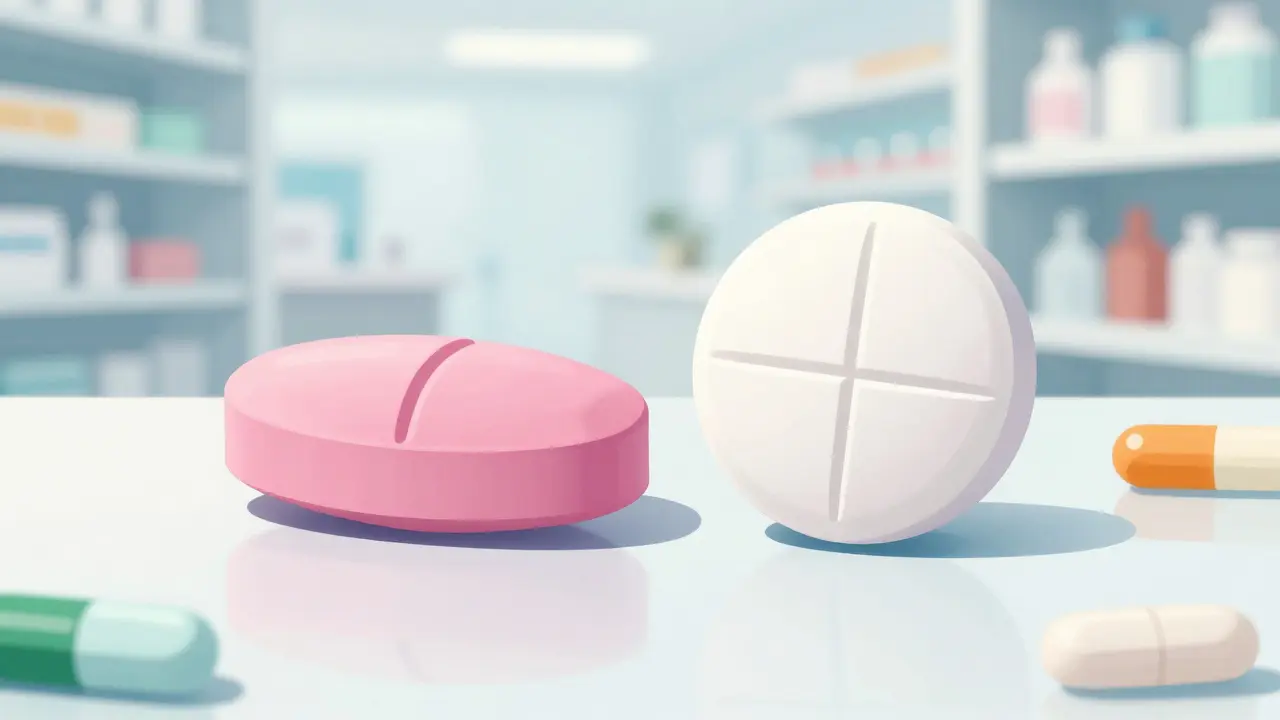
Trademark laws actually prevent generic drugs from looking exactly like the brand-name version. This is why your generic blood pressure pill might be white and round, while the brand version is pink and oval. For most people, these fillers don't matter. However, in rare cases, a person might be allergic to a specific dye or filler used in the generic version, which can lead to a different side effect experience, even though the medicine itself is doing the same job.
| Feature | Brand-Name Drug | Generic Drug |
|---|---|---|
| Active Ingredient | Original Molecule | Identical Molecule |
| Inactive Ingredients | Proprietary Blend | Varies by Manufacturer |
| Appearance | Trademarked Look | Must be visually different |
| FDA Requirements | Full Clinical Trials | Bioequivalence Proof |
| Cost | Higher (R&D Recovery) | Lower (Competitive Pricing) |
When "Same" Isn't Quite Enough: The NTI Exception
For about 95% of medications, switching to a generic is a seamless process. But there is a small category of drugs where a tiny difference in concentration can be a big deal. These are called Narrow Therapeutic Index (NTI) drugs. With an NTI drug, the window between a dose that works and a dose that is toxic is very small.
Common examples include Warfarin (a blood thinner) and Levothyroxine (for thyroid issues). In these specific cases, pharmacists and doctors monitor patients much more closely. While many NTI drugs are safely substituted, some patients may react better to staying on a consistent brand to avoid the slight variations in absorption that can happen between different manufacturers.

The Real-World Impact on Your Wallet
Why do we even bother with generics if they're just the same? The answer is simple: money. Creating a new drug is incredibly expensive, which is why companies get a patent (usually lasting 20 years) to recoup their costs. Once that patent expires, the floodgates open. The price difference is staggering. Data from GoodRx shows that generics average around $4.27 per prescription, while brand names can jump to over $60 for the same therapeutic effect.
This isn't just about saving a few bucks; it's about whether people can actually afford their medicine. Research from Harvard Medical School suggests that cost-related non-adherence (people skipping doses because they can't afford the pill) drops from 25% with brand names down to just 8% when generics are used. When the medicine is affordable, people actually take it.
How to Navigate Your Pharmacy Visit
If you're unsure about a generic switch, you don't have to guess. You can check the FDA Orange Book, which is the official gold standard for approved generic drugs. If a drug is listed there as bioequivalent, it has passed the rigorous tests for strength, purity, and quality.
If you have a history of allergies to dyes or fillers, tell your pharmacist. They can often check the inactive ingredient list for different generic manufacturers to find one that doesn't contain the problematic filler. For the vast majority of us, the switch to a generic is a win-win: the same health outcome for a fraction of the cost.
Do generic drugs take longer to work than brand names?
No. Because they must prove bioequivalence, the FDA requires that generic drugs deliver the active ingredient into your bloodstream in the same amount of time as the brand-name version. The onset of action is virtually identical.
Why do some generics feel different than others?
This is usually due to the excipients (inactive ingredients). Different manufacturers use different binders or coatings. While these don't change how the medicine works, they can change how the pill dissolves in your mouth or how it tastes.
Can I ask my doctor to specify "Dispense as Written" (DAW)?
Yes. If you have a medical reason-such as an allergy to a generic filler or a condition requiring an NTI drug-your doctor can mark your prescription "Dispense as Written." This tells the pharmacist to provide only the brand-name version.
Are biosimilars the same as generic drugs?
Not exactly. Biosimilars are for complex biologic medicines (made from living cells) rather than simple chemical formulas. Because biologics are so complex, they can't be "identical" like a chemical generic, but they are "highly similar' and provide the same clinical result.
Is the quality of generics lower in other countries?
Quality depends on the regulatory body of that country. In the US, the FDA maintains strict oversight. Many generic manufacturers operate globally and must meet the standards of whichever country they are selling in, but always verify that the medication is approved by your local health authority.