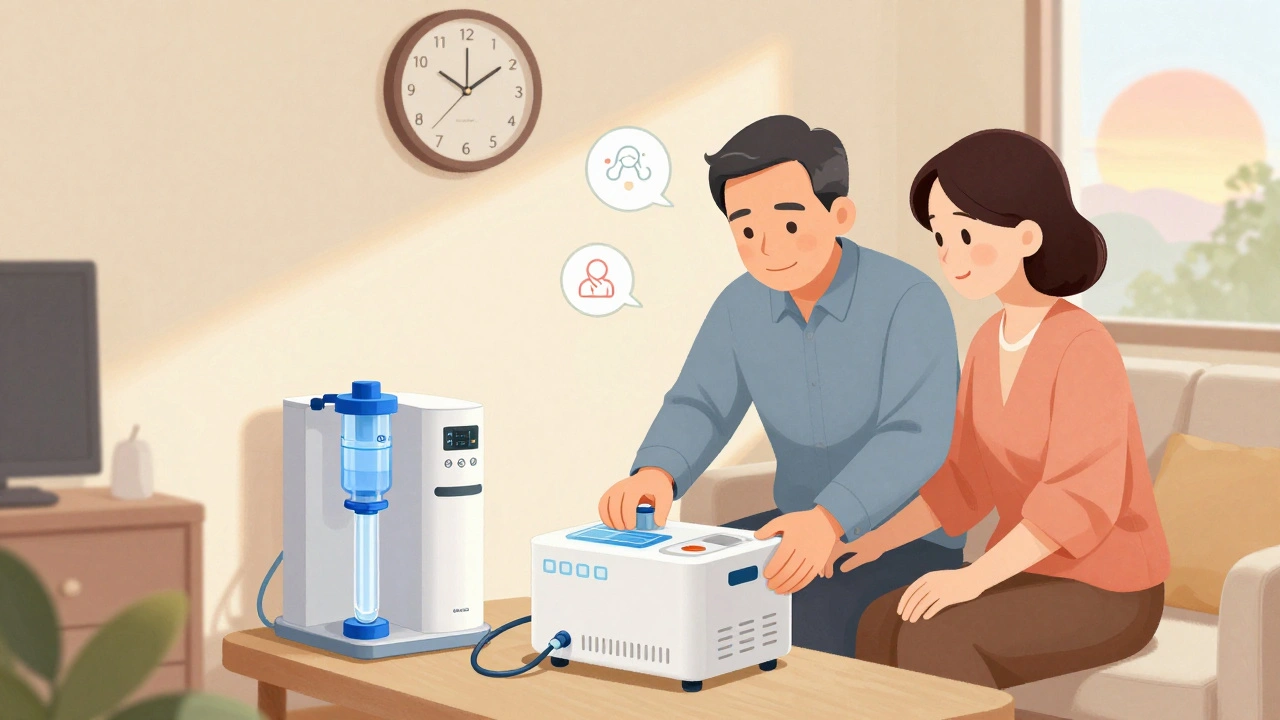
When you’re living with end-stage kidney disease, dialysis isn’t just a medical procedure-it’s a lifestyle. For many, the idea of spending four hours, three times a week, stuck in a clinic chair, hooked up to a machine, feels like losing control over your life. That’s where home hemodialysis comes in. It’s not for everyone, but for those who can manage it, it offers something most in-center treatments don’t: freedom. Freedom to dialyze when you want, where you want, and how often your body needs. But it’s not as simple as just moving the machine from the clinic to your living room. There’s training. There are schedules. There are outcomes-and they’re better than you might think.
What Home Hemodialysis Actually Looks Like
Home hemodialysis means doing your dialysis treatments in your own home, using a machine that filters waste and extra fluid from your blood. It’s not new-doctors have been experimenting with it since the 1960s-but it’s only in the last 15 years that it’s become practical for most people. Modern machines are smaller, quieter, and easier to use. Some, like the NxStage System One, are even portable enough to take on road trips. You don’t need a hospital-grade setup. Most people use a corner of their living room, basement, or spare bedroom. You’ll need about 6 feet by 6 feet of space, a dedicated electrical outlet (120-volt, 20-amp), a water line with 40-80 psi pressure, and a drain nearby. The machine connects to a reverse osmosis water system, which purifies tap water to a level safe for dialysis. That’s non-negotiable. Contaminated water can cause serious infections. Unlike in-center dialysis, where nurses handle everything, home hemodialysis puts you in charge. That includes setting up the machine, connecting your vascular access, starting the treatment, monitoring your blood pressure, and shutting everything down safely. And you’re not alone. Most people train with a care partner-usually a spouse, adult child, or close friend-who learns every step alongside you.Training: It’s Not Just Learning How to Use a Machine
Training for home hemodialysis isn’t a quick demo. It’s a full immersion. Most programs require 3 to 8 weeks of daily or weekly sessions, with each lasting 3 to 5 hours. Some patients finish in as little as two weeks if they’ve already practiced self-needling during in-center treatments. Others take up to 12 weeks, especially if they’re older, have limited dexterity, or are learning to manage their own vascular access for the first time. You’ll learn:- How to clean and prep your treatment area
- How to connect and disconnect your dialysis access (fistula or graft)
- How to set up the machine, load dialysate, and prime the tubing
- How to monitor your blood pressure and fluid removal during treatment
- How to recognize and respond to alarms-low blood pressure, air in the line, clotting, or leaks
- How to store and order supplies, track your treatments, and keep logs
- How to follow your fluid and diet limits to avoid complications
Three Main Schedules-Which One Fits You?
Home hemodialysis isn’t one-size-fits-all. There are three main schedules, each with different benefits:- Conventional home hemodialysis: Three times a week, 3-4 hours per session. This looks a lot like in-center dialysis, but you do it on your own schedule-early morning, late night, or even on weekends. It’s the easiest transition for people new to home dialysis.
- Short daily home hemodialysis: Five to seven times a week, 2-3 hours per session. This is where the real benefits kick in. Because you’re dialyzing more often, your body doesn’t build up as much fluid and toxin waste between treatments. Blood pressure improves. Left ventricular hypertrophy (a thickening of the heart muscle) decreases. A 2021 study in the Clinical Journal of the American Society of Nephrology found these patients had a 28% lower risk of death than those on standard in-center dialysis.
- Nocturnal home hemodialysis: Three to seven nights a week, 6-10 hours while you sleep. This is the most gentle form. Slow, long sessions mimic how healthy kidneys work. Phosphorus levels drop dramatically-some patients cut their phosphate binder pills from 6 a day to just 2. Fluid removal is smoother, so you wake up feeling less bloated. Studies show patients on nocturnal dialysis have better sleep, fewer cramps, and improved appetite.

Outcomes: Why More People Are Choosing Home
The data doesn’t lie. People on home hemodialysis live longer, feel better, and spend less time in the hospital. The U.S. Renal Data System found home hemodialysis patients had a 15-20% lower mortality rate than those on in-center dialysis. That gap widens for those doing frequent or nocturnal treatments. A 2018 study in Nephrology Dialysis Transplantation showed nocturnal patients had 42% lower phosphate levels-meaning less bone damage, fewer heart problems, and fewer meds. Quality of life? Even better. A 2019 review in the American Journal of Kidney Diseases found home dialysis patients scored 37% higher on quality-of-life surveys than in-center patients. Why? More energy. Fewer dietary restrictions. No more rigid clinic schedules. No more sitting in a waiting room for hours. One patient in a Reddit survey said, “I went from barely leaving the house to hiking with my grandkids. I didn’t realize how tired I was until I wasn’t tired anymore.” But it’s not all smooth sailing. Machine alarms go off at 2 a.m. Supplies run out before your order arrives. Your partner gets frustrated. You feel guilty for asking them to help every day. One in two home dialysis patients report relationship strain. And 63% of people say anxiety about handling emergencies was their biggest fear-until they got trained.The Hidden Barriers: Who Can’t Do It?
Despite the benefits, only about 12% of U.S. dialysis patients use home hemodialysis. Why? The biggest reason isn’t medical-it’s social. About 30% of potential candidates don’t have a care partner willing or able to help. That’s a hard wall. Medicare and most programs won’t approve solo home dialysis unless you’ve proven you can handle every emergency alone-and even then, it’s rare. There’s also a lack of access. Only 12% of U.S. dialysis centers offer home training. If you live in a rural area, you might need to drive hours just to start the process. And even when programs exist, they’re often understaffed. Nephrologists say 71% of centers don’t have enough trained staff to expand home dialysis. Reimbursement is another issue. Medicare pays for up to 25 training sessions for home hemodialysis-but that’s still not enough to cover the hours of staff time needed. Many centers simply can’t afford to offer it.
What’s Changing? The Future Is Here
Things are shifting. In 2021, the U.S. government launched the Advancing American Kidney Health initiative with a goal: 80% of new kidney failure patients should start dialysis at home or get a transplant by 2025. We’re not there yet-but progress is real. New machines are smaller, smarter, and easier to use. The WavelinQ endoAVF system, approved in 2022, creates a more reliable vascular access with less risk of clotting. Portable devices mean you can dialyze while traveling. And starting in 2025, Medicare will pay based on patient outcomes-not just how many treatments you get. That means clinics will have a financial reason to push home dialysis. More patients are asking for it. More doctors are recommending it. And the evidence keeps piling up: home hemodialysis isn’t just convenient. It’s better medicine.Is It Right for You?
Ask yourself:- Do you have someone who can help you every day-or almost every day?
- Are you comfortable learning new skills and managing your own care?
- Do you have space in your home and access to clean water and electricity?
- Are you motivated to avoid the clinic, reduce meds, and reclaim your schedule?
Can I do home hemodialysis alone?
In most cases, no. Nearly all programs require a trained care partner to be present during every treatment. Solo home hemodialysis is possible only after extensive evaluation and approval, and even then, it’s rare. The risk of complications-like low blood pressure, needle dislodgement, or machine failure-is too high to manage alone without immediate help.
How long does training take for home hemodialysis?
Training typically lasts between 3 and 8 weeks, with sessions lasting 3 to 5 hours each. Some patients finish in as little as two weeks if they’ve practiced self-needling before, while others take up to 12 weeks depending on their learning pace, physical ability, and the complexity of their treatment schedule. Medicare covers up to 25 training sessions, which is usually enough to build confidence and competency.
What are the biggest risks of home hemodialysis?
The main risks include infection at the vascular access site, low blood pressure during treatment, air entering the bloodstream, or the machine malfunctioning. These are rare with proper training, but they can happen. That’s why having a trained care partner and knowing how to respond to alarms is critical. Most programs teach emergency protocols, including when to call 911 and how to clamp the lines safely.
Is home hemodialysis more expensive than in-center dialysis?
No. Medicare covers the full cost of home hemodialysis equipment, supplies, training, and water treatment systems. There are no out-of-pocket costs for the dialysis itself. Some patients pay for minor home modifications like a new outlet or drain line, but these are usually one-time expenses. The real cost is time and effort-not money.
Can I travel if I do home hemodialysis?
Yes-but it depends on your machine. Standard home dialysis machines are not portable. If you use one of these, you’ll need to schedule treatments at a clinic when you travel. Portable systems like the NxStage System One let you take your machine with you. You’ll need to arrange for dialysate and water delivery at your destination, but many companies offer shipping services. Always plan ahead-don’t wait until the day you leave.
Do I need to change my diet with home hemodialysis?
You still need to follow a kidney-friendly diet, but it’s often easier with home hemodialysis. Because you’re dialyzing more frequently, you can usually eat more potassium, phosphorus, and fluids than someone on in-center dialysis. Many patients report being able to enjoy foods like bananas, oranges, and even a glass of milk again. But you still need to monitor your intake-your dietitian will help you adjust based on your schedule and lab results.
How do I know if I’m a good candidate for home hemodialysis?
You’re likely a good candidate if you’re motivated, have a reliable care partner, can follow instructions, and are willing to learn. Physical ability matters less than mental readiness. Many older adults, people with diabetes, and those with heart conditions do well with home dialysis. Your nephrologist will assess your medical stability, cognitive function, home environment, and social support. If you’re unsure, ask for a trial session or shadow someone doing home dialysis.


This whole home dialysis thing is a scam pushed by big med to save money. They don't care if you die in your living room as long as the clinic bill goes down. I've seen people get sepsis from DIY needle jobs because they were too scared to go to the hospital. It's not freedom-it's abandonment wrapped in a pretty marketing brochure.