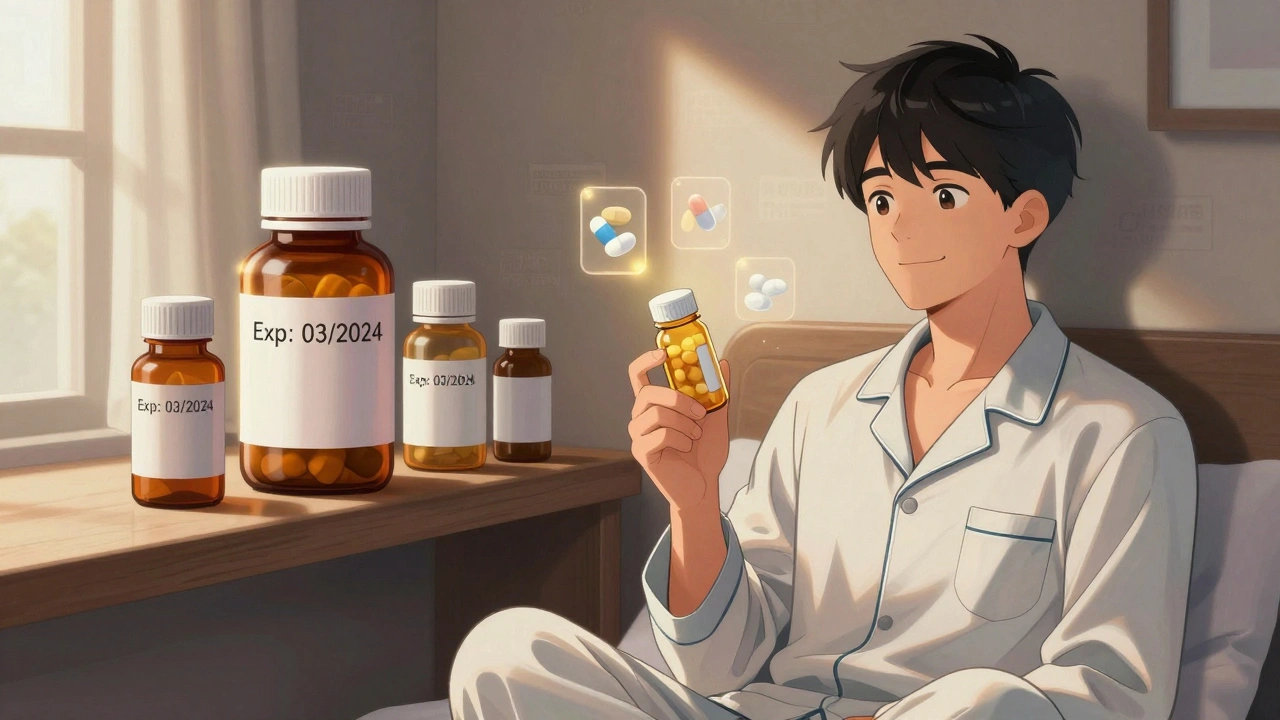
Most people toss out medications the moment they hit their expiration date. You see it on the bottle: Exp: 03/2024. You think, That’s it. Done. Dangerous. But what if that date isn’t really the end of the line? What if your old painkiller, allergy pill, or blood pressure med is still working just fine - even years later?
The truth is, expiration dates aren’t magic cutoffs. They’re more like manufacturer guarantees. The drug company promises that the medication will be at least 90% as strong as labeled up to that date. After that? No one’s required to prove it stops working. And research shows, in most cases, it doesn’t.
What the Science Actually Says
In 2012, researchers from the University of California-San Francisco tested 15 different active ingredients in medications that had expired between 28 and 40 years earlier. These weren’t random pills sitting in a bathroom cabinet. They were stored in ideal conditions - cool, dry, sealed in original containers. The results? Twelve of the fourteen drugs still had at least 90% of their original potency. Eight of them were still fully potent after 40 years.
This wasn’t a fluke. The U.S. Department of Defense has been running a program called the Shelf-Life Extension Program (SLEP) since 1986. They test stockpiled military medications - everything from antibiotics to heart drugs - to see how long they last. Out of 122 different drugs tested, 88% were extended beyond their original expiration dates. On average, they gained an extra 66 months of usable life. One drug lasted 278 months past its date.
The FDA itself tested over 100 drugs and found that about 90% remained safe and effective up to 15 years past expiration - if stored properly. That’s not speculation. That’s hard data from government labs.
Not All Medications Are Created Equal
But here’s the catch: not every pill holds up. Some medications degrade fast, and using them after expiration can be risky.
Drugs to avoid after expiration:
- Nitroglycerin - Used for heart attacks. If it’s weak, it won’t work when you need it most.
- Insulin - Losing potency means dangerous blood sugar swings.
- Liquid antibiotics - Once mixed, they break down quickly. Even a month past expiration, they may not kill the infection.
- Epinephrine auto-injectors (EpiPens) - A weakened dose could mean the difference between life and death in an allergic reaction.
- Tetracycline - Older studies linked degraded tetracycline to kidney damage. While newer versions are safer, it’s still not worth the risk.
On the flip side, solid pills like codeine, hydrocodone, aspirin (mostly), ibuprofen, and acetaminophen are incredibly stable. Even if they’ve been sitting in a drawer for five, ten, or even twenty years, they’re likely still doing their job.
Storage Matters More Than You Think
Where you keep your meds makes a huge difference. Heat, moisture, and light are the real killers.
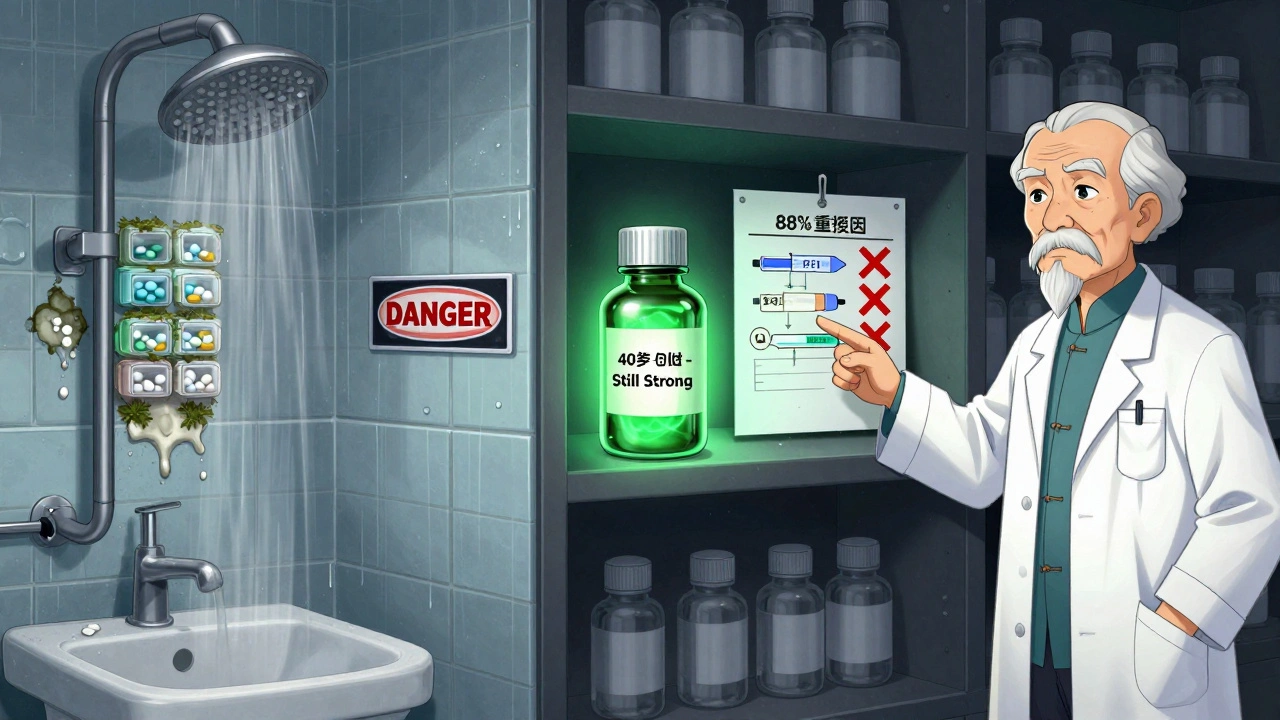
That bottle you transferred from the pharmacy to a plastic pill organizer? That’s a problem. Those little containers don’t seal out air or humidity. Moisture sneaks in. The pill starts breaking down. You might think you’re being organized - but you’re actually shortening the life of your medication.
Original packaging, kept in a cool, dry place like a bedroom drawer or a closet shelf, is best. Avoid the bathroom. The steam from showers ruins pills. Don’t leave them in the car. Summer heat can cook them.
A sealed bottle in a dark, dry spot? That’s your best bet for longevity. The 2012 study only tested drugs still in their original, unopened containers. That’s not an accident.
Why Do Expiration Dates Even Exist?
If these drugs last so long, why do we have expiration dates at all?
It’s not science - it’s liability and business.
When the FDA required expiration dates in 1979, they didn’t demand long-term stability testing. Manufacturers only had to prove their drugs were good for 12 to 60 months. That’s it. No one had to test if they lasted five, ten, or twenty years. Why? Because testing that takes time and money. And if a drug’s expiration date was extended, people wouldn’t buy new ones as often.
Think about it: if your blood pressure pill lasts 20 years, how many bottles do you buy in a decade? One. Maybe two. That’s not good for profits.
So expiration dates became a way to guarantee safety for a short window - and drive repeat sales. They’re not a scientific end-of-life date. They’re a legal and economic tool.
What Should You Do With Expired Meds?
Here’s a practical guide:
- Check the drug type. If it’s insulin, EpiPen, nitroglycerin, or liquid antibiotics - throw it out. No exceptions.
- Look at the condition. Is the pill cracked, discolored, or smells weird? Don’t take it. That’s real degradation.
- Consider the risk. If it’s a non-critical drug - like an old pain reliever or allergy pill - and it’s been stored well, it’s probably fine. You’re not curing cancer here. You’re managing a headache.
- Don’t dig through the trash. Just because a drug can last doesn’t mean you should take something you found in an old box. Only use meds you’ve kept properly and know the history of.
- Dispose of safely. If you’re unsure, take expired meds to a pharmacy drop-off or community disposal event. Don’t flush them or toss them in the trash.
The California Poison Control System found that most people know not to use insulin or EpiPens after expiration. But many still think it’s dangerous to take an old aspirin or antihistamine. That’s not backed by science.
The Bigger Picture
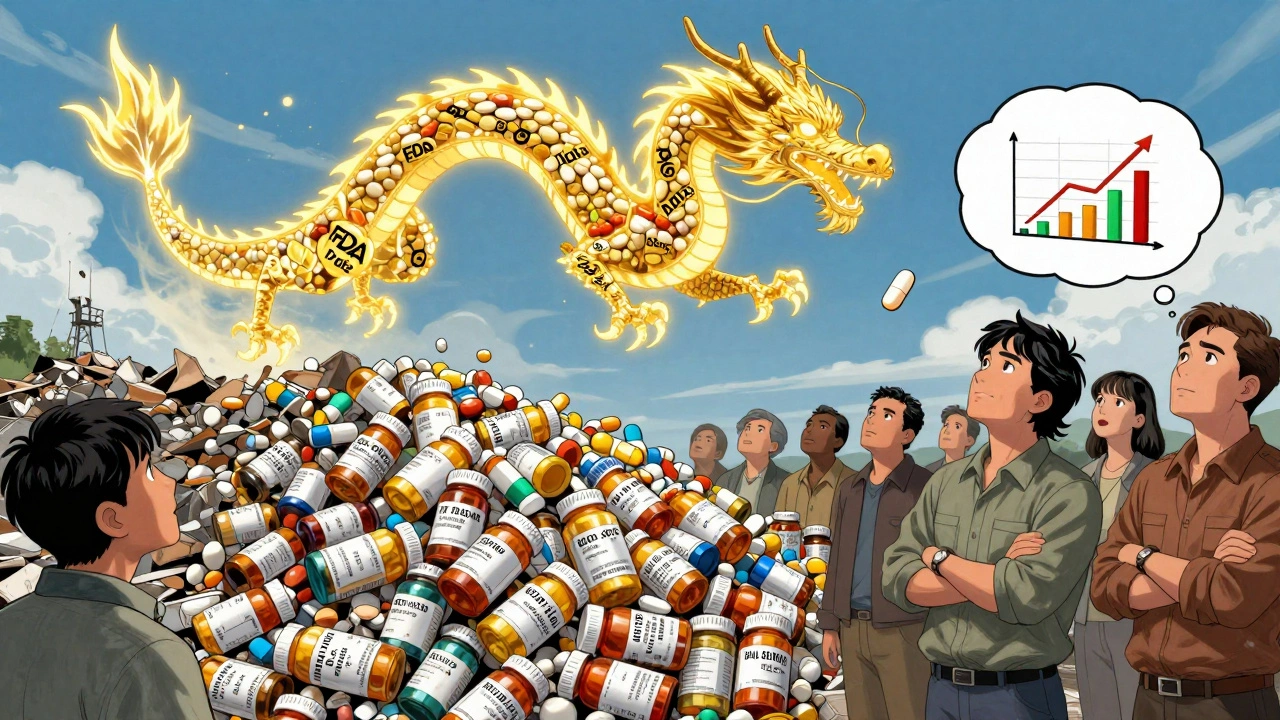
Every year, Americans spend over $300 billion on prescription drugs. A huge chunk of that gets thrown away because of expiration dates. The Department of Defense saved millions by extending drug shelf life. Imagine if that happened across the whole system.
Healthcare costs are rising. Drug prices are high. We’re discarding perfectly good medicine because of a date printed on a label - not because of evidence.
That doesn’t mean you should start hoarding old pills. But it does mean you shouldn’t panic every time you find a bottle past its date. Use your head. Know the risks. Store them right. And for the love of your wallet, don’t throw out a bottle of ibuprofen just because it’s a year old.
The science is clear: most medications don’t turn into poison after their expiration date. They just get a little weaker. And for many, that little bit of weakness doesn’t matter - especially if you’ve kept them dry, dark, and sealed.
Are expired medications dangerous to take?
For most solid medications like pain relievers, antihistamines, or blood pressure pills stored properly, expired drugs aren’t dangerous - they’re just possibly less effective. But for critical drugs like insulin, EpiPens, nitroglycerin, or liquid antibiotics, using them after expiration can be life-threatening. Always avoid those.
How long do pills last after the expiration date?
Under ideal conditions - cool, dry, sealed in original packaging - many pills retain 90% or more of their potency for 5 to 15 years after expiration. Some, like codeine or ibuprofen, have been shown to work even after 20-40 years. But this doesn’t apply to liquids, injections, or unstable drugs like insulin.
Should I keep my medications in the original bottle?
Yes. Original bottles are designed to block light and limit moisture exposure. Transferring pills to plastic organizers, pillboxes, or ziplock bags exposes them to air and humidity, which speeds up degradation. Keep them sealed in their original containers unless you’re actively using them daily.
Can I trust expiration dates on over-the-counter meds?
Expiration dates on OTC meds are just as arbitrary as prescription ones. They’re based on short-term testing, not long-term stability. Many OTC painkillers and antihistamines remain effective for years beyond their labeled date - if stored correctly. Don’t assume they’re useless just because the date passed.
Why don’t drug companies extend expiration dates if the science shows it’s safe?
Because it would hurt their profits. If a drug lasts 20 years instead of 3, people buy fewer refills. Drug companies have no financial incentive to fund long-term stability studies. The FDA doesn’t require them to do so either. It’s a business model, not a medical one.
Is it legal to use expired medications?
There’s no law against using expired medications in your own home. But doctors and pharmacists can’t legally prescribe or dispense them past the expiration date. The liability risk for providers is too high, even if the science supports safety. It’s a legal gray area - safe for you to use, but not for professionals to recommend.


Whoa, this changed my whole perspective 😲 I’ve been tossing out ibuprofen like it’s expired milk. Now I’m gonna check my drawer-might have some 2018 stuff still good. Thanks for the science breakdown!