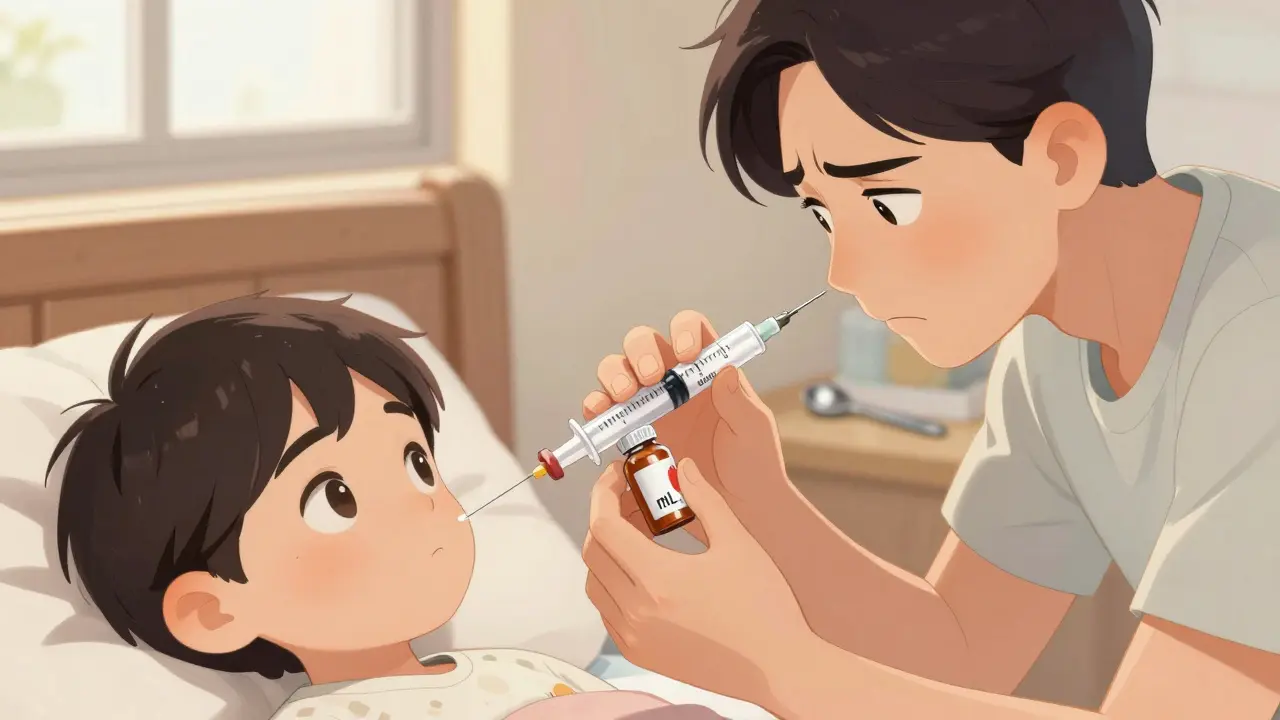
Getting the right dose of medicine for your child isn’t just important-it can be life-saving. A mistake of just one milliliter can mean the difference between treatment working and something serious happening. And it’s not rare. Studies show that 7 in 10 parents mess up liquid medication doses at home, mostly because they use kitchen spoons or dosing cups instead of the right tools. This isn’t about being careless-it’s about confusion. Many parents don’t know the difference between mg and mL, or think a tablespoon is always a tablespoon. But it’s not. And when your child is small, even a tiny error can be dangerous.
Why Milliliters (mL) Are the Only Measurement That Matters
Forget teaspoons and tablespoons. They’re not accurate, and they never should be used for kids’ medicine. A kitchen teaspoon can hold anywhere from 3.9 to 7.3 milliliters-way off from the standard 5 mL. That’s a 30% error right there. For a child who needs 2.5 mL of antibiotics, that could mean getting only 1.8 mL or 5.5 mL. Underdosing means the infection won’t clear. Overdosing can cause liver damage, breathing problems, or worse.
The CDC, the American Academy of Pediatrics, and every major pediatric hospital now agree: all pediatric liquid medications must be measured in milliliters (mL) only. No more “teaspoon,” no more “tablespoon.” Labels and instructions should say 2.5 mL, not ½ tsp. If you see both, ask your pharmacist to rewrite the label in mL only. Many pharmacies still mix units because they’re slow to update, but you have the right to ask for clarity.
Which Tools Actually Work?
Not all measuring tools are created equal. Here’s what works-and what doesn’t:
- Oral syringes (1-10 mL): Best for doses under 5 mL. They’re precise, easy to control, and let you give the medicine slowly into the side of the mouth. Accuracy rate: 94%. They’re the gold standard.
- Dosing cups (5-30 mL): Okay for older kids who can drink from a cup, but only if the dose is 5 mL or more. For anything less, they’re risky. Error rate jumps to 68% for 2.5 mL doses.
- Droppers (1-2 mL): Good for babies or tiny doses, especially with newborns. Make sure the dropper came with the medicine-don’t use a random one.
- Medication spoons: Only if they’re labeled in mL and you’re sure they’re the right size. Most household spoons aren’t.
- Kitchen spoons, shot glasses, or eye droppers: Never use these. They’re not calibrated. Ever.
For doses under 5 mL-like most antibiotics, pain relievers, or fever reducers-use an oral syringe. It’s the only tool that gives you confidence you’re giving the exact amount. Many pharmacies now give them for free with pediatric prescriptions. If they don’t, ask for one. Or buy one at a pharmacy for under $5. They’re reusable, washable, and last for years.
How to Use an Oral Syringe Correctly
Even the best tool won’t help if you don’t use it right. Here’s how to get it perfect every time:
- Shake the bottle first-especially antibiotics or suspensions. If the medicine settles, you might give your child too little. One study found 30-50% of parents didn’t shake their medicine, leading to underdosing.
- Draw up the medicine slowly. Insert the syringe into the bottle, turn it upside down, and pull the plunger to the right line. Don’t rush.
- Hold it at eye level. Look straight at the syringe. The liquid forms a curve (called a meniscus). Read the measurement at the bottom of that curve, not the top.
- Don’t push the plunger too fast. Gently squeeze the medicine into the side of your child’s mouth, near the cheek. Avoid the front of the tongue-it triggers the spit reflex. If they spit it out, wait 30 seconds and try again with a little more.
- Wash the syringe after each use with warm water. Let it air dry. Don’t store it capped with medicine inside-it can grow bacteria.
Pro tip: Use a permanent marker to mark the syringe at your child’s most common dose (like 2.5 mL or 5 mL). That way, even if you’re tired or stressed, you can see the line instantly.
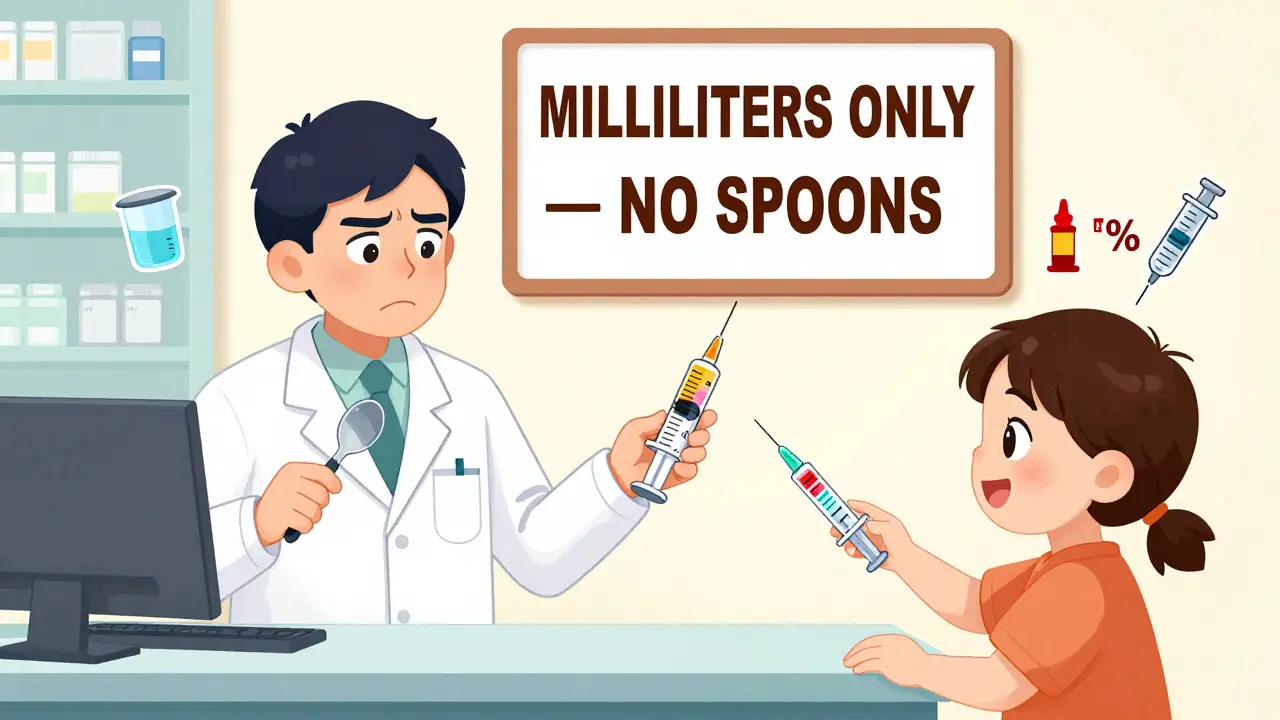
Weight Matters: Calculating the Right Dose
Children’s doses aren’t based on age-they’re based on weight. That’s why your doctor asks for your child’s weight in kilograms (kg). If your scale only shows pounds, convert it: 1 kg = 2.2 lb.
Example: Your child weighs 22 pounds. That’s 22 ÷ 2.2 = 10 kg. If the prescription says “10 mg/kg twice daily,” that’s 10 × 10 = 100 mg per dose. If the medicine is 100 mg per 5 mL, then you give 5 mL per dose.
Always double-check the math. Write it down. Ask your pharmacist to show you the calculation. If the dose seems too high or too low for your child’s size, speak up. A dose of 20 mL for a 5-year-old? That’s not normal. Ask why.
What to Do When Your Child Refuses Medicine
It’s common. Over two-thirds of parents say their child spits out or refuses medicine. Here’s what helps:
- Use a flavored version if available (many pharmacies can compound medicines with fruit flavors).
- Give the medicine with a small amount of applesauce, yogurt, or juice-only if the label says it’s okay. Some meds lose effectiveness if mixed.
- Use a syringe to squirt the medicine gently along the inside of the cheek. It bypasses the taste buds.
- Don’t mix medicine with a whole bottle of juice. If they don’t drink it all, they won’t get the full dose.
- Try a cold spoon or chilled medicine-some kids prefer it cold.
Never force medicine by pinching the nose or pouring it down the throat. That can cause choking or fear that lasts for months.
Common Mistakes (And How to Avoid Them)
These errors happen more than you think:
- Confusing mg and mL: “Give 10 mg” is not the same as “Give 10 mL.” One is a weight, one is a volume. Always check the concentration: “100 mg/5 mL” means each 5 mL has 100 mg. If you’re unsure, ask your pharmacist.
- Using the wrong syringe: Don’t use a syringe meant for injections. Those are different. Use only oral syringes.
- Not checking the expiration date: Liquid antibiotics expire fast-often 14 days after mixing. Throw out what’s left.
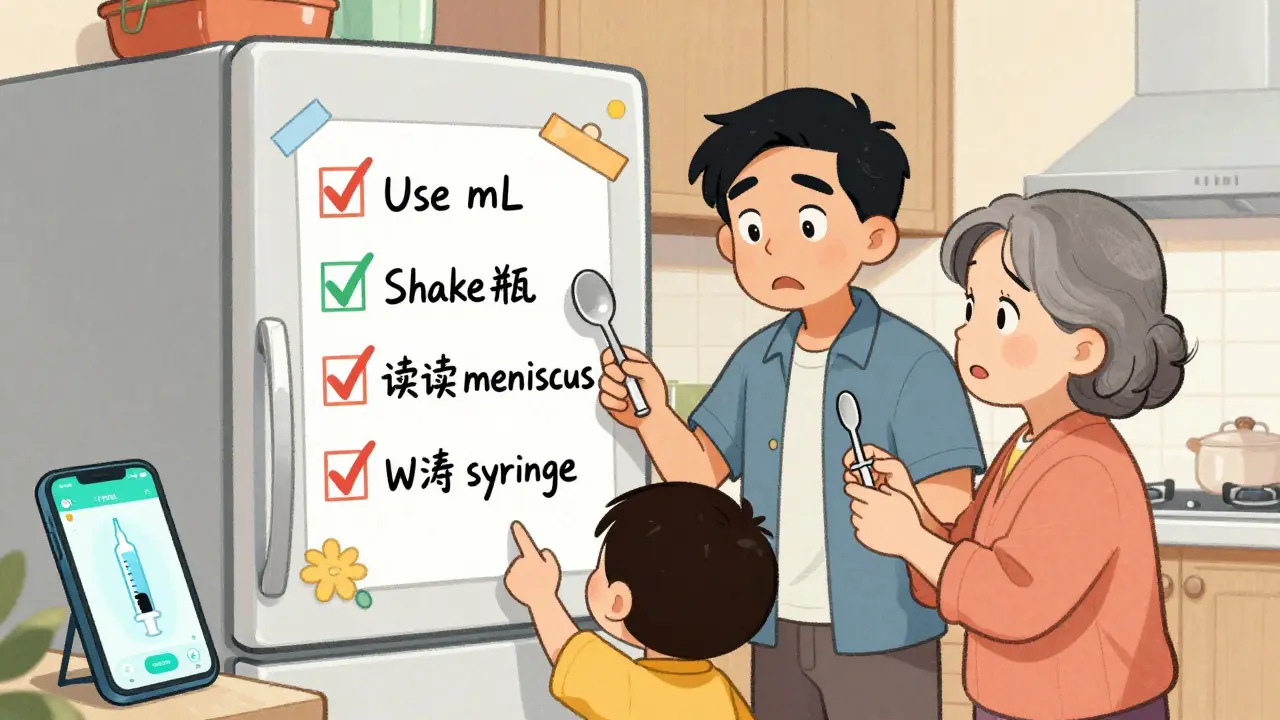
- Multiple caregivers using different tools: If Grandma uses a spoon and Mom uses a syringe, the doses won’t match. Everyone needs the same tool and the same instructions. Write it down and post it on the fridge.
- Assuming “more is better”: Never give extra doses to “make sure it works.” Stick to the schedule. Overdosing on acetaminophen is the #1 cause of liver failure in kids.
What’s Changing in 2025
Things are getting better. The FDA is pushing for a new rule in 2025 that will require all pediatric liquid medicines to come with a standardized mL-only oral syringe. That means no more guessing. Pharmacies will be required to include one with every prescription. Some hospitals are already doing it.
Apps like MedSafety use your phone’s camera to show you how to hold the syringe correctly. Smart dosing cups that beep when you’ve measured the right amount are coming in 2025. Color-coded syringes (like NurtureShot) are already helping families reduce errors by over 60%.
But until then, the best tool you have is knowledge. Use mL. Use a syringe. Double-check the math. Ask questions. Your child’s safety depends on it.
Quick Reference: Dosing Checklist
- ✅ Always use mL-not teaspoons or tablespoons
- ✅ Use an oral syringe for doses under 5 mL
- ✅ Shake the bottle before measuring
- ✅ Read the meniscus at eye level
- ✅ Give medicine to the side of the mouth, not the front
- ✅ Convert pounds to kg: divide by 2.2
- ✅ Wash the syringe after each use
- ✅ Ask your pharmacist to confirm the dose
- ✅ Keep a written dosing chart on the fridge
Can I use a kitchen spoon if I don’t have a syringe?
No. Kitchen spoons vary too much in size-some hold as little as 3.9 mL, others as much as 7.3 mL. That’s a 70% error range. For a child, that could mean too little medicine won’t work, or too much could cause harm. Always use an oral syringe or dosing tool designed for medicine.
What if the label says both mL and tsp?
Ask your pharmacist to rewrite the label in mL only. Even if the numbers seem to match (like 5 mL = 1 tsp), the risk of confusion is too high. Studies show that labels with both units lead to 42% more dosing errors. You have the right to request a clear, mL-only label.
Is it safe to mix medicine with juice or food?
Only if the pharmacist or label says it’s okay. Some medicines, like antibiotics, can lose strength when mixed with certain foods. Others, like acetaminophen, are fine in a small spoonful of applesauce. Always check first. Never mix medicine into a full bottle of liquid-if your child doesn’t finish it, they won’t get the full dose.
How do I know if I gave the right dose?
Check the prescription: What’s the dose in mg/kg? What’s the concentration (mg/mL)? Do the math. If you’re unsure, call your pharmacy. Write down the dose each time. If your child’s symptoms don’t improve or get worse, contact your doctor-don’t assume you gave too little.
What should I do if I think I gave too much?
Call Poison Control immediately: 1-800-222-1222 (U.S.) or your local emergency number. Don’t wait for symptoms. Even if your child seems fine, some overdoses take hours to show up. Keep the medicine bottle handy-you’ll need the concentration and ingredient info.


It’s wild how we treat kids’ meds like a guessin’ game. I used a kitchen spoon once-didn’t know better. Now I keep three syringes in the medicine cabinet, labeled for each kid. One for fever, one for antibiotics, one for allergies. Simple. No more stress.