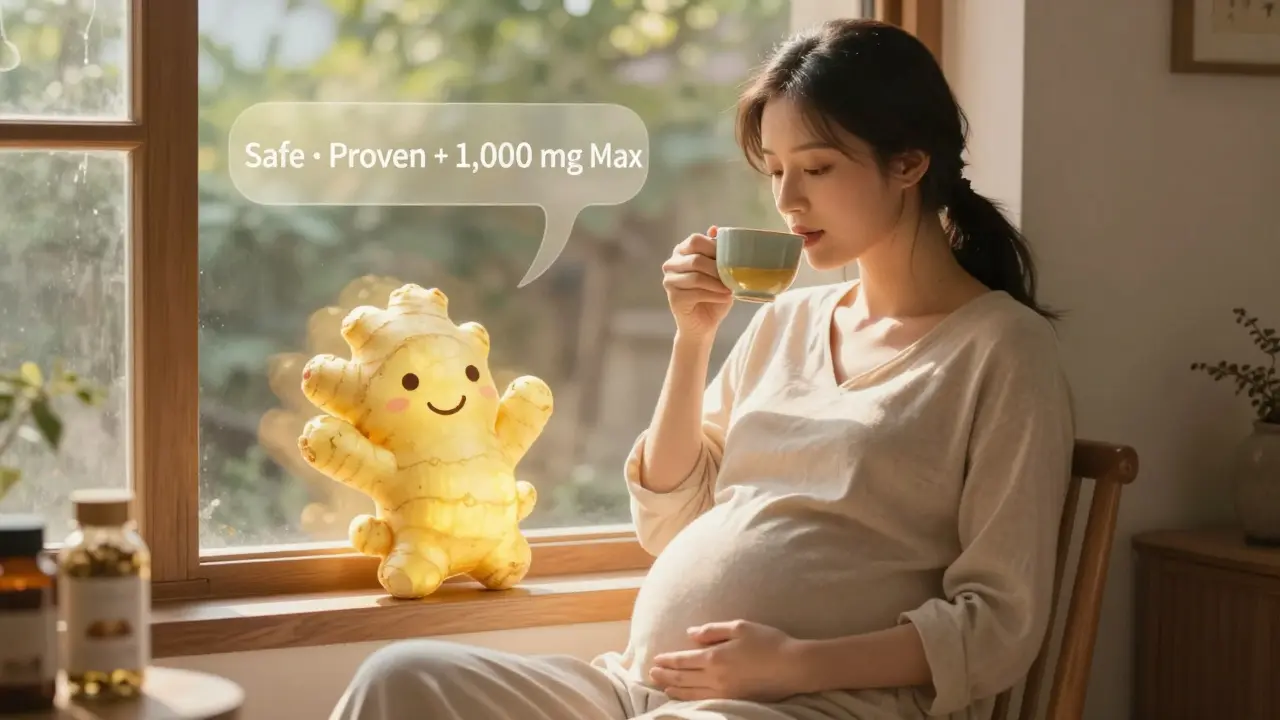
More than 1 in 4 pregnant women take herbal supplements. They reach for ginger tea to calm morning sickness, sip chamomile to sleep, or chew raspberry leaf tablets hoping for an easier birth. But here’s the problem: herbal supplements in pregnancy aren’t tested like prescription drugs. No one knows for sure if they’re truly safe-or what they might be doing to your baby.
What’s Actually in Those Supplements?
You might think “natural” means safe. It doesn’t. A bottle of red raspberry leaf tea might say “100% organic” on the label, but what’s inside? Studies show 20% to 60% of herbal supplements don’t even contain what’s listed on the label. Some have hidden fillers. Others have too much of the active ingredient-or worse, toxic contaminants like lead or pesticides. The FDA doesn’t test them before they hit shelves. That means you’re rolling the dice every time you open a capsule or pour a tea bag.Ginger: The One That Actually Works
If you’re taking something during pregnancy, make it ginger. It’s the only herbal supplement with strong, consistent evidence backing it. Studies involving over 1,000 pregnant women show that 250-1,000 mg of ginger per day reduces nausea and vomiting just as well as vitamin B6 or even some prescription anti-nausea meds-without the side effects. Most women notice improvement within a few days. Ginger is safe when taken in these amounts, and it’s been used for centuries across cultures. You can get it as tea, capsules, or even candied pieces. Just avoid excessive amounts-stick to under 1,000 mg daily. And if you’re on blood thinners, talk to your provider. Even ginger can interact.Raspberry Leaf: The Myth vs. The Data
Raspberry leaf is everywhere in pregnancy circles. Midwives swear by it. Online forums call it “nature’s labor prep.” But here’s what the science says: it doesn’t shorten labor. It doesn’t make contractions easier. And in some cases, it might actually increase your chance of a C-section if used to try to induce labor. A 2023 review by the American Academy of Family Physicians found a higher rate of cesarean deliveries among women who took raspberry leaf to kickstart labor. That’s not a small risk. And because there’s no standard dose-some teas have weak extracts, others are concentrated-you can’t predict how your body will react. If you’re thinking about using it in the third trimester, talk to your doctor first. Don’t assume it’s harmless just because it’s herbal.
Chamomile, Cranberry, and the Hidden Risks
Chamomile tea sounds soothing. But studies link it to possible risks like premature closure of a fetal blood vessel (ductus arteriosus), lower birth weight, and preterm birth. That’s not something you want to risk for a cup of tea. Cranberry supplements are often taken to prevent urinary tract infections (UTIs). They might help a little-but not as reliably as antibiotics. Worse, some women report spotting in the second or third trimester after taking cranberry extracts. Spotting doesn’t always mean trouble, but in pregnancy, it’s a red flag. And rosemary? It’s fine as a seasoning in your pasta sauce. But in medicinal doses-like capsules or essential oils-it can stimulate the uterus. That’s why the American Pregnancy Association says oral rosemary is “possibly unsafe.”Why Do Women Keep Taking Them?
You’re not alone if you’ve taken something without asking your doctor. In one study in Catalonia, Spain, 42% of women started using herbal supplements without telling anyone in the medical system. They got advice from their moms, Instagram, or Reddit threads. Many believe herbal products are “cleaner” than pills. But that’s a dangerous assumption. A 2024 Reddit thread with 142 comments showed that 78% of respondents were unsure if what they were taking was safe-even though 63% were using at least one supplement. People want control. They want to avoid “chemicals.” But the truth is, herbs are chemicals too. And without testing, you don’t know the dose, the purity, or the long-term effect.What the Experts Say
The American College of Obstetricians and Gynecologists (ACOG) is clear: “Don’t take any herbal product without talking to your provider.” The Cleveland Clinic says the same: “Avoid most herbal supplements during pregnancy.” Even the German Federal Institute for Risk Assessment, which studies herbal safety, says there’s no “typical” pregnant woman who uses them-so every patient needs to be asked. Your doctor won’t judge you. They’ve seen it all. They just need to know what’s in your system so they can watch for interactions. If you’re on prenatal vitamins, thyroid meds, or iron supplements, some herbs can interfere. Red raspberry leaf might make iron less effective. Ginger might thin your blood. These aren’t theoretical risks-they’re documented.
What You Should Do
If you’re pregnant and taking herbal supplements, here’s what to do right now:- Stop taking anything you haven’t discussed with your provider.
- Write down every supplement, tea, or tincture you’re using-name, dose, how often.
- Bring that list to your next appointment. Don’t wait. Don’t be embarrassed.
- Ask: “Is this safe? Is there proof? What are the risks?”
- If you’re using ginger for nausea, keep going. It’s the exception.
Don’t rely on blogs, YouTube videos, or well-meaning friends. Your baby’s health isn’t a Pinterest experiment.
The Bigger Picture
The global market for herbal supplements sold to pregnant women is worth billions. Companies profit from fear-fear of hospitals, fear of drugs, fear of “toxins.” But science doesn’t move fast enough to keep up. The NIH just launched a $12.7 million study to finally track what happens when pregnant women take specific herbs. But that won’t be done until 2029. In the meantime, you’re the one making the call. And you deserve better than guesswork.Bottom Line
Most herbal supplements in pregnancy have no proven safety data. Ginger is the only one with solid evidence-and even then, stick to the right dose. Everything else? Proceed with extreme caution. If you’re tempted to try something new, pause. Ask your doctor. If they don’t know, ask for a referral to a maternal-fetal medicine specialist. There’s no shame in saying, “I don’t know.” But there’s real risk in assuming something is safe just because it’s natural.Is ginger safe during pregnancy?
Yes, ginger is considered safe for nausea during pregnancy when taken in doses under 1,000 mg per day. Multiple studies confirm its effectiveness and low risk. It’s one of the few herbal supplements with strong evidence supporting its use. Stick to tea, capsules, or candied ginger-avoid essential oils or concentrated extracts.
Can raspberry leaf tea induce labor?
There’s no solid proof that raspberry leaf tea induces labor. Some women use it in the third trimester hoping to prepare the uterus, but research shows it doesn’t shorten labor or reduce complications. In fact, when used to try to start labor, it’s linked to a higher chance of cesarean delivery. Experts advise against using it for labor induction.
Are herbal supplements regulated like medicine?
No. Unlike prescription drugs, herbal supplements don’t need FDA approval before being sold. Manufacturers aren’t required to prove they’re safe or effective. The FDA only steps in after problems are reported. That means product quality, strength, and ingredients can vary widely-even between batches of the same brand.
What herbs should I avoid during pregnancy?
Avoid pennyroyal, blue cohosh, black cohosh, dong quai, and large medicinal doses of rosemary, sage, and thyme. These have been linked to uterine stimulation, miscarriage, or fetal harm. Chamomile and cranberry carry potential risks too, including preterm birth and spotting. When in doubt, skip it.
Why do doctors say to avoid herbal supplements?
Because there’s simply not enough reliable data. Most herbs haven’t been studied in pregnant women. Even when they have, dosing isn’t standardized, and interactions with prenatal meds are poorly understood. Doctors can’t recommend something if they don’t know the risks. Your safety-and your baby’s-isn’t worth guessing.
Can I drink herbal teas during pregnancy?
Some are fine in moderation. Ginger and peppermint tea are generally safe. Rooibos is caffeine-free and low-risk. Avoid teas with licorice root, fenugreek, or high amounts of chamomile. Always check the ingredients-many “pregnancy teas” contain herbs that aren’t safe. Stick to single-ingredient teas and limit to 1-2 cups per day.


bro i took raspberry leaf tea like it was water during my wife’s preggo phase and she had a 2 hour labor. no c-section, no epidural, just pure vibes. science can suck it, i’ve seen it with my own eyes. also the tea tastes like grass but hey, free labor prep? sign me up.