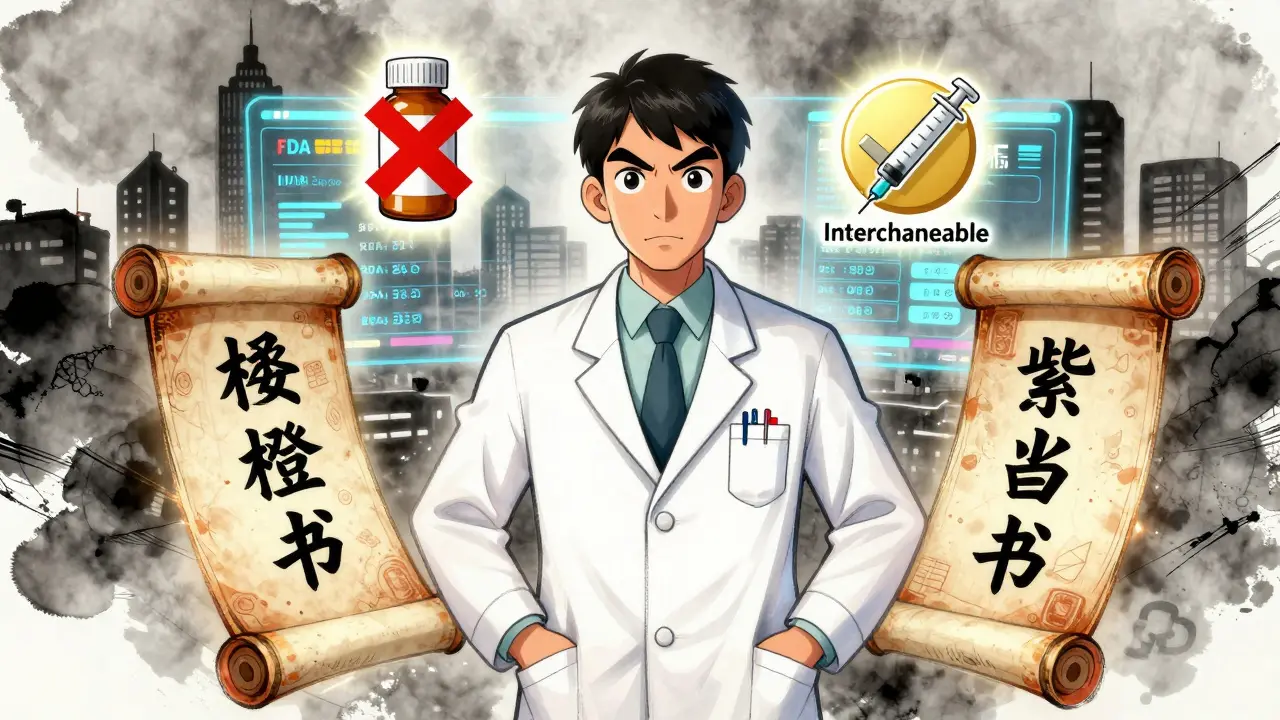
When you’re checking if a generic drug is safe to substitute for a brand-name version, or if a new biosimilar biologic carries the same risks as its original, you’re not guessing-you’re using the FDA Orange Book and FDA Purple Book. These aren’t just dusty reference manuals. They’re live, searchable databases that tell you exactly which drugs have been pulled from the market for safety reasons, which generics are truly equivalent, and which biosimilars have passed the FDA’s toughest safety tests. If you work in pharmacy, prescribing, or even just want to understand why your medication changed without warning, these tools are non-negotiable.
What the FDA Orange Book Actually Tells You
The FDA Orange Book, officially called Approved Drug Products with Therapeutic Equivalence Evaluations, is the go-to source for small-molecule drugs-think pills, capsules, and injections made from chemical compounds. It’s been around since 1985, and as of September 2023, it lists over 20,000 approved products. But here’s what most people miss: it doesn’t just list approved drugs. It flags the ones that were pulled.
Section II of the Orange Book is where safety information lives. If a drug was withdrawn because of serious side effects, contamination, or failure to meet safety standards, it shows up here with a clear note: “Federal Register determination that product was discontinued or withdrawn for safety or efficacy reasons.” There are 127 such products listed as of late 2023. That’s not a small number. It means if you’re filling a prescription for a generic version of a drug that’s no longer on the market for safety reasons, you need to know-because the generic might be the same product, just under a different name.
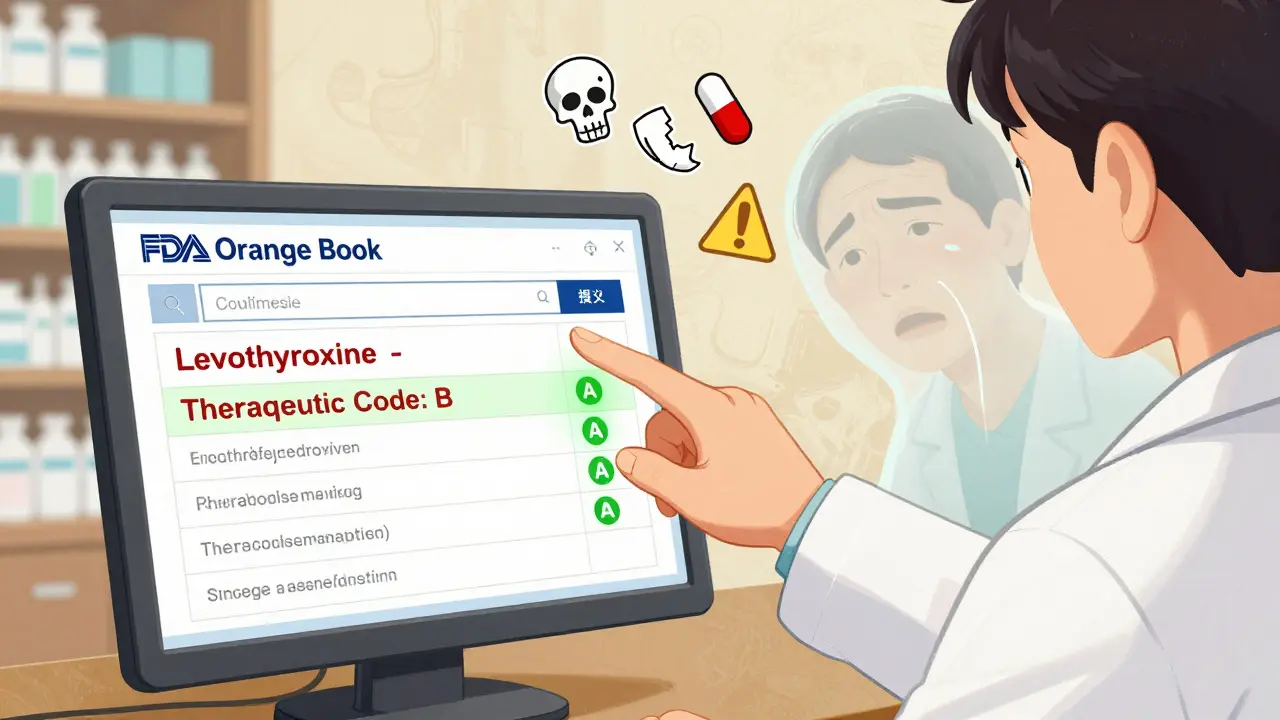
Therapeutic equivalence codes are another key part. Look for the letter after the drug name. An “A” code means the generic is therapeutically equivalent to the brand-same active ingredient, same dose, same safety profile. But if you see a “B,” that’s a red flag. It means the FDA doesn’t consider it interchangeable. This often happens with narrow therapeutic index drugs-medications like warfarin, levothyroxine, or phenytoin-where even tiny differences in absorption can cause harm. The Orange Book tells you exactly which generics are safe to swap and which aren’t.
How the FDA Purple Book Protects Patients on Biologics
If you’re dealing with drugs like Humira, Enbrel, or insulin analogs, you’re working with biologics-complex proteins made from living cells. These aren’t simple chemicals. They’re harder to copy, which is why the FDA created the Purple Book in 2014. It’s the only official source for biosimilar and interchangeable biologic products in the U.S.
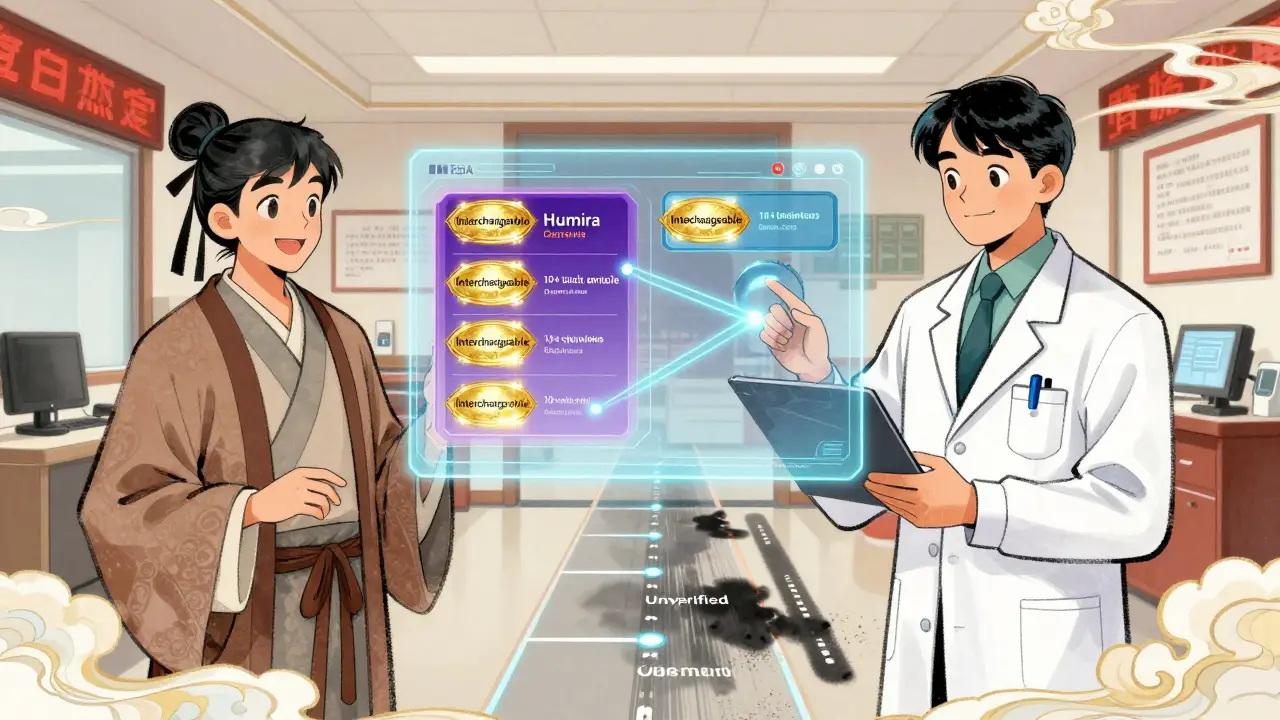
Unlike the Orange Book, the Purple Book doesn’t list withdrawn products. Instead, it tells you whether a biosimilar has proven it’s as safe as the original. To get approved, a biosimilar must show “no clinically meaningful differences” in safety, purity, or potency compared to the reference product. That’s not just marketing speak. It’s a strict FDA requirement backed by clinical data. The Purple Book lists each biosimilar under its reference product, so you can see all the alternatives at a glance. For example, if you’re checking biosimilars for adalimumab (Humira), you’ll see all 10+ versions listed under it, each marked with whether they’re “Biosimilar” or “Interchangeable.”
Interchangeable is the gold standard. It means a pharmacist can switch you from the brand to the biosimilar without needing a doctor’s approval-and the FDA is confident the safety profile won’t change. As of 2023, only about 40 of the 400+ biologics listed in the Purple Book have achieved this status. That’s because proving interchangeability requires additional studies on switching back and forth between products. It’s not just about being similar-it’s about being predictable in real-world use.
Key Differences Between Orange and Purple Books for Safety
Here’s the simple breakdown:
- Orange Book tells you: Which drugs were pulled for safety reasons and which generics are safe to swap.
- Purple Book tells you: Which biosimilars have passed the safety bar and which ones can be swapped automatically.
The Orange Book is reactive-it lists drugs that failed safety tests. The Purple Book is proactive-it verifies that new products meet safety standards before they even hit shelves. Both are essential, but they serve different purposes.
For example: If your patient is on a generic version of a drug that’s been withdrawn for safety issues, the Orange Book will catch it. If you’re considering switching a patient from Enbrel to a biosimilar, the Purple Book tells you if that switch is safe and legally allowed without a new prescription.
Neither book tells you about individual adverse events. For that, you need the FDA’s FAERS database (Adverse Event Reporting System). But the Orange and Purple Books tell you which products are flagged for deeper scrutiny. They’re your first line of defense.
How to Search the Orange Book for Safety Risks
Go to the FDA’s Orange Book website. Don’t use Google-use the official source. Once there:
- Click on “Search the Orange Book.”
- Under “Drug Product Selection,” choose “Discontinued Drug Products.”
- Under “Reason for Discontinuation,” select “Safety.”
- Hit search.
You’ll get a list of products pulled for safety reasons. Each entry includes the brand name, generic name, manufacturer, and the exact date it was withdrawn. Cross-check this list before approving any generic substitution-especially for high-risk drugs like blood thinners or seizure medications.
Pro tip: Use the “Therapeutic Equivalence Code” column. If you see a “B” code next to a drug you’re considering, don’t substitute it unless you’ve confirmed with the prescriber. The FDA doesn’t consider these safe for automatic substitution.
How to Use the Purple Book for Biosimilar Safety
The Purple Book is a bit more complex, but it’s worth the effort. Here’s how to use it:
- Go to the FDA’s Purple Book page.
- Use the search bar to find the reference product (e.g., “adalimumab”).
- Look at the results. Each biosimilar will be listed below it.
- Check the “Biosimilarity or Interchangeability” column. If it says “Yes,” the product has met FDA safety standards.
- If it says “Interchangeable,” that’s the highest level of safety assurance.
Don’t skip the “Reference Product Exclusivity” column. If the exclusivity period has expired, it means the original manufacturer’s data protection has ended-and more biosimilars are likely to enter the market. That’s good for cost savings, but you should still verify each one’s safety status in the Purple Book before switching patients.
What These Books Don’t Tell You (And What to Do Instead)
Neither book tells you about recent adverse events, recalls, or emerging safety signals. That’s where the FDA’s MedWatch program comes in. If a drug suddenly shows a spike in liver damage reports, the FDA issues a safety communication. These are separate from the Orange and Purple Books.
Also, the Purple Book updates every 60 days. The Orange Book updates every 30. That means a biosimilar might be listed as interchangeable, but if a new safety issue emerges, it could take two months to show up. Always check for recent FDA safety alerts alongside your database search.
And don’t rely on pharmacy software alone. Some systems auto-populate therapeutic equivalence codes, but they’re not always updated in real time. A 2022 survey by the National Community Pharmacists Association found that 37% of pharmacists had trouble interpreting these codes for complex cases. Manual verification saves lives.
Real-World Safety Scenarios
Here’s what this looks like in practice:
- A hospital pharmacist notices a patient’s generic levothyroxine was switched to a new brand. She checks the Orange Book and finds the new generic has a “B” code. She calls the prescriber-turns out the new version had inconsistent absorption in trials. The original brand is reinstated.
- A rheumatologist wants to switch a patient from Humira to a biosimilar. He checks the Purple Book and finds one version is labeled “Interchangeable.” He prescribes it. The pharmacist fills it without calling the doctor-because the law allows it.
- A community pharmacy receives a prescription for a generic version of a drug that was withdrawn in 2021 for contamination. The system didn’t flag it. The pharmacist checks the Orange Book manually and stops the fill. The patient is never exposed to a potentially toxic batch.
These aren’t hypotheticals. They happen every day. And they’re preventable-with the right tools.
Who Uses These Books, and Why It Matters
Ninety-eight percent of U.S. pharmacies use the Orange Book daily. Nearly 80% of biotech companies reference the Purple Book in regulatory filings. These aren’t optional tools-they’re part of the legal and safety infrastructure of U.S. drug distribution.
Smaller clinics and rural pharmacies sometimes skip checking them. A 2022 Deloitte report found only 62% of small practices regularly consult these resources. That’s a gap. And it puts patients at risk.
The FDA doesn’t just publish these books. They train people on how to use them. Free 90-minute webinars are offered quarterly. If you’re in healthcare and you’re not attending them, you’re missing critical safety training.
What’s Next for Drug Safety Tracking
The FDA is working on integrating the Orange and Purple Books into a single search platform. Starting in late 2022, you can now cross-search biologics and small-molecule drugs in one place. That’s a big step forward.
They’re also testing “Safety Signal” flags in the Orange Book. These will appear on products showing early signs of trouble-before they’re officially withdrawn. Think of it as an early warning system.
And by 2025, the FDA plans to use machine learning to pull safety data from adverse event reports and auto-flag products in both books. That means faster updates, fewer delays, and more accurate safety info.
For now, though, the Orange and Purple Books are your most reliable, free, and legally recognized sources for drug safety decisions. They’re not perfect. But they’re the best we have-and they’re updated daily by experts who know exactly what to look for.
Can I trust the therapeutic equivalence codes in the Orange Book?
Yes, the therapeutic equivalence codes in the Orange Book are assigned by the FDA’s Center for Drug Evaluation and Research based on rigorous bioequivalence studies. An “A” code means the generic is considered therapeutically equivalent to the brand-same active ingredient, strength, dosage form, and safety profile. A “B” code means the FDA does not consider it interchangeable, often due to inconsistent absorption or narrow therapeutic index. These codes are legally recognized and used by pharmacists nationwide to determine substitution.
Is the Purple Book only for new biosimilars?
No. The Purple Book includes all licensed biological products, including the original reference products and all approved biosimilars and interchangeable products. It’s not just for new entries. You can use it to track the full family of biologics for any given reference product-like seeing every version of Humira or Enbrel that’s been approved, whether it’s the original or a copy. This helps you compare safety profiles across all available options.
Do I need to check both books if I’m prescribing a generic drug?
If the drug is a traditional small-molecule generic (like metformin or lisinopril), you only need the Orange Book. If it’s a biologic-like insulin, monoclonal antibodies, or growth hormones-you need the Purple Book. Some drugs, like insulin glargine, now have both generic versions (in the Orange Book) and biosimilars (in the Purple Book). Always check the right book based on the drug type. Confusing them can lead to unsafe substitutions.
What if a drug is listed in the Orange Book as discontinued for safety, but I still see it being sold?
If a drug is listed in the Orange Book as withdrawn for safety reasons, it should no longer be legally distributed in the U.S. If you see it being sold, report it immediately to the FDA’s MedWatch program. Sometimes, expired stock or foreign imports may still circulate. Pharmacists and prescribers are required to stop dispensing these products. Never assume a drug is safe just because it’s still on a pharmacy shelf-always verify with the official FDA database.
Are the Orange and Purple Books free to use?
Yes, both the FDA Orange Book and Purple Book are free public resources. You can access them directly through the FDA website without registration, subscription, or payment. There are no paywalls. Many third-party apps and pharmacy systems pull data from these official sources, but the original databases are always free and updated daily by the FDA.
Next Steps for Safe Prescribing and Dispensing
Start today: Bookmark the FDA Orange Book and Purple Book websites. Make checking them part of your routine-before approving any generic substitution or switching a patient to a biosimilar. If you’re in a clinic or hospital, share this with your team. Train your pharmacy staff. Ask your IT department to integrate these databases into your electronic prescribing system.
Don’t wait for a mistake to happen. The tools are there. The data is clear. The safety is in your hands.


I swear this post is the reason my pharmacist called me at 8pm last night screaming about my levothyroxine being a B-code. I thought she was joking. She wasn't. I now have a new anxiety disorder called 'Orange Book PTSD'.