Medication Arrhythmia Risk Calculator
Personalized Risk Assessment
This tool helps evaluate your risk of medication-induced heart arrhythmias based on key factors from medical research. Click "Calculate Risk" after entering your information.
Select medications that may affect heart rhythm (up to 5)
What Are Drug-Induced Arrhythmias?
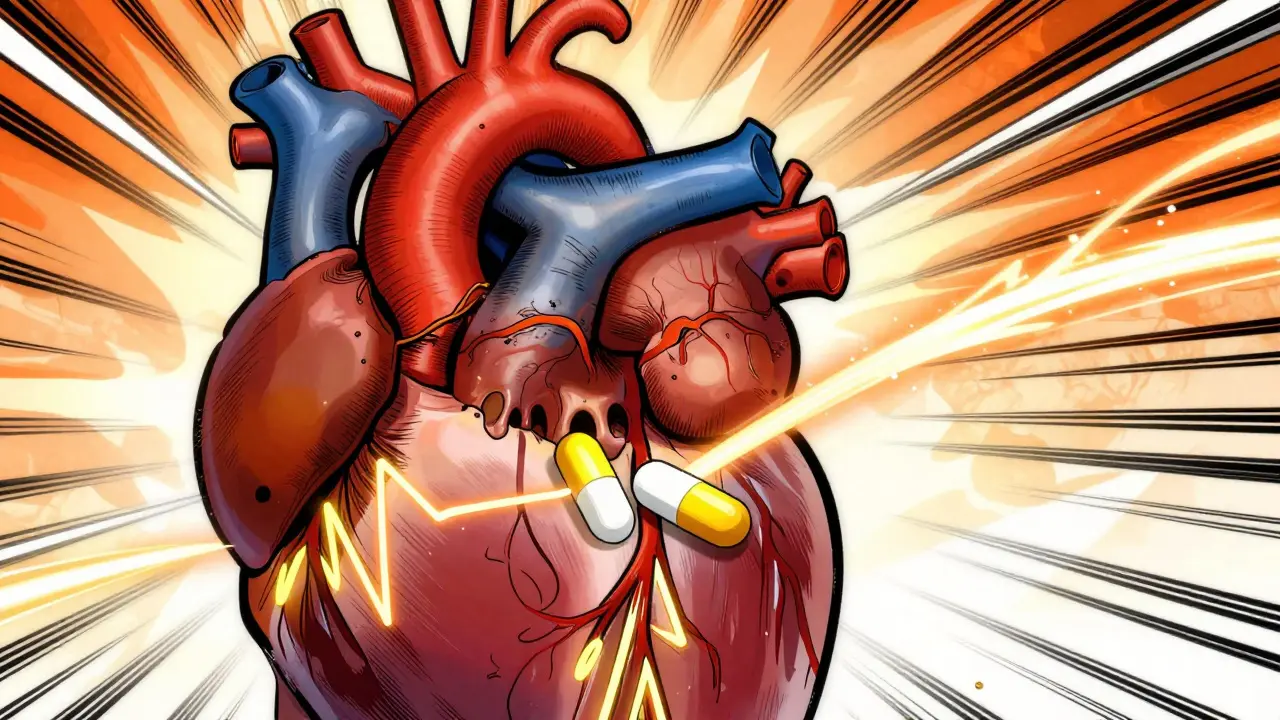
drug-induced arrhythmias happen when medications disrupt your heart's normal rhythm. Over 100,000 Americans are hospitalized each year because of this issue. It's not rare-it affects people taking common prescriptions. Your heart beats from electrical signals, and drugs can interfere with these signals in multiple ways. The most common problem is QT prolongation, a delay in the heart's electrical recovery phase. This makes dangerous rhythms like torsades de pointes more likely. Other drugs affect ion channels or cause electrolyte imbalances. For example, some antibiotics and antidepressants block potassium channels, while diuretics lower potassium levels. Over 400 widely used medications can trigger arrhythmias, including antihistamines, cholesterol drugs, and even anti-arrhythmic medications themselves.
Common Medications That Cause Heart Rhythm Problems
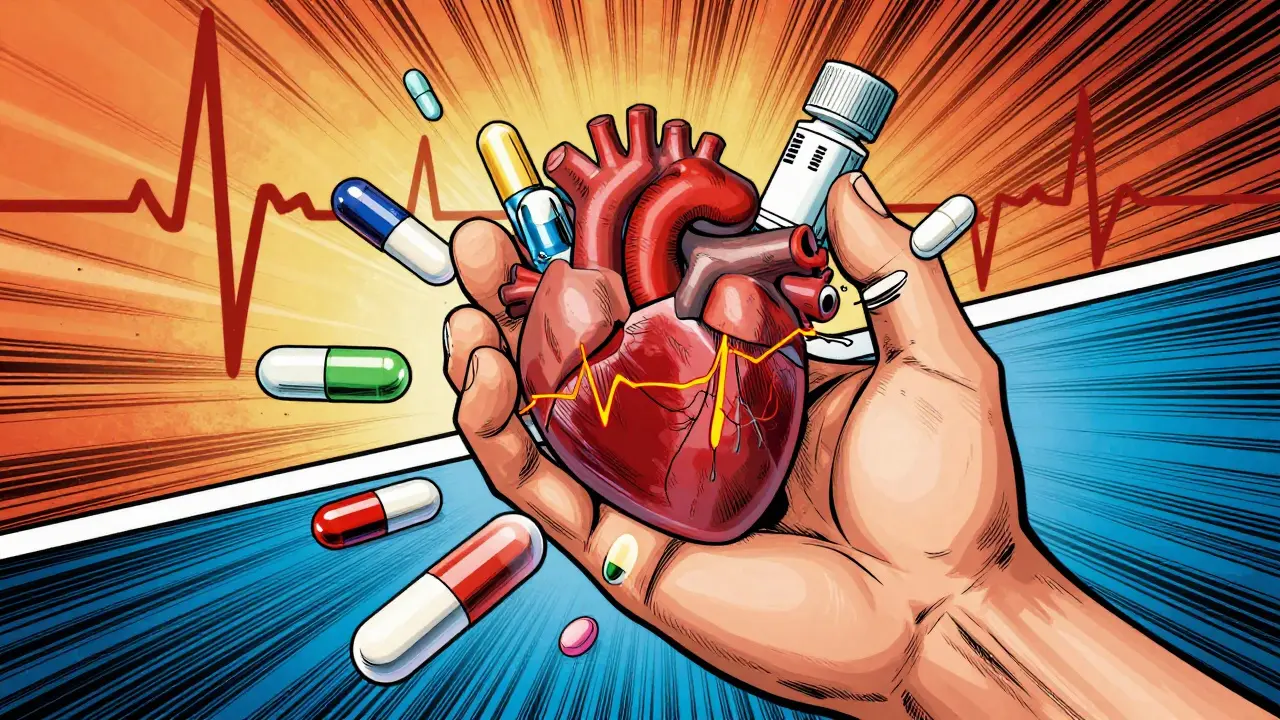
beta-blockers like metoprolol are often prescribed for heart conditions but can cause bradycardia. Symptoms include fatigue (15-20% of patients), weakness (10-15%), dizziness (8-12%), and fainting (2-4%). amiodarone, used to treat arrhythmias, causes atrial fibrillation in 2-5% of patients through thyroid-related mechanisms. digoxin, for heart failure, leads to toxicity in about 1% of users, especially when kidney function is poor or serum levels exceed 2 ng/mL. Antibiotics like azithromycin and levofloxacin prolong QT interval in 3-5% of users, with highest risk in the first week. Antidepressants such as citalopram and escitalopram also carry this risk. The FDA has added black box warnings for QT prolongation to 25 medications since 2010, with 8 new warnings in 2022 alone.
Key Warning Signs You Shouldn't Ignore
Early detection is critical. The most common symptoms include:
- palpitations (70-80% of patients)
- Dizziness (40-50%)
- Fatigue (30-40%)
- Chest discomfort (15-20%)
- Fainting (5-10%)
These signs can be subtle-like feeling unusually tired during routine tasks or brief dizziness when standing up. Don't dismiss them. If you notice these while on medication, contact your doctor immediately. In some cases, symptoms like chest pain or fainting require emergency care.
Who's Most at Risk?
Not everyone faces the same level of danger. Key risk factors include:
- Older age (65+ years), present in 60-70% of severe cases
- Electrolyte imbalances-low potassium (affecting 20% of hospitalized patients) or magnesium (10-15%)
- Excessive alcohol consumption (more than 3 drinks daily, increasing risk by 200-300%)
- Genetic variants like S1103Y (15% of African ancestry) and R1193Q (12% of East Asian ancestry)
- Taking multiple QT-prolonging drugs together (risk jumps 300-500% compared to single meds)
People with kidney disease or those on multiple medications are especially vulnerable. Always tell your doctor about all the drugs you take, including supplements and over-the-counter medications.

How Doctors Manage Drug-Induced Arrhythmias
Most cases improve with medication adjustments. Doctors follow a clear process:
- Check baseline ECG monitoring before starting high-risk drugs
- Repeat ECG within 72 hours of starting therapy
- Monitor electrolytes-target potassium above 4.0 mEq/L and magnesium above 2.0 mg/dL
- Adjust or switch medications when needed
In 75-85% of cases, changing the dose or switching drugs resolves the issue. For beta-blocker-induced bradycardia, dose reduction works in 60-70% of cases. If symptoms persist, a pacemaker may be needed (10-15% of cases), but surgery is rare (less than 2%). Always follow your doctor's monitoring plan closely.
What's New in Prevention and Treatment
Research is rapidly advancing. Vanderbilt University's study shows genetic testing for variants like S1103Y and R1193Q can predict individual risk before prescribing high-risk drugs. The American College of Cardiology is developing a clinical decision tool for 2024 that calculates personalized arrhythmia risk using age, genetics, electrolyte levels, and current medications. The FDA continues to add black box warnings for QT-prolonging medications. Experts predict these advances could reduce severe events by 30-40% in five years. Meanwhile, lifestyle changes matter too-avoid smoking, limit caffeine and alcohol, maintain healthy weight, and control blood pressure and diabetes.
Can over-the-counter medications cause heart arrhythmias?
Yes, some OTC drugs like antihistamines (e.g., diphenhydramine) and decongestants (e.g., pseudoephedrine) can trigger arrhythmias, especially in people with risk factors. Always check with your doctor before taking new medications, even if they're available without a prescription.
How do I know if my medication is causing heart rhythm problems?
Watch for symptoms like palpitations, dizziness, or unusual fatigue. If you experience these while on medication, contact your healthcare provider immediately. They may order an ECG or blood tests to check electrolytes and drug levels. Never stop taking prescribed medication without consulting your doctor.
Are there genetic tests to check my risk for drug-induced arrhythmias?
Yes, genetic testing for variants like S1103Y and R1193Q is available. These tests help identify people at higher risk before starting QT-prolonging medications. Vanderbilt University's research shows this can prevent serious complications. Talk to your doctor about whether genetic testing is right for you.
What should I do if I experience symptoms like palpitations?
Contact your healthcare provider immediately. If symptoms are severe (chest pain, fainting), call emergency services. Do not ignore these signs. Your doctor may adjust your medication, check your ECG, or monitor electrolytes. Early action is key to preventing serious outcomes.
Can lifestyle changes reduce my risk of medication-induced arrhythmias?
Absolutely. The Mayo Clinic recommends avoiding smoking, maintaining a low-salt diet, exercising 30 minutes daily, managing weight, reducing stress, controlling blood pressure and diabetes, getting 7-9 hours of sleep, and limiting caffeine and alcohol. These steps significantly lower your risk when taking medications known to affect heart rhythm.


Big Pharma is pushing these drugs to make money.
They don't care about the heart issues.
They're just trying to get people hooked on meds that cause more problems.
The FDA is in cahoots with them.
I've read that they suppress studies showing the real risks.
They keep approving new drugs that cause arrhythmias.
It's all about profits.
They don't care about your health.
Wake up, people!
The government is in on it too.
They're letting these dangerous drugs slip through because they're getting kickbacks from the drug companies.
This is not a coincidence.
It's all planned.
The system is rigged against us.