
When you pick up your prescription at the pharmacy, you might not think about whether your drug was swapped for another. But under Medicare Part D, that swap happens more often than you realize. It’s not a mistake. It’s policy. And if you don’t understand how it works, you could end up paying more - or worse, taking a drug that doesn’t work for you.
What Medicare Part D Substitution Really Means
Medicare Part D substitution isn’t about pharmacists randomly changing your meds. It’s about formularies - lists of drugs your plan covers, organized into tiers with different costs. If your doctor prescribes a drug that’s not on your plan’s formulary, or it’s in a higher-cost tier, the pharmacist may substitute it with another drug that’s covered - and cheaper - if it’s considered therapeutically equivalent. This is legal and common. But here’s the catch: not all drugs that treat the same condition are the same. A generic version of your blood pressure pill might work fine. But switching from one antidepressant to another? That’s not always safe. The rules allow substitution, but they don’t guarantee it’s the right move for your health.How Formularies Drive Substitution
Every Medicare Part D plan has its own formulary. These lists are created by Pharmacy Benefit Managers (PBMs) hired by insurance companies. In 2025, the average plan uses a five-tier system:- Tier 1: Preferred generics - lowest cost, often $5-$10 copay
- Tier 2: Non-preferred generics - slightly higher cost
- Tier 3: Preferred brand-name drugs
- Tier 4: Non-preferred brands - higher copay or coinsurance
- Tier 5: Specialty drugs - often for complex conditions like cancer or MS
The $2,000 Out-of-Pocket Cap Changes Everything
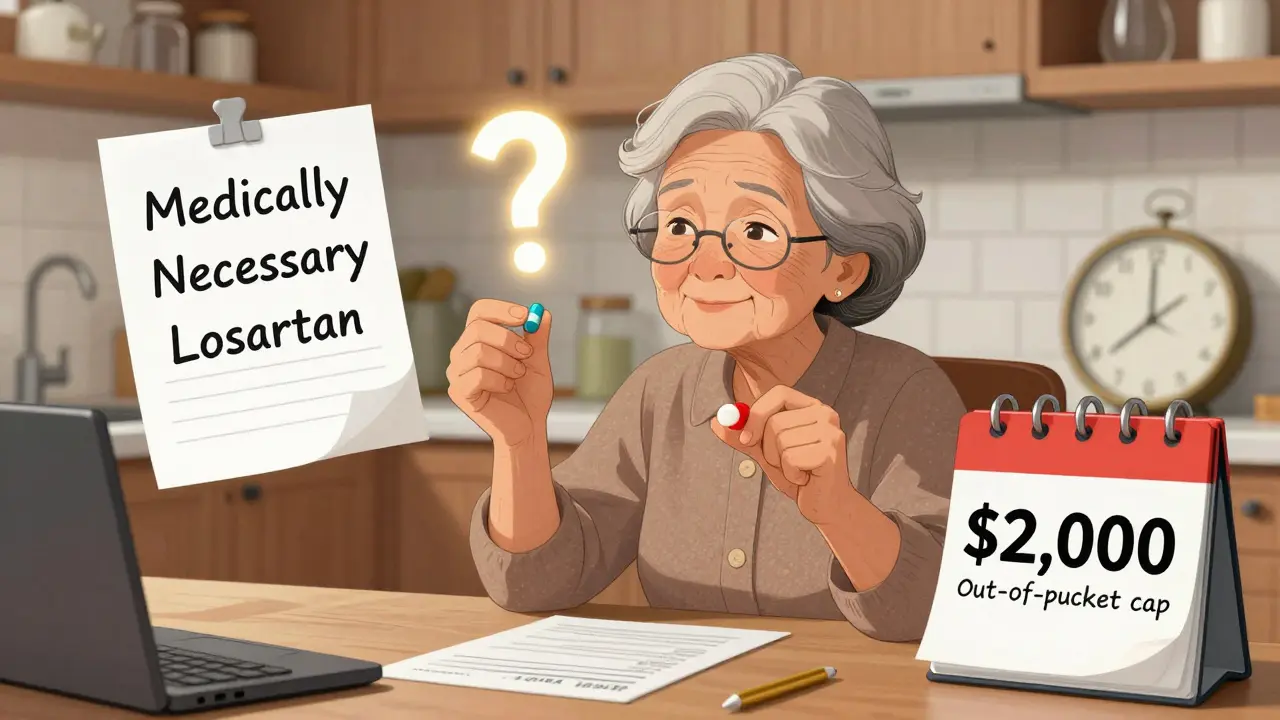
Starting January 1, 2025, the Medicare Part D "donut hole" disappeared. No more confusing coverage gaps. Instead, there’s now a hard cap: once you’ve spent $2,000 out of pocket on covered drugs in a year, you enter catastrophic coverage. After that, you pay nothing for your prescriptions for the rest of the year. This changes substitution dynamics. Before, people would avoid higher-cost drugs to stay out of the donut hole. Now, the pressure is reversed. If you’re close to that $2,000 limit, your plan may push you toward cheaper substitutes - even if you’ve been stable on a brand-name drug. Why? Because once you hit the cap, the plan pays less for expensive drugs. They want you to spend less before the cap so they pay less overall.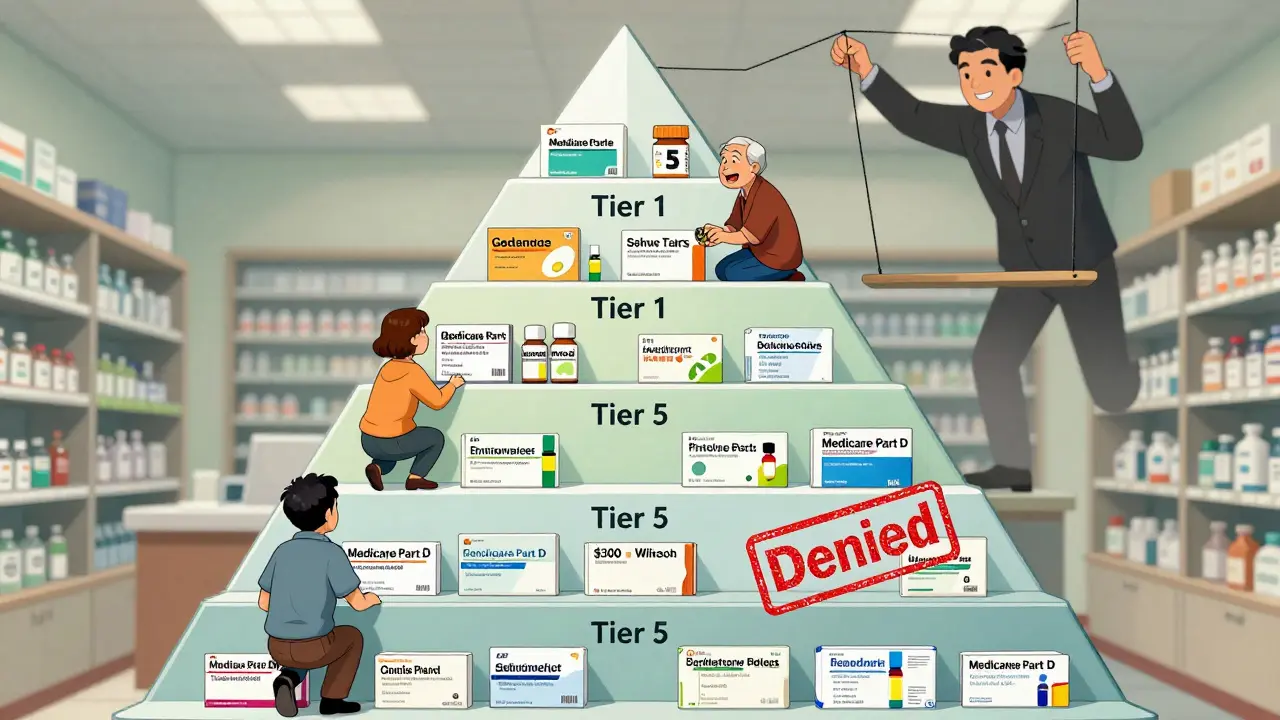
Therapeutic Substitution: When Your Drug Gets Replaced
A common substitution tactic is called "therapeutic interchange." This means your plan replaces your prescribed drug with another drug in the same class - say, switching from lisinopril to losartan for high blood pressure. Both are ACE inhibitors or ARBs. They work similarly. But they’re not identical. Some people respond better to one than the other. Side effects differ. Some drugs interact with other medications you take. Your doctor didn’t pick your drug by accident. But your plan might not care - if the alternative is cheaper, they’ll allow substitution without your doctor’s approval. Some plans require "step therapy" before approving a brand-name drug. That means you have to try and fail on two cheaper alternatives first. If those don’t work, you can appeal - but that takes time. And if you’re managing diabetes, heart disease, or depression, waiting weeks for a new drug can be dangerous.What You Can Do: Check, Ask, Switch
You have rights. And tools.- Check your plan’s formulary every year. It changes. Drugs get moved up or down tiers. Some are removed entirely. You can find it on your plan’s website or call them. Don’t assume your current drugs are still covered.
- Ask your pharmacist: "Is this a substitution?" If they switch your drug, they must tell you. They should also offer to contact your doctor if you’re not okay with it.
- Ask your doctor: "Is this drug essential for me?" If yes, they can file a form for an exception. Most plans allow exceptions if a drug is medically necessary.
- Switch plans during Open Enrollment. October 15 to December 7 is your chance to pick a new Part D plan. If your current plan keeps swapping your meds, find one that covers them without restrictions.
Special Cases: Insulin, Vaccines, and Other Exceptions
Not all drugs follow the same rules. Insulin is capped at $35 per 30-day supply in 2025 - no matter what plan you’re on. That’s federal law. So substitution for insulin? Less common. If you’re on insulin, your plan must cover it at that price. No tier-shifting. Vaccines like shingles or flu shots are covered 100% under Part D. No copay. No substitution needed. But for other high-cost drugs - like those for multiple sclerosis, rheumatoid arthritis, or rare diseases - substitution can be risky. These drugs often have no generics. Your plan might try to move you to a similar biologic, but that’s not always possible. Always ask: "Is this a true substitute, or just a cheaper option?"What Happens If You Don’t Pay Attention?
People get caught off guard. They refill a prescription, get a different pill, and don’t notice until they feel worse. Or they’re hit with a surprise $150 bill because their drug moved from Tier 1 to Tier 4. In 2024, over 40% of Medicare Part D enrollees reported at least one formulary change that affected their medication. Many didn’t know until they showed up at the pharmacy. The worst case? You stop taking your drug because you think it’s the same - but it’s not. A study from the National Council on Aging found that 17% of seniors who experienced an unplanned drug substitution had to visit the ER within 30 days due to worsening symptoms.Bottom Line: You’re Not Powerless
Medicare Part D substitution is built into the system. It’s designed to save money - for the plan, not necessarily for you. But you have more control than you think. Know your formulary. Ask questions. Don’t let a pharmacist or plan make a decision about your health without your input. If your drug is essential, get your doctor to help you fight for it. And if your plan keeps changing your meds, switch. You’re not stuck with a bad plan. The $2,000 out-of-pocket cap is a win. But it doesn’t mean you should stop paying attention. In fact, now’s the time to be even more careful. Because when the system thinks you’ve spent enough, it might try to push you toward cheaper drugs - even if they’re not the right ones for you.Can a pharmacist substitute my Medicare Part D drug without telling me?
No. Pharmacists must inform you if they’re substituting a drug. If the substitution is allowed under your plan’s rules and the drug is considered therapeutically equivalent, they can make the change - but only after telling you and giving you the chance to refuse. If you say no, they must fill the original prescription, unless your doctor has already approved the switch.
Do all Medicare Part D plans have the same drug coverage?
No. Each plan has its own formulary, and there are over 48 Part D plans available in 2025. One plan might cover your diabetes drug at a low cost, while another doesn’t cover it at all. Even two plans from the same company - like Wellcare or Humana - can have very different formularies. Always check the formulary before enrolling.
What if my drug gets moved to a higher tier?
If your drug moves from Tier 1 to Tier 4, your cost could jump from $10 to $80 or more. You can request an exception from your plan. Your doctor must submit paperwork saying the drug is medically necessary. If denied, you can appeal. Many people win appeals - especially if they’ve been on the drug for years without issues.
Is generic substitution always safe?
For most medications, yes. Generics must meet FDA standards for safety and effectiveness. But for drugs with narrow therapeutic windows - like warfarin, levothyroxine, or some seizure medications - even small differences in how they’re absorbed can matter. If you’re on one of these, ask your doctor if a generic is appropriate. Some plans allow you to request the brand-name version with an exception.
Can I switch Part D plans anytime if I’m unhappy with substitutions?
Generally, no. You can only switch during Open Enrollment (October 15-December 7) or if you qualify for a Special Enrollment Period - like moving to a new state, losing other coverage, or entering a nursing home. But if your plan changes its formulary mid-year and removes your drug, you can request a Special Enrollment Period to switch to a plan that covers it.


While the structural nuances of Medicare Part D substitution are indeed complex, one cannot overlook the systemic incentives embedded within Pharmacy Benefit Managers’ formulary design. The prioritization of cost-efficiency over therapeutic individualization reflects a broader commodification of healthcare, wherein patient outcomes are subordinated to actuarial calculus. This is not merely a policy flaw-it is an ethical failure rooted in profit-driven governance.