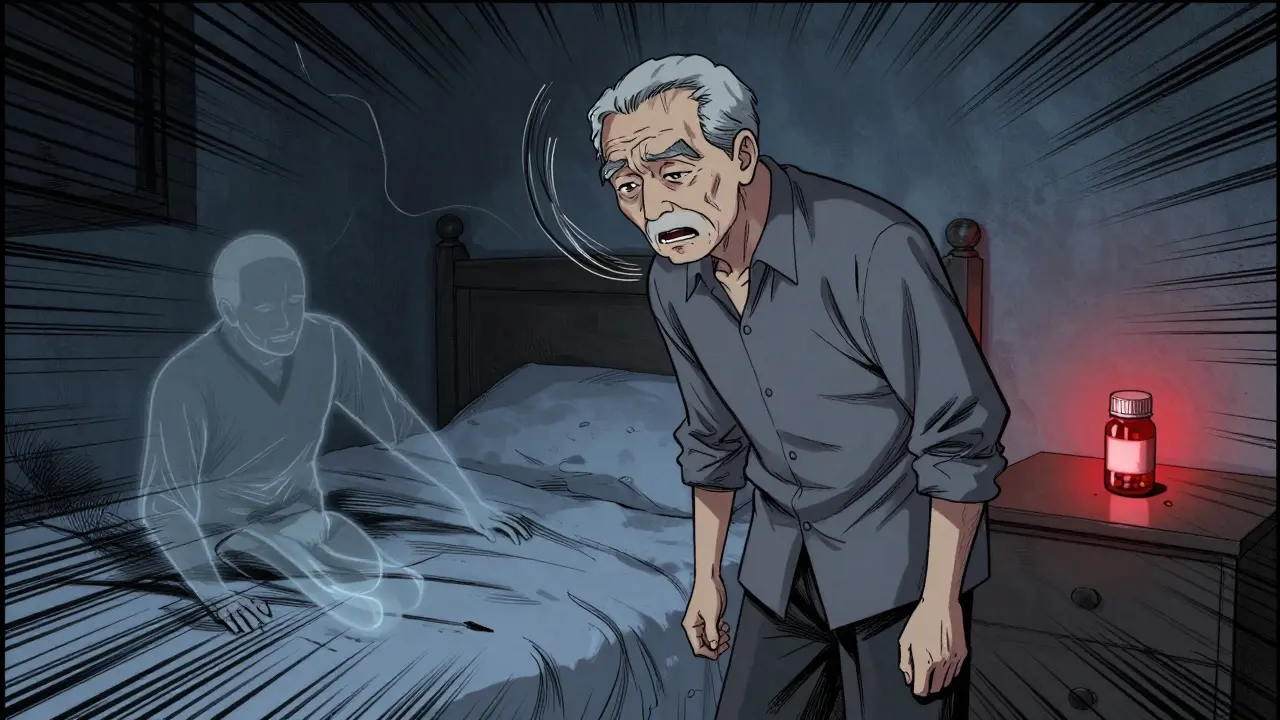
Did you know that nearly half of adults over 65 struggle with chronic insomnia? For many seniors, the immediate fix seems obvious: reach for a pill. But here is the hard truth-sleep medications carry significant risks for older adults, from dangerous falls to increased dementia risk. The landscape of senior sleep health has shifted dramatically. We are moving away from quick-fix sedatives toward safer, evidence-based strategies that protect both brain health and physical safety.
If you or a loved one is navigating sleep issues after 65, understanding which medications are risky and what actually works is critical. This guide breaks down the dangers of common sedatives, explains why doctors are prescribing them less often, and offers practical, safer alternatives to help you reclaim restful nights without compromising your health.
The Hidden Dangers of Common Sleep Aids
When it comes to sleep medications for seniors pharmacological treatments designed to induce sleep, including benzodiazepines, Z-drugs, and antihistamines, which carry heightened risks of falls, cognitive impairment, and dependency in adults aged 65+, not all pills are created equal. In fact, many commonly used drugs are now considered potentially inappropriate for older adults. The American Geriatrics Society established the Beers Criteria a clinical guideline list of potentially inappropriate medications for older adults, updated regularly to reflect current safety data in 1991, and its 2019 update explicitly warns against using benzodiazepines as a first choice for insomnia.
Why the warning? Older bodies process drugs differently. Reduced metabolism means medications stay in the system longer, leading to "hangover" effects like dizziness, confusion, and daytime drowsiness. A 2014 study published in the BMJ found that benzodiazepine use was associated with a 51% increased risk of developing Alzheimer's disease. The risk jumped to 84% for those who used long-acting benzodiazepines for more than six months. That is a statistic no family should ignore.
Falls are another major concern. Long-acting agents like flurazepam can increase fall risk by 50%. Even "safer" Z-drugs like zolpidem (Ambien) carry a 30% increased fall risk in adults over 65. If a senior falls while under the influence of a sedative, the consequences can be catastrophic, ranging from hip fractures to loss of independence.
Which Medications Are Safest for Seniors?
If medication is necessary, some options have better safety profiles than others. The key is choosing drugs with minimal anticholinergic effects and shorter half-lives to reduce next-day impairment. Here is how the most common options stack up:
| Medication Class | Common Examples | Safety Profile for Seniors | Key Risks |
|---|---|---|---|
| Benzodiazepines | Triazolam, Flurazepam | Avoid (High Risk) | Falls, memory loss, high addiction potential, prolonged effect |
| Z-Drugs | Zolpidem (Ambien), Eszopiclone | Use with Caution | Falls, complex sleep behaviors, next-day impairment |
| Low-Dose Doxepin | Silenor (3-6mg) | Safer Option | Minimal side effects, low fall risk, improves sleep efficiency |
| Melatonin Receptor Agonists | Ramelteon (Rozerem) | Safer Option | No GABA activity, minimal residual effects, non-addictive |
| Orexin Antagonists | Lemborexant (Dayvigo) | Promising Newer Option | Better cognitive performance scores vs. Z-drugs, but costly |
Low-dose doxepin (Silenor) at 3-6mg has shown favorable results. A 2010 study in the Journal of Clinical Sleep Medicine found it improved total sleep time by nearly 29 minutes with minimal side effects. Ramelteon works on melatonin receptors rather than GABA, meaning it doesn't cause the same level of sedation or dependency. However, cost remains a barrier; Silenor can cost around $400 per month without insurance, compared to generic zolpidem at $15.
CBT-I: The Gold Standard for Senior Insomnia
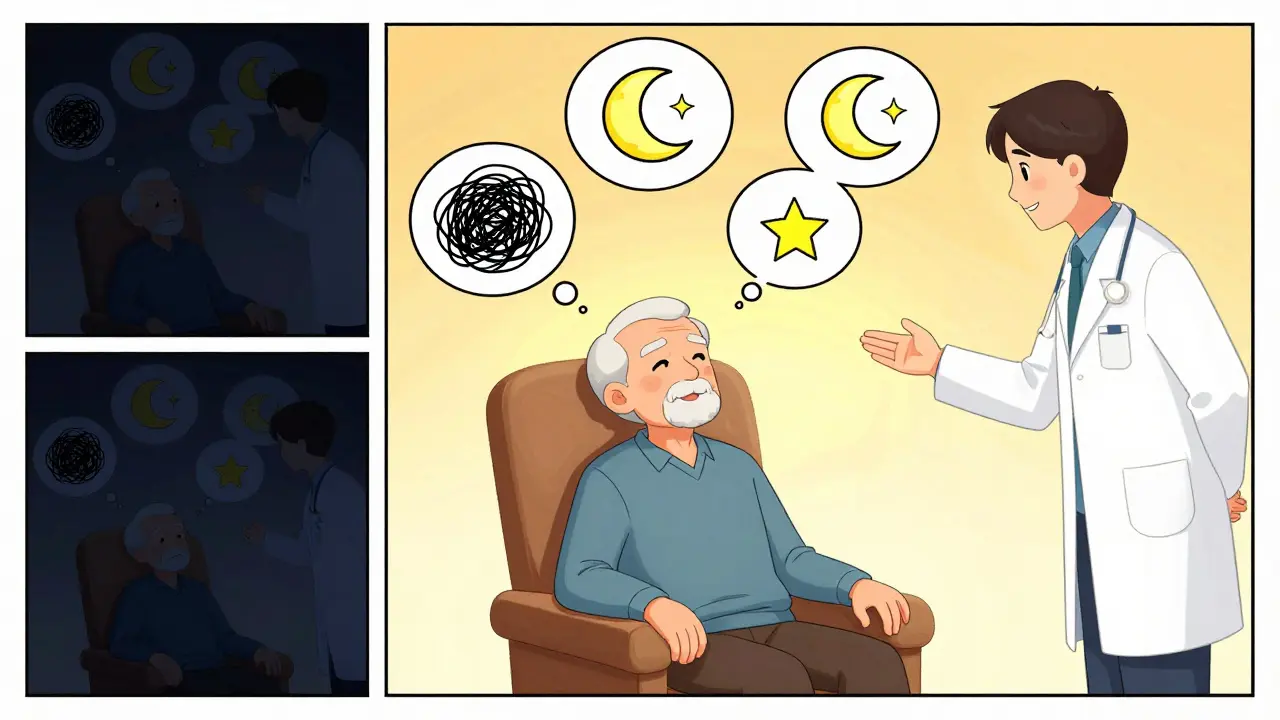
So, if pills are risky, what is the alternative? The answer is Cognitive Behavioral Therapy for Insomnia, or CBT-I a structured psychological treatment program focusing on changing thoughts and behaviors related to sleep, recognized as the first-line treatment for chronic insomnia. The American Academy of Sleep Medicine prioritizes CBT-I as the first-line treatment for chronic insomnia in adults, reserving medication only for adjunctive use when necessary.
CBT-I isn't just "talking about sleep." It involves specific techniques like sleep restriction, stimulus control, and cognitive restructuring. For example, sleep restriction helps consolidate sleep by limiting time in bed to actual sleep time, which builds sleep drive. Stimulus control teaches the brain to associate the bed only with sleep, not with watching TV or worrying.
You might wonder if this works for older adults. Yes, it does. A 2019 study in JAMA Internal Medicine showed that telehealth-delivered CBT-I achieved 57% remission rates for insomnia in adults over 60. Digital platforms like Sleepio have also proven effective, achieving 63% response rates in seniors according to a 2023 JAMA Neurology study. The best part? There are no drug interactions, no fall risks, and no hangovers.
Practical Steps to Safer Sleep
Implementing safer sleep strategies requires a shift in approach. Here is how you can start improving sleep quality without relying heavily on sedatives:
- Prioritize Sleep Hygiene: Keep the bedroom cool, dark, and quiet. Avoid screens for at least an hour before bed, as blue light suppresses melatonin production.
- Limit Naps: If you nap, keep it under 30 minutes and before 3 PM. Long naps can disrupt nighttime sleep drive.
- Manage Light Exposure: Get bright natural light early in the day to regulate your circadian rhythm. Use blackout curtains at night.
- Review Medications: Talk to your doctor about deprescribing any sedatives you are currently taking. The STOPP/START criteria recommend gradual tapering over 4-8 weeks to avoid rebound insomnia.
- Consider Melatonin: Low-dose melatonin (2-5mg) can be a safer supplement option for resetting sleep cycles, though it is not a strong sedative.
Remember, consistency is key. Behavioral changes take time to show results, usually 4-6 weeks. But unlike medications, these strategies build lasting resilience in your sleep patterns.
What to Discuss With Your Doctor
If you are currently taking sleep medication, schedule a review with your healthcare provider. Ask specific questions:
- "Is my current medication listed in the Beers Criteria as potentially inappropriate for my age?"
- "Can we try CBT-I before starting or continuing prescription sedatives?"
- "If I must take medication, can we use the lowest effective dose for the shortest duration?"
- "Are there safer alternatives like low-dose doxepin or ramelteon that fit my budget and health profile?"
Don't stop medication abruptly. Sudden discontinuation of benzodiazepines or Z-drugs can cause severe withdrawal symptoms, including anxiety, tremors, and even seizures. Always work with a professional to create a tapering plan.
The Future of Senior Sleep Health
The medical community is recognizing that pharmacological treatments should constitute no more than 20-30% of insomnia management strategies for seniors. By 2030, behavioral approaches like CBT-I are expected to become the dominant treatment modality. Initiatives like the NIH's Seniors Sleep Safety Initiative are funding research into non-pharmacological interventions, signaling a major shift toward precision treatment based on individual risk profiles rather than one-size-fits-all pills.
Your sleep health is deeply connected to your overall well-being. By choosing safer strategies, you protect your brain, your bones, and your independence. Start small, be consistent, and prioritize therapies that heal rather than just suppress.
Is it safe for seniors to take Ambien?
Ambien (zolpidem) carries significant risks for seniors, including a 30% increased risk of falls and next-day impairment. While it may be prescribed in low doses (5mg) for short-term use, it is not considered a first-line treatment due to safety concerns. Always consult a doctor and consider safer alternatives like CBT-I or low-dose doxepin.
What is the Beers Criteria and why does it matter for sleep meds?
The Beers Criteria is a list of medications that are potentially inappropriate for older adults due to high risk profiles. It matters because it helps doctors avoid prescribing drugs like benzodiazepines that can cause falls, confusion, and memory loss in seniors, guiding them toward safer alternatives.
How does CBT-I work for insomnia?
Cognitive Behavioral Therapy for Insomnia (CBT-I) uses techniques like sleep restriction, stimulus control, and cognitive restructuring to change behaviors and thoughts that interfere with sleep. It is highly effective, with remission rates over 50% in seniors, and has no drug-related side effects.
Can sleep medications cause dementia?
Yes, studies have linked long-term use of benzodiazepines to an increased risk of Alzheimer's disease. A 2014 BMJ study found a 51% increased risk with benzodiazepine use, rising to 84% for long-acting agents used for more than six months. This is a key reason why these drugs are discouraged for seniors.
What are the safest sleep supplements for seniors?
Low-dose melatonin (2-5mg) is generally considered safe for helping reset sleep cycles. Prescription options like low-dose doxepin (Silenor) and ramelteon (Rozerem) also have better safety profiles than traditional sedatives, with fewer risks of falls and cognitive impairment.