
Soy-Levothyroxine Timing Calculator
Critical For optimal absorption, you should wait at least 3 hours after soy consumption before taking levothyroxine.
Why it matters Soy contains isoflavones (genistein and daidzein) that bind to levothyroxine in your gut, reducing absorption by up to 40%.
Tips Take levothyroxine on an empty stomach 30-60 minutes before breakfast. Wait at least 3-4 hours before eating soy-containing foods.
If you’re taking levothyroxine for hypothyroidism, what you eat can make a real difference - and soy is one of the biggest culprits. You might not think a bowl of tofu stir-fry or a soy latte could mess with your medication, but science says otherwise. Studies show soy can reduce how much of your thyroid hormone your body actually absorbs by up to 40%. That means even if you’re taking your pill exactly as prescribed, your TSH levels could still climb, leaving you tired, cold, or gaining weight - not because your dose is wrong, but because your breakfast is fighting it.
How Soy Interferes With Levothyroxine
Soy doesn’t just “get in the way” - it chemically binds to levothyroxine in your gut. The main offenders are two plant compounds called genistein and daidzein, found in high amounts in soybeans, tofu, tempeh, soy milk, and even soy sauce. These isoflavones latch onto the thyroid hormone molecules, making them too big or too sticky for your intestines to absorb properly.
It’s not just about soy milk. A 2021 review of 63 studies found that when people took levothyroxine with soy, their blood levels of thyroid hormone dropped by an average of 25.3%. That’s more than coffee, more than fiber-rich foods, and almost as bad as calcium supplements. The more soy you eat, the worse it gets. One study showed 20 grams of soy protein reduced absorption by 15.8%, but 40 grams cut it by over 35%.
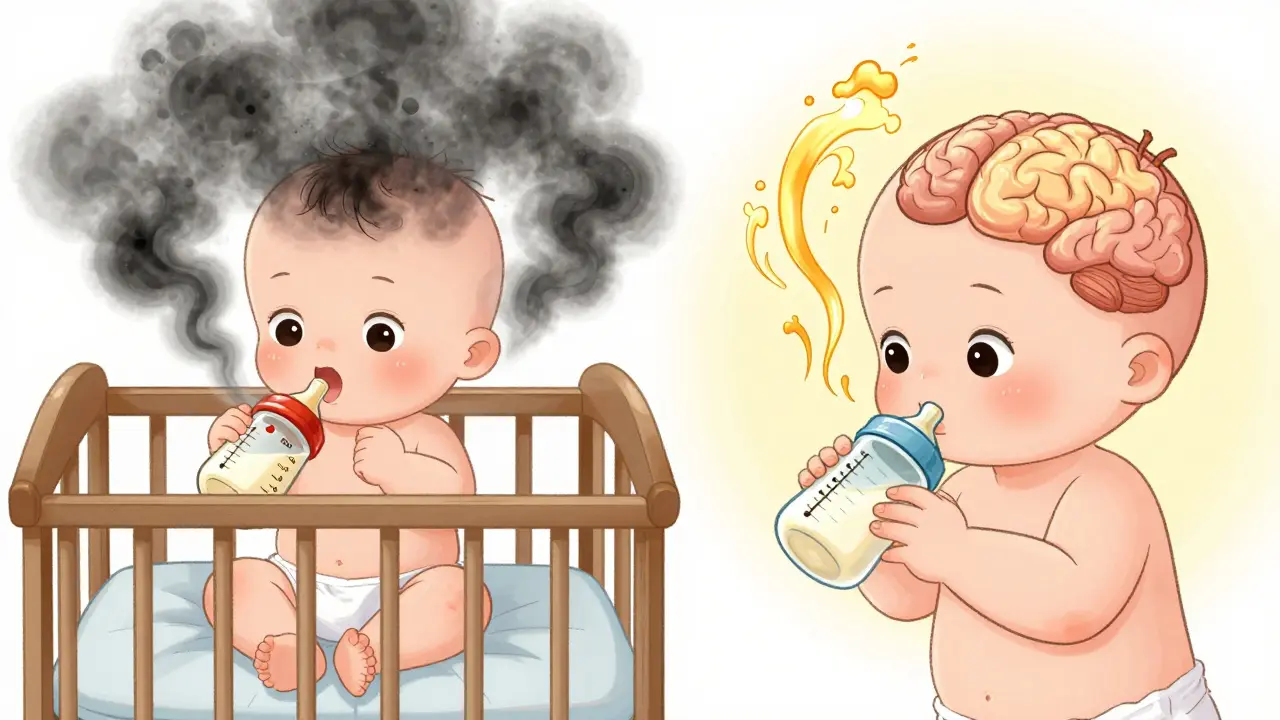
This isn’t a myth or an old wives’ tale. It’s been documented since 1991. In one heartbreaking case, a newborn with congenital hypothyroidism was given the right dose of levothyroxine - but also fed soy formula. Her TSH levels stayed above 200 µIU/mL for weeks, even though the dose was correct. Her brain was being starved of thyroid hormone, which is critical for development. Only when the soy formula was switched out did her numbers start to normalize.
Why This Matters More Than You Think
Most people think if they’re taking their pill every morning, they’re fine. But if you’re eating soy within a few hours of your dose, you might as well be taking half a pill. And the problem isn’t just adults. Infants with hypothyroidism are especially vulnerable. Up to 92% of U.S. infant formulas contain soy, and if a baby is on levothyroxine and soy formula at the same time, it can delay development, affect motor skills, and even lower IQ scores if not caught early.
For adults, the risks are subtler but just as real. You might feel fine - until your TSH jumps from 2.5 to 8.7, and your doctor says, “We’ll increase your dose.” But if you keep eating soy with your pill, you’ll need higher and higher doses over time - and still not feel right. That’s because your body isn’t absorbing what you’re taking. It’s like pouring water into a bucket with a hole in the bottom.
And soy is everywhere. It’s not just in obvious foods. Soy lecithin is in 70% of packaged foods - from bread to chocolate to salad dressings. Soy protein isolate hides in veggie burgers, protein bars, and even “healthy” snacks. If you’re vegetarian, vegan, or just trying to cut back on meat, you’re likely consuming more soy than you realize.
What the Experts Say
The American Thyroid Association and the Endocrine Society both agree: soy interferes with levothyroxine absorption. They don’t say to stop eating soy - they say to separate it from your medication.
Dr. Todd Nippoldt from the Mayo Clinic put it simply: “People don’t need to avoid soy completely - just separate consumption by several hours.” That’s the key. You don’t have to give up your favorite tofu dish or soy yogurt. You just need to time it right.
Some doctors still argue that moderate soy intake doesn’t affect most adults. And yes, a few people report no change - maybe because their stomachs absorb differently, or they eat soy far from their pill. But those are exceptions. The data doesn’t lie: for most people, soy = lower absorption.
The FDA now requires soy interaction warnings on levothyroxine labels - but only 67% of prescriptions actually carry them. And only 63% of patients on Reddit’s thyroid forum knew about the interaction. That’s a dangerous gap.
How to Avoid the Problem
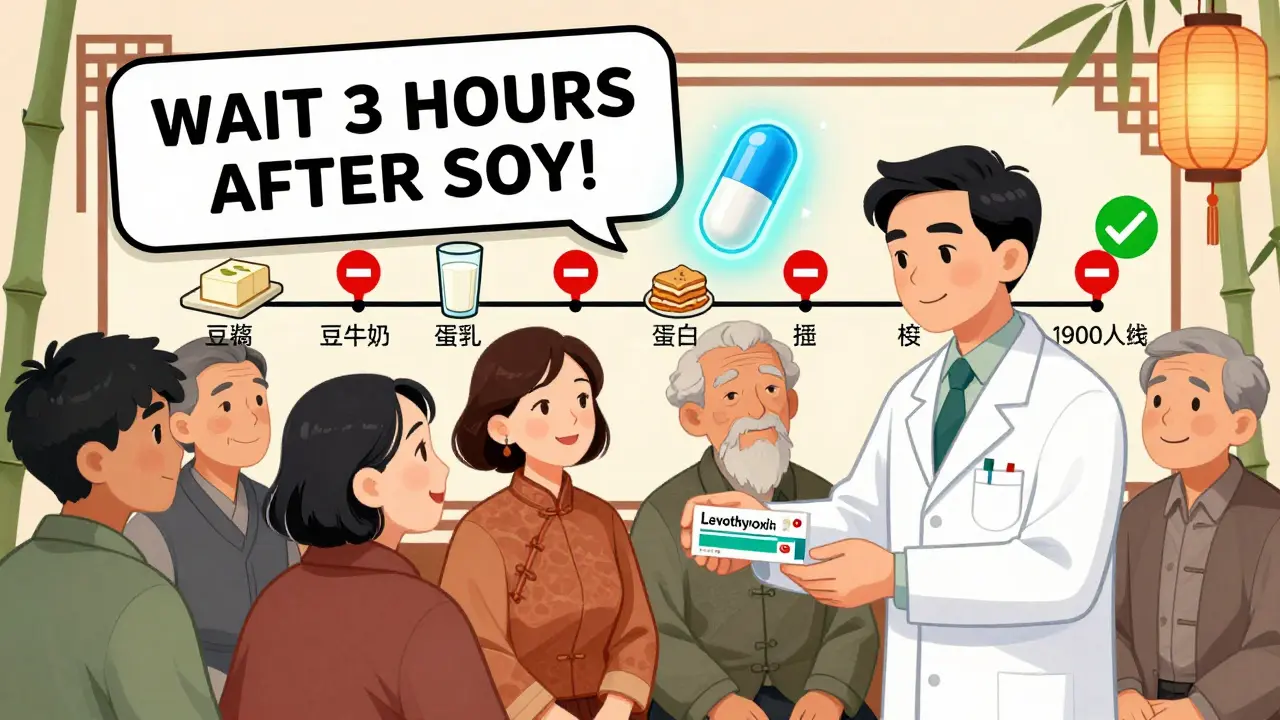
Here’s the simple fix: wait at least 3 to 4 hours after eating soy before taking your levothyroxine. Or, take your pill at least 3 hours before eating anything with soy.
Most people take levothyroxine first thing in the morning on an empty stomach. That’s good - but if you’re drinking soy milk with your toast, you’re undoing it. Instead:
- Take your pill with water, 30-60 minutes before breakfast.
- Wait at least 3-4 hours before eating soy products.
- Don’t take your pill with coffee, calcium, iron, or antacids either - those interfere too.
If you eat soy at lunch or dinner, that’s fine - as long as your morning pill is long gone. For example: take your pill at 7 a.m., have oatmeal and fruit, then enjoy your soy-based lunch at 1 p.m. or later.
For parents of infants with hypothyroidism: switch to a non-soy formula immediately if your child is on soy. The American Academy of Pediatrics says this is non-negotiable. Soy formula is not safe for babies on levothyroxine.
What About Soy Alternatives?
You don’t have to give up plant-based eating. There are plenty of soy-free options:
- Almond milk, oat milk, rice milk, or coconut milk instead of soy milk
- Lentils, chickpeas, quinoa, or seitan (wheat gluten) instead of tofu or tempeh
- Coconut aminos instead of soy sauce
- Check labels for “soy protein isolate,” “hydrolyzed soy protein,” or “soy lecithin” - avoid them if you’re trying to minimize exposure
Some newer forms of levothyroxine, like Tirosint® (a softgel capsule), absorb better than tablets when taken with soy. In one study, patients on Tirosint absorbed 18.3% more hormone with soy present than those on regular tablets. If you’re struggling to get your TSH stable despite timing your meals, ask your doctor about switching.
What If You’ve Been Eating Soy With Your Pill for Years?
You’re not alone. Many people have been doing this for years without knowing. If your TSH has been high or fluctuating, and you eat soy regularly, it’s worth a conversation with your doctor.
Here’s what to ask:
- “Could soy be affecting how my medication works?”
- “Can we check my TSH after I avoid soy for two weeks?”
- “Should I consider switching to a different formulation like Tirosint?”
Don’t stop your medication. Don’t panic. Just adjust your timing. In many cases, simply waiting 3-4 hours after soy brings TSH levels back into range - without changing your dose.
The Bigger Picture
Soy consumption in the U.S. has jumped from less than 2 kg per person in 1980 to over 12 kg today. At the same time, over 120 million levothyroxine prescriptions were filled in 2023. That’s a lot of people taking a hormone pill while eating a food that blocks it.
The solution isn’t to ban soy. It’s to educate. Pharmacy chains now include soy warnings in 89% of their levothyroxine counseling - up from just 32% in 2018. That’s progress. But it’s not enough. If you’re on levothyroxine, you need to know this. Your doctor might not bring it up. Don’t wait for them to.
It’s not about perfection. It’s about awareness. You can still enjoy tofu, soy milk, or edamame - just not with your pill. A little timing goes a long way.
Can I still eat soy if I take levothyroxine?
Yes, you can still eat soy. You don’t need to eliminate it from your diet. But you must wait at least 3 to 4 hours after eating soy before taking your levothyroxine, or take your pill at least 3 hours before eating soy. This timing allows your body to absorb the medication properly without interference.
Does all soy affect levothyroxine the same way?
Not exactly. Whole soy foods like tofu, tempeh, and soy milk have the highest levels of isoflavones - the compounds that interfere. Soy sauce and soy lecithin have much lower amounts, so their impact is minimal. But because soy is in so many processed foods, it’s safest to assume any product with soy protein isolate, soy flour, or soy oil could contribute to interference - especially if you eat multiple servings.
How long should I wait after taking levothyroxine before eating soy?
Wait at least 3 to 4 hours. This gives your body enough time to absorb the medication before soy enters your system. Levothyroxine is absorbed mainly in the upper small intestine, and soy takes about 2.8 hours to move through your stomach. Waiting 3-4 hours ensures they don’t meet in your gut.
What if I forget and eat soy with my pill?
Don’t panic. One mistake won’t ruin your treatment. But if it happens often, your TSH levels may rise over time. If you realize you ate soy with your pill, skip your next soy meal that day and resume your 3-4 hour separation rule going forward. If your TSH has been climbing, talk to your doctor about testing it again after avoiding soy for two weeks.
Are there better forms of levothyroxine that aren’t affected by soy?
Yes. Tirosint®, a softgel capsule form of levothyroxine, absorbs better than tablets when taken with soy. In clinical trials, patients on Tirosint absorbed 18.3% more hormone with soy present than those on standard tablets. If you struggle to keep your TSH stable despite timing your meals, ask your doctor if switching to Tirosint might help.


okay so i just found out i’ve been eating tofu with my levothyroxine for 3 years?? like… i thought soy milk was ‘healthy’?? my tsh has been all over the place and my doc just kept upping my dose. now i get it. thanks for the post. i’m switching to oat milk tomorrow. 🙏