
Medication Dose Calculator
Dose Calculator
Calculate the correct medication dose based on patient weight and medication concentration
Visual Dosing Aid
See how the calculated dose appears on a visual dosing tool
Getting the right dose of medicine isn’t just about reading a label. It’s about seeing it clearly-especially when lives are on the line. For parents giving liquid medicine to a sick child, for elderly folks managing multiple prescriptions, or for paramedics racing against time in an emergency, a tiny mistake can mean big trouble. That’s where visual dosing aids come in. These aren’t fancy gadgets. They’re simple, smart tools-syringes, droppers, and measuring cups-that use color, markings, and design to make dosing impossible to mess up. And the data shows they work.
Why Visual Dosing Aids Matter
Medication errors are one of the leading causes of preventable harm in healthcare. The Institute of Medicine estimates over 1.5 million adverse drug events happen every year in the U.S. alone. Many of these stem from simple mistakes: misreading milliliters, confusing teaspoons with tablespoons, or guessing a dose because the numbers are too small to see. Visual dosing aids cut through that noise. They don’t ask you to calculate. They show you exactly what to give.
Take pediatric antiretroviral treatment. Kids grow fast. Their weight changes. Doses need to change too. In resource-limited settings, nurses and caregivers were making errors because they had to do complex math on the fly. A visual dosing aid called the VDA was created to fix that. Instead of calculating, you match the child’s weight to a color band on the syringe. The right dose? It’s right there in front of you.
It’s not just for kids. Emergency situations are where these tools shine. In a 2018 study, radiologists simulated treating a severe reaction to contrast dye. One group used a standard syringe. The other used a visual dosing aid with color-coded zones for epinephrine. The results? Error rates dropped from 40% to 18.2%. Administration time went from 152 seconds to 97 seconds. That’s more than a minute saved. In an emergency, a minute can mean the difference between life and death.
How Syringes Are Built for Clarity
Not all oral syringes are created equal. The ones designed for visual dosing have features you won’t find on a generic pharmacy syringe.
- Enlarged, high-contrast markings: Numbers are big. Backgrounds are dark or light to make the lines pop. No squinting.
- Color-coded dosage zones: Green for safe, yellow for caution, red for danger. You don’t need to know the exact milliliter-you just need to know if you’re in the right zone.
- Eliminated clutter: No extra lines. No confusing decimal points. Just the doses you actually use-like 0.5 mL, 1 mL, 2 mL.
- Non-slip grip and clear barrel: Even if your hands are shaky, you can still read the dose.
These aren’t just nice-to-haves. They’re built to reduce cognitive load. When you’re tired, stressed, or in a hurry, your brain doesn’t process fine print. A visual syringe cuts the guesswork out.
Droppers That Don’t Lie
Droppers are everywhere-baby medicine, eye drops, nasal sprays. But most droppers are terrible. The liquid clings to the sides. You squeeze too hard. You lose half the dose. Visual dosing droppers fix this.
- Clear measurement windows: Instead of trying to read a tiny line on the side, you see the liquid level against a marked background.
- Color indicators: When the right amount is drawn, a colored ring or band appears. No more guessing if you got enough.
- Controlled flow: Some have one-way valves or slow-release tips so you don’t accidentally dump the whole dose.
One study showed caregivers using these droppers made 70% fewer dosing mistakes compared to standard ones. That’s not luck. That’s design.
Measuring Cups and Spoons That Actually Work
Remember when your doctor said, “Give two teaspoons”? You reach for the kitchen spoon. Big mistake. A kitchen teaspoon holds anywhere from 2.5 to 7 mL. A real teaspoon? It’s 5 mL. But most people don’t have one. That’s why measuring cups with visual cues were developed.
Modern visual dosing cups have:
- Wide, angled spouts: So you can pour without spilling.
- Backlit or glow-in-the-dark markings: For low-light situations.
- Weight-based labels: Not just mL, but also “For 10-15 kg child” or “Adult dose.”
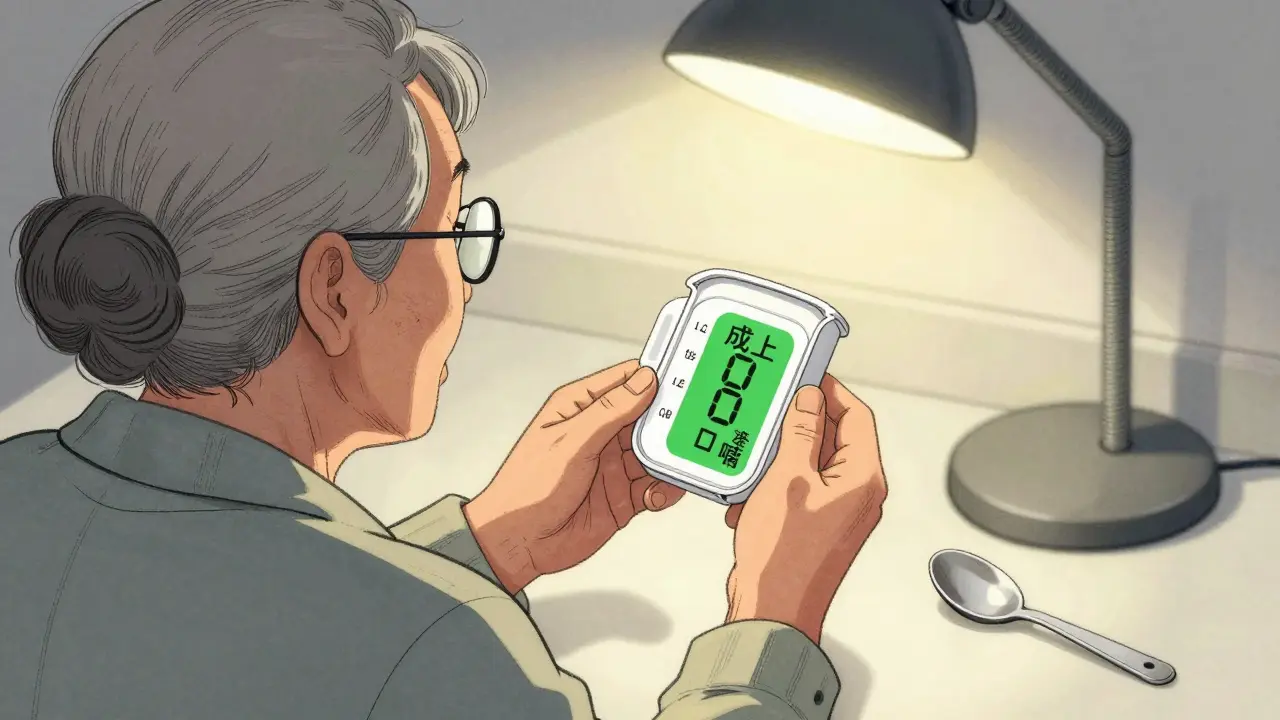
These aren’t just for kids. Elderly patients with arthritis or vision loss benefit too. One caregiver in New Zealand told us she switched after nearly giving her husband a double dose because she misread the line. Now she uses a cup with a bright green zone for his daily blood pressure pill. “I don’t even think about it anymore,” she said. “I just see the green.”
What the Data Really Says
Let’s cut through the noise. Here’s what the studies show:
| Feature | With Visual Aids | Without Visual Aids |
|---|---|---|
| Error Rate (Emergency Dosing) | 18.2% | 40% |
| Time to Administer Epinephrine | 97 seconds | 152 seconds |
| User Confidence (Radiologists) | 97.8% agreed it helped | N/A |
| Reduction in Dosing Errors | 54.5% relative improvement | Baseline |
The numbers don’t lie. But here’s the catch: visual aids aren’t magic. Even with them, 18.2% of users still made mistakes. Why? Because the biggest error wasn’t misreading the dose-it was giving the medicine by the wrong route. In the study, some people gave epinephrine into the skin instead of the muscle. That’s a training issue. Not a tool issue.
Visual dosing aids reduce errors from misreading. But they don’t fix errors from misunderstanding. That’s why they’re part of a safety system-not the whole system.
Who Benefits Most?
These tools aren’t just for hospitals. They’re for real life:
- Parents of young children: Liquid meds are tricky. Growth spurts mean changing doses. A visual syringe removes the math.
- Elderly patients: Vision decline, shaky hands, memory issues-all make standard dosing risky.
- Caregivers: Whether it’s a family member or a home nurse, stress and fatigue lead to mistakes.
- Emergency responders: In chaos, clarity saves time. And time saves lives.
One study found that caregivers using visual tools reported feeling “more confident” and “less anxious” about giving meds. That’s huge. Anxiety leads to hesitation. Hesitation leads to delays. Delays lead to worse outcomes.

What to Look For When Buying
Not all visual dosing tools are equal. Here’s what to check:
- Does it match your medication? Some syringes are calibrated for specific concentrations (like 10 mg/mL vs. 100 mg/mL). Using the wrong one can be dangerous.
- Are the markings easy to read? Hold it under a lamp. Can you see the line from 12 inches away?
- Is the color coding intuitive? Green = safe. Red = stop. If it’s purple or orange, ask why.
- Is it compatible with your medicine bottle? Some droppers won’t fit narrow necks. Test it before you buy.
- Does it come with instructions? Even simple tools need a quick guide. If there’s none, skip it.
Look for products labeled “medication dosing syringe” or “visual dosing aid.” Avoid generic “oral syringes” from discount stores. They’re often made for pet meds or non-critical use.
Limitations and What You Still Need
Visual dosing aids are powerful-but they’re not a cure-all.
- Training still matters. If your caregiver doesn’t know what the colors mean, the tool won’t help.
- Consistency matters. If you switch tools every few weeks, confusion creeps back in.
- They don’t replace double-checking. Always verify the dose with the prescription. A visual aid reduces error-but doesn’t eliminate human judgment.
Also, don’t assume your pharmacy will give you one. Most still hand out standard plastic syringes. If you need a visual dosing tool, ask for it. If they don’t have it, ask where to get it. Many online medical supply stores sell them. Some pharmacies now offer them for free with prescriptions for liquid meds.
The Future Is Clear
Visual dosing aids are becoming standard in pediatric wards, ERs, and home care programs. The trend is clear: if you can see it, you can’t miss it. Future versions might include QR codes that link to video instructions, or smart syringes that beep if the dose is wrong. But the core idea stays the same-make the dose obvious.
Medication safety isn’t about having the fanciest gear. It’s about making the right thing the easiest thing. Visual dosing aids do that. They turn a stressful, confusing task into something you can do without thinking. And in healthcare, that’s not just smart. It’s lifesaving.
Can I use a kitchen spoon to measure my child’s medicine?
No. Kitchen spoons vary in size and aren’t calibrated for medicine. A teaspoon can hold anywhere from 2.5 to 7 milliliters. That’s a huge difference when dosing a child. Always use a dosing syringe, dropper, or measuring cup designed for medication.
Are visual dosing aids only for children?
No. While they’re especially helpful for kids, elderly adults, people with vision problems, or those managing multiple medications also benefit. Anyone who needs to measure liquid medicine accurately can use them.
Do pharmacies provide visual dosing tools?
Some do, but many still give out basic plastic syringes. Always ask for a visual dosing syringe or measuring cup when picking up liquid medication. If they don’t have one, ask for a recommendation on where to buy one.
Can I reuse a visual dosing syringe?
It depends. Some are designed for single use, especially if they’re used for different medications. Others can be cleaned and reused. Always check the manufacturer’s instructions. If in doubt, replace it. Contamination or residue buildup can affect accuracy.
What if the medicine bottle doesn’t match the syringe markings?
Never guess. Double-check the prescription and concentration. Some syringes are made for specific strengths (e.g., 10 mg/mL). Using the wrong one can lead to a dangerous overdose or underdose. Contact your pharmacist if you’re unsure. They can swap the syringe or provide the correct one.


Why are we wasting money on fancy syringes when India makes perfect dosing tools for pennies? This whole 'visual dosing' thing is just a Western scam to sell overpriced plastic. We’ve been giving medicine with spoons for centuries and kids survive. You think a colored stripe stops a mistake? Ha. It’s the caregiver’s brain that matters, not the syringe. Stop over-engineering everything.