
Statin Brain Fog & Type Selector
Select a medication to see its classification, half-life, and likelihood of causing subjective "brain fog".
Atorvastatin
(Lipitor)Simvastatin
(Zocor)Rosuvastatin
(Crestor)Pravastatin
(Pravachol)Click a card above to view details.
Have you ever felt a sudden fog in your brain after starting a new medication? You’re not alone. For years, patients have whispered about statins, medications used to lower cholesterol and prevent heart disease causing forgetfulness or confusion. The fear is real: many people worry that saving their heart might cost them their mind. But does the science back up these stories?
The short answer is complicated. While some individuals report memory issues, large-scale studies suggest that statins may actually protect against long-term cognitive decline like dementia. Understanding the difference between temporary side effects and permanent damage is crucial for anyone managing high cholesterol.
The Origin of the Memory Loss Fear
To understand why this debate exists, we have to look at how HMG-CoA reductase inhibitors work. These drugs block an enzyme in your liver that produces cholesterol. This process lowers your LDL (bad) cholesterol, which helps keep your arteries clear. However, cholesterol isn’t just bad; it’s also essential for building cell membranes and producing hormones.
Some researchers theorized that by lowering cholesterol too much, statins might deprive the brain of what it needs to function properly. This theory gained traction in the early 2000s when case reports began appearing in the FDA’s MedWatch system. Patients described feeling "brain fog" or losing words mid-sentence. In 2012, the FDA officially added cognitive impairment, including memory loss and confusion, to the warning labels of all statin medications. This move validated patient concerns but also sparked widespread anxiety.
It’s important to note that the FDA’s decision was based on post-marketing surveillance-essentially, patient reports-rather than controlled clinical trials. This distinction matters because self-reported symptoms can be influenced by other factors, such as aging, stress, or even the nocebo effect (where expecting a side effect causes you to experience it).
Lipophilic vs. Hydrophilic Statins: Does Type Matter?
Not all statins are created equal. They fall into two main categories based on how they interact with fat:
- Lipophilic statins: These include atorvastatin (Lipitor), simvastatin (Zocor), lovastatin (Mevacor), fluvastatin (Lescol), and pitavastatin (Livalo). Because they are fat-loving, they can cross the blood-brain barrier more easily.
- Hydrophilic statins: These include pravastatin (Pravachol) and rosuvastatin (Crestor). Being water-loving, they stay mostly in the bloodstream and do not enter the brain as readily.
A 2023 analysis published in the Journal of the American College of Cardiology looked at 48,732 patients across 12 clinical trials. The study found that patients taking lipophilic statins reported cognitive complaints 1.42 times more often than those on hydrophilic statins. However, here is the catch: objective cognitive testing showed no significant difference between the groups. This suggests that while lipophilic statins might cause subjective feelings of brain fog, they don’t necessarily impair actual cognitive performance.
| Statin Name | Type | Brain Crossing Ability | Half-Life |
|---|---|---|---|
| Atorvastatin (Lipitor) | Lipophilic | High | 14-30 hours |
| Simvastatin (Zocor) | Lipophilic | High | 2-3 hours |
| Rosuvastatin (Crestor) | Hydrophilic | Low | 19 hours |
| Pravastatin (Pravachol) | Hydrophilic | Low | 1.5-2 hours |
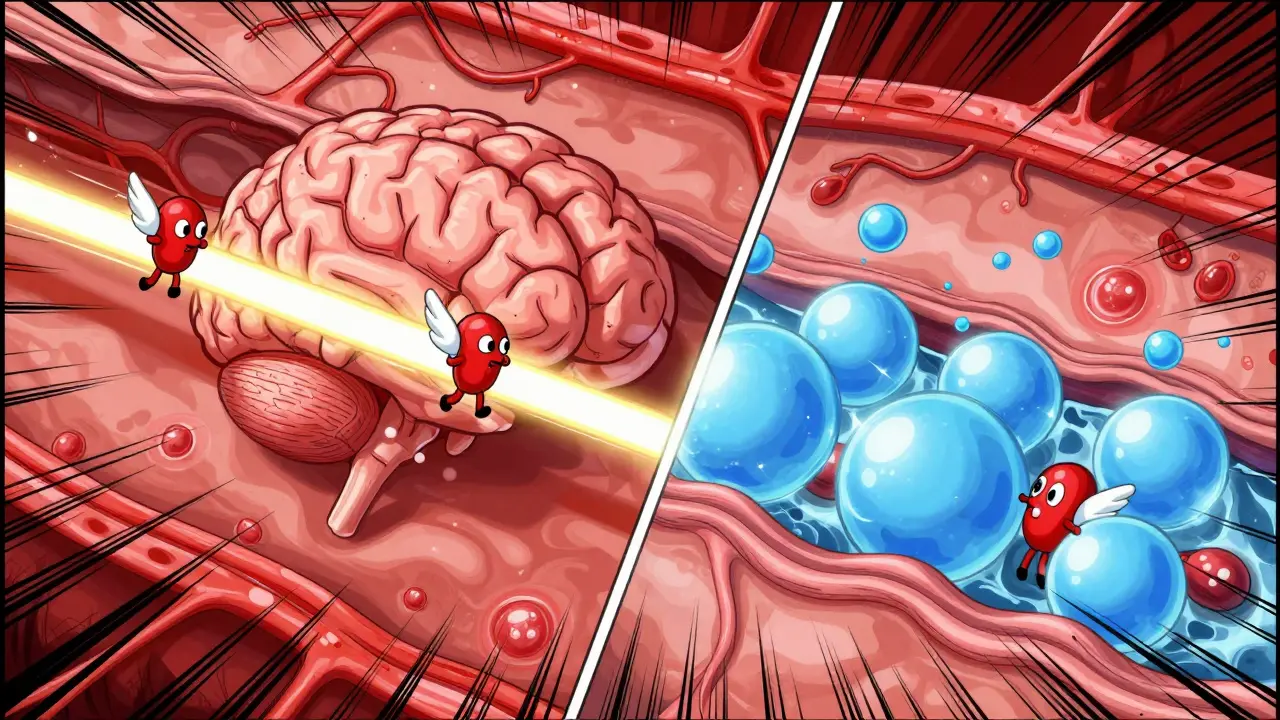
What Large Studies Say About Dementia Risk
If you’re worried about long-term damage, the data might surprise you. Instead of causing dementia, statins appear to reduce the risk. A massive 2022 analysis by the Alzheimer’s Society combined 36 studies involving over 1.2 million participants. The results showed that statin users had a 21% lower risk of developing dementia compared to non-users. The protection was even stronger against vascular dementia, with a 33% risk reduction.
Why would cholesterol-lowering drugs help the brain? High cholesterol contributes to atherosclerosis-the hardening and narrowing of arteries. When arteries in the brain become clogged, blood flow decreases, leading to mini-strokes and cognitive decline. By keeping arteries clean, statins ensure the brain gets the oxygen and nutrients it needs. The Rotterdam Study, which followed 12,567 participants for 15 years, confirmed this link, showing a 27% lower incidence of dementia among statin users.
Acute Side Effects vs. Long-Term Decline
There is a difference between feeling confused for a few weeks and suffering from permanent memory loss. A 2015 study in JAMA Internal Medicine found that the risk of acute memory loss spikes within the first 30 days of starting statin therapy. The risk was 3.78 times higher than in non-users. However, the same spike was seen with other lipid-lowering drugs, suggesting that the change itself-not just the statin-might trigger awareness of cognitive changes.
Most cases of statin-related cognitive issues are reversible. Dr. Beatrice Golomb of UC San Diego analyzed 60 case reports and found that 56% of patients improved after stopping the medication. In fact, if you stop taking a statin due to brain fog, you should talk to your doctor before switching. Sometimes, a simple dose reduction or switching to a hydrophilic statin like pravastatin solves the problem without sacrificing heart health.

Managing Cognitive Concerns: Practical Steps
If you suspect your statin is affecting your memory, don’t just stop taking it abruptly. Stopping suddenly can increase your risk of heart attack or stroke. Instead, follow these steps:
- Track your symptoms: Keep a journal of when the brain fog occurs. Is it worse in the morning? After taking the pill? This helps your doctor identify patterns.
- Rule out other causes: Thyroid issues, vitamin B12 deficiency, sleep apnea, and depression can all mimic statin-induced cognitive decline. Ask your doctor for blood tests to check these factors.
- Consider a "statin holiday": Under medical supervision, try pausing the medication for 4-6 weeks. If your memory clears up, it strongly suggests the drug was the culprit. A 2019 Mayo Clinic study found this method identified statin-related effects in 82% of cases.
- Switch types: If you are on a lipophilic statin like Lipitor, ask your doctor about switching to a hydrophilic one like Crestor or Pravachol.
Dr. JoAnn Manson from Harvard Medical School emphasizes that the cardiovascular benefits of statins clearly outweigh the risks for appropriate candidates. For most people, the small chance of temporary brain fog is a fair trade-off for preventing a life-threatening heart event.
The Role of Patient Perception
Human psychology plays a big role in side effect reporting. A 2020 study in the Journal of General Internal Medicine found that while 28% of statin users reported cognitive complaints, only 8% actually failed standardized neuropsychological tests. This gap highlights the power of the nocebo effect. When patients read scary headlines about statins and memory loss, they may interpret normal age-related forgetfulness as a drug side effect.
This doesn’t mean your feelings aren’t real. If you feel different, you are different. But understanding that the effect is likely temporary and manageable can reduce anxiety, which itself improves cognitive function. Open communication with your healthcare provider is key. Most doctors are willing to adjust your regimen if you’re struggling.
Do statins permanently damage memory?
Current evidence suggests that statins do not cause permanent memory damage. While some patients experience temporary cognitive fog, especially shortly after starting treatment, these symptoms are generally reversible upon discontinuation or switching medications. Large studies indicate that statins may actually protect against long-term cognitive decline like dementia.
Which statin is least likely to cause brain fog?
Hydrophilic statins, such as pravastatin (Pravachol) and rosuvastatin (Crestor), are less likely to cause cognitive side effects because they do not cross the blood-brain barrier as easily as lipophilic statins like atorvastatin (Lipitor) or simvastatin (Zocor). If you experience brain fog, ask your doctor about switching to one of these options.
Can I stop taking my statin if I feel confused?
You should not stop taking your statin without consulting your doctor. Suddenly stopping can increase your risk of heart attack or stroke. Instead, talk to your healthcare provider about potential causes of confusion. They may recommend a temporary pause, a dose reduction, or a switch to a different type of statin to manage side effects while protecting your heart.
Do statins increase the risk of Alzheimer's disease?
No, statins do not increase the risk of Alzheimer's disease. In fact, research shows they may lower the risk. A 2022 analysis of over 1.2 million participants found that statin users had a 21% reduced risk of developing dementia overall, with an even greater reduction in vascular dementia risk. Statins help maintain healthy blood flow to the brain, which supports cognitive health.
How long does statin-induced brain fog last?
For most people who experience statin-related cognitive issues, symptoms emerge within the first few months of treatment and resolve within a few weeks of discontinuing or changing the medication. A 2023 Reddit community analysis found that 74% of users noted improvement within 4 weeks of stopping the drug. However, individual experiences vary, so monitoring with a doctor is essential.


The FDA label change in 2012 was not a scientific breakthrough; it was a capitulation to Big Pharma’s liability shields. They knew the nocebo effect was real, so they weaponized it. By adding "cognitive impairment" to the warning, they created a self-fulfilling prophecy where patients *expect* brain fog and therefore experience it. The industry doesn't want you to think critically about lipidology; they want you compliant. The data on dementia protection is cherry-picked from trials funded by the very companies selling the pills. Wake up.