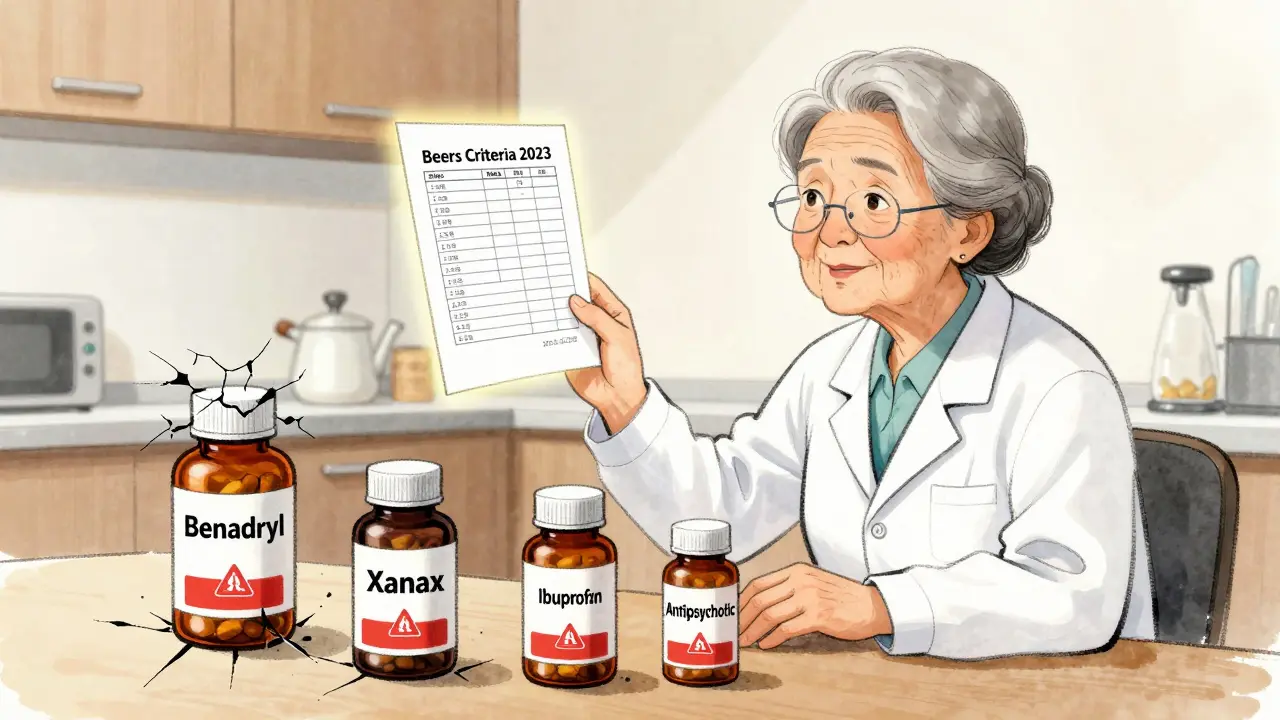
Every year, thousands of older adults end up in the hospital because of a medication that shouldn’t have been prescribed in the first place. It’s not because doctors are careless - it’s because aging changes how the body handles drugs, and many common prescriptions become more dangerous than helpful after age 65. That’s where the Beers Criteria come in.
First created in 1991 by Dr. Mark Beers, the Beers Criteria are a living guide that tells clinicians which medications are risky for older adults. The latest version, updated in 2023 by the American Geriatrics Society (AGS), lists 131 specific drug-related warnings. These aren’t guesses. They’re based on reviews of over 1,500 studies published between 2019 and 2022. And they’re used in hospitals, nursing homes, and clinics across the U.S. - and increasingly, around the world.
What the Beers Criteria Actually Say
The Beers Criteria don’t just say “avoid these drugs.” They break it down into clear categories:
- Medications to avoid in most older adults - even if they seem harmless. Think antihistamines like diphenhydramine (Benadryl), which can cause confusion, dry mouth, and falls.
- Medications to avoid with specific conditions - like using NSAIDs (ibuprofen, naproxen) in someone with kidney disease or heart failure. These drugs can suddenly turn from pain relievers into kidney killers.
- Medications to use with caution - such as benzodiazepines (Valium, Xanax) or sleep aids like zolpidem. These increase fall risk by up to 50% in older adults, according to CDC data.
- Medications to avoid with kidney problems - because aging kidneys can’t clear drugs the way they used to. Metformin, for example, may need dose adjustments or outright avoidance in moderate to severe kidney impairment.
- Dangerous drug interactions - like combining warfarin with certain antibiotics or SSRIs. These combos can lead to bleeding, confusion, or even death.
The 2023 update added stronger warnings about antipsychotics in dementia patients. These drugs don’t treat dementia - they just mask agitation, and they raise the risk of stroke and sudden death. The AGS now says they should only be used as a last resort, and even then, for the shortest time possible.
Why This Matters More Than You Think
One in five older adults in the U.S. is taking at least one medication flagged by the Beers Criteria. That’s not rare. It’s common. And it’s not because patients are asking for them. Often, it’s because a prescription got passed down from one doctor to another without ever being re-evaluated.
Take someone with arthritis who’s been on long-term NSAIDs for 15 years. They develop mild kidney changes. No one checks. No one questions. Then they get sick - not from the arthritis, but from the drug meant to treat it.
Studies show that when these inappropriate drugs are stopped, patients don’t just avoid hospital visits - they feel better. Better sleep. Better balance. Sharper thinking. One 2014 study found that nearly half of patients in long-term care were on at least one Beers-listed drug. After pharmacists reviewed their meds, 60% of those drugs were safely discontinued - and no one got worse.
It’s Not About Rules - It’s About Judgment
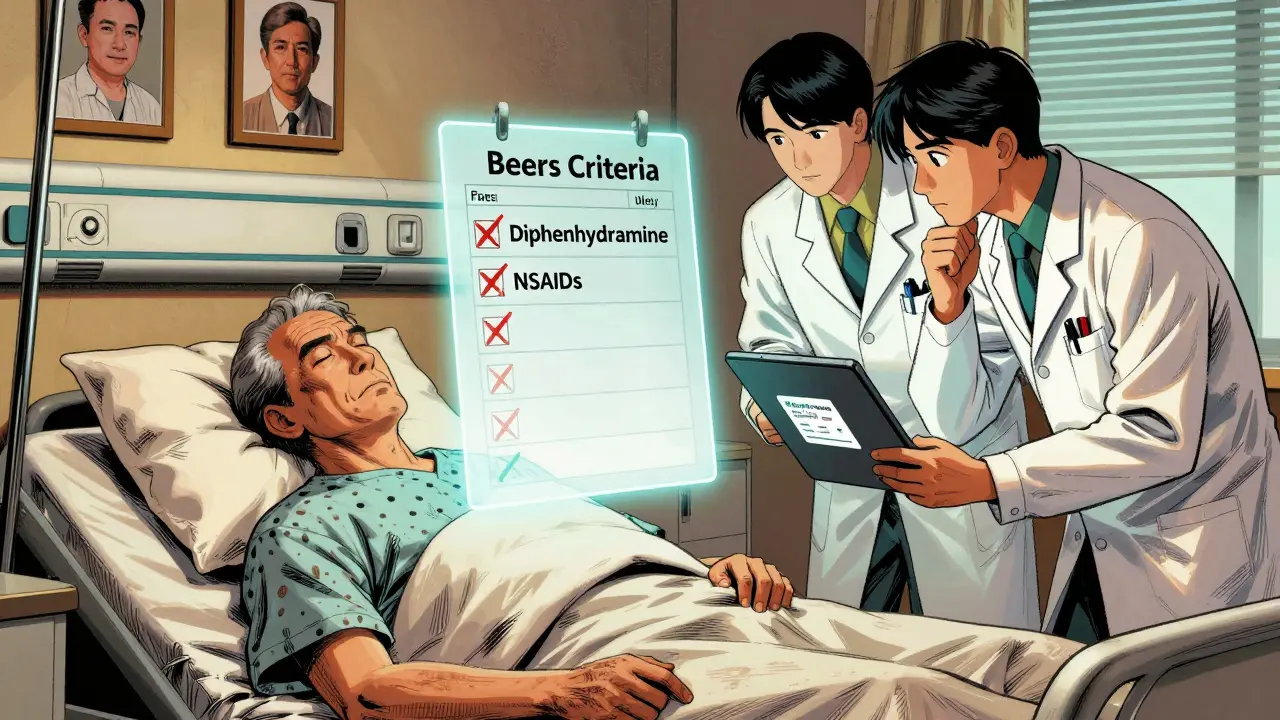
The AGS is clear: the Beers Criteria are not a checklist. They’re a warning system.
Some nursing homes and insurance companies have turned them into rigid rules - penalizing doctors for prescribing a flagged drug, even if it’s the only thing that works. That’s not what they’re for. As Dr. Todd Semla, co-chair of the 2023 panel, says: “They should never be used to justify restricting health coverage.”
Here’s the truth: sometimes, a flagged drug is still the best option. A person with severe insomnia who’s tried everything else might need a low-dose sedative. A patient with chronic pain and no other options might need a short course of an NSAID. The key is knowing the risk, monitoring closely, and having the conversation.
That’s why the best use of the Beers Criteria is as a starting point - not an endpoint. It’s a tool to spark a discussion: “Why are we still on this? What are we trying to treat? Are there safer alternatives?”
How Clinicians Are Using It Today
Most hospitals now have the Beers Criteria built into their electronic health records. When a doctor types in a prescription for an older patient, a pop-up says: “This drug is flagged in the 2023 Beers Criteria. Consider alternatives.”
Pharmacists use it daily. In nursing homes, they run monthly med reviews using the criteria as a checklist. In primary care, it’s part of annual wellness visits. The AGS even offers a free mobile app and a printable pocket card - so a doctor can pull it up during a 10-minute appointment.
And it’s working. Medicare Part D now requires pharmacists to review medications for older adults using Beers Criteria standards. As a result, the rate of inappropriate prescribing has dropped by 18% since 2015, according to CMS data.

What You Can Do - Even If You’re Not a Doctor
If you’re caring for an older adult, here’s what you can do:
- Ask for a med review - every year, or after a hospital stay. Say: “Can we go through all the pills? Are any of them on the Beers list?”
- Know the red flags - if they’re on diphenhydramine, benzodiazepines, NSAIDs, or antipsychotics, ask why.
- Don’t assume it’s safe because it’s been prescribed - many of these drugs were approved decades ago, before we understood aging.
- Use healthinaging.org - the AGS has simple, plain-language guides for families to understand these risks.
One woman in Dunedin, 78, was on four medications flagged by the Beers Criteria. She was dizzy, confused, and falling. Her pharmacist spotted it during a routine check. Within six weeks, three were switched or stopped. Her balance improved. Her memory cleared. She started walking again.
The Bigger Picture
The Beers Criteria aren’t perfect. They can’t account for every patient’s unique situation. But they’re the most widely used, most researched, and most trusted tool we have to cut down on harmful prescribing.
They’re not meant to replace clinical judgment - they’re meant to support it. Think of them like a seatbelt. You don’t wear it because you think you’ll crash. You wear it because, in the long run, it saves lives.
As more systems adopt these guidelines - and as more families ask the right questions - we’re slowly moving away from “prescribe and forget” and toward “review and rethink.” That’s the future of safe care for older adults.
Are the Beers Criteria legally binding for doctors?
No, the Beers Criteria are not legally binding. They are clinical guidelines, not laws. Doctors are not required to follow them, and they cannot be used to deny care or insurance coverage. However, many healthcare systems use them as quality benchmarks, and some insurance programs or nursing homes may reference them in audits. The American Geriatrics Society explicitly warns against using them to punish clinicians or restrict access to care.
What’s the difference between Beers Criteria and STOPP-START?
The Beers Criteria focus only on medications that should be avoided in older adults - the “don’t prescribe” list. STOPP-START goes further: STOPP identifies inappropriate prescriptions, while START identifies medications that should be prescribed but often aren’t - like statins for heart disease or bisphosphonates for osteoporosis. Beers is narrower and more widely used in the U.S., while STOPP-START is popular in Europe and often used alongside Beers for a fuller picture.
Can over-the-counter drugs be flagged by the Beers Criteria?
Yes. The 2023 update includes several OTC medications, especially antihistamines like diphenhydramine (Benadryl) and doxylamine (Unisom), which can cause confusion, dry mouth, urinary retention, and falls. Many older adults don’t realize these are powerful drugs - not harmless sleep aids. Even topical creams and eye drops can be flagged if they’re absorbed systemically.
Is the Beers Criteria updated regularly?
Yes. The American Geriatrics Society updates the Beers Criteria every three to five years. The last update was in 2023, based on over 1,500 new studies. The next update is expected around 2027. Updates are driven by new evidence - such as findings on fall risk, kidney function, or drug interactions - and are reviewed by a panel of geriatricians, pharmacists, and researchers.
Why are antipsychotics so heavily warned against in the Beers Criteria?
Antipsychotics like risperidone and haloperidol are commonly used to manage agitation in dementia - but studies show they increase the risk of stroke by up to 3 times and raise the chance of sudden death. The 2023 update strengthened the warning, stating these drugs should only be considered if the patient is a danger to themselves or others, and only after non-drug approaches have failed. Even then, they should be used at the lowest dose for the shortest time possible.
For anyone caring for an older adult, the Beers Criteria aren’t just another medical guideline - they’re a lifeline. They help turn routine prescriptions into thoughtful choices. And that’s what safe aging looks like.


So let me get this straight - we’re using a 1991 list to tell doctors what to do in 2024? 🤦♀️ My grandma was on Benadryl for 20 years and still beat everyone at bingo. Maybe the real problem is doctors who don’t listen, not the meds.