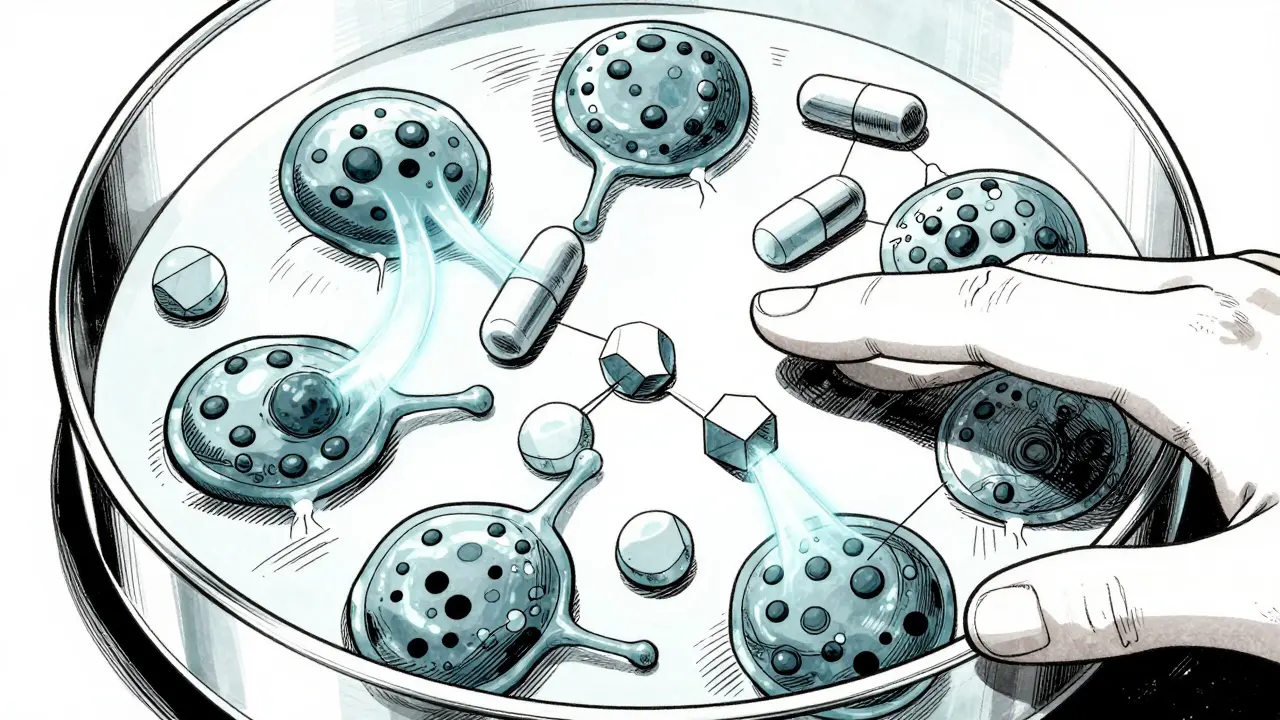
There is a persistent misunderstanding floating around global health discussions about whether we can just "make a generic version" of a vaccine the same way we do for aspirin or antibiotics. The short answer is no, and the reason has less to do with corporate greed and more to do with fundamental biology. While you might see headlines calling for "vaccine generics" to solve shortages, the reality is that true generics do not exist in this sector. This distinction shapes everything from how much your local clinic pays for a shot to whether a remote village ever receives protection from measles.
To understand why, we have to look at what makes a vaccine different from a standard pill. Vaccines are biological products made from live attenuated pathogens or genetic material that train the immune system. Unlike small-molecule drugs, which are chemically synthesized and identical regardless of who manufactures them, vaccines involve living cell lines or complex biological processes. Because these biological processes vary slightly every time, two vials produced in different labs might contain slight structural differences. This means regulators cannot accept a simplified approval process for copying them. You need entirely new testing for every factory that tries to replicate a formula.
The Myth of Vaccine Equivalency
In the world of traditional medicine, the United States Food and Drug Administration introduced the Abbreviated New Drug Application, often abbreviated as Abbreviated New Drug Application (ANDA) under the Hatch-Waxman Act. For regular drugs, once a patent expires, other companies can submit an ANDA to prove their version works the same way as the original. This creates a competitive market where prices drop by 80 to 90 percent when multiple manufacturers enter the space. This mechanism simply does not apply to biological medicines.
The regulatory hurdle is massive. Every new vaccine plant requires a full Biological License Application, treating the facility almost like a new company launching a new product. There is no "bioequivalence" shortcut. Consequently, the global landscape remains dominated by a handful of giants. If you look at the statistics from 2020, companies like Pfizer, Pfizer Inc., GSK, Merck, and Sanofi controlled roughly 70% of the market. When demand spikes, as seen during the COVID-19 pandemic, there are no alternative suppliers waiting in the wings to flood the market and drive prices down.
Barriers to Manufacturing Scale
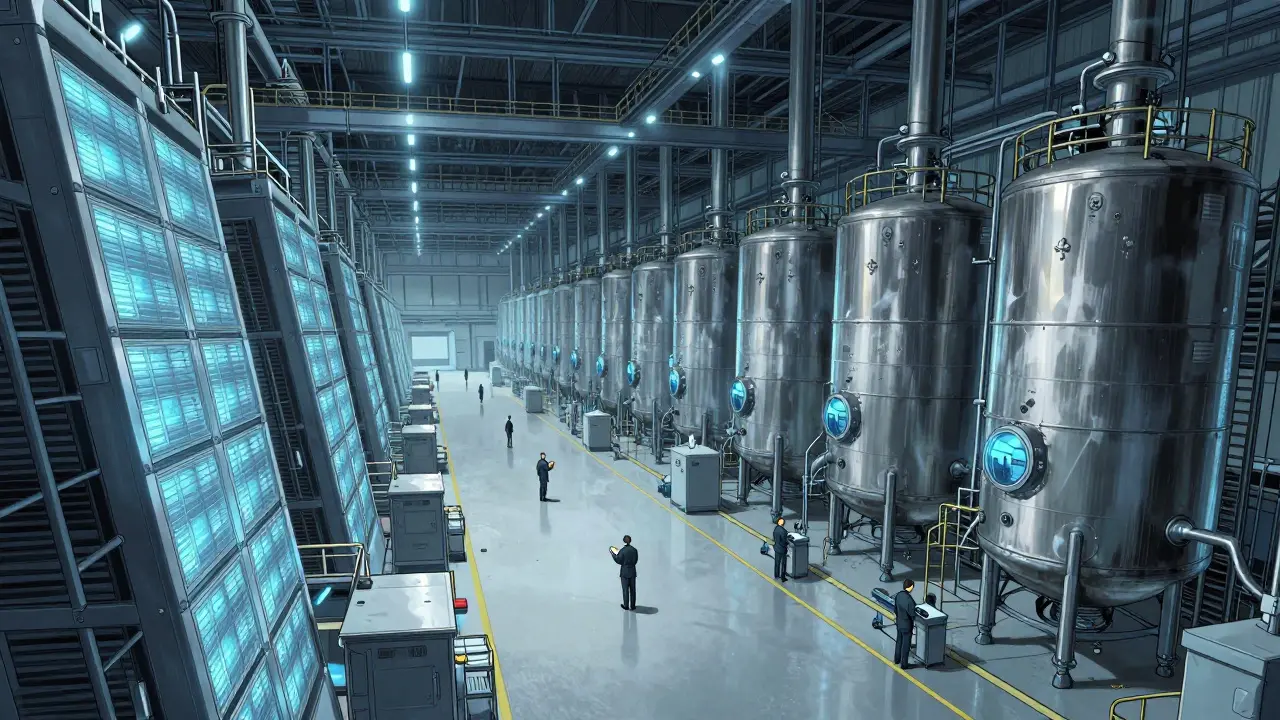
Even if we ignore patents and regulations, building the infrastructure to produce these shots is incredibly difficult. A typical pharmaceutical factory costs millions, but a vaccine production line requires significantly more capital investment. Estimates suggest setting up a single modern line costs between $200 million and $500 million USD. Furthermore, the timeline is unforgiving. From breaking ground on the construction to getting the first dose approved can take five to seven years.
Beyond the money, the technology itself is fragile. Consider the shift to mRNA vaccines during the pandemic. These require ultra-cold storage chains at temperatures dropping to minus 70 degrees Celsius. Maintaining this temperature requires specialized freezers and transport logistics that many developing nations simply do not possess. Without this cold chain, the vaccine loses efficacy, making the physical delivery just as critical as the manufacturing.
We also face a severe bottleneck in raw materials. Even in a country known for generic drugs, like India, manufacturers rely heavily on imported ingredients. About 70% of vaccine-related active pharmaceutical ingredients come from China. During peak crisis moments, when borders close or exports are restricted, entire production lines grind to a halt because they lack the basic chemical components needed to finish the vial.
The Global Supply Chain Divide
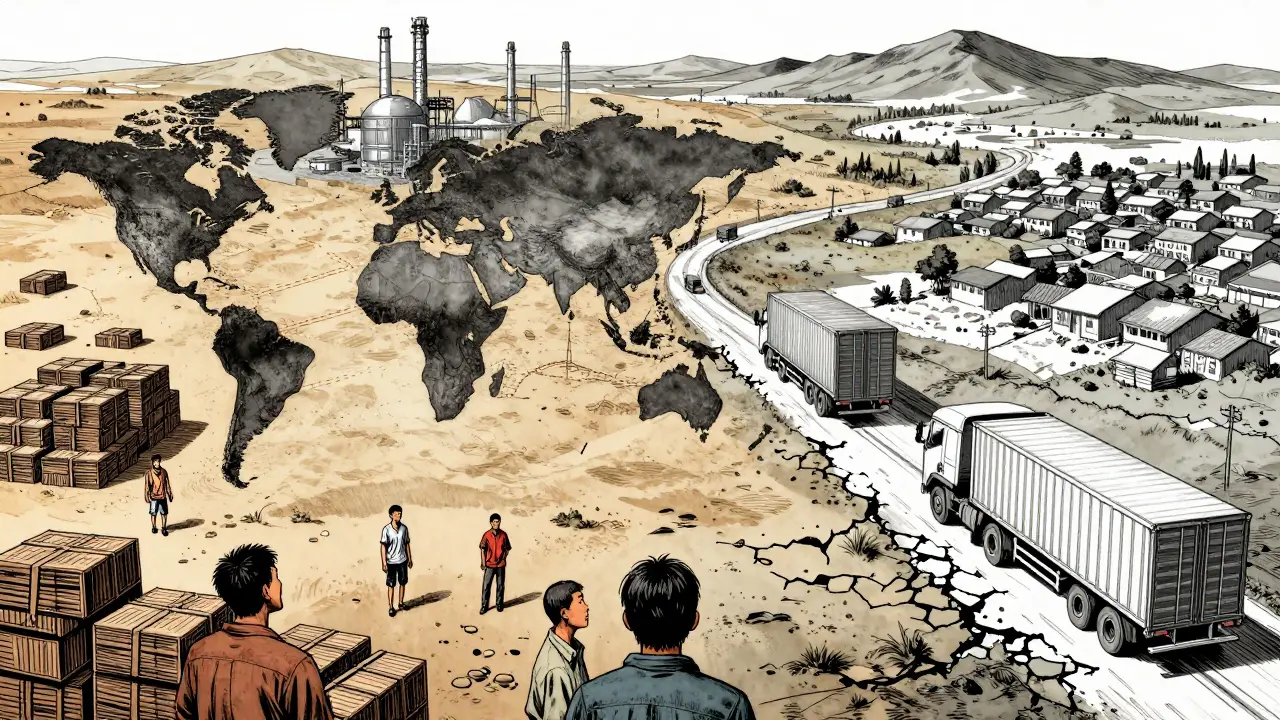
The disparity in access isn't just theoretical; it shows up in the numbers. During the early phases of the global vaccination effort, high-income nations secured 86% of the initial doses available, despite representing only 16% of the world's population. Meanwhile, regions like Africa saw a significant portion of their population miss out completely. It sounds paradoxical that a continent could have such low vaccination rates while sitting near some of the most productive pharmaceutical hubs, but the infrastructure gap is real.
Africa currently imports 99% of its vaccines. To put that in perspective, while the continent grows its own food and minerals, it lacks the localized capacity to secure health immunity. Dr. John Nkengasong, Director of Africa CDC, noted that Africa's industry is at an "early-stage development," similar to where Asia was decades ago. The African Union launched a plan to reach 60% self-sufficiency by 2040, aiming to spend $4 billion to build regional hubs. That is a massive goal, but it highlights how entrenched the dependency is.
| Metric | High-Income Nations | Low/Middle-Income Nations |
|---|---|---|
| Initial Dose Share (2021) | 86% | 14% |
| Local Production Capacity | Near Self-Sufficient | ~99% Import Dependent (Africa) |
| Raw Material Access | Secure Supply Chains | Heavily Reliant on Imports |
| Investment Per Line | Willing/able to absorb $500m+ | Requires external funding/grants |
Cases of Exception: Who Actually Produces?
While most production stays in the hands of big multinationals, there are outliers. The Serum Institute of India stands as a prominent example. They operate 11 facilities across four sites with a capacity of 1.5 billion doses a year. During the pandemic, they were responsible for producing the AstraZeneca vaccine, delivering doses at $3 to $4 each compared to the $15-$20 charged by Western firms.
However, even the Serum Institute faces limitations. When India experienced its devastating second wave of infections in early 2021, they paused all exports. This decision alone caused a ripple effect, reducing the global supply by an estimated 50%. This demonstrates the vulnerability of relying on single-source or few-source manufacturing. When domestic needs spike, the "global commons" effectively vanish overnight.
Another interesting experiment was the World Health Organization's mRNA Technology Transfer Hub in South Africa. Launched to help scale production for poorer nations, it faced an 18-month delay before achieving anything tangible. By September 2023, they managed to produce doses, but their annual capacity sat at only 100 million doses-less than 1% of global needs. This illustrates that transferring knowledge is harder than the blueprints suggest; finding the specific lipids and equipment required took far longer than anticipated.
Market Dynamics and Pricing
You might wonder if we can't just force prices down through competition. In the generic drug market, competition naturally drives prices to a floor where the manufacturer barely breaks even. With vaccines, the market dynamics work differently. Pricing tends to remain sticky because entry barriers keep competitors away. Reports from Gavi, the Vaccine Alliance, show that certain essential vaccines, like the pneumococcal conjugate vaccine, remained above $10 per dose for low-income countries for years, despite repeated requests for differential pricing.
The economics here favor volume and stability over agility. Companies invest billions upfront knowing they have limited competition. This stability protects their returns but leaves public health systems with little bargaining power. Without a mechanism for rapid generic entry, governments must negotiate directly with these monopolies or rely on pooled purchasing organizations.
Looking Ahead: Can We Fix the Gaps?
As we approach late 2026, the focus is shifting toward strengthening national supply chains rather than hoping for immediate global charity. The U.S. Food and Drug Administration recently rolled out a pilot program in late 2025 to prioritize domestic generic drug manufacturing, signaling a broader trend where nations are re-evaluating how much they rely on foreign API supplies.
For the rest of the world, the path forward looks like heavy investment in technology transfer hubs, though success remains elusive. We need to treat vaccine production like water or electricity-public goods that require sustained infrastructure maintenance rather than emergency fixes. Until we can democratize the biological processes behind the vials, access will continue to be defined by geography and GDP rather than medical need.
Why can't we make generic vaccines like we do for normal medicines?
Because vaccines are biologics, meaning they are created using living systems like cells or genetic material. Unlike small chemical molecules used in pills, biological products vary slightly with every batch. Regulatory bodies require complete safety testing for every new manufacturing site, preventing the "copycat" approval shortcuts used for generic drugs.
Which country produces the most vaccines?
India is currently the largest producer by volume, supplying about 60% of the global vaccine market through organizations like the Serum Institute of India. However, even India relies heavily on importing raw materials, specifically from China, creating supply chain risks.
Does Africa have any vaccine manufacturing capability?
Currently, Africa produces less than 2% of the vaccines it consumes, meaning it imports 99% of its supply. The African Union aims to increase this to 60% self-sufficiency by 2040 through major investment and regional hub development.
What happened to vaccine distribution during the pandemic?
Distribution was highly inequitable. High-income countries secured 86% of the initial global doses despite having only 16% of the population. Many African nations had vaccinated less than 2% of their populations by mid-2021 due to logistical failures and scarcity.
Are there any efforts to transfer technology to developing nations?
Yes, the WHO established an mRNA vaccine technology transfer hub in South Africa. However, it faced significant delays and achieved very low initial capacity compared to global demand, highlighting how difficult technical replication is.


It is indeed fascinating to observe the regulatory distinctions outlined here regarding biologics. The financial implications of establishing a single production line often deter smaller entities significantly. We must consider the capital requirements exceeding half a billion dollars per facility. This creates a substantial barrier to entry for developing nations trying to localize production. Infrastructure investment is paramount for sustainable health outcomes in any region. Many policymakers overlook the biological variance inherent in vaccine manufacturing processes. Small molecule synthesis logic does not apply to complex living organisms effectively. The data regarding market dominance by specific firms is quite telling in this analysis. Supply chain resilience remains a critical vulnerability in current global systems. We should focus on diversification rather than immediate generic replication attempts. Long-term planning is essential for national security against future pandemics. Global cooperation is necessary to address these gaps effectively and fairly. Technology transfer requires more than just blueprints and simple funding. We need dedicated training programs for local workforces to maintain quality.