
You might feel perfectly fine. You can run up stairs without getting winded, your energy levels seem normal, and you aren't in any pain. But inside your body, a silent storm is brewing. This is the dangerous reality of metabolic syndrome, which is a cluster of interconnected metabolic risk factors that significantly increase the likelihood of developing cardiovascular disease, type 2 diabetes, and stroke. It isn't a single disease you catch like the flu; it’s a combination of conditions working together to damage your health from the inside out.
About one in three adults in the United States has this condition. That’s roughly 34.7% of the adult population, according to data from the National Health and Nutrition Examination Survey (NHANES). The numbers get even more concerning as we age, with nearly half of adults over 60 meeting the diagnostic criteria. Because it often presents no obvious symptoms other than weight gain, many people walk around unaware they are at high risk for heart attack or diabetes until it’s too late.
The Five Diagnostic Criteria: How Doctors Spot It
To diagnose metabolic syndrome, doctors don't look for one specific marker. Instead, they check for a constellation of five specific abnormalities. You need at least three of these five criteria to receive a diagnosis. These thresholds were established by the National Cholesterol Education Program's Adult Treatment Panel III (ATP III) and are widely used by organizations like the American Heart Association (AHA).
| Component | Threshold for Men | Threshold for Women |
|---|---|---|
| Abdominal Obesity | Waist circumference > 40 inches (102 cm) | Waist circumference > 35 inches (88 cm) |
| Elevated Triglycerides | ≥ 150 mg/dL | ≥ 150 mg/dL |
| Reduced HDL Cholesterol | < 40 mg/dL | < 50 mg/dL |
| Elevated Blood Pressure | Systolic ≥ 130 mmHg or Diastolic ≥ 85 mmHg | Systolic ≥ 130 mmHg or Diastolic ≥ 85 mmHg |
| Elevated Fasting Glucose | ≥ 100 mg/dL | ≥ 100 mg/dL |
Note that waist circumference thresholds can vary based on ethnicity. For example, Asian populations often have lower cutoffs (men >90 cm, women >80 cm) because visceral fat accumulation becomes dangerous at smaller sizes in these groups. If you are taking medication for high blood pressure or high cholesterol, those conditions count toward the diagnosis even if your current numbers are controlled.
The Silent Driver: Insulin Resistance
What ties all these seemingly unrelated issues-fat, blood pressure, sugar, and lipids-together? The answer lies in insulin resistance, which is a condition where cells in muscles, fat, and liver do not respond normally to insulin, causing the pancreas to produce more insulin. Think of insulin as a key that unlocks your cells to let glucose (sugar) in for energy. When your cells become resistant, the key doesn't work well. Your pancreas responds by pumping out more keys (hyperinsulinemia), but eventually, the system gets overwhelmed.
This chronic state of high insulin drives several harmful processes. It signals your body to store more fat, particularly in the abdomen. It causes your kidneys to retain sodium, raising your blood pressure. It also interferes with how your liver processes fats, leading to higher triglycerides and lower HDL (the "good" cholesterol). According to StatPearls, adipose tissue dysfunction and chronic inflammation form the basic pathogenic components alongside insulin resistance. Essentially, your body is stuck in a storage mode, unable to efficiently burn fuel, which creates toxic byproducts that damage your arteries.
Why Abdominal Obesity Matters More Than Weight
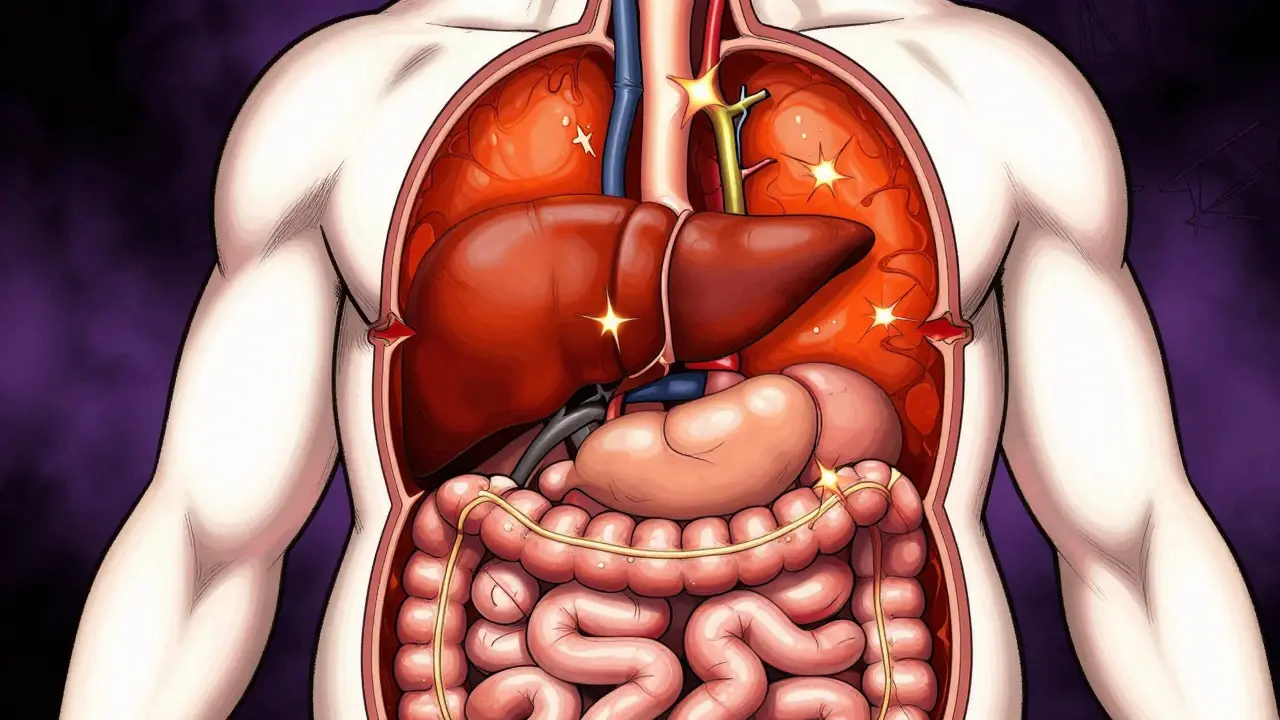
You might wonder why waist size is such a critical factor when BMI (Body Mass Index) is commonly used. The issue isn't just about being overweight; it's about where the fat is stored. There are two main types of body fat: subcutaneous fat, which sits just under the skin, and visceral fat, which wraps around your internal organs like the liver, pancreas, and intestines.
Visceral fat is metabolically active. It doesn't just sit there; it acts like an endocrine organ, releasing free fatty acids, pro-inflammatory cytokines, C-reactive protein, leptin, and resistin into your bloodstream. These chemicals promote systemic inflammation and further worsen insulin resistance. This is why an "apple-shaped" body (fat concentrated in the belly) carries a much higher cardiovascular risk than a "pear-shaped" body (fat distributed in hips and thighs). The NHLBI emphasizes that abdominal obesity specifically represents a greater cardiovascular risk than fat distributed in other body areas.
The Lipid Paradox: Triglycerides and HDL
When most people hear "cholesterol," they think of LDL (bad cholesterol). While LDL is important, metabolic syndrome is characterized by a specific lipid pattern known as atherogenic dyslipidemia. This involves high triglycerides and low HDL cholesterol.
Triglycerides are a type of fat found in your blood. They come primarily from the foods you eat, especially sugars and refined carbohydrates. When you have excess calories, your body converts them into triglycerides and stores them in fat cells. High levels (≥150 mg/dL) make your blood thicker and stickier, promoting plaque buildup in arteries. Simultaneously, your HDL cholesterol-the "good" cholesterol that helps remove bad cholesterol from your arteries-drops below healthy levels (<40 mg/dL for men, <50 mg/dL for women). Low HDL means your body loses its primary cleanup crew, leaving arterial walls vulnerable to damage.
Risk Factors: Who Is Most Vulnerable?
While lifestyle plays a huge role, some factors are outside your control. Age is a major one; prevalence jumps from 19.6% in adults aged 20-39 to 49.6% in those 60 and older. Genetics also matter. Certain ethnic backgrounds, including African Americans, Hispanics, Asians, and Native Americans, face higher risks due to genetic predispositions for storing visceral fat and developing insulin resistance.
Hormonal imbalances can also trigger the syndrome. Polycystic Ovary Syndrome (PCOS) in women, for instance, is strongly linked to insulin resistance and abdominal obesity. Additionally, physical inactivity is a massive contributor. Muscle mass helps regulate blood sugar; when you don't move, your muscles become less efficient at using glucose, forcing your pancreas to work harder.

Treatment: Lifestyle Changes Over Medication
Here is the good news: metabolic syndrome is reversible. Unlike many chronic diseases, you don't necessarily need a lifetime of drugs to manage it. The cornerstone of treatment is aggressive lifestyle modification. Major healthcare systems like Penn Medicine report achieving 65% success rates in reversing the syndrome through intensive lifestyle interventions over 12 months.
Your action plan should focus on three pillars:
- Weight Loss: Losing just 5-10% of your body weight can dramatically improve all metabolic parameters. This reduces visceral fat, lowers inflammation, and improves insulin sensitivity.
- Physical Activity: Aim for at least 150 minutes of moderate-intensity exercise per week. This could be brisk walking, cycling, or swimming. Exercise makes your muscles more sensitive to insulin, helping them pull glucose out of your blood without needing as much insulin.
- Dietary Changes: Cut back on refined carbohydrates and added sugars. Focus on whole foods, fiber, lean proteins, and healthy fats. Reducing sugar intake directly lowers triglyceride production.
Medications may still be necessary for individual components. You might take statins for cholesterol, ACE inhibitors for blood pressure, or metformin for glucose control. However, these treat the symptoms, not the root cause. Lifestyle changes address the underlying insulin resistance.
The Long-Term Stakes: Why You Should Act Now
If left untreated, metabolic syndrome doesn't just stay a syndrome. It progresses. Research published in Diabetes Care shows that individuals with metabolic syndrome have a 1.5- to 2-fold increased risk of cardiovascular events. A 2022 meta-analysis in The Lancet Diabetes & Endocrinology involving 2.8 million participants confirmed that the condition increases type 2 diabetes risk by 5-fold and cardiovascular disease risk by 2-3 fold.
The damage is cumulative. Chronic inflammation erodes the lining of your arteries. High blood pressure strains your heart muscle. High blood sugar damages nerves and kidneys. By the time you experience symptoms like chest pain or vision loss, significant harm has already occurred. The goal is to interrupt this process early, while the changes are still reversible.
Can metabolic syndrome be cured completely?
Yes, metabolic syndrome can often be reversed entirely. Through significant weight loss, regular exercise, and dietary changes, you can normalize your blood pressure, lipid levels, and blood sugar. Many patients no longer meet the diagnostic criteria after sustained lifestyle modifications, effectively "curing" the condition.
Is metabolic syndrome the same as Type 2 Diabetes?
No, they are different but closely related. Metabolic syndrome is a cluster of risk factors, while Type 2 Diabetes is a specific disease defined by chronically high blood sugar. However, having metabolic syndrome significantly increases your risk of developing Type 2 Diabetes. In fact, people with metabolic syndrome are five times more likely to develop diabetes.
How accurate is the waist measurement for diagnosis?
Waist circumference is a strong indicator of visceral fat, which is the dangerous type associated with metabolic syndrome. However, it is not perfect. Some people with normal waistlines may still have visceral fat (TOFI: Thin Outside, Fat Inside). Doctors use waist measurement as a screening tool but rely on blood tests for a definitive diagnosis.
Do I need medication if I change my lifestyle?
It depends on your starting point. If your blood pressure or cholesterol is dangerously high, your doctor may prescribe medication immediately to prevent immediate harm like a stroke or heart attack. As your lifestyle changes take effect, your doctor may reduce or eliminate these medications. Never stop prescribed medication without consulting your physician.
What is the best diet for reversing metabolic syndrome?
There is no single "best" diet, but patterns that reduce insulin spikes are most effective. The Mediterranean diet, rich in vegetables, fruits, whole grains, fish, and olive oil, is highly recommended. Low-carbohydrate or ketogenic diets can also be effective for lowering triglycerides and improving insulin sensitivity. The key is eliminating processed sugars and refined carbs.