Antihistamine Dosing Calculator for Children
Calculate Safe Antihistamine Dose
Dosing Result
Enter child's information to see dosage instructions
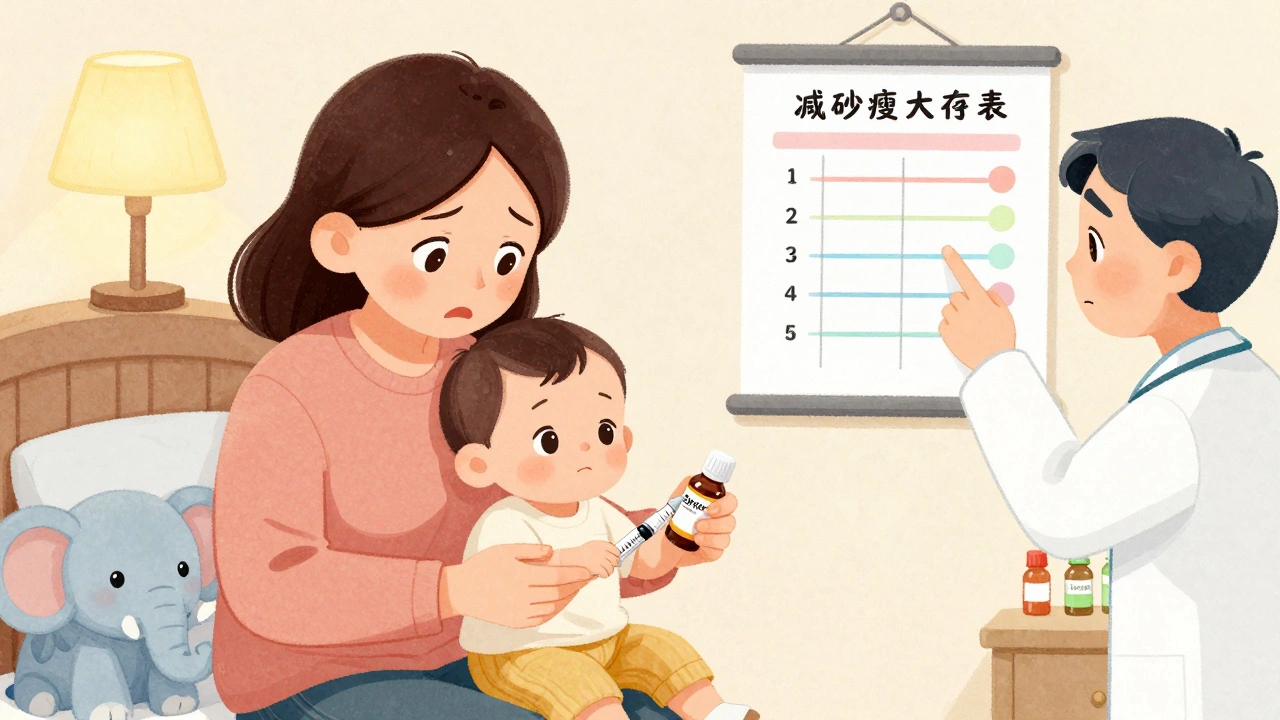
Every parent has been there: your child wakes up with a rash, swollen eyes, or a runny nose that won’t quit. You reach for the medicine cabinet and see that bottle of antihistamine-but is it safe? How much should you give? And why does the label say "do not use under 2"?
Antihistamines aren’t just for adults. Kids get allergies too. But their bodies don’t process these drugs the same way. Giving the wrong dose-or the wrong kind-can lead to drowsiness so deep it looks like sleep, a racing heart, confusion, or even trouble breathing. The good news? There’s a clear, science-backed way to use them safely. And it starts with knowing which one to pick and how much to give based on your child’s age and weight.
Not All Antihistamines Are Created Equal
There are two main types of antihistamines: first-generation and second-generation. The difference isn’t just in the name-it’s in how they affect your child’s brain and body.
First-generation antihistamines like diphenhydramine (Benadryl) cross the blood-brain barrier easily. That’s why they make adults drowsy. In kids, that same effect can be stronger-and dangerous. Studies show 50-60% of children given diphenhydramine become overly sleepy. Some develop dry mouth, blurry vision, or even agitation. In rare cases, especially under age 2, it can slow breathing enough to need emergency care. The FDA has warned against using diphenhydramine in children under 2 without a doctor’s order. Even for older kids, it’s not the go-to choice anymore.
Second-generation antihistamines like cetirizine (Zyrtec) and loratadine (Claritin) were designed to avoid the brain. They work just as well for allergies but cause drowsiness in only 10-15% of children. That’s a big drop from the first-gen drugs. Cetirizine is slightly more likely to cause sleepiness than loratadine-about 15% vs. 7%-but it’s still far safer overall. That’s why hospitals like Boston Children’s, St. Louis Children’s, and Children’s Hospital Colorado all list second-gen options as their first-line treatment for kids.
What Age Can Kids Take Antihistamines?
Age matters more than you think. The rules aren’t arbitrary-they’re based on how a child’s liver and kidneys develop over time.
- Under 6 months: No antihistamine is officially approved for this age group. But in severe cases-like widespread hives-doctors may prescribe cetirizine off-label at 0.125 mg per kg of body weight per day. For an 8 kg baby, that’s about 1 mg daily. This is done only under specialist supervision.
- 6 to 11 months: Cetirizine is approved for this group. The standard dose is 0.25 mg per kg per day. That’s usually 2.5 mg total for most babies in this range.
- 2 to 5 years: Cetirizine: 5 mg once daily. Loratadine: 5 mg once daily (which equals 2.5 mL of liquid). Never use adult tablets here. Always use the liquid form with the measuring cup that came with the bottle.
- 6 to 11 years: Cetirizine: 5-10 mg daily. Loratadine: 10 mg daily. If symptoms aren’t controlled with 5 mg, your doctor may suggest increasing to 10 mg.
- 12 years and older: Same as adults: 10 mg of cetirizine or loratadine daily.
One common mistake? Parents think "children’s" means "safe for all kids." But children’s chewables come in 5 mg or 10 mg doses. If your 3-year-old gets a 10 mg chewable by accident, that’s double the recommended dose. Always check the label. Never guess.
How to Measure Doses Correctly
Using a kitchen spoon to give medicine is one of the most dangerous things you can do.
A standard kitchen teaspoon holds anywhere from 3 mL to 7 mL. The measuring cup that comes with Zyrtec or Claritin? It’s calibrated to deliver exactly 5 mL for a 5 mg dose. If you use a random spoon, you could be giving 20-50% more-or less-than your child needs. Too little won’t help. Too much can cause side effects.
Here’s what to do:
- Always use the syringe, dropper, or cup that came with the bottle.
- Store the measuring tool with the medicine. Don’t lose it.
- If you don’t have the original tool, ask your pharmacy for a new one. They’ll give it to you free.
- Never use a regular spoon-even if you think it’s "close enough."
Also, avoid products that say "plus decongestant" or "multi-symptom." Those contain extra ingredients like pseudoephedrine or phenylephrine, which are not approved for kids under 6. Even for older kids, they add unnecessary risk.
When to Avoid Antihistamines Altogether
Antihistamines are not sleep aids. That’s a myth that puts kids at risk.
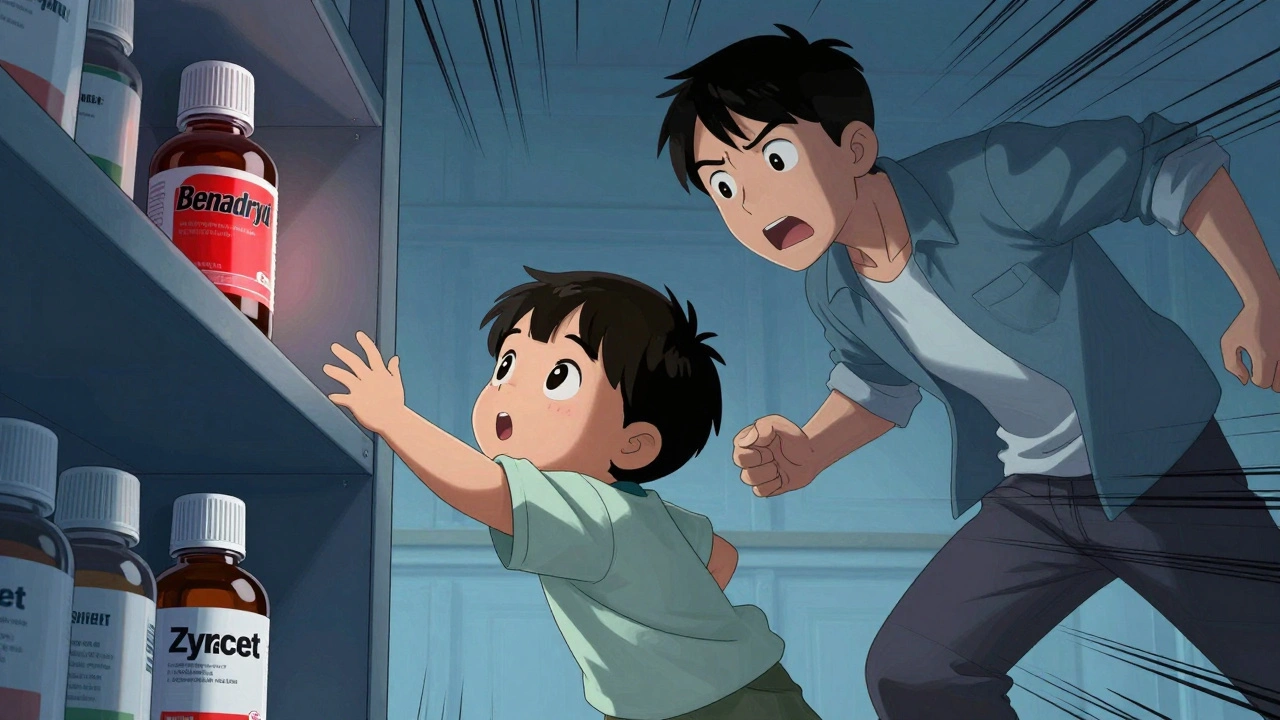
Some parents give Benadryl at bedtime hoping it will help their child sleep through the night. But this is exactly what the American College of Allergy, Asthma, and Immunology warns against. In children under 2, using antihistamines for sleep increases the risk of overdose by 300%. It’s not just drowsiness-it can be seizures, hallucinations, or a dangerously fast heartbeat.
Also, don’t use antihistamines for colds. They don’t help with runny noses from viruses. They only help with allergic reactions-like hay fever, pet dander, or food allergies. If your child has a cold, focus on fluids, rest, and saline drops. Antihistamines won’t fix it, and they might make your child feel worse.
What to Do in Case of Overdose
Accidents happen. Maybe you gave two doses by mistake. Maybe your toddler got into the cabinet. Know the signs:
- Extreme drowsiness or unresponsiveness
- Very dry mouth or flushed skin
- Racing heart or trouble breathing
- Confusion, hallucinations, or seizures
- Difficulty urinating
If you see any of these, call poison control immediately: 1-800-222-1222 in the U.S. (or your local poison center). Don’t wait for symptoms to get worse. Don’t try to make your child vomit. Just call.
Keep the medicine bottle handy when you call. The poison control team will need to know the exact name, dose, and how much was taken.
What’s Changing in 2025?
Guidelines keep getting better. In 2020, experts started strongly advising against first-gen antihistamines in kids. By 2023, 95% of pediatric allergists were using cetirizine or loratadine as first choice. The FDA is now requiring more safety studies for all antihistamines used under age 2. Results from ongoing trials could lead to official approval of cetirizine for babies under 6 months by 2026.
For now, if your child is under 6 months and needs allergy treatment, talk to a pediatric allergist. Don’t try to self-treat. Even though some doctors prescribe cetirizine off-label in this group, it’s done carefully-with close monitoring and exact weight-based dosing.
One thing won’t change: the safest route is always the simplest. Use the right drug. Use the right dose. Use the right tool. And never use antihistamines to make your child sleepy.
What to Keep in Your Medicine Cabinet
For most families, here’s what you actually need:
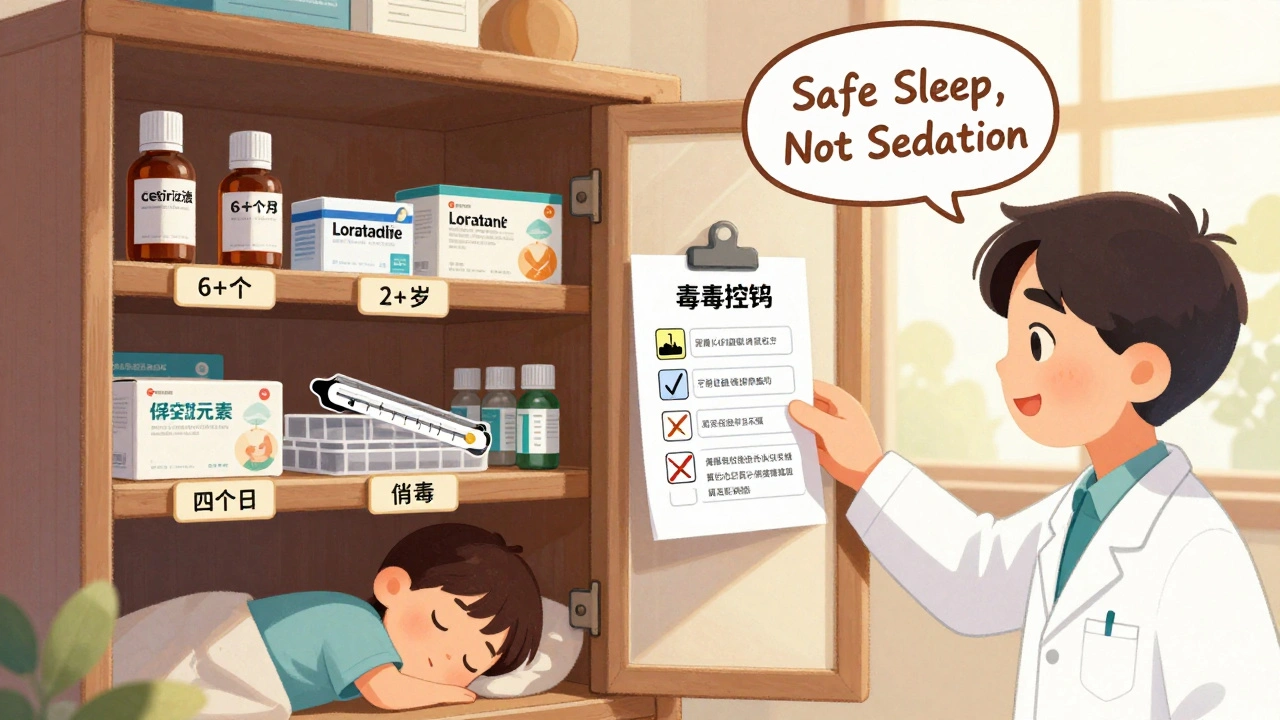
- One bottle of cetirizine liquid (1 mg/mL or 5 mg/5 mL) for kids 6 months and up
- One bottle of loratadine liquid (1 mg/mL or 5 mg/5 mL) for kids 2 years and up
- The original measuring tools for both
- A list of your child’s weight and the correct doses for each age
- Poison control number saved in your phone
Forget the Benadryl bottle unless your doctor says to keep it for emergency anaphylaxis. Even then, only use it if you’ve been trained to recognize a severe reaction-and only after calling 911.
Can I give my 1-year-old Benadryl for allergies?
The FDA does not recommend diphenhydramine (Benadryl) for children under 2 years unless a doctor specifically prescribes it. Even then, it’s only for short-term use in serious allergic reactions. For routine allergies, cetirizine (Zyrtec) is safer and approved for babies 6 months and older. Always check with your pediatrician before giving any antihistamine to a child under 2.
Is cetirizine safe for babies under 6 months?
Cetirizine is not officially approved for babies under 6 months, but some pediatric allergists prescribe it off-label for severe hives or eczema-related allergies. The dose is very low-0.125 mg per kg of body weight per day-and only used when other treatments fail. Never give it without a doctor’s guidance. This is not something to try at home.
How do I know if my child’s antihistamine dose is too high?
Signs of overdose include extreme drowsiness, dry mouth, flushed skin, fast heartbeat, trouble urinating, confusion, or agitation. If your child seems unusually sleepy after taking the medicine-or worse, is hard to wake up-call poison control right away. Never assume "a little extra" is harmless. Kids are not small adults. Their bodies react differently.
Can I use children’s Claritin instead of Zyrtec?
Yes. Loratadine (Claritin) is a safe, second-generation antihistamine approved for children 2 years and older. It’s less likely to cause drowsiness than cetirizine, so it’s a good option if your child gets sleepy on Zyrtec. Both are effective for allergies. Choose based on your child’s response and your doctor’s advice.
Why do some pharmacies say "not for children under 6" on antihistamine bottles?
That warning is for over-the-counter products that contain decongestants or multiple active ingredients. Pure antihistamines like cetirizine or loratadine are fine for kids as young as 6 months or 2 years, depending on the drug. But if the bottle says "cold and allergy" or "multi-symptom," it’s not safe for kids under 6. Always read the active ingredients list.
Should I give antihistamines daily or only when symptoms appear?
For seasonal allergies or chronic conditions like allergic rhinitis, daily use is often better than waiting for symptoms to flare. Second-generation antihistamines like cetirizine and loratadine are safe for daily use in kids over 2. But if your child only has occasional reactions-like after eating peanuts or playing with a cat-give the medicine only when needed. Always follow your doctor’s recommendation.


Just read this and felt like someone finally explained it without the panic marketing. I used to give Benadryl for colds because my mom did. Turns out I was just sedating my kid. Not cool. Switched to Zyrtec last year-no more midnight zombie mode. Best decision.