
Exercise Intensity Estimator
Your Exercise Intensity Check
Use the Talk Test and Borg RPE Scale to find your optimal intensity while on beta-blockers
Intensity Guidelines
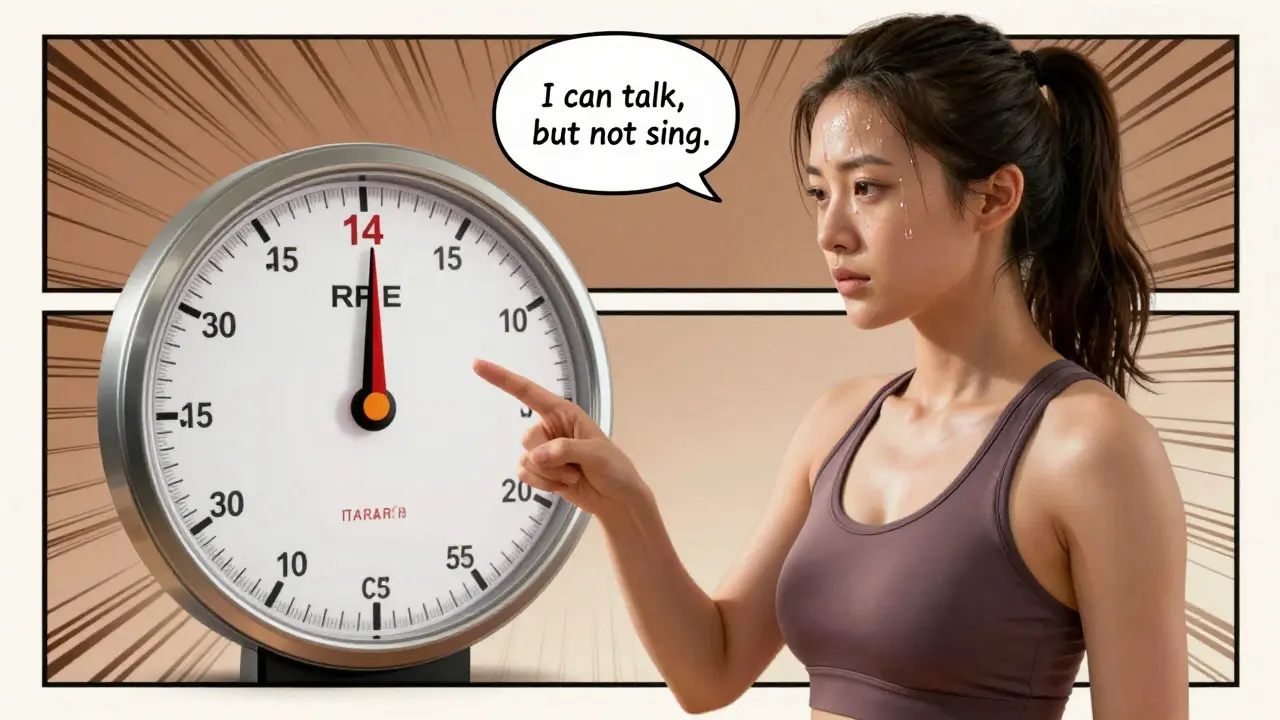
If you can speak in full sentences but not sing, you're at the right intensity.
Your Intensity Result
When you're on beta-blockers for heart conditions like high blood pressure or arrhythmias, you might notice something unexpected: even a light walk leaves you winded. You're not lazy. You're not out of shape. Your body is responding to medication that’s doing exactly what it’s supposed to - slowing your heart rate. But that same effect makes exercise feel harder than it should. The good news? You can still stay active, build strength, and protect your heart - you just need to change how you do it.
Why Beta-Blockers Make Exercise Feel So Tiring
Beta-blockers like metoprolol, propranolol, and atenolol work by blocking adrenaline. That’s great for your heart - it reduces strain, lowers blood pressure, and prevents dangerous spikes in heart rate. But it also cuts your body’s ability to ramp up during physical activity. Your heart can’t beat as fast, so less blood (and oxygen) gets pumped to your muscles. Studies show maximum heart rate drops by 20-30% on these drugs. If you used to hit 170 bpm during a run, you might now max out at 130. That’s not weakness. It’s pharmacology.
This directly lowers your VO₂ max - your body’s maximum oxygen use - by 10-15%. That means even moderate effort feels like hard work. You’ll tire faster, recover slower, and may notice you don’t sweat as much or feel your usual burn. Some users report dry mouth or feeling overheated without sweating - a red flag for dehydration.
How Other Medications Compare
Not all heart meds slow you down the same way. ACE inhibitors like lisinopril or calcium channel blockers like amlodipine rarely limit heart rate. Diuretics might cause cramps from low potassium, but they don’t restrict cardiac output. Beta-blockers are unique because they directly throttle your heart’s ability to respond to demand. That’s why heart rate targets - like the old 220-minus-age rule - don’t work anymore. If you’re trying to hit a number, you’re setting yourself up for frustration or overexertion.
Forget Heart Rate. Use These 3 Tools Instead
Forget your smartwatch’s heart rate zone. It’s misleading. Here’s what actually works:
- The Talk Test - If you can speak in full sentences but not sing, you’re at the right intensity. That’s moderate effort. If you can’t talk without gasping, you’re going too hard. This simple method is backed by the American Heart Association and used in cardiac rehab programs nationwide.
- The Borg RPE Scale - This is a 6-to-20 scale where 6 is “no effort” and 20 is “maximal.” Aim for 12-14 for moderate exercise (feels like a brisk walk), 15-17 for vigorous (you’re working, but can keep going). Most beta-blocker users need to aim one level lower than before they started the drug. If you used to push for 17, now aim for 14.
- Perceived Effort - Ask yourself: “How hard does this feel right now?” Don’t compare to your pre-med self. Compare to how you feel today. If your legs feel heavy or your breath is shallow, slow down. Your body is giving you real-time feedback.
Adjust Your Workout Routine
Don’t quit. Just change the plan.
- Extend your warm-up - Instead of 5 minutes, spend 10-15 minutes easing into movement. This gives your heart time to adjust gradually. A slow walk, arm circles, or light cycling helps prevent sudden strain.
- Extend your workout duration - Since you’re working at lower intensity, you need more time to get the same benefit. Aim for 180-188 minutes of moderate activity per week instead of the standard 150. Break it into 30-40 minute sessions. Five 36-minute walks beats one 90-minute push.
- Use interval training - Research from Circulation shows that 2:1 work-to-rest ratios (e.g., 3 minutes walking, 1.5 minutes resting) improve endurance better than steady-state exercise for beta-blocker users. You get more benefit with less stress on your heart.
- Adjust resistance training - Beta-blockers don’t weaken your muscles. They just limit blood flow. So keep your reps (10-15 per set) but reduce weight by 15-20%. Focus on control, not lifting heavy. You’ll still build strength.
Watch for Warning Signs
Not all fatigue is normal. If you experience any of these, stop and call your doctor:
- Resting heart rate below 45 bpm with dizziness or lightheadedness
- Systolic blood pressure dropping below 90 mmHg during activity
- Chest pain, unusual shortness of breath, or fainting
- Extreme dry mouth or lack of sweat during mild effort - this signals dehydration risk
These signs aren’t common, but they’re serious. About 5% of users report resting bradycardia with symptoms. 3% experience dangerous blood pressure drops during exercise. Don’t ignore them.
What’s New in 2026?
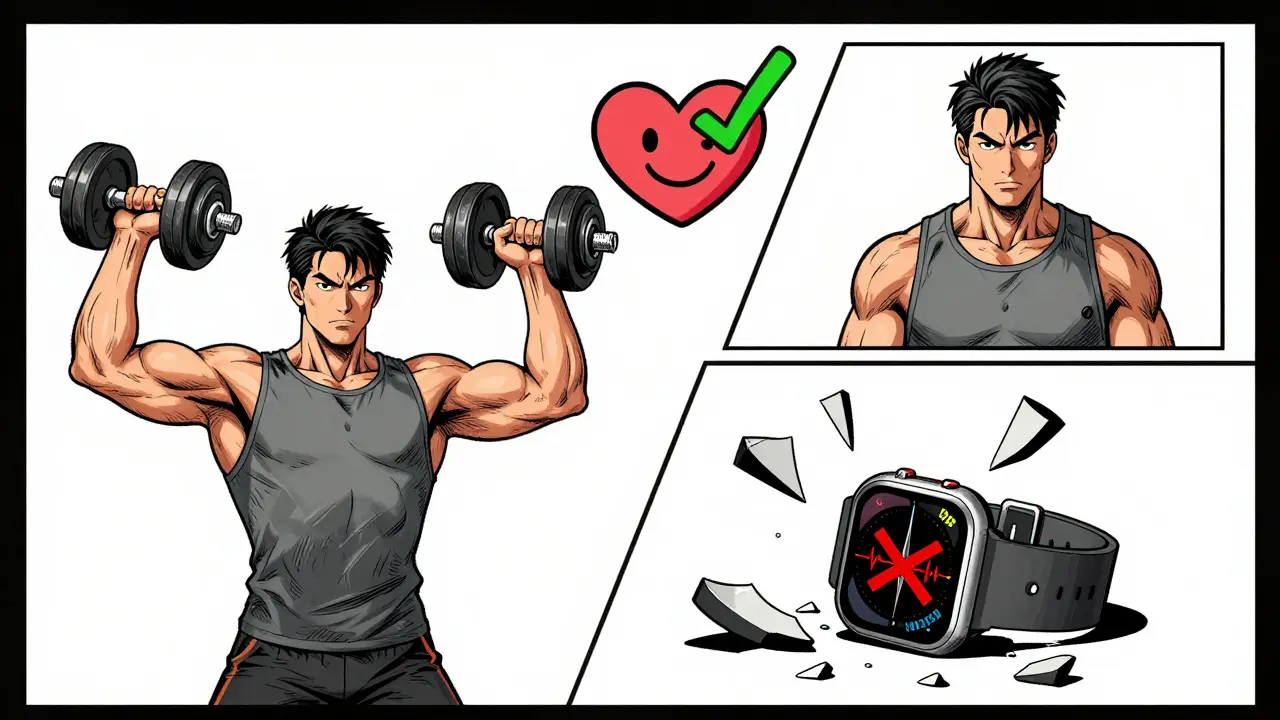
Technology is catching up. Apple Watch’s software version 9.1 (released in 2023) now includes beta-blocker-adjusted heart rate zones. It doesn’t replace the talk test, but it can help you track trends over time. Wearables are starting to factor in medication use - a big step forward.
Cardiopulmonary exercise testing (CPET) is becoming more available. It’s a lab test that measures exactly how your body responds to exercise while on meds. If your clinic offers it, ask. It’s the most accurate way to personalize your plan.
Newer beta-blockers like nebivolol cause less reduction in VO₂ max - about 8-10% less than older ones. If you’re switching meds, this might be worth discussing with your doctor.
Real People, Real Results
One user on Reddit said: “On 100mg metoprolol, my 5K time went from 25:30 to 29:15 - but I didn’t feel like I was trying harder.” That’s normal. Performance drops, but effort stays the same.
Another on the American Heart Association’s support forum said: “Switching from heart rate to the talk test let me walk every day without fear.” That’s the goal: consistency without burnout.
The data shows 67% of beta-blocker users report exercise fatigue. But those who adjusted their approach - using RPE, extending time, skipping heart rate targets - kept moving. And that’s what matters.
Keep Moving. Just Differently.
You didn’t lose your fitness. Your body just got a new set of rules. Beta-blockers saved your heart. Now, you’re learning how to move within those limits. It’s not about pushing harder. It’s about working smarter. Use the talk test. Listen to your body. Extend your time. Drop the numbers. Stay consistent. Your heart will thank you - not for how fast you go, but for how long you keep going.


I swear, beta-blockers turned me into a human sloth. Used to run 5Ks like it was nothing. Now I need a nap after walking to the mailbox. But the talk test? Game changer. If I can talk while I’m shuffling, I’m good. No more stressing over heart rate numbers. My watch is now just a fancy step counter. 🙃