Feverfew & Anticoagulant Bleeding Risk Assessment
Medication Profile
Personal Health Factors
- Age over 65 years Toggle
- History of GI Bleeding or Ulcers Toggle
- Surgery Planned within 3 Weeks Toggle
- Liver Disease or Impaired Function Toggle
- Also Taking Aspirin or NSAIDs Regularly Toggle
Risk Assessment
Key Recommendations
- Select options above to generate personalized advice.
Monitoring Checklist
Imagine taking a natural herb to stop your migraines, only to find your blood thinner isn't working as it should. This is the real-world tension behind bleeding risk when combining feverfew with anticoagulant medications. Feverfew (*Tanacetum parthenium*) is a popular herbal remedy for headache prevention, but its active compound, parthenolide, affects how your platelets clump together. For millions of people on blood thinners like warfarin or apixaban, this interaction moves from theoretical to practical concern. The core issue isn't just whether you can take them together; it's understanding the specific mechanism of interference and knowing exactly when to pause your supplement regimen.
The risk stems from feverfew's ability to inhibit serotonin-induced platelet aggregation. While this helps prevent migraine onset, it also means your blood takes longer to clot. When paired with drugs that already thin the blood, the effects can stack up. It’s not a guaranteed disaster for everyone, but the margin for error is smaller than with many other supplements. Understanding this balance is key to using both therapies safely.
How Feverfew Interacts with Blood Thinners
To grasp the danger, you have to look at what feverfew actually does in your body. The primary bioactive component is parthenolide, which makes up about 0.1% to 1.0% of the dried leaf material. In clinical settings, standardized capsules usually contain 0.2% to 0.7% parthenolide. This compound doesn't just reduce inflammation; it specifically blocks the pathway where serotonin triggers platelets to stick together. Interestingly, it doesn't seem to affect platelet response to ADP or thrombin as strongly, making its effect somewhat targeted but still significant for overall clotting efficiency.
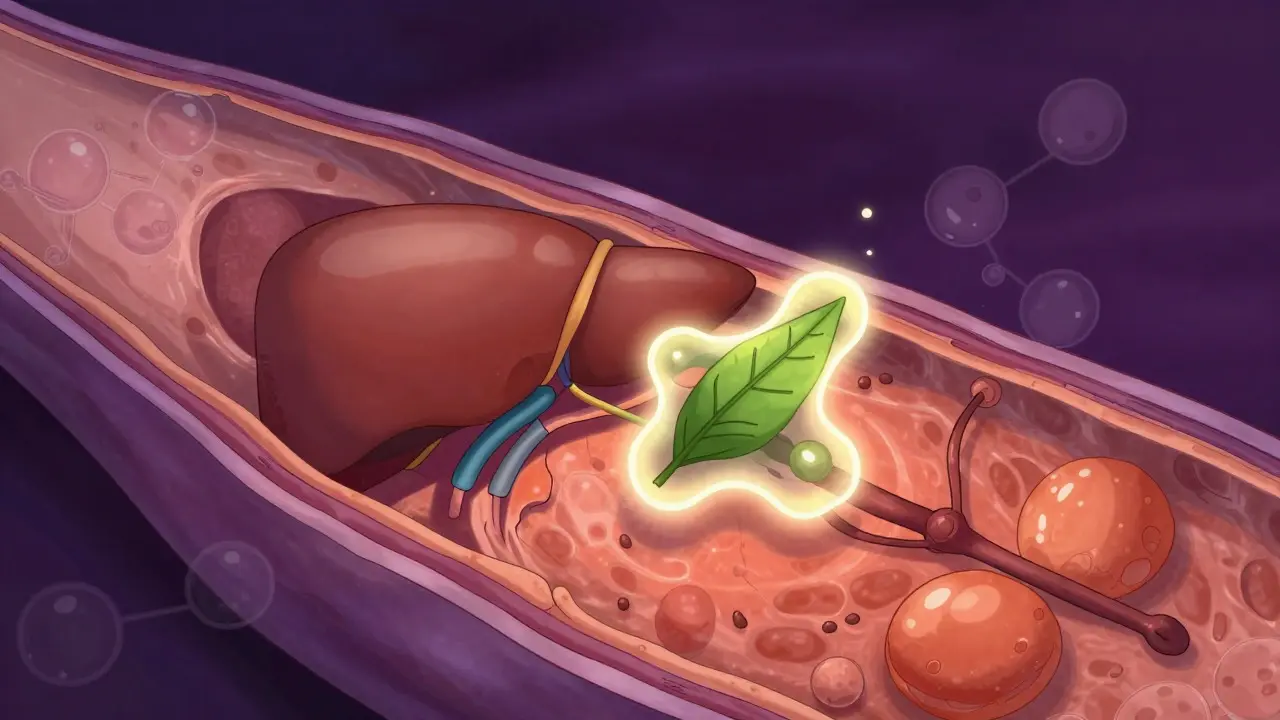
Beyond platelets, feverfew influences liver enzymes. Specifically, it inhibits several cytochrome P450 enzymes, including CYP2C9 and CYP3A4. This matters because warfarin, one of the most common oral anticoagulants, relies heavily on these same enzymes for metabolism. If feverfew slows down CYP2C9 activity, your body clears warfarin more slowly. Studies suggest this could increase plasma concentrations of warfarin by roughly 18-22%. That might sound small, but in the context of narrow therapeutic windows, even a slight bump in drug levels can push your INR out of range.
| Herb | Primary Mechanism | Interaction Type | Risk Level (EMA Category) |
|---|---|---|---|
| Feverfew | Inhibits serotonin-induced platelet aggregation & CYP enzymes | Additive antiplatelet + Metabolic inhibition | Category C (Theoretical risk) |
| Ginkgo Biloba | Potent antiplatelet effect | Strong additive bleeding risk | High Risk (Documented cases) |
| Dong Quai | Contains coumarin derivatives | Direct prolongation of prothrombin time | Category A (Documented risk) |
| Garlic | Mild antiplatelet effect | Additive bleeding risk | Moderate Risk |
Real-World Evidence and Case Studies
You might wonder if this is just a lab theory or something that actually happens in clinics. The evidence is mixed but telling. A notable case report published in 2021 described a 36-year-old woman who developed abnormal coagulation parameters while taking feverfew. Her prothrombin time (PT) shot up to 27.3 seconds (normal is 11-16), and her partial thromboplastin time (PTT) reached 42 seconds (normal is 18-28). She also showed signs of anemia with hemoglobin dropping to 10 g/dL. After stopping the herb for four months, all these values normalized. This case highlights that the effect can be profound enough to cause clinically significant changes, not just minor statistical shifts.
However, feverfew isn't the worst offender among herbal remedies. Medical professionals often use the "Few Gs" mnemonic to remember herbs with bleeding risks: Feverfew, Ginger, Ginkgo, Garlic, and Ginseng. Among these, ginkgo biloba has a stronger track record of interacting with warfarin, with over a dozen documented cases of increased INR reported to the FDA between 2000 and 2015. Feverfew, by contrast, has fewer documented severe interactions, leading regulatory bodies like the European Medicines Agency to classify it as "Category C," meaning there is a theoretical risk without overwhelming clinical proof of widespread harm. This distinction is crucial: it's not safe to ignore, but it's not an automatic contraindication either.
Assessing Your Personal Risk Factors
Not every patient faces the same level of danger. Several factors determine how likely you are to experience issues. First, consider your current medication. If you are on warfarin, the metabolic interaction via CYP2C9 is a major concern. If you are on newer direct oral anticoagulants (DOACs) like apixaban or rivaroxaban, the risk profile is slightly different but still present due to shared enzyme pathways. A multicenter trial currently investigating feverfew's interaction with apixaban aims to clarify this specific gap in knowledge, with results expected soon.
Your surgical schedule is another critical factor. If you have any upcoming procedures, feverfew needs to be stopped well in advance. Unlike garlic or ginger, which clear from your system within about 72 hours, feverfew requires a longer washout period. The American Society of Anesthesiologists recommends discontinuing feverfew at least 14 days before standard surgeries. For high-bleeding-risk procedures, experts advise waiting 21 days. Why so long? Because of "post-feverfew syndrome." Abruptly stopping long-term use can trigger withdrawal symptoms like insomnia, joint pain, and headaches, which complicate recovery. A tapering period of 2-3 weeks is generally recommended to minimize this discomfort while ensuring the herb is cleared from your system.
Monitoring and Practical Management Strategies
If you decide to continue using feverfew alongside anticoagulants, strict monitoring is non-negotiable. Healthcare providers typically recommend obtaining baseline PT/INR and PTT tests before starting the supplement. Once you begin, retesting every two weeks for the first month helps catch any drift in your clotting times early. Don't wait for bruising or nosebleeds to tell you something is wrong; the numbers will show the trend before you do.
Communication is your best tool here. Many patients forget to mention herbal supplements during their doctor's visits, assuming they are "natural" and therefore harmless. Make sure your hematologist or primary care provider knows exactly what you are taking, including the dosage and formulation. Encapsulated forms are generally preferred over chewing fresh leaves, which can cause mouth sores in about 1 in 9 users. Standardized capsules provide a consistent dose of parthenolide, making it easier to predict and manage the interaction. If you notice unusual bruising, prolonged bleeding from cuts, or dark stools, contact your healthcare provider immediately. These are classic signs that your anticoagulation levels may be too high.
Frequently Asked Questions
Can I take feverfew if I am on warfarin?
It is possible, but it requires careful management. Feverfew can inhibit the liver enzymes that break down warfarin, potentially increasing its concentration in your blood. You must work closely with your doctor to monitor your INR levels frequently, especially when starting or stopping the supplement. Do not start or stop feverfew without consulting your healthcare provider.
How long before surgery should I stop taking feverfew?
Most guidelines recommend stopping feverfew at least 14 days before standard surgical procedures. For high-bleeding-risk surgeries, a 21-day window is safer. This allows time for the herb to clear your system and reduces the risk of excessive bleeding during the operation. Tapering off gradually over 2-3 weeks can help avoid withdrawal symptoms.
What are the signs of excessive bleeding from this interaction?
Watch for easy bruising, nosebleeds that last longer than usual (more than 15-20 minutes), bleeding gums, pink or dark urine, and black or tarry stools. In women, unusually heavy menstrual bleeding can also be a sign. If you experience any of these, seek medical attention promptly to check your coagulation parameters.
Is feverfew safer than ginkgo biloba for people on blood thinners?
Generally, yes. Ginkgo biloba has a stronger documented history of causing elevated INR levels and bleeding events in patients on warfarin. Feverfew's risk is considered moderate and primarily theoretical, though it still requires caution. Both are part of the "Few Gs" group of herbs associated with bleeding risks, but ginkgo tends to be flagged more frequently in clinical warnings.
Does the form of feverfew matter for bleeding risk?
Yes. Chewing fresh leaves can cause local irritation and mouth sores, but the systemic bleeding risk comes from the parthenolide content regardless of form. However, standardized capsules offer a more predictable dose, which helps in managing the interaction with anticoagulants. Liquid extracts vary more in potency, making dosing less precise. Always choose products labeled with their parthenolide percentage.