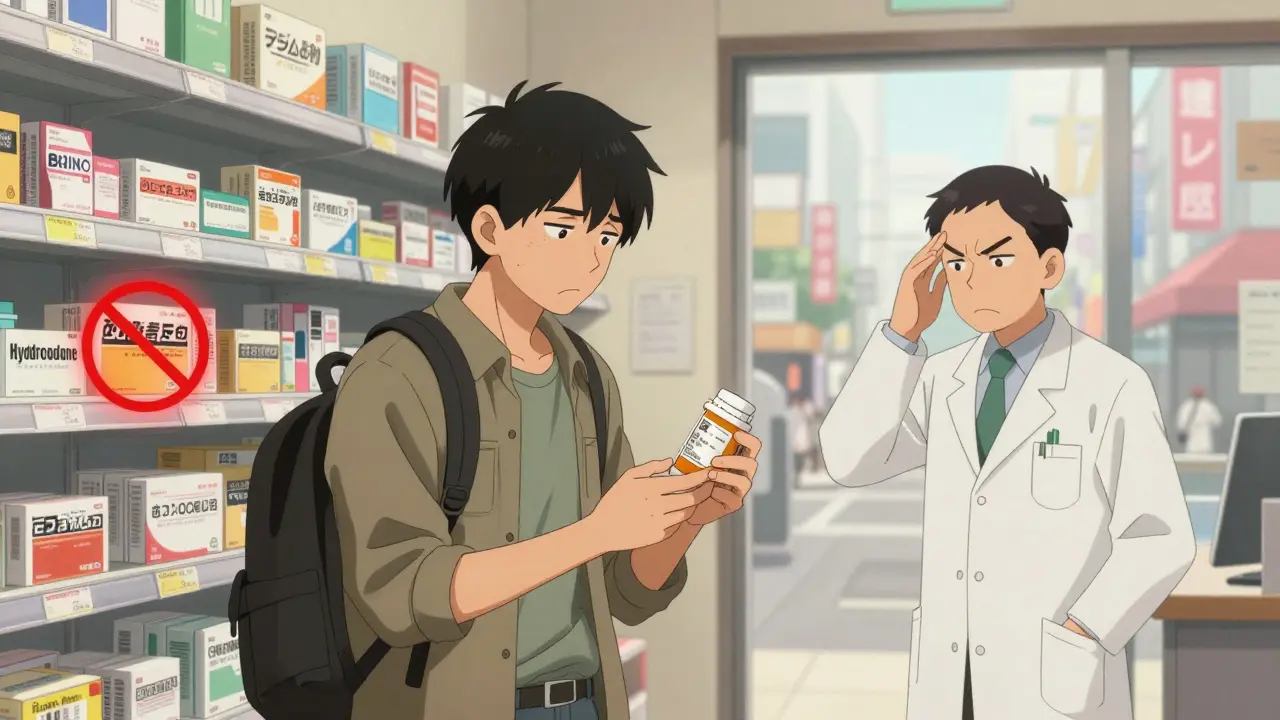
Imagine you’re halfway through your trip in Tokyo, and your anxiety medication runs out. You walk into a pharmacy, ask for your usual prescription, and the pharmacist shakes their head. No, they can’t fill it. Not because they don’t have it - but because it’s illegal here. This isn’t a rare story. Every year, thousands of travelers face this exact situation - not because they didn’t plan, but because they didn’t know how complex international drug laws really are.
Why Your Prescription Might Not Work Overseas
Not all medications are created equal around the world. What’s over-the-counter in Mexico might be a controlled substance in Australia. What’s legal in the U.S. could land you in jail in Singapore. The problem isn’t just availability - it’s legality.For example, hydrocodone, a common painkiller in the U.S., is completely banned in Japan. Codeine is sold without a prescription in Mexico, but in Australia, you need special authorization just to bring it in. Even something as simple as pseudoephedrine - found in many cold medicines - is banned in New Zealand, Australia, and the UAE because it can be used to make methamphetamine. In Q1 2025 alone, Sydney Airport confiscated 387 packages containing this ingredient from travelers.
The root of the issue lies in decades-old international treaties. The 1961 Single Convention on Narcotic Drugs and the 1971 Convention on Psychotropic Substances created global drug control frameworks, but each country interprets them differently. The International Narcotics Control Board (INCB) tracks these rules, but only 68 out of 200+ countries have published clear guidelines for travelers. That means if you’re heading somewhere like the UAE, Thailand, or Malaysia, you’re flying blind unless you do your homework.
What You Can and Can’t Bring Across Borders
The golden rule? Always carry medications in their original containers with pharmacy labels. No ziplock bags. No pill organizers. No unlabeled bottles. Airlines and customs agencies require this - and they enforce it.The U.S. Transportation Security Administration (TSA) allows medically necessary liquids over 3.4 ounces if declared at security, but that doesn’t mean you’re safe once you land abroad. Countries like Japan limit narcotic medications to a 30-day supply. Singapore caps it at 14 days. Even if you have a doctor’s note, exceeding those limits can lead to confiscation - or worse.
Here’s what you need to carry:
- Original prescription bottles with your name matching your passport
- A letter from your doctor on official letterhead, listing your diagnosis (using ICD-11 codes), medication names (both brand and generic), dosage, and quantity
- Notarized translations if the destination country doesn’t use English
- Extra copies of all documents - keep one in your carry-on, one in your checked bag, and one digitally on your phone
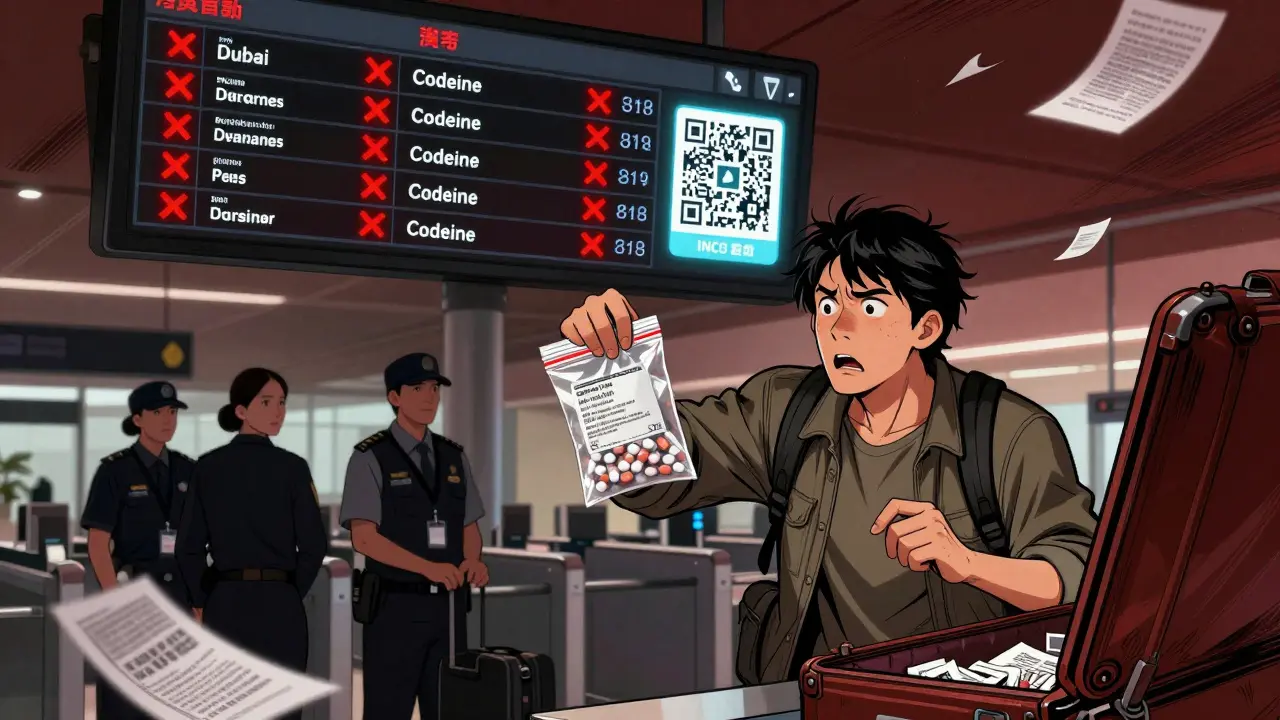
Doctors’ letters aren’t just paperwork - they’re your legal shield. In 2024, the CDC found that 43% of medication-related travel incidents involved benzodiazepines like alprazolam (Xanax) or zolpidem (Ambien). In Dubai, 1,247 travelers were delayed or detained in 2024 just because they brought these without prior approval. One Reddit user, u/TravelMedWoe, lost three full days of vacation fighting customs over 10mg of zolpidem - even with a WHO-standard letter.
How to Get a Local Prescription Abroad
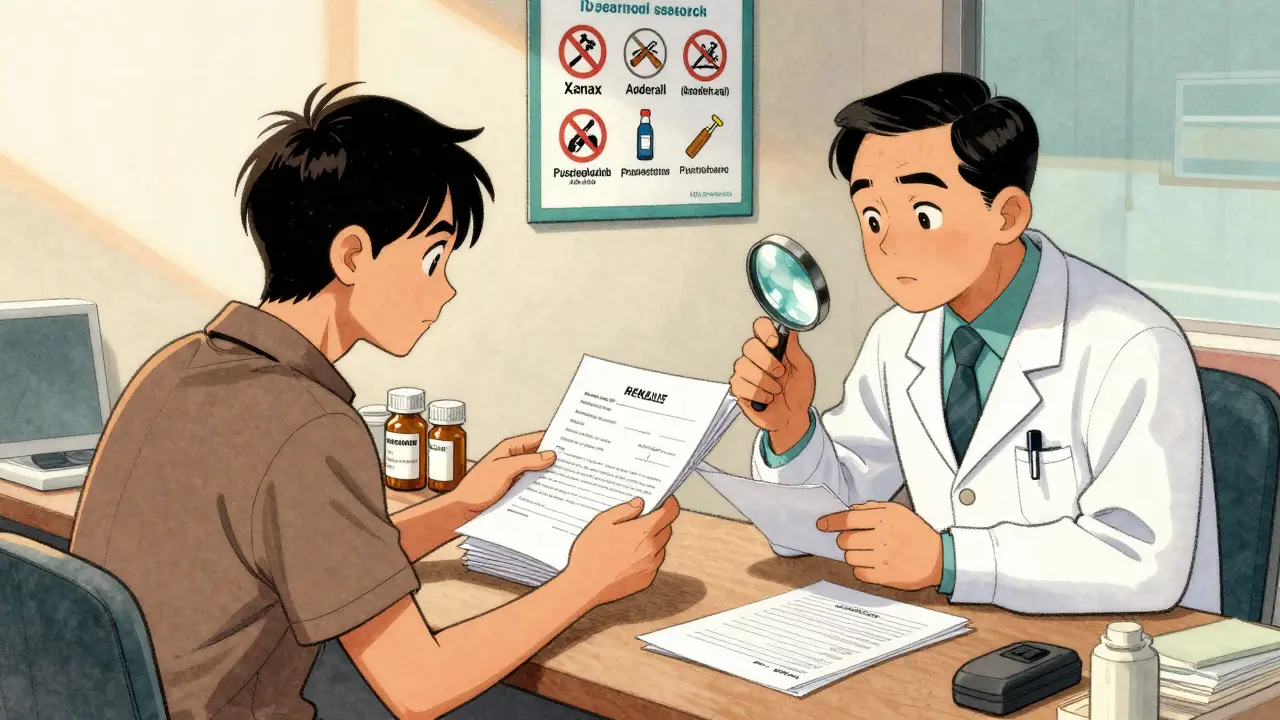
If you run out, or your meds aren’t allowed, you might need to see a local doctor. It’s not impossible - but it’s not easy either.Start by finding a clinic that treats international patients. Services like the International Association for Medical Assistance to Travellers (IAMAT) have a network of 1,400 verified clinics worldwide. These are doctors who understand foreign prescriptions and can help you get a local script.
Bring everything you have: your original prescription, doctor’s letter, pill bottles, even the packaging. In many countries, doctors won’t write a new prescription without proof you were taking it legally at home. Some may require blood tests or a consultation before issuing anything - especially for controlled substances like ADHD meds or opioids.
Be prepared for delays. In Southeast Asia, getting a local script for a stimulant like Adderall can take days. In Europe, the process is faster - especially if you’re in the EU. Under the EU’s Falsified Medicines Directive, a prescription from Germany can be filled in France, Spain, or Italy with 98.7% success rate. But outside the EU? Forget it. Countries like Malaysia ban all benzodiazepines - no exceptions, even with a U.S. prescription.
Regional Differences You Can’t Ignore
You can’t treat every country the same. Here’s what you need to know by region:- Europe (EU): Best-case scenario. Your prescription transfers easily. Use the European Health Insurance Card (EHIC) if you’re from an EU country. Non-EU travelers can still get prescriptions filled with proper documentation.
- United States: One of the worst for travelers. ADHD medications like methylphenidate and amphetamine/dextroamphetamine are Schedule II controlled substances. You can’t bring them into most countries without a special import permit. Even bringing them back into the U.S. from abroad requires FDA approval.
- Japan: Extremely strict. Narcotics, sedatives, and even some cough syrups are banned. You need pre-approval from Japan’s Ministry of Health. Apply at least 60 days before arrival.
- United Arab Emirates: Zero tolerance. Zolpidem, codeine, and even some antidepressants require official permission. Customs officers have a list of banned substances - and they check every bag.
- Thailand: Relatively flexible. Most medications are allowed if you have a prescription and a reasonable quantity (up to 30 days). But don’t bring anything with pseudoephedrine - it’s banned.
- Canada: Travelers can now legally import a 90-day supply of medication from approved countries under the 2025 Affordable and Safe Prescription Drug Importation Act. This makes Canada one of the few countries actively helping foreign travelers.
The U.S. ranks 23rd globally for medication accessibility for travelers, according to the 2025 Commonwealth Fund. That means if you’re American, you’re more likely to run into trouble than someone from the UK, Germany, or Australia.
What to Do Before You Leave
Don’t wait until you’re at the airport. Start planning 8 to 12 weeks before departure.- Check your destination’s official embassy website for medication rules. Don’t rely on Google - go straight to the source.
- Visit the INCB’s Country Regulations database (updated October 2025) to see if your destination has published guidelines.
- Call your doctor. Ask for a letter with ICD-11 codes and generic drug names. Don’t just say “I need my pills” - be specific.
- Get translations notarized if needed. In non-English-speaking countries, 62% of rejections happen because the label wasn’t translated.
- Call your airline. Some require advance notice for carrying controlled substances.
- Carry a 30-day supply extra - just in case flights are delayed or you get stuck.
And here’s the one thing no one tells you: If you’re taking psychiatric meds, tell your doctor you’re traveling. In 2025, the CDC reported a 22% jump in benzodiazepine-related travel incidents - mostly because people didn’t realize how tightly these drugs are controlled abroad.
What to Do If You’re Turned Away
If customs confiscates your meds:- Stay calm. Arguing won’t help.
- Ask for a written explanation of why it was seized.
- Contact your country’s embassy immediately. They can’t get your meds back, but they can help you find local care.
- Use IAMAT or local expat groups to find a doctor who understands your condition.
- Never try to buy meds on the street. Counterfeit drugs are rampant in countries like Thailand, Mexico, and India.
Some travelers turn to services like MediFind or MyTravelMed, which help source medications abroad. MediFind has an 85% success rate in 28 countries. But even these services can’t guarantee access to banned substances.
The Future of Travel Medications
Good news: Change is coming. In May 2025, the World Health Organization released a new guideline pushing for standardized international documentation for controlled medications. By mid-2026, a universal form will be available for doctors to use - making it easier for travelers to prove they’re not smuggling drugs, just managing health.The U.S. is also moving forward. The Affordable and Safe Prescription Drug Importation Act of 2025 will allow U.S. travelers to legally import medications from certified pharmacies in Canada, the UK, EU, and Switzerland starting May 1, 2026. This could cut costs and reduce legal risks.
But until then? The system is still broken. 68% of U.S. travelers report medication access issues abroad. 41% of those with chronic conditions had to change their treatment. And 67% of people on opioids couldn’t refill their prescriptions overseas.
Traveling with medication isn’t just about packing a pillbox. It’s about understanding laws, preparing documents, and knowing your rights. The world is connected - but your medicine isn’t.
Can I bring my prescription medication on a plane?
Yes - but only if it’s in its original container with the pharmacy label showing your name, the drug name, dosage, and prescribing doctor. TSA allows medically necessary liquids over 3.4 ounces if declared, but international customs have stricter rules. Never pack pills in a pill organizer or unmarked bottle.
What if my medication is banned in the country I’m visiting?
You cannot bring it in. Even with a prescription, banned substances like codeine in Japan or benzodiazepines in Malaysia will be confiscated. Your options: 1) Switch to an allowed alternative before you leave, 2) Get a local prescription after arrival through a licensed clinic, or 3) Reschedule your trip. Never risk smuggling - penalties include fines, detention, or jail.
Can I get a local prescription abroad?
Yes, but it depends on the country and your medication. In the EU, it’s usually straightforward. In Southeast Asia or the Middle East, you’ll need to see a doctor, show your original prescription, and possibly undergo a consultation. Use IAMAT-certified clinics for reliable care. Don’t expect to walk in and get a refill - many doctors require proof of prior use.
How much medication can I bring?
Most countries allow a 90-day supply for personal use. But Japan limits narcotics to 30 days. Singapore caps it at 14 days. Always check the destination’s official rules. If you’re carrying more than 90 days’ worth, you’ll need a special import permit - which can take months to get.
Do I need a doctor’s letter?
Yes - especially for controlled substances. A letter on official letterhead with your diagnosis (using ICD-11 codes), medication names, dosage, and quantity is required by 83% of Schengen countries and strongly recommended everywhere else. It’s your best defense against confiscation.
What medications are most likely to cause problems?
Stimulants (Adderall, Ritalin), benzodiazepines (Xanax, Valium), opioids (oxycodone, hydrocodone), and pseudoephedrine (in cold meds) are the top offenders. ADHD and anxiety meds cause the most travel incidents. Check your specific drugs against your destination’s list - don’t assume they’re fine because they’re legal at home.
Are there services that help find medications abroad?
Yes. Services like MediFind (85% success rate) and MyTravelMed (62% success rate for controlled substances) help travelers locate and obtain medications overseas. IAMAT also connects travelers with vetted clinics. These aren’t magic solutions - but they’re far safer than guessing or buying on the street.


This is the kind of guide every traveler needs before booking a flight. I had no idea hydrocodone was banned in Japan until my cousin got detained at Narita. She had a doctor’s note and still lost three days. Don’t risk it-plan ahead, carry the letter, and double-check the embassy site. This post saved me from a nightmare.