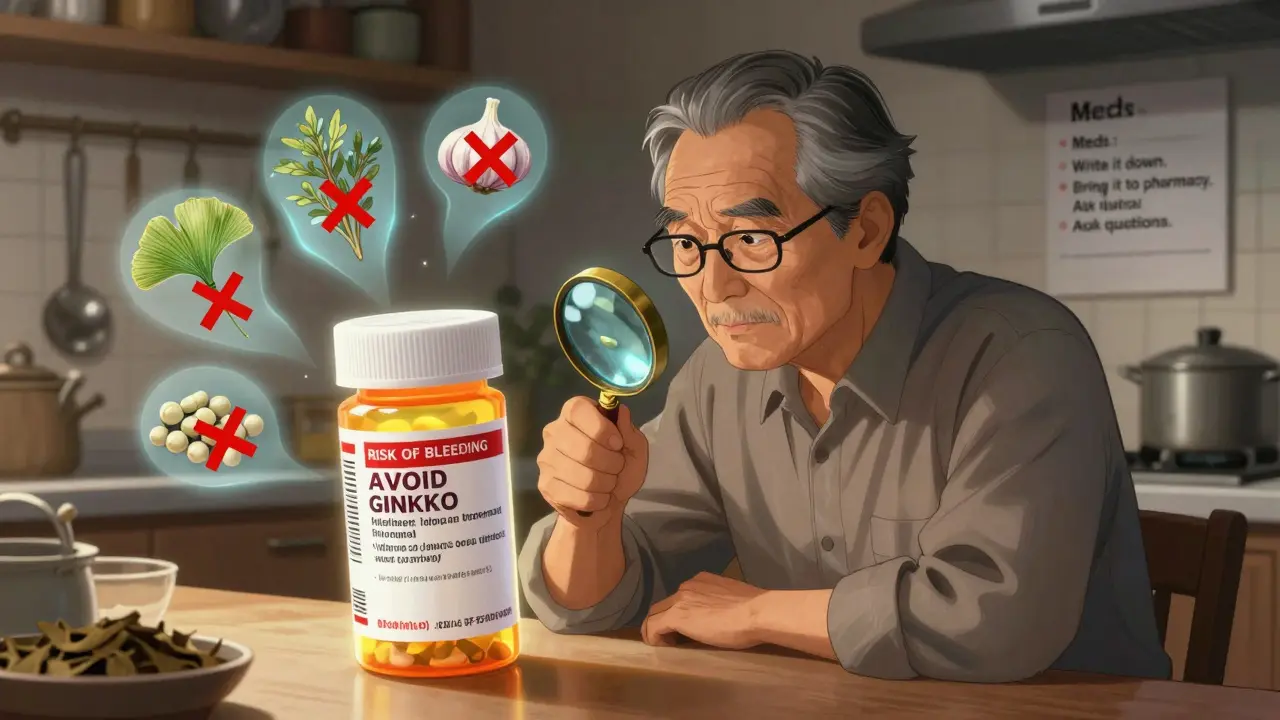
Every time you pick up a prescription, the label on that bottle holds more than just your name and dosage instructions. It’s a safety guide - one that can keep you out of the hospital. But most people don’t read it like one. They glance at the time and dose, then set it aside. That’s where the danger starts. Drug interactions don’t always cause immediate problems. Sometimes, they quietly reduce your medication’s power. Other times, they turn a harmless pill into a health threat. The good news? You don’t need a medical degree to understand what’s on that label. You just need to know where to look - and what to look for.
What’s on the label, really?
The FDA requires every prescription label to include specific sections, and two of them are critical for avoiding dangerous interactions: Warnings and Precautions and Drug Interactions. These aren’t just filler text. They’re legally required safety alerts.
The Warnings and Precautions section (usually Section 5) is where the most serious risks are spelled out. This is where you’ll see phrases like:
- “Avoid concomitant use with [drug name]”
- “May increase risk of bleeding when used with blood thinners”
- “Monitor for dizziness or low blood pressure”
These aren’t vague suggestions. They’re red flags. If your medication says to avoid mixing with ibuprofen, that’s not optional. It’s a warning backed by clinical data showing real harm.
The Drug Interactions section (Section 7) is the detailed list. It’s longer, more technical, and often buried in small print. But here’s the trick: it’s organized by severity. Look for the bolded lines. The FDA’s 2024 update requires manufacturers to highlight the most critical interactions in bold text. These are the ones that can cause hospitalization.
For example, if you take warfarin (a blood thinner), the label might say: “Avoid concomitant use with ginkgo biloba. Increased risk of bleeding has been reported.” That’s not a suggestion. That’s a life-or-death alert. And yet, studies show that 83% of patients taking warfarin don’t tell their doctor about herbal supplements they use - including ginkgo, garlic, or even high-dose vitamin E.
Don’t ignore OTC labels either
You might think, “I’m not on prescription meds, so this doesn’t apply to me.” But over-the-counter drugs are just as dangerous when mixed improperly. Pain relievers like ibuprofen or naproxen can raise your blood pressure or damage your kidneys if you’re already on a blood pressure medication. Even something as simple as a cold medicine containing pseudoephedrine can spike your heart rate if you have an irregular heartbeat.
The Warnings section on OTC bottles is where these risks are listed. And here’s the shocking part: 63% of people don’t read them. A BeMedWise Foundation study found that 98% of OTC products contain critical interaction info - but only 57% of users ever look. That’s like driving with your seatbelt on but ignoring the airbag warning.
Take cold medicine as an example. Many contain acetaminophen. If you’re also taking a prescription painkiller with acetaminophen, you could easily overdose - and your liver won’t warn you until it’s too late. The CDC reports that acetaminophen overdose is the leading cause of acute liver failure in the U.S. - and most cases happen because people didn’t realize they were doubling up.
How to read the label like a pro
You don’t need to be a pharmacist to get this right. Just follow these steps every time you get a new prescription:
- Write down every medication you take - including vitamins, supplements, and OTC drugs. Don’t forget herbal teas, CBD oil, or protein powders. These can all interact.
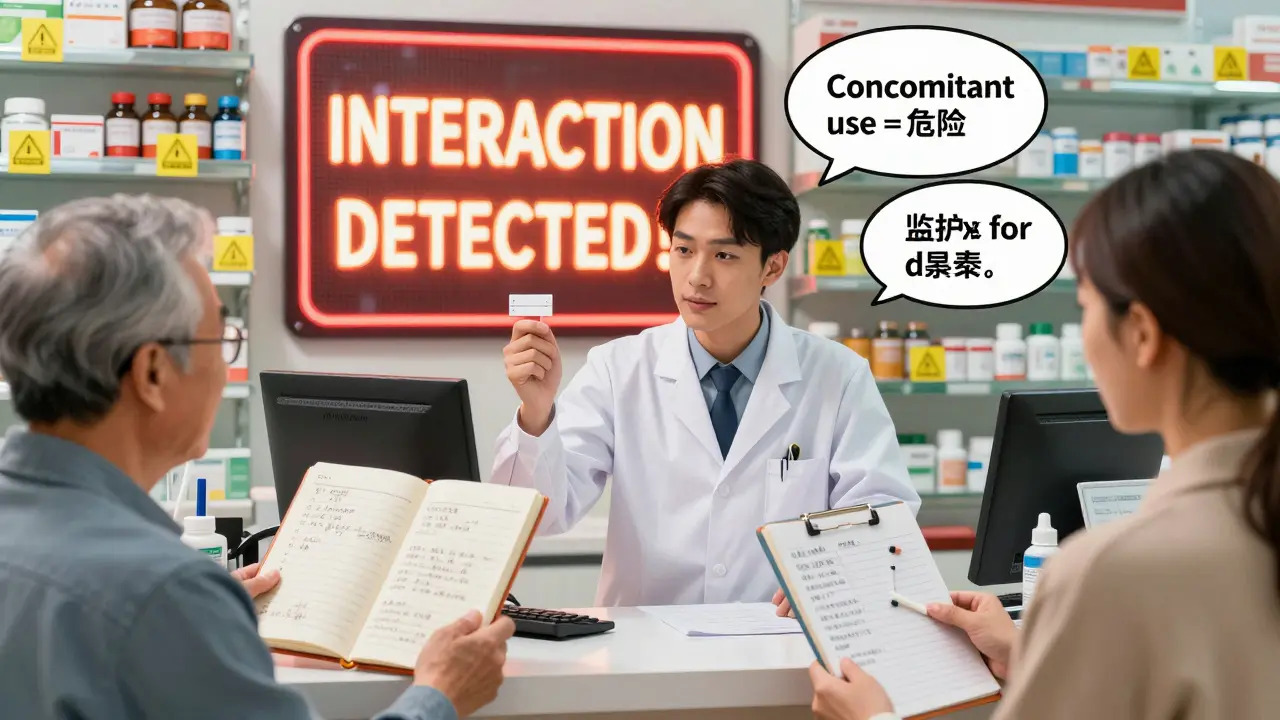
- Bring that list to your pharmacy when you pick up your prescription. Pharmacists are trained to spot interactions. A 2023 study found that 22% of medication reviews uncovered hidden risks that doctors missed.
- Look for the word “avoid” or “do not use with.” These are the clearest warnings. If it says “monitor,” that means you need to watch for symptoms like dizziness, nausea, or unusual bruising.
- Check for dosage changes. Some labels say, “Reduce dose by 50% when used with [drug].” That’s not a mistake. It’s a safety measure.
- Use the Drugs.com Drug Interactions Checker as a second opinion. It’s not perfect - it misses about 8% of prescription drugs - but it’s free, fast, and helps catch what you might overlook.
One simple trick that works: write the reason for each medication on the bottle. For example, instead of just “Clonazepam,” write “Clonazepam - for anxiety.” Why? Because 12% of medication mix-ups happen because people confuse similar-sounding drugs. Klonopin (clonazepam) and clonidine (a blood pressure drug) look alike on the label. If you mix them up, you could have a seizure or a dangerous drop in blood pressure.
What to do when the label confuses you
Let’s be honest - some labels are written in medical jargon. “Concomitant use” means “taken at the same time.” “CYP3A4 inhibitor” means “this drug slows down how your body breaks down another drug.” Most people don’t know these terms.
That’s okay. You don’t have to. But you do have to ask.
If a label says, “Use with caution,” or “May interact,” and you’re not sure what that means - call your pharmacist. Seriously. They’re paid to explain this stuff. A 2023 Drugs.com survey found that 83% of users who asked a pharmacist about their label understood the risks better than those who just read it alone.
And if you’re taking five or more medications? You’re in the highest-risk group. The CDC found that 68% of people on five or more drugs can’t correctly identify potential interactions from their labels. That’s not your fault. The system isn’t designed for complexity. But you can still protect yourself: keep a written list. Update it every time you start or stop something. Bring it to every appointment.
The hidden danger: supplements and herbal products
Here’s the biggest blind spot: natural doesn’t mean safe. Ginkgo biloba, St. John’s wort, garlic pills, and even high-dose vitamin C can interfere with your prescriptions.
St. John’s wort, for example, can make birth control, antidepressants, and HIV meds stop working. Ginkgo can turn a blood thinner into a bleeding risk. And here’s the kicker: prescription labels only mention supplement interactions in 17% of cases - even though they cause 32% of serious drug interactions.
That means you have to be the one to speak up. Tell your doctor and pharmacist: “I take ginkgo every day.” Or, “I use turmeric for joint pain.” Don’t assume they’ll ask. Most don’t.
What’s changing - and what’s next
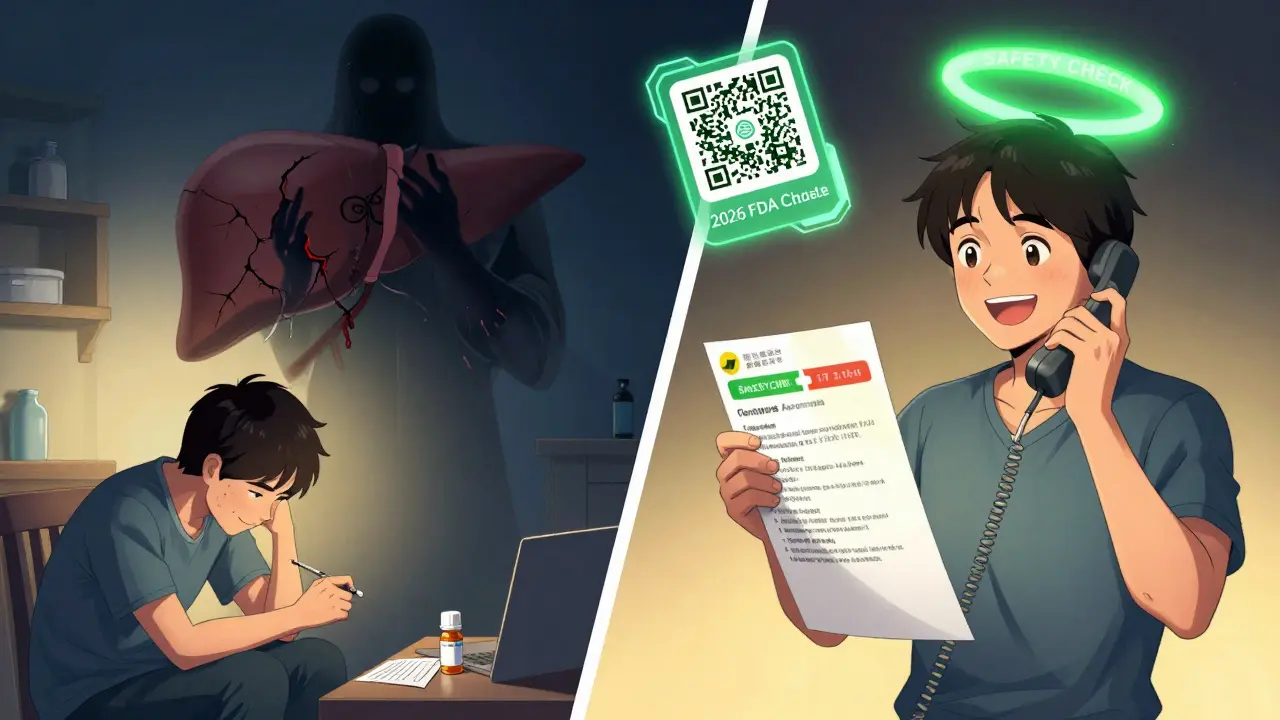
The FDA is making changes. By 2025, all new prescription labels will have clearer, bolder warnings. By 2026, some pharmacies will start testing QR codes on bottles that link to updated interaction info - no more squinting at tiny print.
But here’s the truth: technology won’t fix this unless you use it. The tools are there. The information is required by law. The system is designed to protect you. But it only works if you read it, understand it, and speak up when you don’t.
Every year, 100,000 people in the U.S. are hospitalized because of drug interactions that could have been avoided. Most of them didn’t know the warning was there - or didn’t realize how serious it was.
You don’t have to be one of them.
What should I do if I miss a dose because of a drug interaction warning?
Don’t guess. Call your pharmacist or doctor. Some interactions require you to skip a dose, while others mean you need to adjust timing. For example, if your label says to avoid taking your medication with grapefruit juice, you might be told to take it at night instead of morning. Never restart a missed dose without checking - too much of a drug at once can be dangerous.
Can I trust drug interaction apps instead of reading the label?
Apps like Drugs.com are helpful, but they’re not a replacement. Prescription labels are legally required, manufacturer-validated, and include your exact dosage. Apps may miss newer drugs or not reflect your personal dose. Use them as a second check - not your only source.
Why do some labels say “monitor for” instead of “avoid”?
It means the interaction is real but manageable. For example, if you take a blood pressure drug with a diuretic, your potassium levels might drop. Your doctor may ask you to get a blood test every few months. You don’t have to stop the medication - just keep an eye on it. Always ask what symptoms to watch for.
Do I need to check interactions if I’m only taking one prescription?
Yes. Even one prescription can interact with OTC drugs, supplements, or food. For example, statins (cholesterol drugs) can cause muscle damage if taken with grapefruit juice. Antibiotics can become ineffective if taken with calcium supplements. One medication doesn’t mean one risk.
What if I can’t read the small print on the label?
Ask your pharmacist for a large-print version. Many pharmacies offer this free. You can also use your phone’s camera zoom feature to enlarge the text. If you’re still unsure, call your doctor’s office - they can send you a clear copy. Never guess what’s written.


Just read my label last week and noticed a bolded warning about turmeric. Never knew it could mess with my blood thinner. I called my pharmacist right away - she said 7 out of 10 patients don’t mention supplements. Glad I did.