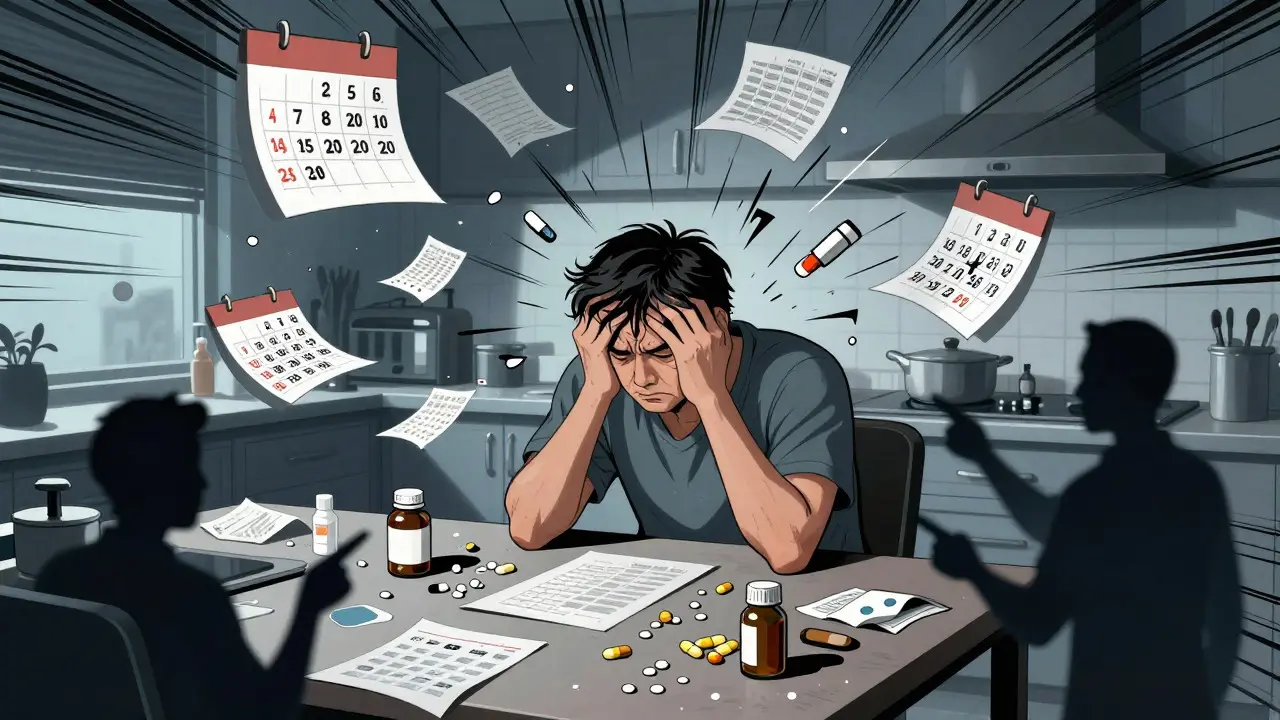
Imagine getting a call from your doctor saying you need three new prescriptions for high blood pressure, cholesterol, and diabetes. Now imagine trying to remember when each one runs out, dealing with different insurance rules for early refills, and worrying about missing a dose because the dates don't line up. For millions of people managing chronic conditions, this is daily life. But there is a simpler way to handle it called refill synchronization, also known as med sync. This service aligns all your monthly medication refill dates to a single day, turning a chaotic schedule into a manageable routine.
Medication non-adherence affects roughly half of patients with chronic illnesses, according to the World Health Organization. The result? More hospital visits, higher costs, and worse health outcomes. Med sync addresses this by removing the guesswork and complexity from managing multiple prescriptions. If you are tired of juggling different refill dates or worried about running out of critical meds, understanding how refill synchronization works can change how you manage your health.
What Is Refill Synchronization?
Refill synchronization is a pharmacy service that consolidates a patient's multiple medication refill dates onto one coordinated date each month. Instead of picking up your blood pressure pill on the 5th, your cholesterol med on the 12th, and your insulin on the 20th, you pick everything up on the 15th. Every month.
This concept started gaining traction in the early 2010s. Pharmacists saw that patients were struggling not because they didn't care about their health, but because the system was too complicated. By 2014, over 355,000 patients were enrolled in these programs across more than 3,000 pharmacies in the U.S. Today, major chains like CVS and Walgreens offer it widely, and independent pharmacies are adopting it at a rapid pace.
The goal isn't just convenience; it's clinical. Studies show that syncing refills can improve medication possession ratios (MPR) and proportion of days covered (PDC) by 3 to 5 percentage points. That might sound small, but in healthcare terms, it translates to fewer emergency room visits and better control over diseases like hypertension and diabetes.
Why Do We Need It?
You might think, "I have phone reminders; why do I need a pharmacy program?" The truth is, reminders only work if you act on them. When you have five different medications with five different refill cycles, the mental load increases. You forget one, then another, until you're playing catch-up.
Forgetfulness and schedule complexity are two of the biggest barriers to taking medication correctly. A 2017 study published in the American Journal of Managed Care found that synchronized refill schedules significantly improved adherence, especially for Medicare Advantage patients who filled their maintenance meds exclusively at retail pharmacies. Another study in Health Affairs showed that patients in med sync programs had a mean PDC of 0.87 compared to 0.84 for those without sync-a clear improvement in consistency.
For patients with low baseline adherence, the benefit is even bigger. The same research indicated that adherence improvements were three times greater for patients who struggled most before joining the program. In short, if you often miss doses or run out of pills, med sync is designed specifically for you.
How Does the Process Work?
Getting started with refill synchronization follows a straightforward four-step process. Here is what happens behind the scenes:
- Initial Consultation: Your pharmacist reviews every medication you currently take. They look at dosages, frequencies, and current refill dates. This usually takes 20-30 minutes.
- Synchronization Plan Creation: The pharmacist adjusts quantities to align all meds to your chosen monthly date. They might give you a few extra doses initially to bridge the gap between your old schedule and the new one.
- Monthly Review and Refill: On your designated day, the pharmacy proactively prepares all your prescriptions. They check for any new meds added by doctors and ensure nothing is missed.
- Pickup or Delivery: You come in once a month (or get delivery) to grab everything at once. No more surprise trips to the pharmacy mid-month.
Pharmacy software systems like PioneerRx, QS/1, and Rx30 have built-in tools to track these synchronized schedules, making it easier for staff to manage hundreds of patients without errors.

Who Benefits Most?
Not everyone needs med sync. If you take one antibiotic for a week, you don't need it. But if you manage chronic conditions requiring daily maintenance medications, you likely will. The ideal candidates are patients taking three or more long-term prescriptions.
| Patient Profile | Number of Meds | Med Type | Benefit Level |
|---|---|---|---|
| Elderly with Multiple Conditions | 5+ | Maintenance (BP, Diabetes, Cholesterol) | High |
| Young Adult with Acute Issue | 1-2 | Short-term (Antibiotics, Pain Relief) | Low |
| Chronic Disease Manager | 3-4 | Daily Maintenance | Medium-High |
| Complex Dosing Needs | Variable | Tapering or Special Handling | Low-Medium |
Medicare Advantage beneficiaries see some of the highest adoption rates, around 22%, compared to 8% for commercial insurance patients. Why? Because Medicare Part D Star Ratings tie pharmacy reimbursement to adherence outcomes. Plans have a financial incentive to keep patients on track, so they promote services like med sync aggressively.
Common Challenges and How to Solve Them
Med sync isn't magic, and it does come with hurdles. The biggest issue is insurance coverage. Many plans restrict early refills or partial fills, which can complicate the initial synchronization phase. According to a 2018 survey by the National Community Pharmacists Association (NCPA), 47% of pharmacists reported struggles with insurance plan restrictions on early refills.
Another challenge is patient resistance. Some people are used to their old schedule and worry about having "too many pills" at once. A Pharmacy Times survey found that 28% of potential candidates resisted changing their schedule initially. However, once educated on the benefits, most stay enrolled. In fact, 68% of med sync users reported never running out of medications, compared to only 42% of non-users.
To overcome these issues, pharmacists now spend significant time counseling patients during enrollment. They explain why adjusting initial quantities is necessary and build relationships with prescribers to authorize early refills when needed. Digital tools also help-CVS, for example, integrated med sync with its digital health platform in 2022, sending automated text reminders and allowing patients to track adherence via an app.

Real-World Impact: Stories and Data
Data tells one story, but patient experiences bring it to life. Take the case of a 72-year-old patient featured in a Farmington Drugs study. He suffered from hypertension, diabetes, and hyperlipidemia. Before med sync, his adherence rate was just 65%. After enrolling, his Proportion of Days Covered jumped to 92%. His blood pressure and glucose levels stabilized, reducing his risk of complications.
Online forums reflect similar success. On Reddit’s r/pharmacy community, user u/MedicationMama shared, "Since my pharmacist synced my 5 medications to the 15th of each month, I haven't missed a single dose in 18 months-this has literally changed my diabetes management." These aren't isolated cases. An 87% satisfaction rate among Walgreens customers using med sync suggests widespread approval.
Experts agree. Dr. Douglas S. Wakefield, Professor at the University of Iowa College of Pharmacy, called medication synchronization "one of the most promising practice models to improve medication adherence while simultaneously creating sustainable pharmacy revenue streams." Even skeptics acknowledge its value, though they call for more rigorous studies linking sync directly to reduced mortality rates.
Is Med Sync Right for You?
If you take multiple daily medications, struggle to remember refill dates, or frequently find yourself short on pills, med sync could be a game-changer. It simplifies your routine, reduces stress, and improves health outcomes. While it requires an upfront conversation with your pharmacist and possibly some adjustments to your insurance expectations, the long-term benefits far outweigh the initial effort.
As of 2022, industry estimates suggest 12 to 15 million patients are enrolled in med sync programs nationwide. With value-based care contracts tying pharmacy payments to adherence results, expect this service to become even more common. By 2025, the American Society of Health-System Pharmacists (ASHP) predicts 75% of U.S. pharmacies will offer formal synchronization programs.
Don't wait until you miss a critical dose. Talk to your pharmacist today about whether refill synchronization makes sense for your situation. Your future self will thank you.
Does medication synchronization cost extra?
In most cases, no. Major pharmacy chains like CVS and Walgreens include med sync as a free service for eligible patients. Independent pharmacies may vary, but many offer it at no additional charge since it helps them retain customers and improve operational efficiency. Always ask your pharmacist about any potential fees before enrolling.
Can I choose my preferred refill date?
Yes, typically you can select a convenient day each month, such as the 1st, 15th, or last day of the month. Your pharmacist will work with you to pick a date that fits your schedule best. Once set, all your medications will align to that specific day every month.
What if I start a new medication after syncing?
Your pharmacist will integrate the new medication into your existing sync schedule. During your monthly review, they'll assess the new prescription and adjust quantities as needed to keep everything aligned. You won't need to switch back to separate refill dates unless advised otherwise.
Are there medications that can't be synchronized?
Most maintenance medications can be synced, but some exceptions exist. Medications requiring special handling (like refrigeration), complex tapering schedules, or acute treatments (such as antibiotics) may not fit well into a standard sync model. Your pharmacist will evaluate each drug individually during the consultation.
How long does it take to enroll in med sync?
The initial enrollment process usually takes 20 to 30 minutes. This includes reviewing your current medications, discussing your preferences, and setting up the synchronization plan. Monthly maintenance afterward requires only 5 to 10 minutes per visit, making it very efficient over time.
Will my insurance cover early refills needed for synchronization?
Coverage varies by plan. Some insurers allow early refills for synchronization purposes, while others require prior authorization or have strict limits. Your pharmacist can help navigate these rules and communicate with your provider to secure necessary approvals. About 23% of patients report experiencing minor delays due to insurance checks, but most issues are resolved quickly.
Can I leave the med sync program anytime?
Absolutely. There are no long-term contracts. If you decide the program isn't working for you, you can opt out at any time. Your pharmacist will revert your prescriptions to their original individual refill schedules. However, most patients stay enrolled due to the convenience and improved adherence benefits.