
Imagine handing your child a spoonful of medicine. It looks harmless enough, right? But if the math is off by even a tiny fraction, that spoonful could be ineffective-or worse, toxic. This isn't just theoretical fear-mongering; it’s the daily reality for parents and healthcare providers alike. According to the Institute for Safe Medication Practices (ISMP), medication errors in children happen at twice the rate they do in adults. A staggering 35% of those errors come straight from miscalculated doses.
This is why weight-based dose calculations are not just a suggestion-they are the gold standard in pediatric care. Unlike adults, whose bodies handle drugs relatively predictably, children are still growing. Their liver and kidney functions mature at different speeds, meaning a 'one-size-fits-all' approach simply doesn’t work. In this guide, we’ll break down exactly how to calculate these doses safely, spot common traps, and ensure your little one gets the right amount of medicine, every time.
Why Weight Matters More Than Age
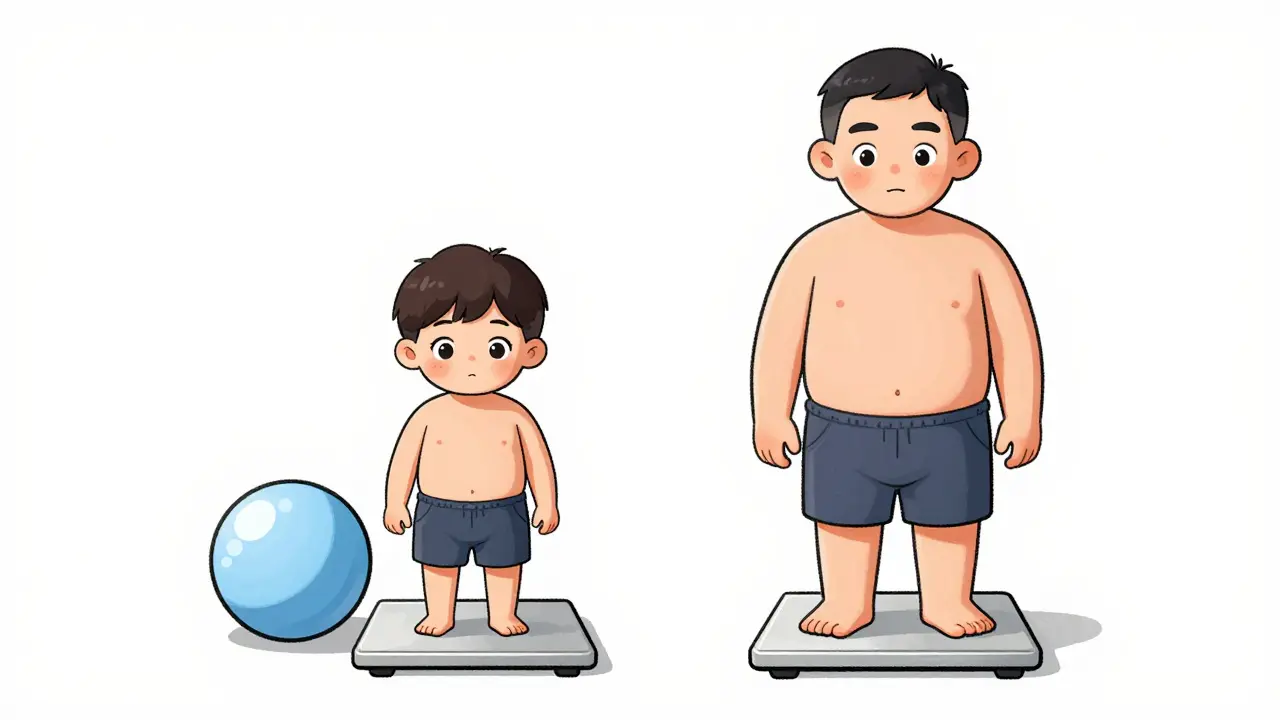
You might have heard older advice like, "Give this dose to kids aged 2 to 4." That method is outdated and dangerous. Why? Because two-year-olds can vary wildly in size. One toddler might weigh 9 kg (about 20 lbs), while another weighs 15 kg (about 33 lbs). That’s a 67% difference in body mass. If you give the heavier child the same dose as the lighter one, you’re underdosing them. If you give the lighter child the heavier dose, you risk toxicity.
Weight-based dosing is a pharmacological protocol where medication amounts are determined by the patient's body weight, typically expressed in milligrams per kilogram (mg/kg). This method accounts for individual physiological differences, ensuring therapeutic efficacy while minimizing the risk of overdose or underdose. By anchoring the dose to weight, we account for how much tissue is available to absorb and process the drug. It’s precise, personalized, and significantly safer than guessing based on age charts.
The Core Math: Converting Pounds to Kilograms
Before you can calculate anything, you need the right units. Most medical formulas use kilograms (kg). However, if you live in the US or other countries using imperial measurements, you likely weigh your child in pounds (lbs). The conversion factor is non-negotiable: 1 kg = 2.2 lbs.
To convert pounds to kilograms, divide the weight in pounds by 2.2. Let’s look at a real-world example:
- Child’s weight: 56 lbs
- Calculation: 56 ÷ 2.2 = 25.45 kg
Always round to two decimal places for accuracy during calculation, but keep the full number in mind until the final step. Never estimate weight. Use a calibrated scale. An estimated weight can lead to a calculated dose that is dangerously high or low.
Calculating the Daily Dose
Once you have the weight in kg, you multiply it by the prescribed dose per kilogram. Doctors usually write orders like "Amoxicillin 40 mg/kg/day." Here is how you break that down:
- Identify the dose: 40 mg per kg.
- Identify the weight: 25.45 kg (from our previous example).
- Multiply: 40 mg × 25.45 kg = 1,018 mg total daily dose.
This gives you the total amount of medicine the child needs in a 24-hour period. But wait-most medicines aren’t given all at once. They are split into multiple doses throughout the day.
Splitting the Dose: Frequency Matters
If the prescription says "every 12 hours" (twice a day) or "every 8 hours" (three times a day), you must divide the total daily dose by the number of administrations.
| Total Daily Dose | Frequency | Doses Per Day | Amount Per Dose |
|---|---|---|---|
| 1,018 mg | Every 12 hours | 2 | 509 mg |
| 1,018 mg | Every 8 hours | 3 | 339.3 mg |
In the first scenario, you would give roughly 509 mg twice a day. In the second, about 339 mg three times a day. Precision here prevents building up too much drug in the system between doses.
From Milligrams to Milliliters: Handling Liquid Concentrations
Here is where most parents trip up. You’ve calculated the dose in milligrams (mg), but the bottle in front of you lists concentration in milligrams per milliliter (mg/mL). For example, the label might say "40 mg/mL."
To find out how many milliliters (mL) to pour, divide the dose in mg by the concentration in mg/mL.
- Dose needed: 509 mg
- Concentration: 40 mg/mL
- Calculation: 509 ÷ 40 = 12.7 mL
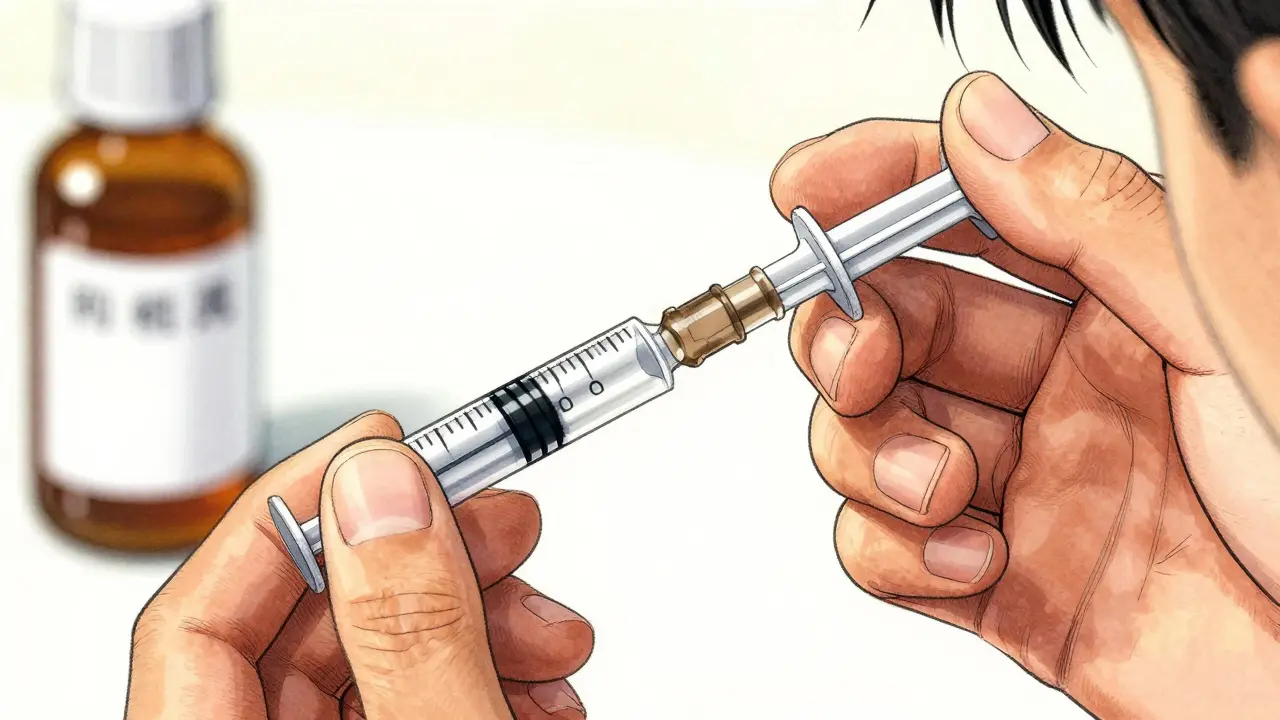
You would measure out 12.7 mL. Always use an oral syringe or a dosing cup with clear markings. Kitchen teaspoons are notoriously inaccurate and can lead to significant over- or under-dosing.
Body Surface Area (BSA): When Weight Isn't Enough
For some powerful medications, especially chemotherapy drugs like vincristine, weight alone isn’t precise enough. These drugs have a narrow therapeutic index, meaning the difference between a helpful dose and a harmful one is tiny. In these cases, doctors use Body Surface Area (BSA).
Body Surface Area (BSA) is a measurement used in pediatric oncology and critical care to determine drug dosage, calculated using both height and weight. The Mosteller formula is commonly used: BSA (m²) = √[height(cm) × weight(kg) / 3600]. While complex, this method correlates better with metabolic rate and organ function for certain high-risk drugs.
Common Pitfalls and How to Avoid Them
Even experienced nurses make mistakes. The ISMP reports that 80% of pediatric calculation errors involve unit conversion issues. Here are the biggest traps:
- Decimal placement: Writing 10.5 mg instead of 1.05 mg can result in a tenfold overdose. Always double-check where the decimal point sits.
- Confusing mg/kg/day vs. mg/kg/dose: Does the order mean the total daily amount or the amount per single administration? Clarify this with the prescriber immediately. Ambiguous orders like "mg/kg/d" are red flags.
- Ignoring concentration changes: Infant acetaminophen comes in different strengths than children’s acetaminophen. Always read the label on the specific bottle you are using, not the one you bought last year.
Safety Protocols: Double-Check Everything
In hospitals, dual verification is mandatory for high-alert medications. Two clinicians independently calculate the dose and compare results before administering. At home, you can adopt a similar mindset. If something feels off-if the volume seems too large or too small-stop. Call your pharmacist or doctor. Don’t guess.
Electronic health records now often include built-in calculators that auto-convert weights and flag unusual doses. These tools have reduced calculation errors by nearly 60% in recent studies. Until your home pharmacy app has that feature, rely on pen, paper, and patience.
What is the most common error in pediatric dosing?
The most frequent error is incorrect unit conversion, specifically failing to convert pounds to kilograms accurately or misplacing decimal points. According to the Institute for Safe Medication Practices, 80% of calculation errors stem from these basic math mistakes.
Can I use age-based dosing charts for my child?
It is strongly discouraged. Age-based charts ignore significant variations in body weight among children of the same age. A 2-year-old can weigh anywhere from 9 to 15 kg, leading to potential overdosing or underdosing if age is the only factor considered.
How do I convert pounds to kilograms for medication?
Divide the child's weight in pounds by 2.2. For example, a 44-pound child weighs 20 kg (44 / 2.2 = 20). Always verify this conversion before proceeding with any dose calculation.
When is Body Surface Area (BSA) used instead of weight?
BSA is primarily used for potent medications with narrow therapeutic windows, such as chemotherapy agents. It provides a more accurate reflection of metabolic capacity than weight alone for these specific high-risk drugs.
What should I do if the calculated dose seems wrong?
Stop immediately. Do not administer the medication. Contact your prescribing physician or pharmacist to verify the calculation. Trust your instincts-if the volume looks too high or too low for your child's size, it likely is.