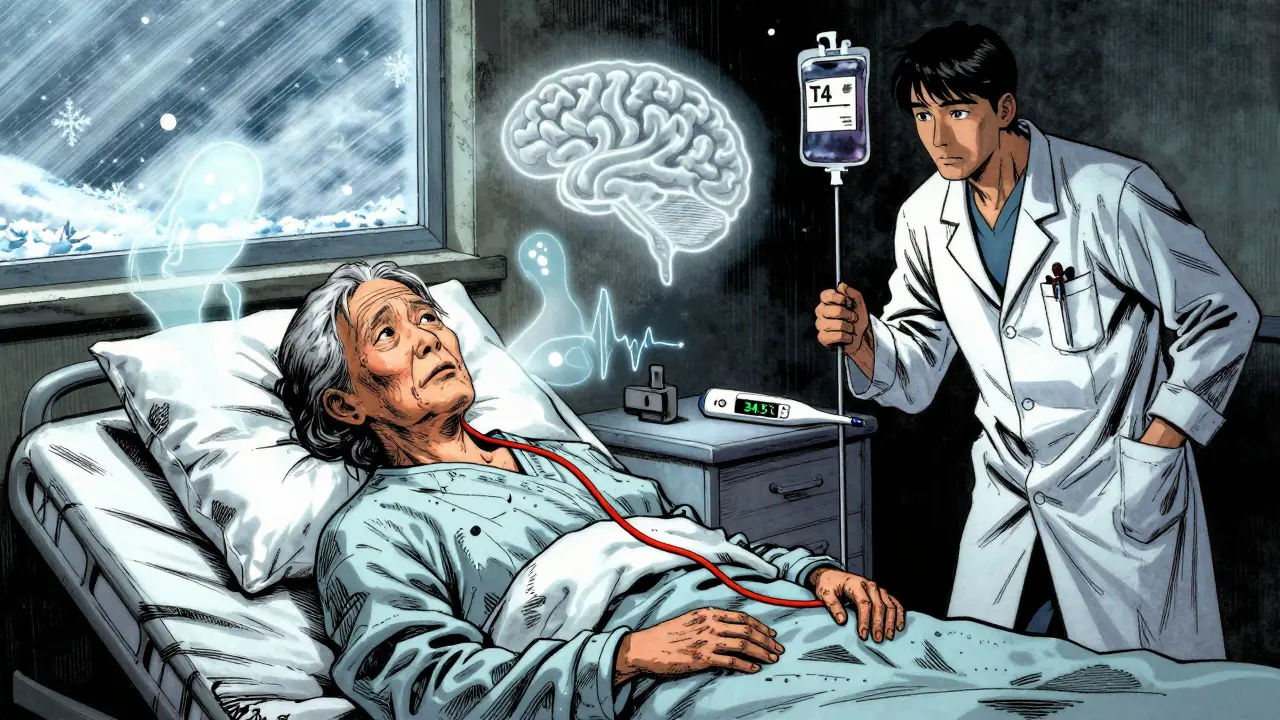
Myxedema coma isn’t just a rare complication of hypothyroidism-it’s a ticking time bomb. Most people with underactive thyroids manage their condition with daily medication and regular checkups. But when that balance collapses, especially in older adults during winter, the body can shut down in hours. This isn’t a slow decline. It’s a medical emergency that kills 25% to 60% of those who don’t get help fast enough.
What Exactly Is Myxedema Coma?
Myxedema coma, now more accurately called myxedema crisis, happens when thyroid hormone levels drop so low that your brain, heart, lungs, and metabolism start failing. It doesn’t require someone to be in a coma to count. Many patients are just deeply confused, barely responsive, or extremely lethargic. The term "coma" stuck from old descriptions, but today’s diagnosis is based on symptoms, not consciousness level.
Think of your thyroid as the body’s thermostat and engine control unit. When it stops working, everything slows: your heart beats slower, your breathing gets shallow, your body can’t hold heat, and your brain fogs up like a frozen windshield. This isn’t fatigue from a bad night’s sleep. It’s a systemic collapse.
The classic signs are simple to remember: altered mental status, hypothermia (core temperature below 35°C or 95°F), and a triggering event like infection, cold exposure, or stopping thyroid meds. But here’s the catch-many patients don’t look "classic." Especially older women, who make up most cases, may seem just "depressed," "dizzy," or "confused." That’s why so many are misdiagnosed for months.
Who’s at Risk?
If you’re a woman over 60 with untreated or poorly managed hypothyroidism, your risk jumps dramatically. The female-to-male ratio is about 3:1. But men aren’t immune-they’re just less likely to be diagnosed early. One study found men wait 40% longer for diagnosis, often because doctors don’t suspect hypothyroidism in younger or male patients.
Winter is the deadliest season. Cold exposure doesn’t just make you shiver-it pushes your body past its limits. Even a slightly chilly room can trigger a crisis in someone with low thyroid function. Hospitals see spikes in cases during December and January.
Other high-risk groups include people who skip their thyroid meds, especially during hospital stays. One patient shared on a support forum that she was admitted for pneumonia, had her levothyroxine stopped "by mistake," and slipped into myxedema coma within 72 hours. She spent 11 days in ICU.
And it’s not just about medication. Infections-especially pneumonia and UTIs-are the most common trigger, responsible for up to half of all cases. Even a mild cough or low-grade fever can be the spark.
How Do You Know It’s Happening?
There’s no single blood test that confirms myxedema coma. But here’s what you’ll see in almost every case:
- Altered mental status: Confusion, drowsiness, slurred speech, or unresponsiveness. Up to 98% of patients show extreme lethargy.
- Hypothermia: Body temperature under 35°C. Often the only sign of infection in elderly patients-no fever, just cold.
- Slow heart rate: Below 60 bpm, sometimes as low as 30-40.
- Shallow breathing: Less than 12 breaths per minute. Carbon dioxide builds up in the blood, oxygen drops.
- Swelling: Puffy face, eyelids, lips, hands, and legs-non-pitting edema, meaning pressing on it doesn’t leave a dent.
- Low sodium: Hyponatremia (below 135 mmol/L) in 70-80% of cases.
- High TSH, low T4: TSH often above 100 mIU/L, free T4 below 0.9 ng/dL.
And here’s what’s often missed: constipation, ileus (stopped gut movement), or even megacolon. One patient was admitted for abdominal pain, thought to have appendicitis, but turned out to have a massively distended colon from hypothyroidism.
Don’t wait for all the signs. If someone has three of these-especially mental changes, low temperature, and a recent illness-treat it as myxedema crisis until proven otherwise.
Emergency Protocol: What Doctors Must Do
Time is the enemy. Every hour without treatment increases death risk by 10%. The goal? Restore thyroid hormone and fix what triggered it-fast.
Step 1: Secure the airway. Half to 70% of patients need intubation because their breathing is too slow to sustain life. Don’t wait for full coma. If respiratory rate is under 12, prepare for intubation.
Step 2: Give thyroid hormone immediately. No waiting for lab results. Start with 300-500 mcg of intravenous levothyroxine (T4). In severe cases-especially with heart problems-add 10-20 mcg of liothyronine (T3) every 8 hours. A 2022 study showed this combo cuts 30-day death risk by 15%.
Step 3: Warm slowly. No heating blankets. No warm baths. Active rewarming can cause your heart to crash. Use warm blankets, turn up the room temperature, and monitor core temperature every 30 minutes. Let the body warm naturally once hormone levels rise.
Step 4: Treat the trigger. Assume infection until proven otherwise. Give broad-spectrum antibiotics right away. Pneumonia, UTIs, and sepsis are the usual culprits. Don’t wait for cultures.
Step 5: Fix electrolytes carefully. Low sodium is common, but correcting it too fast can cause brain damage. Limit sodium correction to 4-6 mmol/L in the first 24 hours. Use fluids sparingly-fluid overload worsens heart and lung function.
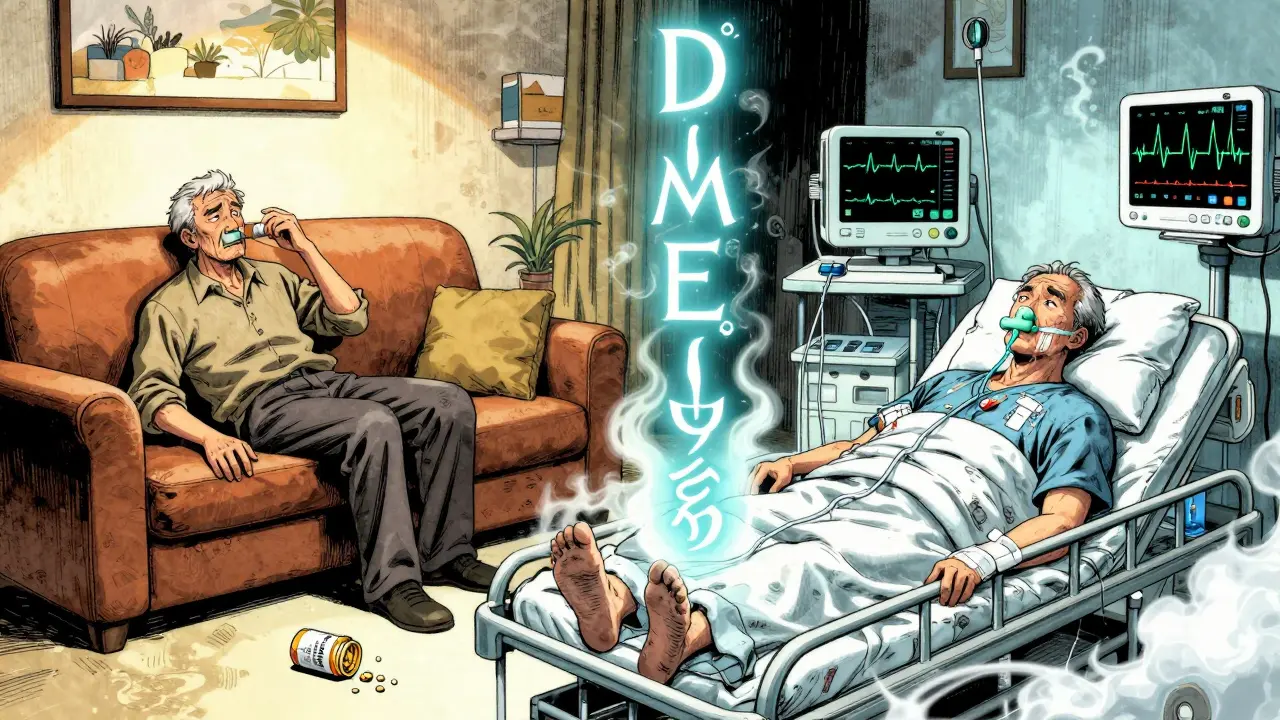
Use the DIMES mnemonic to spot triggers: Drugs (missed meds), Infection, Myocardial infarction or stroke, Exposure to cold, Stroke.
Why Do People Die?
Most deaths aren’t from the low thyroid alone. They’re from delays. A 2023 study found that patients who got treatment within 2 hours had a 15% mortality rate. Those who waited over 6 hours? Over 50% died.
Doctors miss it because the symptoms look like other things: depression, dementia, stroke, drug overdose, or just "getting old." One patient was labeled "psychiatric" for 18 months before collapsing. Another was told his slow heartbeat was "normal for his age."
And here’s a hidden problem: health disparities. Uninsured patients wait 35% longer for treatment. Mortality is 22% higher for them. That’s not just medical-it’s systemic.

What’s New in Treatment?
Things are changing. In January 2023, the FDA approved a new IV thyroid hormone called Thyrogen®, which works faster than older versions. Point-of-care thyroid tests are in late-stage trials-they’ll give results in 15 minutes instead of hours.
Research is also finding early warning signs. A 2023 Lancet study showed that elevated thyrotropin receptor antibodies predict decompensation before symptoms appear. This could help high-risk patients get ahead of the crisis.
But the biggest shift? The move away from "wait for labs" to "treat now." The American Thyroid Association and Endocrine Society now say: if you suspect myxedema crisis, give the hormone before you even get the blood test back.
What Happens After?
If someone survives, recovery can be quick-many feel significantly better in 24 to 48 hours. But long-term management is critical. Most will need lifelong thyroid replacement. They must never skip doses. They need to know the warning signs: worsening fatigue, new confusion, feeling unusually cold.
Family members should be trained. A simple rule: if an older person with hypothyroidism gets sick, even mildly, and acts "off," assume it’s a crisis until proven otherwise. Call 911. Don’t wait.
And for patients: never stop your thyroid meds without talking to your doctor. Even during a hospital stay. Always tell every new provider you have hypothyroidism. Write it on your wrist or carry a card.
Can It Be Prevented?
Yes. Most myxedema crises are preventable.
- Take your thyroid medication every day, no exceptions.
- Get TSH checked at least once a year-even if you feel fine.
- During illness, cold weather, or hospital stays, double-check your meds with your doctor.
- Know the red flags: confusion + cold + slow heart rate = emergency.
With awareness, early action, and proper protocols, myxedema coma doesn’t have to be a death sentence. It’s a condition we can recognize, treat, and prevent-if we act fast enough.
Is myxedema coma the same as thyroid storm?
No. Myxedema coma is caused by too little thyroid hormone (hypothyroidism), while thyroid storm is caused by too much (hyperthyroidism). They’re opposites. Thyroid storm means a racing heart, high fever, and agitation. Myxedema coma means a slow heart, low temperature, and confusion. Treatment is completely different-thyroid storm needs drugs to block hormone production, while myxedema coma needs hormone replacement.
Can you survive myxedema coma without treatment?
Almost never. Without thyroid hormone replacement and supportive care, the body shuts down. Respiratory failure, cardiac arrest, and multi-organ failure follow. Mortality is 25-60% even with treatment. Without it, survival is extremely rare.
Why do elderly patients often get misdiagnosed?
Because their symptoms don’t look like classic hypothyroidism. Instead of weight gain, hair loss, or dry skin, they may just seem tired, confused, or depressed. Doctors call this "apathetic hypothyroidism." It’s common in older adults, especially women. The absence of obvious signs leads to delays-sometimes months-before the crisis hits.
Can cold weather alone cause myxedema coma?
Not alone, but it’s a major trigger. Cold stresses the body’s ability to regulate temperature. If someone already has very low thyroid hormone, their body can’t produce enough heat. Exposure to cold-like a drafty home or winter walk-can push them over the edge into crisis, especially if they’re also sick or haven’t taken their medication.
How long does recovery take after treatment?
Many patients show clear improvement within 24-48 hours after starting IV thyroid hormone. Mental clarity returns, breathing improves, and body temperature rises. Full recovery can take days to weeks, depending on complications like infection or organ damage. But the key is early treatment-delayed care leads to longer ICU stays and higher risk of permanent damage.
Are there any new tests to detect myxedema coma early?
Yes. A 2023 study found that elevated thyrotropin receptor antibodies can predict decompensation before symptoms appear. Point-of-care thyroid tests are in phase 3 trials and can give results in 15 minutes-much faster than lab tests. These tools will help emergency teams act before the patient crashes.


My grandma had this and no one knew what was wrong for months. She just seemed "really tired" and kept falling asleep in her chair. By the time they figured it out, she was in the ICU. Thank god she made it. Please, if you have hypothyroidism and someone you love acts weird in winter, don't wait. Just call 911.