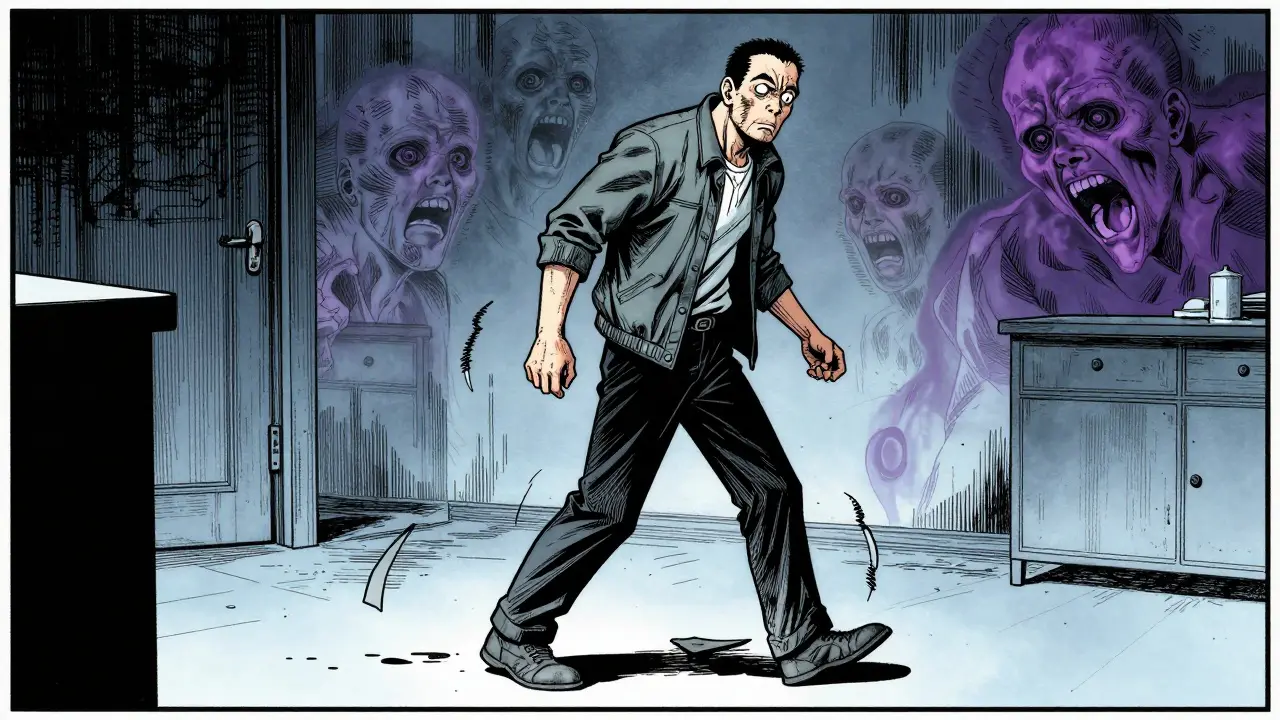
Parkinson's Psychosis Management Guide
Step-by-Step Management Plan
Click each step to learn more about managing Parkinson's disease psychosis safely.
Rule Out Other Causes
Check for infections, dehydration, or sleep issues
Review Current Medications
Identify drugs that may be causing psychosis
Non-Drug Interventions
Environmental and caregiver strategies
Introduce Safe Antipsychotics
Only if previous steps fail
Select a Step Above
Click on any step in the list above to see detailed guidance and recommendations.
Medication Safety Checker
Check the risk level of common antipsychotic medications for Parkinson's patients.
Quick Reference Guide
Imagine trying to walk across a room, but your legs feel like they are glued to the floor. For someone living with Parkinson’s disease is a progressive neurological disorder characterized by dopamine deficiency in the brain, this isn’t just fatigue-it’s a daily battle against rigidity and tremors. Now, imagine that same person begins experiencing hallucinations or delusions, known as Parkinson’s disease psychosis (PDP). The standard treatment for these mental health symptoms often involves antipsychotic medications. But here is the cruel catch: many of these drugs make the physical shaking and stiffness significantly worse.
This creates a terrifying dilemma for patients and families. You treat the mind, and you risk losing the body’s ability to move. This article breaks down why this happens, which specific medications are the most dangerous, and what safer alternatives exist today.
The Dopamine Dilemma: Why Antipsychotics Hurt Movement
To understand why antipsychotics can worsen motor symptoms in Parkinson's patients, we have to look at how the brain works. Parkinson’s disease occurs when nerve cells in the substantia nigra die off, leading to a severe shortage of dopamine-the chemical messenger responsible for smooth, coordinated movement. That is why patients take levodopa; it replaces the missing dopamine.
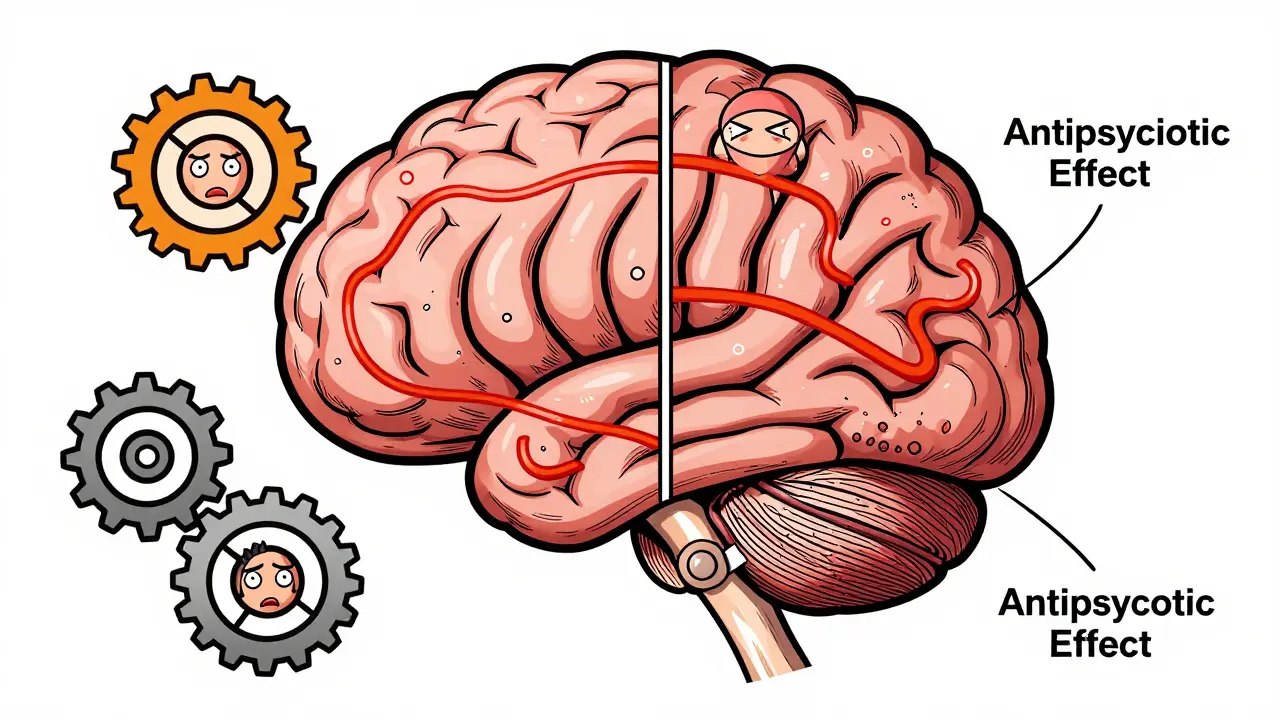
Antipsychotics work by blocking dopamine receptors, specifically the D2 receptor, to calm psychotic symptoms. It sounds logical until you realize you are blocking the very chemical pathway that is already struggling to function. When an antipsychotic blocks these receptors, it essentially puts the brakes on movement further. This is called drug-induced parkinsonism. In simple terms, you are treating one symptom by making the underlying cause of the disease much harder to manage.
This phenomenon was first systematically documented in the 1970s as antipsychotics became more common. By 1996, the American Academy of Neurology issued specific warnings about this interaction. Today, we know that the severity of motor worsening depends entirely on how strongly a drug binds to those D2 receptors.
The Dangerous List: Which Drugs to Avoid
Not all antipsychotics are created equal when it comes to Parkinson’s. Some are catastrophic for motor control, while others are relatively safe. Understanding this distinction can save a patient from hospitalization or permanent disability.
| Medication | Type | D2 Receptor Blocking Power | Risk Level for Motor Symptoms |
|---|---|---|---|
| Haloperidol (Haldol) | First-Generation (Typical) | Very High (90-100% occupancy) | Extreme Danger |
| Risperidone (Risperdal) | Second-Generation (Atypical) | High | High Danger |
| Olanzapine (Zyprexa) | Second-Generation (Atypical) | Moderate-High | Moderate-High Risk |
| Quetiapine (Seroquel) | Second-Generation (Atypical) | Low (40-60% occupancy) | Low Risk (Commonly Used) |
| Clozapine (Clozaril) | Second-Generation (Atypical) | Low (Transient binding) | Lowest Risk (Gold Standard) |
First-generation antipsychotics, also known as typical antipsychotics, are the worst offenders. Haloperidol is particularly notorious. At standard doses, it causes parkinsonism in 70-80% of patients. Even microdoses can trigger severe stiffness. The Parkinson’s Foundation explicitly advises avoiding these entirely in Parkinson’s patients.
Even some second-generation (atypical) antipsychotics are risky. Risperidone is a common example. A landmark study by Ellis et al. in 2005 showed that while risperidone reduced psychosis effectively, it caused significant motor deterioration compared to clozapine. More alarmingly, a 2013 Canadian study found that risperidone increased mortality risk in Parkinson’s patients by 2.46 times compared to non-use. If you see risperidol prescribed for a Parkinson’s patient, ask questions immediately.
The Safer Alternatives: Clozapine and Quetiapine
If you cannot avoid antipsychotics, you need the ones with the "loosest" grip on dopamine receptors. These drugs block serotonin receptors more than dopamine receptors, which helps manage psychosis without shutting down movement pathways completely.
Clozapine is considered the gold standard. It has FDA approval for treating psychosis in Parkinson’s disease. Clinical trials show it reduces psychosis without worsening motor symptoms. However, it comes with a major caveat: a small risk (0.8%) of agranulocytosis, a dangerous drop in white blood cells. This means patients must undergo mandatory weekly blood tests, especially during the first six months. Despite this hassle, neurologists often prefer it because it preserves mobility better than any other option.
Quetiapine is the most commonly prescribed alternative, though technically used "off-label" for PDP. It does not require blood monitoring, making it easier for patients. However, its efficacy is debated. A 2017 double-blind trial suggested quetiapine might be no better than a placebo for some patients. Still, many doctors start here because the safety profile is acceptable if the motor symptoms don’t worsen.
A New Hope: Pimavanserin (Nuplazid)
In April 2022, the landscape changed with the FDA approval of Pimavanserin (Nuplazid). This is the first medication approved specifically for Parkinson’s disease psychosis that does not block dopamine receptors at all. Instead, it acts as a selective serotonin 5-HT2A inverse agonist.
Why does this matter? Because it treats the psychosis without touching the movement pathways. In clinical trials, patients saw a significant improvement in psychotic symptoms with virtually no change in their motor scores. It doesn’t make you stiffer. It doesn’t make you shake more.
However, it is not perfect. Post-marketing surveillance revealed a slight increase in mortality risk compared to placebo, leading to a black box warning. It also takes time to work-you might not see results for several weeks. And it is expensive. But for many families, the trade-off of preserving movement while managing hallucinations is worth the cost and the caution.
The Step-by-Step Management Plan
Before reaching for any antipsychotic, experts agree on a strict hierarchy of actions. Rushing into medication often leads to unnecessary suffering.
- Rule Out Other Causes: Is the psychosis caused by infection, dehydration, or sleep deprivation? Treat these first.
- Review Current Medications: Many Parkinson’s drugs cause psychosis themselves. The goal is to reduce the dose of the offending agent. Usually, doctors taper off anticholinergics, MAO-B inhibitors, amantadine, and dopamine agonists first. Levodopa is kept last because it is essential for movement.
- Non-Drug Interventions: Engaging caregivers, reducing environmental clutter, and ensuring good lighting can reduce confusion and hallucinations.
- Introduce Safe Antipsychotics: Only if steps 1-3 fail, introduce clozapine, quetiapine, or pimavanserin.
A study by Thomsen et al. found that 62% of patients resolved their psychosis through medication adjustment alone, never needing an antipsychotic. This highlights the importance of patience and careful review before adding new drugs.

Monitoring and Red Flags
If you are starting a new medication, watch closely. The Unified Parkinson’s Disease Rating Scale (UPDRS) is a tool doctors use to measure motor function. While you won’t fill out this form at home, you can observe changes.
Watch for:
- Increased freezing of gait (feeling stuck in place)
- Worsening tremors in hands or head
- Greater difficulty turning over in bed
- Falls or near-falls
Conclusion
Treating Parkinson’s disease psychosis is a tightrope walk. The wrong antipsychotic can steal a patient’s independence faster than the disease itself. By avoiding high-risk drugs like haloperidol and risperidone, and prioritizing options like clozapine, quetiapine, or pimavanserin, patients can maintain their quality of life. Always involve a neurologist who specializes in movement disorders. They understand the delicate balance between the mind and the body in Parkinson’s care.
Can I stop my antipsychotic suddenly?
No. Stopping antipsychotics abruptly can cause withdrawal symptoms or a rapid return of psychosis. Always taper off under medical supervision.
Is quetiapine safe for everyone with Parkinson’s?
It is generally safer than typical antipsychotics, but it can still cause sedation and orthostatic hypotension (low blood pressure when standing). Monitor for falls.
How long does pimavanserin take to work?
Pimavanserin may take up to 12 weeks to reach full effectiveness. Patience is required during the initial titration phase.
What is the biggest risk of using clozapine?
The biggest risk is agranulocytosis, a severe drop in white blood cells. This requires regular blood monitoring, usually weekly for the first six months.
Can diet help reduce psychosis in Parkinson’s?
While diet doesn't cure psychosis, staying hydrated and eating balanced meals prevents metabolic imbalances that can worsen confusion and hallucinations.