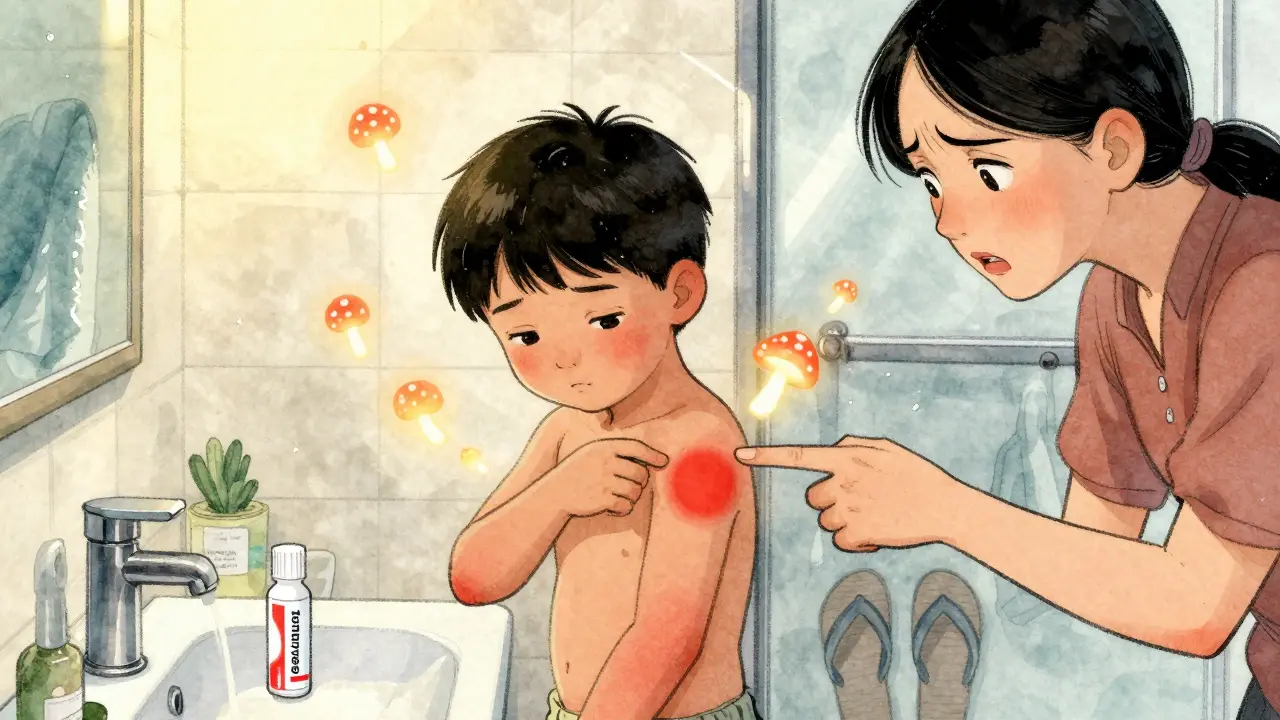
Ringworm doesn’t come from worms. That’s the first thing to know. The name is misleading, but the rash? Real. It shows up as a red, circular patch on the skin, often with a raised, scaly edge and a clearer center - like a ring. It itches. It spreads. And if you ignore it, it can get worse. This isn’t just a kids’ problem or something you catch at the gym. It’s a common fungal infection called tinea, and it affects about one in five people worldwide. In New Zealand, where damp weather and shared locker rooms are common, it’s no surprise you’re seeing more cases in schools, sports teams, and even at home.
What Exactly Is Ringworm?
Tinea, or dermatophytosis, is caused by fungi - not worms - that live on dead skin, hair, and nails. Three main types of fungi cause it: Trichophyton, Microsporum, and Epidermophyton. These fungi love warmth and moisture. That’s why they thrive between your toes, under your armpits, or under your toenails. They don’t need to be dirty to grow - just damp. A sweaty sock, a shared towel, or even a shower floor you walked on barefoot can be enough.
There are different types of tinea, depending on where the fungus lands:
- Tinea corporis - body ringworm. The classic red ring, usually on arms, legs, or torso.
- Tinea pedis - athlete’s foot. Between the toes, peeling, stinging, sometimes with a bad smell.
- Tinea cruris - jock itch. Red, itchy patches on the inner thighs and groin.
- Tinea capitis - scalp ringworm. Mostly in kids. Can cause bald patches or even a swollen, pus-filled lump called a kerion.
- Tinea unguium - nail fungus. Toenails thicken, turn yellow or brown, and become brittle.
It takes 4 to 14 days after exposure for symptoms to show. But once they do, they can spread fast - especially if you scratch and then touch another part of your body.
How Do You Catch It?
You don’t need to be unclean to get ringworm. It’s about exposure. About 60% of cases come from direct skin contact - shaking hands with someone who has it, or wrestling a teammate who’s infected. Another 30% come from surfaces: gym mats, shared towels, hotel floors, even pet beds. Pets, especially cats and dogs, can carry the fungus without showing symptoms. If your dog’s scratching its ear and you pet it, you could pick it up.
Some people are more at risk:
- Wearing tight shoes and sweaty socks all day - especially if you’re active.
- Having hyperhidrosis (excessive sweating) - affects 3% of people and makes skin a perfect breeding ground.
- Playing contact sports like wrestling - up to 84% of college wrestlers have had it at some point.
- Living in a humid climate - like Dunedin in winter, where dampness lingers.
- Being under 10 years old - kids are most likely to get scalp ringworm.
- Having a weakened immune system - whether from illness, medication, or age.
Public showers are a major source. One study found people who don’t wear flip-flops in locker rooms are 45% more likely to get athlete’s foot. It’s not about dirt - it’s about the fungus being there, waiting.
What Antifungal Creams Actually Work?
For most cases - body, foot, or groin ringworm - over-the-counter antifungal creams are the first and best step. They’re cheap, easy to use, and effective when used correctly.
Here’s what works, based on clinical data:
- Terbinafine (Lamisil AT) - 1% cream. Works in 80-90% of cases. Often clears symptoms in 3-5 days. Most users report faster results than other creams. Treatment: once daily for 1-2 weeks.
- Clotrimazole - 1% cream. Works in 70-80% of cases. Takes longer - usually 2-4 weeks. Cheaper, but slower.
- Miconazole - 2% cream. 65-75% effective. Often found in combo packs with itch relief.
- Ketoconazole - 2% cream. 75-85% effective. Good for stubborn cases.
Terbinafine is the most effective and fastest. In over 4,300 Amazon reviews, 82% of users said it worked better than other creams. Many noted visible improvement within days. But here’s the catch: people stop using it too soon.
A Reddit thread with over 1,200 comments showed 68% of users stopped treatment as soon as the rash looked better. That’s a mistake. The fungus is still alive under the skin. Stopping early leads to recurrence in 45% of cases. You need to finish the full course - even if it looks gone.
Side effects? Mild. About 22% of users report stinging, redness, or dryness. If it burns badly, stop and see a doctor. But for most, it’s just a little irritation at first.

When Do You Need More Than Cream?
Topical creams won’t fix everything. If you have scalp ringworm (tinea capitis), you need oral medication. Creams can’t penetrate the hair follicle deep enough. Kids under 10 are most at risk here. If your child has a bald patch on their head with flaky skin or a swollen, pus-filled bump (kerion), don’t wait. See a doctor. Left untreated, it can cause permanent scarring.
Oral antifungals like terbinafine (250mg daily) or itraconazole are prescribed for scalp and nail infections. For nail fungus, treatment lasts 6-12 weeks. Cure rates are 85-90% when taken correctly. But these meds can affect the liver, so blood tests may be needed.
Also, if the rash keeps coming back after treatment, or spreads rapidly, you might have a resistant strain. A 2022 study found a 12% rise in terbinafine-resistant fungi since 2018. If your cream isn’t working after 2 weeks, talk to your doctor. You might need a different drug or longer treatment.
What Doesn’t Work - And Why
Tea tree oil? Coconut oil? Vinegar soaks? You’ll see these on blogs and YouTube. But here’s the truth: a 2021 Cochrane Review looked at all the evidence. Tea tree oil cleared the infection in only 40-50% of cases - half the rate of antifungal creams. And it’s not regulated. Concentrations vary. Some people get worse irritation.
Same with garlic paste, apple cider vinegar, or essential oils. No solid evidence they work better than a $10 cream from the pharmacy. They might feel natural, but they’re not proven. And if you delay real treatment, the infection spreads.
Don’t waste time on unproven remedies. Use what science backs: antifungal creams or oral meds. Save the natural stuff for your tea, not your rash.

How to Prevent It From Coming Back
Treating the rash is only half the battle. Preventing it from returning is the other half. Here’s what actually helps:
- Wear flip-flops in public showers and pools. This cuts your risk by 45%.
- Change socks daily - twice if you sweat a lot. Moisture is the enemy.
- Don’t share towels, combs, or hairbrushes. Fungi survive on fabric and plastic for weeks.
- Wash bedding and clothes in hot water. Use detergent with bleach if possible.
- Keep skin dry. After showering, pat your feet and groin dry. Use powder if needed.
- Check your pets. If your cat or dog has bald spots or is scratching a lot, take them to the vet.
- Don’t ignore early signs. A small red patch? Treat it right away. Dr. Adam Friedman says starting treatment early can cut healing time by 5-7 days.
It’s not about being paranoid. It’s about being smart. Ringworm is easy to prevent - if you know how.
Why This Matters More Than You Think
Over 40 million cases happen in the U.S. every year. That’s 10-15% of all dermatology visits. In schools, outbreaks affect 5-10 kids at a time. Parents miss work. Kids miss school. Families spend $500 million a year just on creams and prescriptions.
And the emotional toll? Real. A 2022 survey found 73% of teens with visible ringworm were teased or avoided by peers. Imagine being 14, with a red ring on your arm, and everyone stares. You don’t need that.
Ringworm isn’t shameful. It’s common. It’s treatable. But ignoring it makes it worse - for you and everyone around you.
Can ringworm go away on its own?
Sometimes, yes - but it can take months. And during that time, you’re spreading it to others. The fungus stays active under the skin, even if the rash looks better. Without treatment, it can spread to other parts of your body or to family members. Plus, scalp and nail infections rarely go away without medication. Don’t wait. Treat it early.
Is ringworm contagious to pets?
Yes. Pets - especially cats and dogs - can carry the fungus without showing symptoms. If you have ringworm and your pet is scratching, has bald patches, or has flaky skin, take them to the vet. They can get treated with antifungal shampoos or oral meds. Don’t assume your pet is fine just because they don’t have a ring-shaped rash.
How long should I use antifungal cream?
Follow the label, but don’t stop when it looks better. For most creams, use it for at least 2 weeks. For terbinafine, 1-2 weeks is usually enough. For clotrimazole or miconazole, use for 4 weeks. If the rash is gone after 1 week, keep applying. The fungus might still be there underneath. Stopping early is the #1 reason it comes back.
Can I use antifungal cream on my face?
Most over-the-counter creams are not meant for the face. The skin there is more sensitive. If you have a rash on your face, see a doctor. It might be ringworm - or it could be eczema, psoriasis, or another condition. Using the wrong cream can make it worse. A doctor can confirm the diagnosis and recommend a safe treatment.
Why does my ringworm keep coming back?
Three reasons: you didn’t finish treatment, you’re still exposed to the fungus (like sharing towels or walking barefoot), or you have a resistant strain. If it keeps returning, talk to your doctor. They may do a skin scraping to check for resistance or suggest oral medication. Also, check your environment - your shoes, your bedding, your pet. The fungus is hiding somewhere.
What to Do Next
If you see a red, circular rash - even a small one - start treatment now. Grab a tube of terbinafine cream. Apply it twice a day. Keep going for the full two weeks, even if it looks gone. Wash your towels in hot water. Wear flip-flops in the shower. Check your pets. Don’t wait until it spreads.
Ringworm is simple to treat - if you act fast. It’s not a sign of poor hygiene. It’s a sign you need to be a little more careful. And that’s okay. Everyone gets it. The key is not to panic. Just treat it. Prevent it. Move on.


Just had this last winter after wrestling practice. Thought it was a bug bite. Took me two weeks to figure it out. Terbinafine worked like magic. Don't wait like I did.