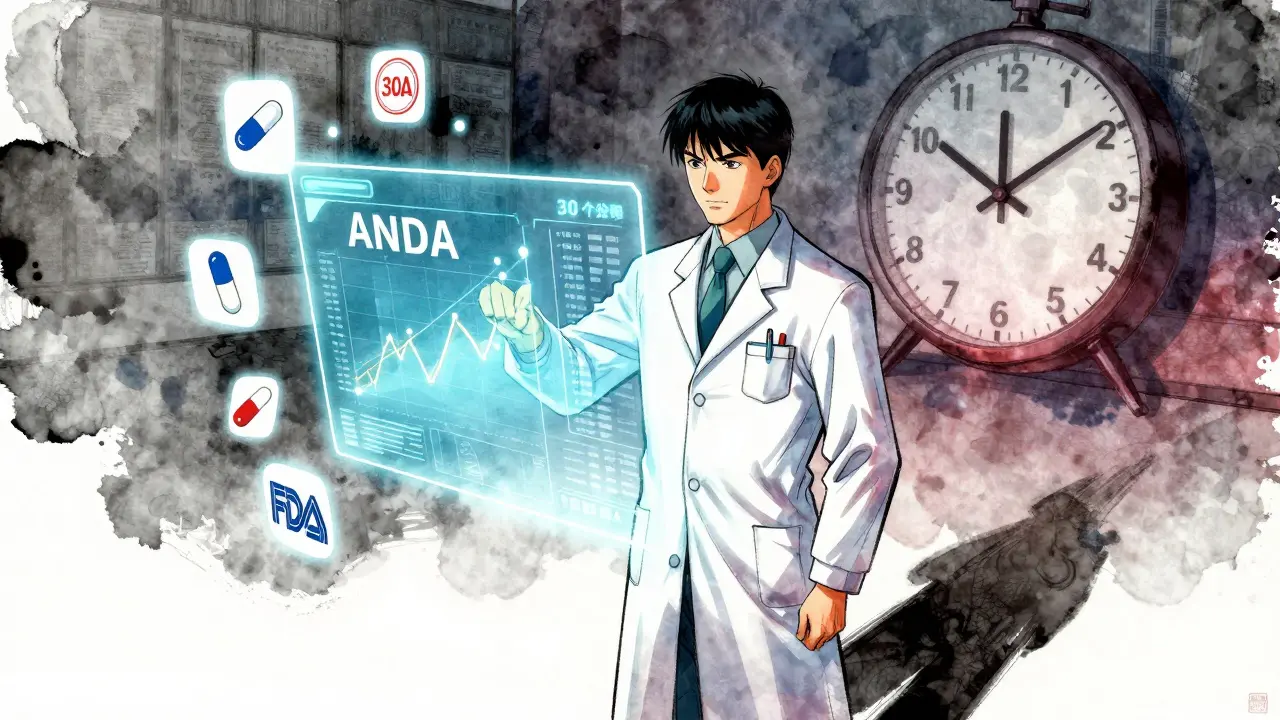
Every time you pick up a generic pill at the pharmacy, you’re holding the result of a complex, tightly regulated journey that starts long before the bottle ever hits the shelf. It begins with an ANDA-the Abbreviated New Drug Application-and ends with a pharmacist handing you a box that costs 80% less than the brand-name version. But what happens in between? How does a drug move from a lab in India or a factory in New Jersey to the counter of your local CVS or Walgreens? It’s not just about getting FDA approval. That’s only the first step.
The ANDA: Not Just a Form, But a Legal Shortcut
The ANDA isn’t a new drug application. It’s a shortcut. When a brand-name drug like Lipitor or Nexium loses its patent, generic manufacturers don’t have to start from scratch. They don’t need to run new clinical trials proving the drug works. Instead, they prove one thing: their version is bioequivalent. That means it delivers the same amount of active ingredient into your bloodstream at the same rate as the original. The FDA accepts this as proof it’s just as safe and effective. This process was created by the Hatch-Waxman Act of 1984. Congress wanted to lower drug prices without killing innovation. So they let generics ride on the brand’s safety data-but only if they met strict standards. The ANDA must include detailed chemistry, manufacturing, and controls (CMC) data. Every ingredient, every step of production, every machine setting must be documented. And the labeling? It has to match the brand’s, except for the name and manufacturer. No misleading claims. No hidden differences. The FDA reviews these applications through its Center for Drug Evaluation and Research. Most ANDAs are submitted electronically via the Electronic Submissions Gateway. For a standard generic, the review clock starts ticking at 30 months under the GDUFA II timeline. But if you’re the first company to file a generic for a popular drug-especially one with a patent challenge-you might get 180 days of exclusive rights to sell it. That’s why companies race to file. In 2022, six different generic makers filed ANDAs for apixaban (the generic for Eliquis) the day the patent expired.Approval Doesn’t Mean Availability
Getting that approval letter from the FDA feels like winning. But for generic manufacturers, it’s really just the halfway point. According to a 2022 survey of 45 generic drug companies, 78% said the real challenge begins after approval. Why? Because the FDA doesn’t decide who gets to sell the drug. Pharmacies, insurers, and pharmacy benefit managers (PBMs) do. PBMs like Express Scripts, OptumRx, and CVS Health are the hidden gatekeepers. They negotiate rebates and decide which generics go on which tier of a drug formulary. Tier 1 means preferred-low copay, high dispensing rate. Tier 3? You’re lucky if anyone even knows it exists. To get on Tier 1, generic makers often have to offer discounts of 20-30% deeper than they originally planned. One sourcing manager on Reddit put it bluntly: “If you’re not giving PBMs a better deal than the brand, your generic won’t move.” Take the generic EpiPen. Teva got FDA approval in August 2019. But it didn’t hit pharmacy shelves until March 2020. Why? Months of back-and-forth with PBMs over pricing and formulary placement. Even though the product was approved, it was stuck in contract negotiations.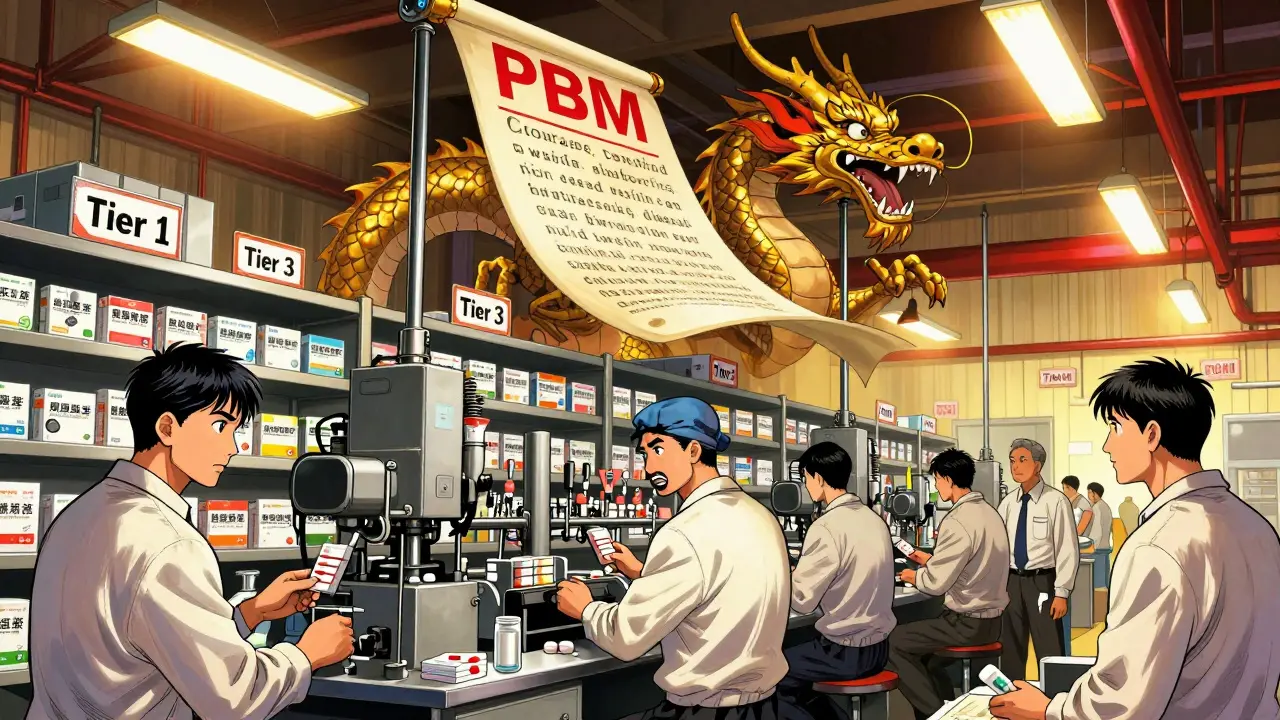
From Factory Floor to Wholesaler
Once the FDA says yes, the manufacturer has to ramp up production. This isn’t just turning on more machines. It’s ensuring every batch meets the exact specifications submitted in the ANDA. A single batch of tablets must have the same dissolution profile, purity, and stability as the one the FDA tested. That means tight control over raw materials, environmental conditions, and equipment calibration. Scaling from pilot batches to commercial volume takes 60 to 120 days. For complex products-like inhalers, patches, or injectables-it can take longer. These are harder to replicate. The FDA’s approval rate for simple pills is around 85%. For complex generics, it drops to 65%. That’s why many companies hire regulatory consultants before filing. Dr. Mark Goldberger, former FDA deputy director, says nearly 40% of initial ANDAs get rejected with a “Complete Response Letter.” Most need a second try. After production starts, the drug moves to wholesalers. Three giants dominate: AmerisourceBergen, McKesson, and Cardinal Health. These companies don’t just store drugs-they distribute them to thousands of pharmacies nationwide. Adding a new product to their system takes 15 to 30 days. The wholesaler must update their inventory software, assign a National Drug Code (NDC), and train their warehouse staff. If the NDC isn’t registered correctly, the pharmacy won’t be able to bill insurance.The Last Mile: Pharmacy Systems and Staff
The final step? Getting the drug into the hands of the pharmacist. That means updating the pharmacy’s computer system. Most pharmacies use systems like Epic, Cerner, or Rx30. When a new generic arrives, the system needs the correct NDC, pricing, and therapeutic equivalence code. If the code is wrong, the system might flag it as “non-preferred” or even block the fill. Pharmacists also need to know what’s changed. A new generic version of metformin might look different from the old one. Patients get confused. Pharmacists have to explain: “Same active ingredient. Same effect. Just cheaper.” Training takes 7 to 14 days after the product is in stock. The average time from FDA approval to first retail dispensing? 112 days. But it varies. Cardiovascular generics like atorvastatin hit shelves in 87 days on average. Complex respiratory generics like fluticasone inhalers? 145 days. The more complicated the drug, the longer the journey.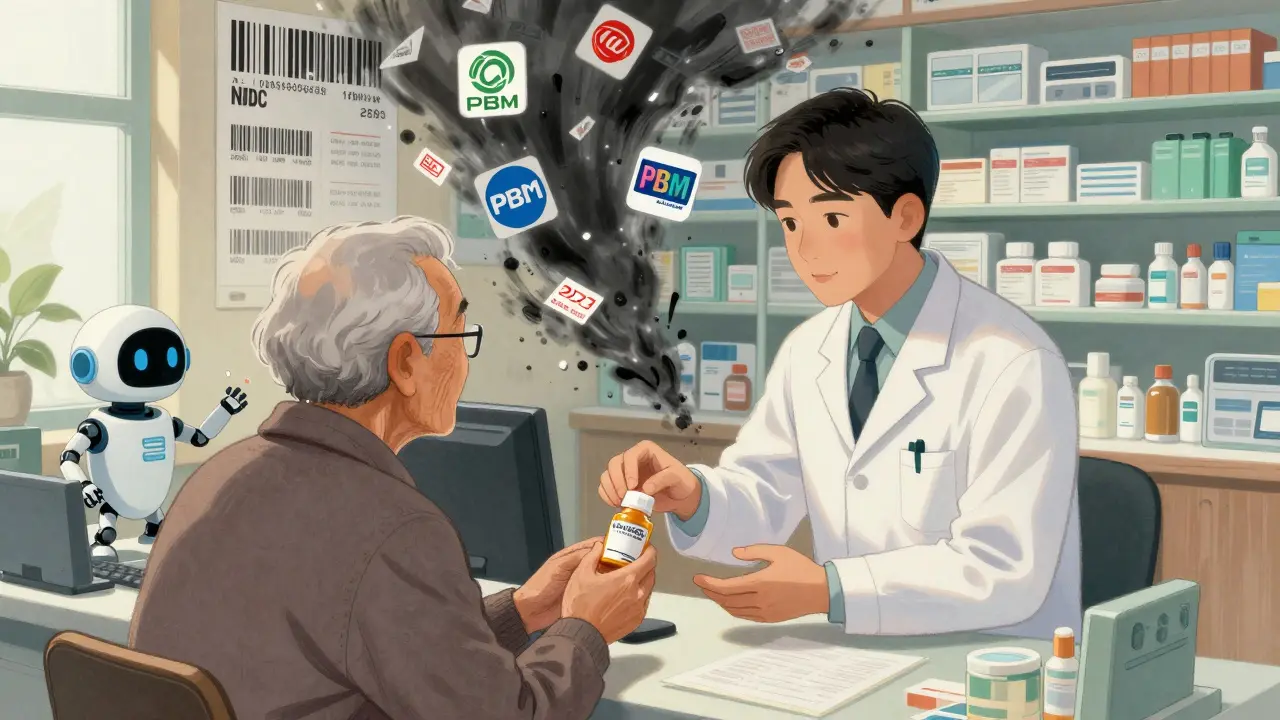
Why This System Works-And Why It’s Under Pressure
This whole system saves the U.S. healthcare system over $300 billion every year. In 2023, 90% of all prescriptions filled were for generics. That’s 6.3 billion pills. And the FDA approved 892 new generic drugs that year-up 12% from 2021. But the pressure is growing. Generic drug prices have dropped 4.7% every year since 2015. Some manufacturers are walking away from low-margin products. Insulin generics, for example, are still rare because the cost to develop and gain approval doesn’t justify the profit. That’s why the FDA launched the Drug Competition Action Plan-to encourage more competition and prevent shortages. New rules are coming. Starting January 2024, all ANDAs must follow the FDA’s Data Standards for Drug Applications. That means structured electronic submissions. It should speed things up, but many small manufacturers aren’t ready. They lack the software or staff to make the switch. And then there’s AI. Some companies are testing artificial intelligence to predict bioequivalence or optimize manufacturing. Early results show it could cut development time by 25-30%. But the FDA hasn’t approved these tools yet. Until they do, the process stays human-driven, paper-heavy, and slow.What This Means for You
When you buy a generic drug, you’re not just saving money. You’re benefiting from a system designed to make healthcare affordable. But that system is fragile. It depends on manufacturers who can afford to invest millions in regulatory compliance. It depends on PBMs who don’t lock out cheaper options. It depends on pharmacies that train their staff and update their systems. If you’ve ever wondered why a generic you used to get is suddenly unavailable, now you know. It’s not because the drug disappeared. It’s because the supply chain-between approval, pricing, and distribution-got tangled. And sometimes, no one notices until the shelf is empty. The next time you pick up a generic, look at the label. That little company name? They fought through regulatory hurdles, negotiated with giants, scaled production, and got their product into your hands. It’s not magic. It’s medicine. And it’s working.What is an ANDA?
An ANDA, or Abbreviated New Drug Application, is a regulatory submission to the FDA that allows generic drug manufacturers to get approval without repeating expensive clinical trials. Instead, they prove their product is bioequivalent to the brand-name drug, meaning it works the same way in the body.
How long does it take for a generic drug to reach the pharmacy after FDA approval?
On average, it takes 112 days from FDA approval to first retail dispensing. This includes scaling up production, negotiating with pharmacy benefit managers, integrating with wholesalers, and updating pharmacy systems. Complex drugs like inhalers can take up to 145 days.
Why are some generic drugs not available even after FDA approval?
Approval doesn’t guarantee availability. Manufacturers must negotiate with pharmacy benefit managers (PBMs) to get their drug on preferred formulary tiers. If they don’t offer deep enough discounts, PBMs may block it. Production delays, wholesaler integration issues, or pharmacy system errors can also cause delays.
Are generic drugs as safe and effective as brand-name drugs?
Yes. The FDA requires generic drugs to have the same active ingredient, strength, dosage form, and route of administration as the brand-name version. They must also prove bioequivalence-meaning they deliver the same amount of medicine into your bloodstream at the same rate. Thousands of studies confirm they work the same.
Why do generic drugs cost so much less?
Generic manufacturers don’t pay for the original research and clinical trials. That’s already covered by the brand-name company. ANDA approval costs $2-5 million per drug, compared to $2.6 billion for a new drug. This allows generics to be priced 80-85% lower, saving the U.S. healthcare system over $300 billion annually.


Bro this whole system is rigged. PBMs are just middlemen sucking the life out of generics so they can charge more. FDA approves it, sure, but if you don’t bribe Express Scripts with 30% off, your drug might as well be in a vault in New Jersey. And don’t get me started on how they force pharmacies to stock overpriced brand-name junk just to keep their ‘preferred’ status. This ain’t healthcare, it’s corporate poker.