
When your head feels like it’s being pounded from the inside, and light or sound makes you want to scream, you’re not just having a bad headache. You’re having a migraine - a neurological disorder that affects over a billion people worldwide. It’s not weakness. It’s not stress. It’s biology. And while there’s no cure, there are real, science-backed ways to stop attacks and reduce how often they happen.
What Makes a Migraine Different From a Headache?
Not all headaches are migraines. A regular tension headache feels like a tight band around your head. A migraine? It’s a full-body event. The pain is usually on one side, throbbing, and gets worse when you move. You might feel nauseous, vomit, or become super sensitive to light and sound. Some people get an aura first - flashing lights, blind spots, tingling in the hand, or even trouble speaking. These symptoms can last minutes to hours before the headache hits. The International Classification of Headache Disorders (ICHD-3) is the gold standard doctors use to diagnose migraines. If you have at least five attacks lasting 4 to 72 hours, with at least two of these features - unilateral pain, pulsating quality, moderate to severe intensity, and worsening with movement - plus nausea or sensitivity to light/sound, you meet the criteria. No MRI or CT scan is needed unless your doctor suspects something else, like a tumor or aneurysm. Most of the time, it’s your story - and your symptoms - that tell the tale.Preventive Treatments: Stop Migraines Before They Start
If you’re having more than four migraine days a month, prevention isn’t optional - it’s essential. The goal? Cut your headache days by at least half. That’s the benchmark most doctors use, but some experts now say 75% reduction is what truly changes your life. Medications The first-line drugs for prevention have been around for decades but still work well for many:- Propranolol and metoprolol (beta-blockers): Taken daily, they reduce attack frequency by 50% or more in about half of users. Side effects? Fatigue, dizziness, low heart rate.
- Topiramate: An antiseizure drug that also prevents migraines. It’s effective, but up to two-thirds of people quit within six months because of brain fog, memory issues, or trouble finding words.
- Valproate: Works well, especially for women with menstrual migraines. But it’s not safe during pregnancy.
- Amitriptyline: A tricyclic antidepressant taken at night. Helps with sleep and pain, but can cause dry mouth and weight gain.
- Erenumab (Aimovig): Monthly injection
- Fremanezumab (Ajovy): Monthly or quarterly injection
- Galcanezumab (Emgality): Monthly injection
- Eptinezumab (Vyepti): Quarterly IV infusion
Acute Treatments: Stop the Attack in Its Tracks
When a migraine hits, speed matters. The sooner you treat it, the better it works. Waiting until the pain is unbearable? That’s when meds fail. Over-the-counter (OTC) painkillers For mild attacks, ibuprofen (400 mg) or naproxen (500-850 mg) can work. Combination meds like Excedrin Migraine (acetaminophen + aspirin + caffeine) help about 26% of people become pain-free in two hours. But here’s the catch: using OTC meds more than 10 days a month can trigger medication-overuse headache. That’s when your headaches become daily because your brain got used to the drugs. It’s a trap many fall into - and then have to detox from. Triptans These are the gold standard for moderate to severe attacks. Seven types exist: sumatriptan, rizatriptan, eletriptan, zolmitriptan, almotriptan, frovatriptan, naratriptan. They work by narrowing blood vessels in the brain and blocking pain signals. Most get you pain-free in two hours in 30-50% of cases. But they’re not for everyone. If you have heart disease, high blood pressure, or a history of stroke, you can’t take them. Side effects? Chest tightness (63% report it), dizziness, drowsiness. Neuro-targeted drugs: Gepants and Ditans If you can’t take triptans, these are your next best bet:- Gepants (ubrogepant, rimegepant): Block CGRP receptors. No heart risks. Rimegepant is also approved for prevention. Users on Reddit report higher satisfaction than sumatriptan - fewer side effects, better tolerability.
- Lasmiditan (a ditan): Works on serotonin receptors in the brain, not blood vessels. Safe for heart patients. But it causes dizziness, fatigue, and sedation. You can’t drive for 8 hours after taking it.
Real People, Real Results
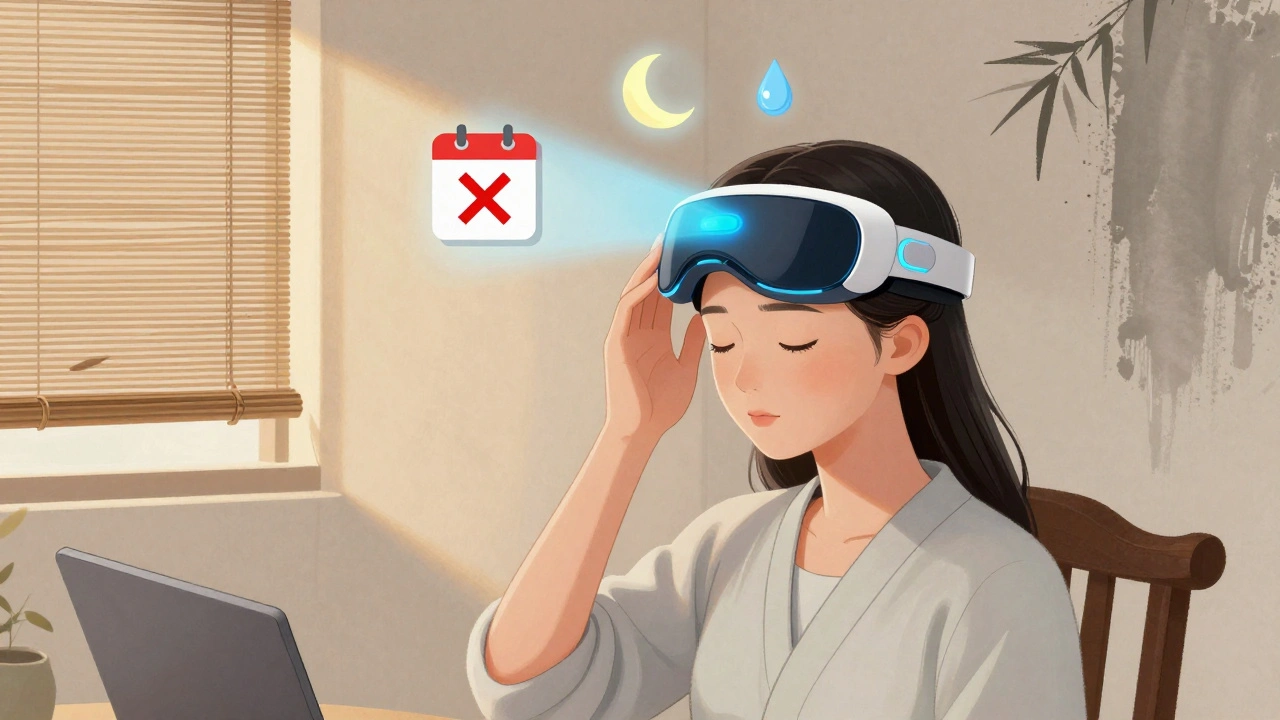
People aren’t just numbers in studies. Here’s what they’re saying:- “I had 25 migraine days a month. After six months of using Cefaly daily, I’m down to 9. No meds. No side effects.” - Miles for Migraine user
- “I took topiramate for six months. I couldn’t remember my daughter’s birthday. I quit.” - Reddit user
- “I got denied for fremanezumab three times. My insurance said I had to try amitriptyline first. I did. It made me gain 20 pounds. I still have migraines.” - Survey respondent
- “Excedrin 15 days a month turned my migraines into daily headaches. Took me six months to detox.” - r/Migraine post
What You Can Do Right Now
You don’t need to wait for a specialist to start making progress.- Keep a headache diary. Track date, time, duration, pain level, triggers (sleep, stress, food, weather), meds taken, and response. Apps like Headache Log are 40% more effective than paper.
- Identify your triggers. Common ones? Sleep disruption (65%), stress (89%), weather changes (72%), alcohol (58%), skipped meals (50%). You can’t control the weather, but you can control your sleep schedule.
- Start early. Take your acute meds within 20 minutes of the first sign - even if it’s just a weird feeling or light sensitivity. Don’t wait for the pain to peak.
- Ask about CGRP inhibitors. If you’ve tried two or more preventives and still have 8+ headache days a month, you’re a candidate. Ask your doctor for a referral to a headache specialist.
- Try neuromodulation. Cefaly costs $300-$400 upfront. Some insurance covers it. If you hate pills, it’s worth a shot.


This is peak neurocapitalism. We've turned human suffering into a subscription model. CGRP inhibitors? More like CGRP *profits*. 💸