Chronic pain affects millions of people, yet for decades, the go-to solution was often a prescription pill with significant side effects. Today, the medical landscape is shifting rapidly toward multimodal pain management, a strategy that combines various non-drug and non-opioid drug treatments to tackle pain from multiple angles. This approach isn't just a trend; it's a clinical priority endorsed by major health bodies like the Centers for Disease Control and Prevention (CDC). By layering therapies such as physical exercise, cognitive behavioral therapy, and newer medications, patients can achieve effective relief without the risks of addiction, respiratory depression, or severe constipation associated with opioids.
Why Shift Away From Opioids?
The push for alternatives stems from a well-documented crisis. Despite declining prescription rates, approximately one in five U.S. adults with chronic pain still relies on opioids. The risks are substantial: annual incidence of opioid use disorder sits at 0.7% among chronic pain patients, while respiratory depression affects 50-80% of users. Constipation is even more common, impacting 40-95% of patients. In contrast, nonpharmacologic approaches show minimal serious adverse events. For instance, acupuncture has an adverse event rate of only 0.14 per 10,000 treatments. The core value here is clear: you get pain relief without the baggage of dependency or organ strain.
| Factor | Opioid Therapy | Multimodal Non-Opioid Strategy |
|---|---|---|
| Addiction Risk | 0.7% annual incidence of use disorder | Negligible for non-pharm methods; low for non-addictive drugs |
| Common Side Effects | Constipation (40-95%), Respiratory Depression (50-80%) | Minimal for exercise/therapy; GI risk for NSAIDs (1-2%) |
| Tolerance Development | High; requires dose escalation | Low; some new drugs show accumulation of effect |
| Primary Use Case | Acute severe trauma, cancer pain | Chronic low back pain, osteoarthritis, migraine |
The Core Pillars of Multimodal Care
Multimodal pain management is not a single treatment but a toolkit. It blends nonpharmacologic interventions with nonopioid pharmacologic agents. The CDC’s 2022 Clinical Practice Guideline strongly recommends these as first-line treatments for subacute and chronic pain. Let’s break down what this actually looks like in practice.
Nonpharmacologic Therapies
These are the foundation of long-term pain control. They require commitment but offer the best functional outcomes.
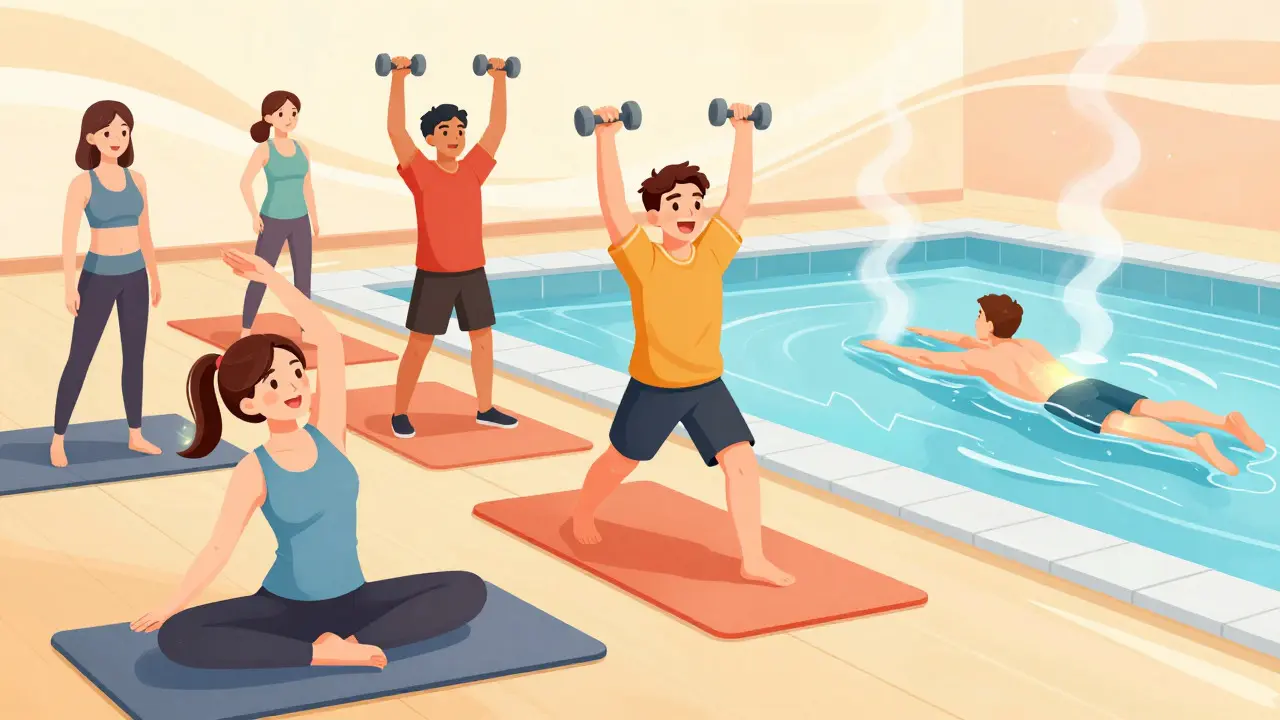
- Structured Exercise is a key component involving aerobic activity for 30-45 minutes, 3-5 days a week, plus resistance training at 60-80% of one-repetition maximum. Aquatic therapy in water heated to 32-35°C is particularly effective for joint pain.
- Cognitive Behavioral Therapy (CBT) is a psychological intervention delivered in 8-12 weekly sessions of 50-60 minutes that helps reframe pain perception and manage stress responses.
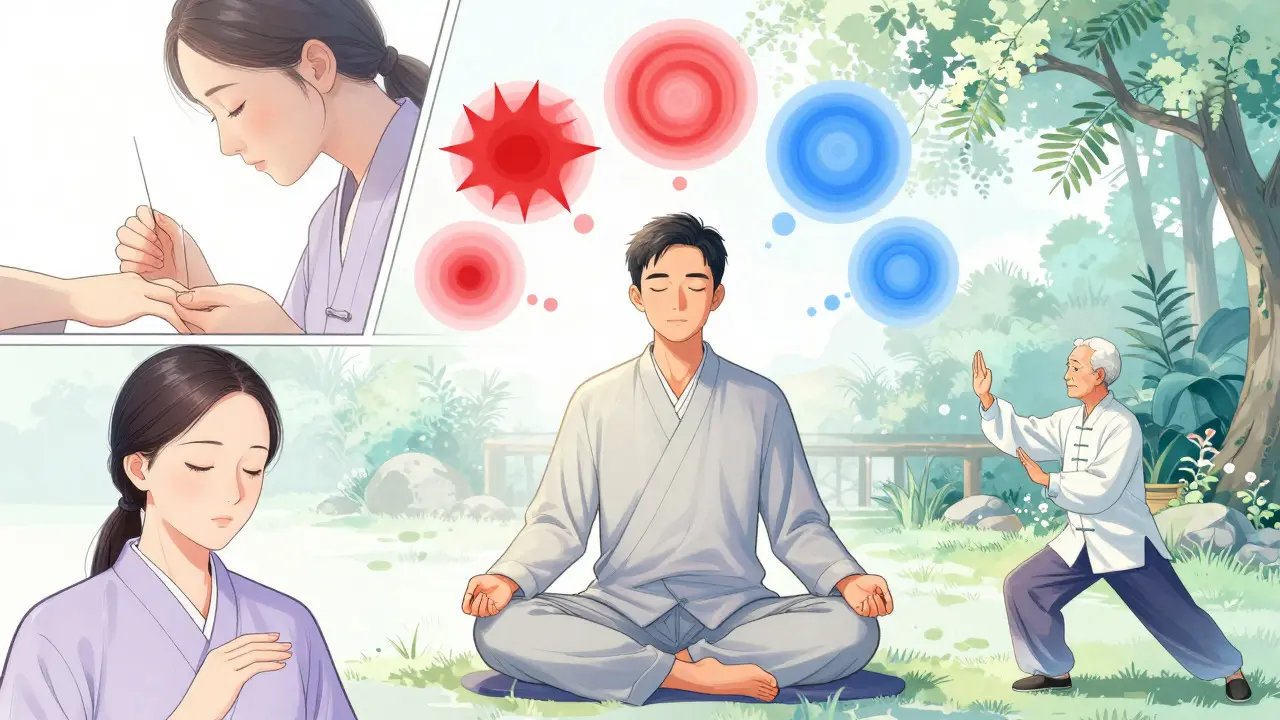
- Mind-Body Practices include yoga sessions of 60-90 minutes, 2-3 times weekly, and tai chi practiced for 30-60 minutes daily to improve flexibility and reduce tension.
- Acupuncture involves 8-12 sessions over 4-8 weeks where needles are retained for 20-30 minutes to stimulate nerve pathways.
Nonopioid Pharmacologic Options
When lifestyle changes aren't enough, specific medications step in. Unlike opioids, these target different biological mechanisms.
- NSAIDs such as ibuprofen (400-800 mg every 6-8 hours) or naproxen (375-500 mg twice daily) reduce inflammation. Topical diclofenac 1% gel is a safer option for localized pain, applied four times daily.
- Acetaminophen works centrally to block pain signals. The standard dose is 650-1000 mg every 6-8 hours, with a strict daily maximum of 4000 mg to prevent liver damage.
- Tricyclic Antidepressants like amitriptyline (10-100 mg nightly) are used for neuropathic pain, leveraging their ability to modulate serotonin and norepinephrine levels.
New Frontiers: Suzetrigine and Beyond
The pharmaceutical landscape is evolving quickly. A major milestone occurred in August 2023 when the FDA approved Journavx (suzetrigine) 50 mg oral tablets. This is the first new non-opioid analgesic class for acute pain in 25 years. As Jacqueline Corrigan-Curay, acting director of the FDA’s Center for Drug Evaluation and Research, noted, it represents "an important public health milestone."
Suzetrigine works as a selective NaV1.8 sodium channel inhibitor. Unlike opioids, it doesn’t suppress breathing or cause constipation. Clinical trials showed it provides comparable efficacy to opioids for moderate to severe acute pain but without the cognitive impairment or addiction risk. This opens the door for safer post-surgical pain management and acute injury care.
Research is also advancing in other areas. Duke University researchers are developing ENT1 inhibitors that show "accumulation of the inhibitor's analgesic actions after repeated administration," meaning they get better with use rather than requiring higher doses. Meanwhile, UT Health San Antonio has developed CP612, a compound that reduces nerve pain from chemotherapy and eases opioid withdrawal symptoms without being addictive itself.
Cost, Accessibility, and Practical Considerations
You might wonder if these strategies are expensive. Not necessarily. Group aerobics classes cost approximately $10-20 per session, whereas individual physical therapy can run $100-150 per session. Research indicates that low-cost group aerobics can be as effective as individual physical therapy for reducing low back pain and improving function. This makes multimodal management accessible to a broader population.
However, adherence is a challenge. Studies show only 40-60% of patients stick to structured exercise programs for chronic pain. Success depends on integrating these activities into your daily routine. For example, swapping a sedentary evening for a 30-minute tai chi session or joining a local yoga community can make a tangible difference. It’s about building habits, not just following a prescription list.
Who Benefits Most? Specific Scenarios
Not all pain is the same, and multimodal strategies excel in specific conditions:
- Chronic Low Back Pain: Exercise and CBT show 30-50% pain reduction in 60-70% of patients. This is the gold standard for non-specific back pain.
- Osteoarthritis: Topical NSAIDs provide 20-40% pain reduction, offering targeted relief with lower systemic side effects.
- Migraine: Triptans achieve pain freedom in 40-70% of patients within two hours, making them a critical part of acute management.
For acute severe trauma, however, immediate potent analgesia may still require traditional interventions. The goal isn't to eliminate all opioids forever, but to reserve them for cases where no other option works, using them sparingly and safely.
Frequently Asked Questions
Is suzetrigine available for chronic pain?
Currently, suzetrigine (Journavx) is primarily approved for acute pain. While research continues, its main role is in short-term management where opioids were previously the default, such as post-procedural or injury-related pain.
Can I combine CBT with medication?
Yes, combining CBT with nonopioid medications is often more effective than either alone. CBT helps manage the emotional and cognitive aspects of pain, while medications address the physiological signals. This dual approach is central to multimodal therapy.
What are the risks of long-term NSAID use?
Long-term use of oral NSAIDs carries a 1-2% annual risk of gastrointestinal bleeding. To mitigate this, doctors often recommend topical NSAIDs for localized pain or limiting oral use to the lowest effective dose for the shortest duration necessary.
How much does multimodal pain management cost?
Costs vary widely. Group exercise classes are inexpensive ($10-20 per session), while individual therapy can cost $100-150. Medications like acetaminophen are generic and cheap, while newer drugs like suzetrigine may have higher initial costs. Insurance coverage varies by provider.
Will I need to stop opioids completely?
Not necessarily. The goal is to reduce reliance on opioids by adding other effective treatments. For many patients, this allows for a lower dose of opioids or complete discontinuation, but for severe cases, a carefully managed combination may still be appropriate.