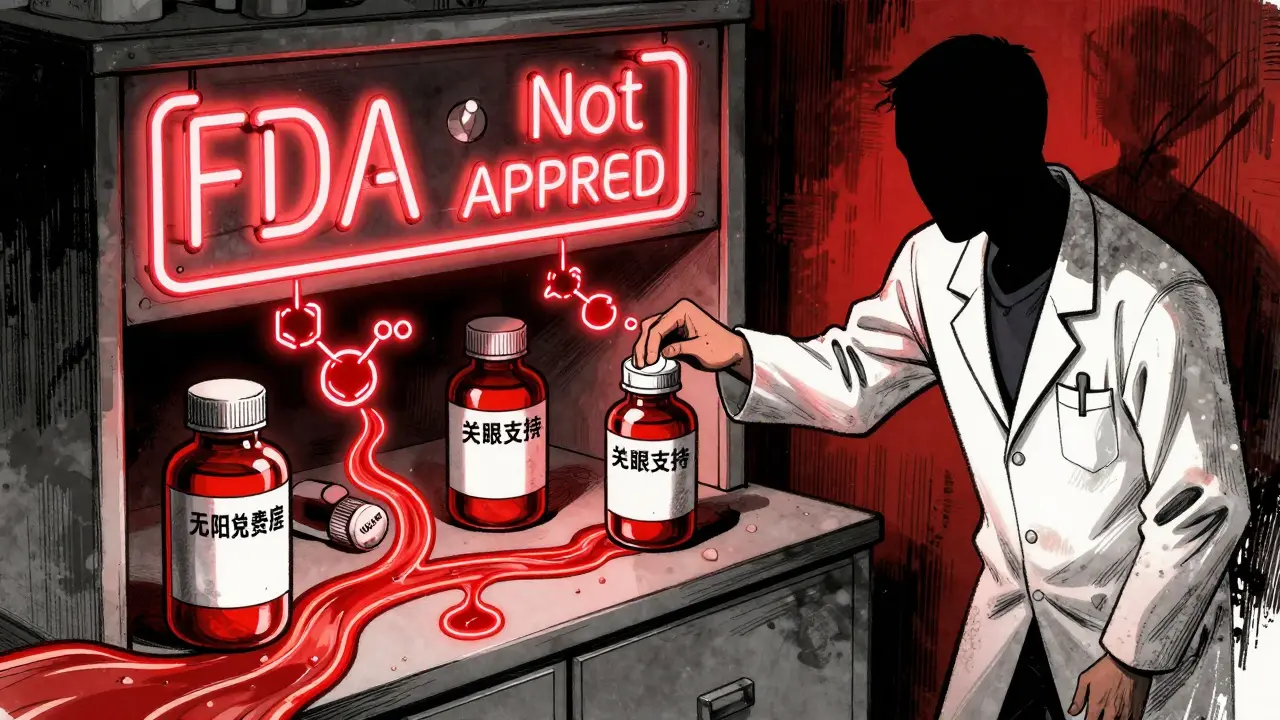
Every year, millions of Americans reach for over-the-counter (OTC) meds without a second thought. A headache? Grab an Advil. Trouble sleeping? Reach for Benadryl. Trying to lose weight or boost performance? There’s a pill for that too. But what if those pills aren’t what they claim to be? What if they contain powerful drugs you’ve never heard of-drugs that can send you to the hospital, trigger heart attacks, or kill you outright?
Here’s the hard truth: many OTC supplements and medications contain hidden pharmaceutical ingredients that aren’t listed on the label. These aren’t mistakes. They’re deliberate. And they’re more common than you think.
What’s Really in Your Supplement?
Think of dietary supplements as the Wild West of medicine. Unlike prescription drugs, which go through years of testing and FDA review, supplements are regulated under a 1994 law called DSHEA. That law says manufacturers, not the government, are responsible for proving their products are safe. The result? A system where companies can sell products with dangerous additives-and the FDA only steps in after people get hurt.
Between 2007 and 2021, researchers found over 1,000 supplement products containing banned or prescription drugs. Sibutramine, a weight-loss drug pulled from the market in 2010 because it raised the risk of heart attack and stroke by 16%, still shows up in weight-loss pills. Phenolphthalein, a laxative linked to cancer in animal studies, was found in 124 different products. And sexual enhancement supplements? Nearly 9 out of 10 contain sildenafil (the active ingredient in Viagra) or tadalafil (Cialis), often without telling you.
And it gets worse. One in five of these contaminated products had multiple hidden drugs inside. Some had three, four, even six different pharmaceuticals. One product marketed for joint pain contained six different unapproved drugs. None of them were listed on the label.
Why This Is So Dangerous
It’s not just about what’s in the bottle-it’s about what happens when you combine it with other things you’re taking.
Take someone on blood pressure medication who picks up a "natural" weight-loss pill. That pill might contain sibutramine, which raises blood pressure. The result? A sudden spike to 180/110. That’s not a fluke. One Reddit user reported exactly that-and testing confirmed the hidden drug. That’s a recipe for stroke.
Or consider someone with diabetes who takes a "natural" sexual enhancer. If it contains sildenafil, it can cause dangerously low blood sugar when combined with insulin or metformin. The FDA has documented cases of patients with diabetic ketoacidosis after using these products.
NSAIDs like ibuprofen and naproxen are common in OTC pain relievers. They already cause 100,000 hospitalizations and 16,500 deaths every year in the U.S. from stomach bleeding, kidney damage, and heart attacks. Now imagine adding a hidden stimulant or diuretic to the mix. That’s not a minor risk. That’s a medical emergency waiting to happen.
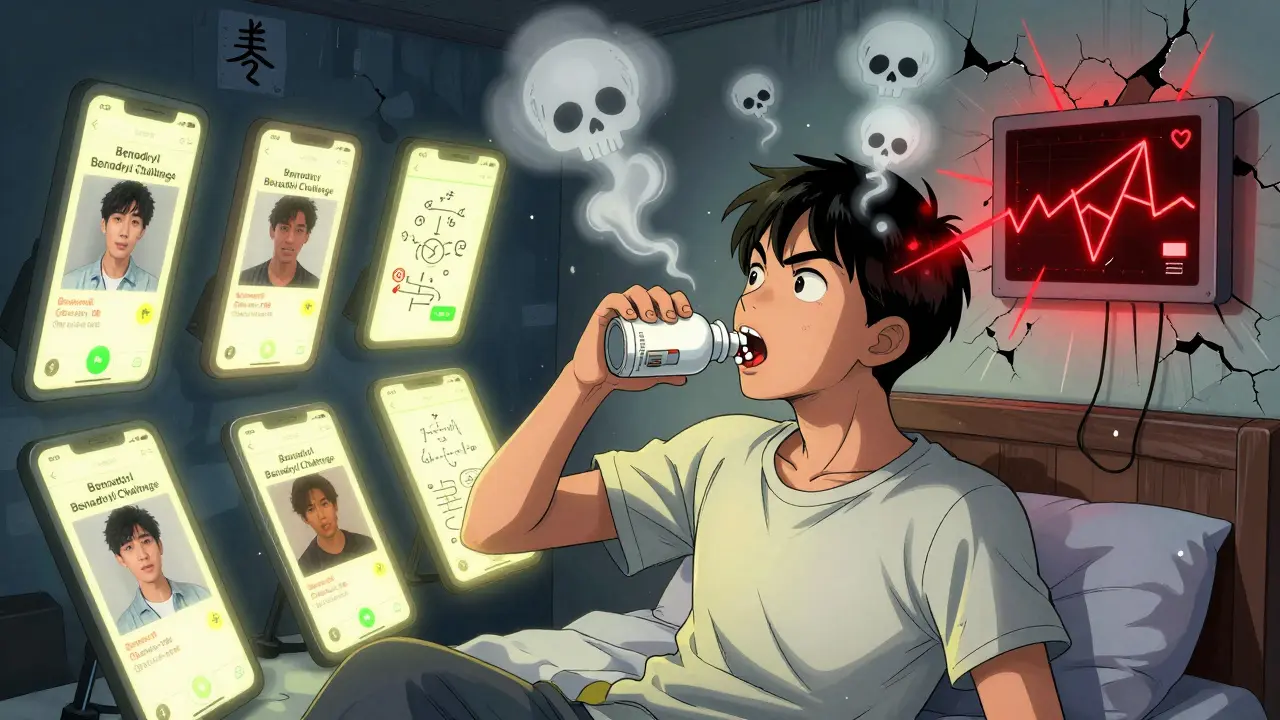
And it’s not just older adults. Teens are getting sick too. The "Benadryl challenge"-a social media trend where kids take massive doses of diphenhydramine to hallucinate-has led to at least three deaths and dozens of hospitalizations. One teen in Wisconsin suffered seizures and cardiac arrhythmias after taking 40 tablets. That’s not "just a sleep aid." That’s poison.
How to Protect Yourself
You can’t trust labels. You can’t rely on "natural" claims. But you can take control.
- Check the FDA’s Health Fraud Product Database. Type in the product name. If it’s listed, don’t buy it. Even if it’s not listed, that doesn’t mean it’s safe-but at least you’re checking.
- Look for third-party seals. USP, NSF International, and ConsumerLab.com test supplements for what’s actually in them. They don’t catch everything, but they’re far better than nothing.
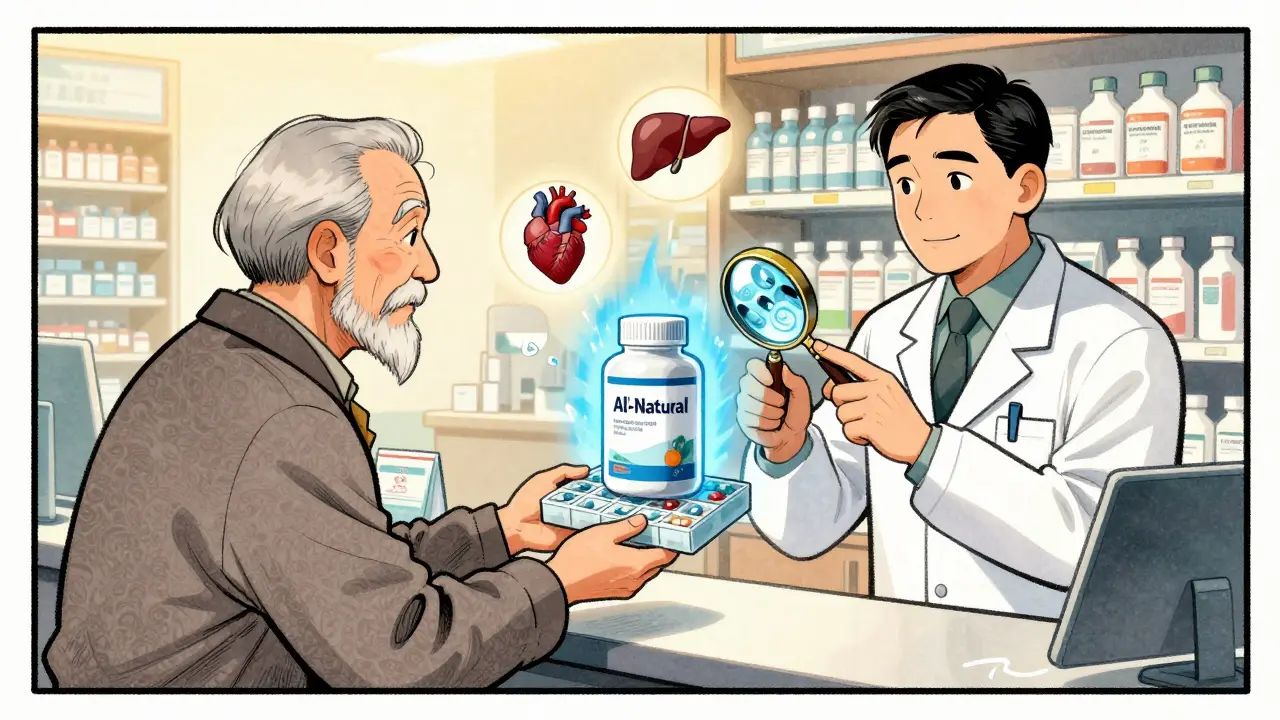
- Use the 5-5-5 rule. Before buying any OTC product: spend 5 minutes Googling it, 5 minutes checking the FDA database, and 5 minutes talking to a pharmacist. Pharmacists see these cases every day. They’ll tell you what to avoid.
- Keep a full medication list. Write down every pill, powder, and drop you take-including vitamins, herbs, and teas. Bring it to every doctor’s appointment. Studies show 63% of adverse events happen because patients didn’t tell their doctors about their supplements.
- Avoid "miracle" claims. If a product promises "instant weight loss," "guaranteed sexual performance," or "all-natural pain relief," it’s almost certainly adulterated. The science doesn’t support it. The FDA doesn’t approve it. And the label doesn’t tell you the truth.
Who’s at Highest Risk?
It’s not just about what you take-it’s about what else you’re taking.
Older adults are the most vulnerable. The average senior takes nearly five prescription medications and several supplements. Combine that with hidden drugs in OTC products, and you’ve got a perfect storm for dangerous interactions. A 72-year-old on warfarin who takes a "joint support" supplement with undisclosed aspirin? That’s a bleeding risk.
Adolescents are another high-risk group. Social media is pushing OTC meds as party drugs. Diphenhydramine, pseudoephedrine, dextromethorphan-these aren’t harmless. They’re psychoactive at high doses. And teens don’t know how much is too much.
People with chronic conditions-heart disease, diabetes, liver or kidney problems-are also at extreme risk. Their bodies can’t handle extra stress. A hidden stimulant can trigger a heart rhythm problem. A hidden diuretic can crash kidney function.
The Bigger Picture
This isn’t just about bad actors. It’s about a broken system.
The supplement industry is worth over $55 billion globally. The FDA has only 17 full-time staff assigned to oversee all dietary supplements. That’s less than one person per 3,000 products on the market. Meanwhile, the number of contaminated products is rising. In 2022 alone, 443 new cases were reported between 2012 and 2016. And that’s just what got caught.
Less than 0.3% of adverse events are reported to the FDA. That means for every one case that shows up on their radar, hundreds go unnoticed. The industry’s own trade group, the Council for Responsible Nutrition, has no power to enforce safety. It’s like asking a candy store owner to police his own store for poison.
There’s hope. A bill called the OTC Medication Safety Act, introduced in 2023, would force companies to report adverse events and give the FDA more power to remove dangerous products. It has bipartisan support. But until it becomes law, you’re on your own.
What to Do Right Now
Don’t wait for Congress to fix this. Don’t assume your pharmacist knows everything. Don’t trust marketing.
Here’s what you can do today:
- Clear out your medicine cabinet. Look at every bottle. If it’s a supplement with vague claims like "boosts energy" or "natural testosterone booster," toss it.
- Call your pharmacist. Ask them to review your entire list of supplements. They’ll tell you which ones are risky.
- Search the FDA’s database. Type in any product you’re still using. If it’s flagged, stop.
- Teach your family. Especially older parents and teens. This isn’t just about you-it’s about everyone who takes something without knowing what’s inside.
OTC medications aren’t inherently dangerous. But when you don’t know what’s in them, you’re gambling with your health. And the odds are stacked against you.
Are all supplements unsafe?
No, not all supplements are unsafe. Many vitamins and minerals, when taken at recommended doses, are safe and beneficial. But supplements that promise quick fixes-weight loss, sexual performance, energy boosts-are the most likely to contain hidden drugs. Stick to basic supplements like vitamin D, calcium, or fish oil from brands with third-party verification (USP, NSF, or ConsumerLab). Avoid anything that sounds too good to be true.
Can I trust supplements with "natural" or "herbal" labels?
No. "Natural" doesn’t mean safe. Many dangerous drugs come from plants. Sibutramine, for example, was originally derived from a plant compound. The term "natural" is unregulated and often used to trick consumers. Products labeled "herbal" or "all-natural" are the most likely to be contaminated with synthetic drugs.
Why don’t more people get sick from these products?
Most people don’t get sick because they don’t take them often-or they don’t combine them with other medications. But the risk is silent. One person might take a contaminated weight-loss pill and feel fine. Another, who’s on blood pressure meds, could have a heart attack. The danger isn’t in the product alone-it’s in the interaction. And those interactions are unpredictable.
How do I know if a supplement has been tested?
Look for the USP, NSF, or ConsumerLab.com seal on the label. These organizations test products for accurate labeling, contaminants, and actual ingredient levels. They don’t guarantee safety-but they do verify that what’s on the label is what’s in the bottle. If there’s no seal, assume nothing has been checked.
What should I do if I think I’ve taken a contaminated product?
Stop taking it immediately. Call your doctor or pharmacist and tell them exactly what you took and when. If you have symptoms like chest pain, rapid heartbeat, dizziness, confusion, or severe stomach pain, go to the ER. Report the product to the FDA’s MedWatch program online or by phone. And keep the bottle-even if it’s empty. The label and lot number can help investigators track the source.
Bottom line: OTC meds and supplements are part of everyday life. But safety isn’t something you can assume. You have to ask questions. You have to check labels. You have to talk to a pharmacist. Your health depends on it.


I saw a guy on YouTube take 10 Benadryl to "chill out" and ended up in the ER. His mom said he thought it was like smoking weed. We're raising a generation that thinks pills are candy.