Missing a dose of your blood pressure pill or forgetting to take your diabetes meds isn’t just a slip-up-it can lead to serious health problems. About half of people with chronic conditions don’t take their meds as prescribed. Text message reminders are one of the simplest, cheapest, and most widely used tools to fix this. But not all reminders work the same way. If you’ve tried text reminders before and they didn’t help, it’s probably not because the idea failed-it’s because they were set up wrong.
Why Text Reminders Work (When Done Right)
Text messages get opened 98% of the time-way more than emails or app notifications. A 2017 study tracking over 1,200 patients found that those who got daily text reminders were 14 percentage points more likely to take their meds than those who didn’t. That’s not small. For someone on blood thinners or HIV meds, that difference could mean the difference between staying out of the hospital and ending up in one.
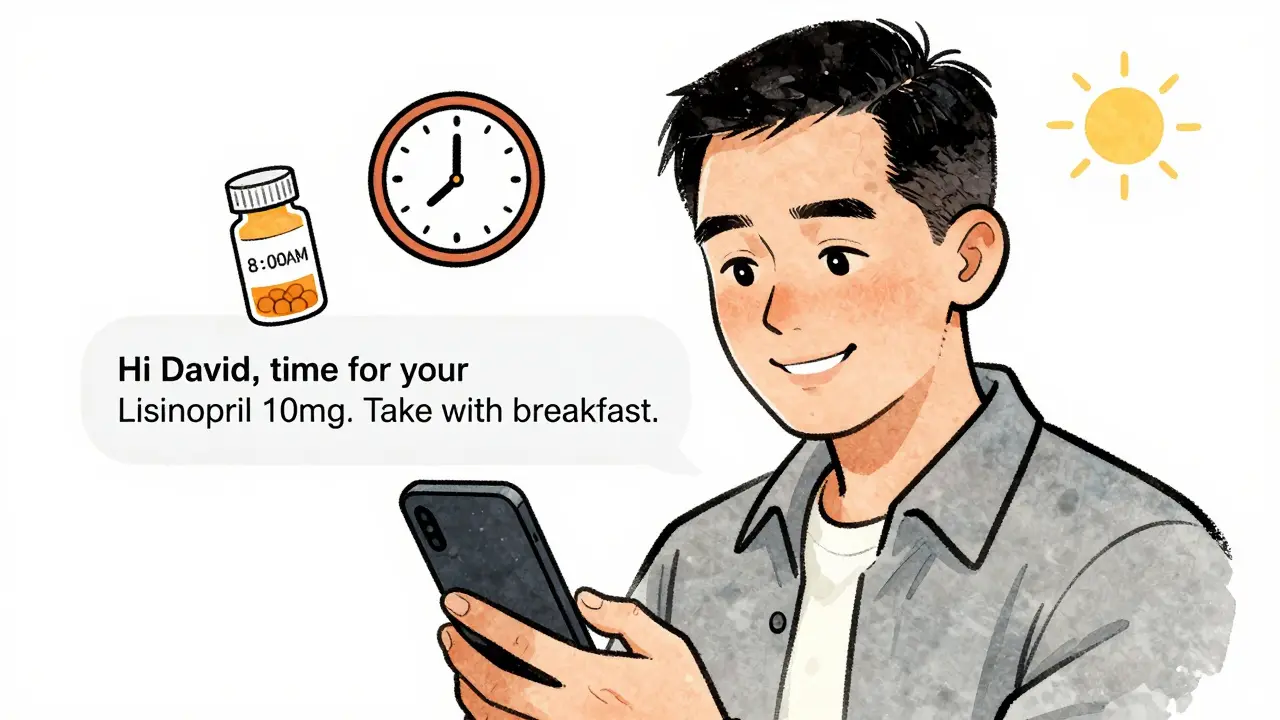
But here’s the catch: effectiveness drops sharply if the message doesn’t feel personal. Generic texts like “Take your meds” have little impact. The real win comes when the message includes your name, the exact drug you’re taking, and the time you usually take it. One study showed personalized messages increased adherence by 32% compared to generic ones. If your reminder says, “Hi Sarah, time for your Lisinopril 10mg. Take with breakfast,” it sticks. If it says, “Medication Reminder,” it gets ignored.
How to Set Up Effective Text Reminders
Setting up a text reminder system isn’t complicated, but it needs structure. Here’s how to do it right:
- Start with your medication list. Write down every drug you take, the dose, and the time. Don’t guess-check your prescription bottle or ask your pharmacist.
- Choose the right timing. Most people take meds in the morning or evening. Send the text 15-30 minutes before your usual time. Studies show reminders sent more than 2 hours before or after the actual dose lose most of their effect.
- Personalize the message. Use your name. Mention the drug by its brand or generic name (e.g., “Lipitor” or “atorvastatin”). Include the dose and time. Example: “Hi Mark, it’s 8:00 AM. Take your 20mg Atorvastatin.”
- Set the frequency. Daily for most chronic meds. Weekly for maintenance drugs like some statins or osteoporosis pills. Too many texts? You’ll tune out. Too few? You’ll forget.
- Use a reliable system. Many pharmacies and clinics now offer automated text services. If yours doesn’t, use a free app like Medisafe or MyTherapy. They sync with your phone’s calendar and can send texts or push alerts.
What Doesn’t Work
Not every text reminder system delivers results. A 2023 study of nearly 10,000 heart patients found that even with daily texts, adherence didn’t improve over 12 months. Why? Three big reasons:
- One-size-fits-all messages. Sending the same text to everyone-even if it’s personalized with a name-doesn’t help if the timing or content doesn’t match the person’s routine.
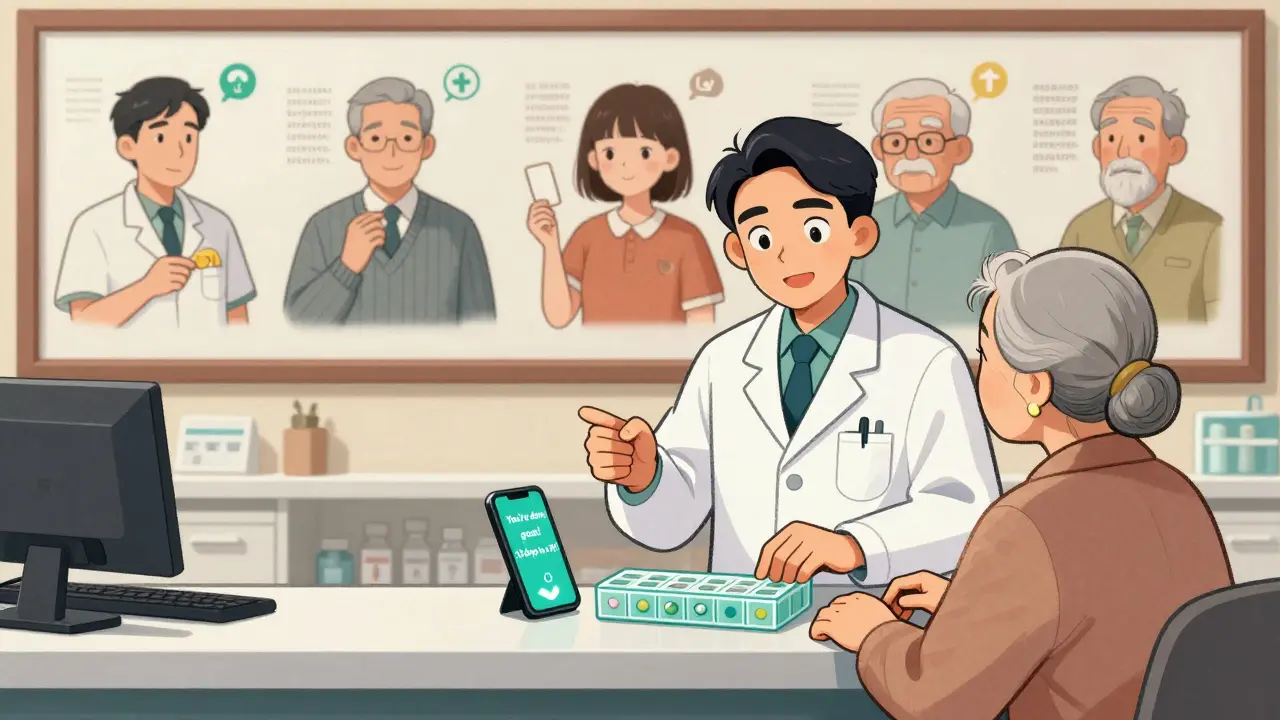
- No follow-up. If you miss a dose and the system doesn’t respond, you’re left on your own. The best systems include two-way texting: “Did you take your pill?” If you reply “No,” it can trigger a nurse call or refill alert.
- Message fatigue. After 3-6 months, people start ignoring the texts. It’s not that they stopped caring-it’s that the novelty wore off. The solution? Vary the message. Change the wording. Add a small encouragement: “You’re doing great. 10 days in a row!”
Who Benefits Most
Text reminders aren’t equally effective for everyone. They work best when:
- You’re managing an infection. For HIV, TB, or hepatitis C, missing even one dose can lead to drug resistance. Studies show text reminders cut missed doses by up to 70% in these cases.
- Your schedule is unpredictable. Shift workers, parents of young kids, or people with irregular routines benefit hugely. A text can anchor your day.
- You’re older. Seniors are more likely to forget pills. One 2021 trial found text reminders improved adherence in adults over 65 by 28%-especially when combined with family involvement.
On the flip side, they’re less effective for people with depression, severe memory loss, or no reliable phone access. If you don’t have a smartphone or a stable number, texts won’t help. In those cases, pill organizers, phone calls from nurses, or home visits are better options.
Common Mistakes to Avoid
Even well-intentioned setups fail. Here’s what to watch out for:
- Using the wrong phone number. Make sure the system has your current number. If you switched carriers or got a new phone, update it immediately.
- Setting reminders for the wrong time. If you take your pill at 7:30 PM but the system sends it at 8:00 PM, you’ll miss the window. Double-check the timing against your routine.
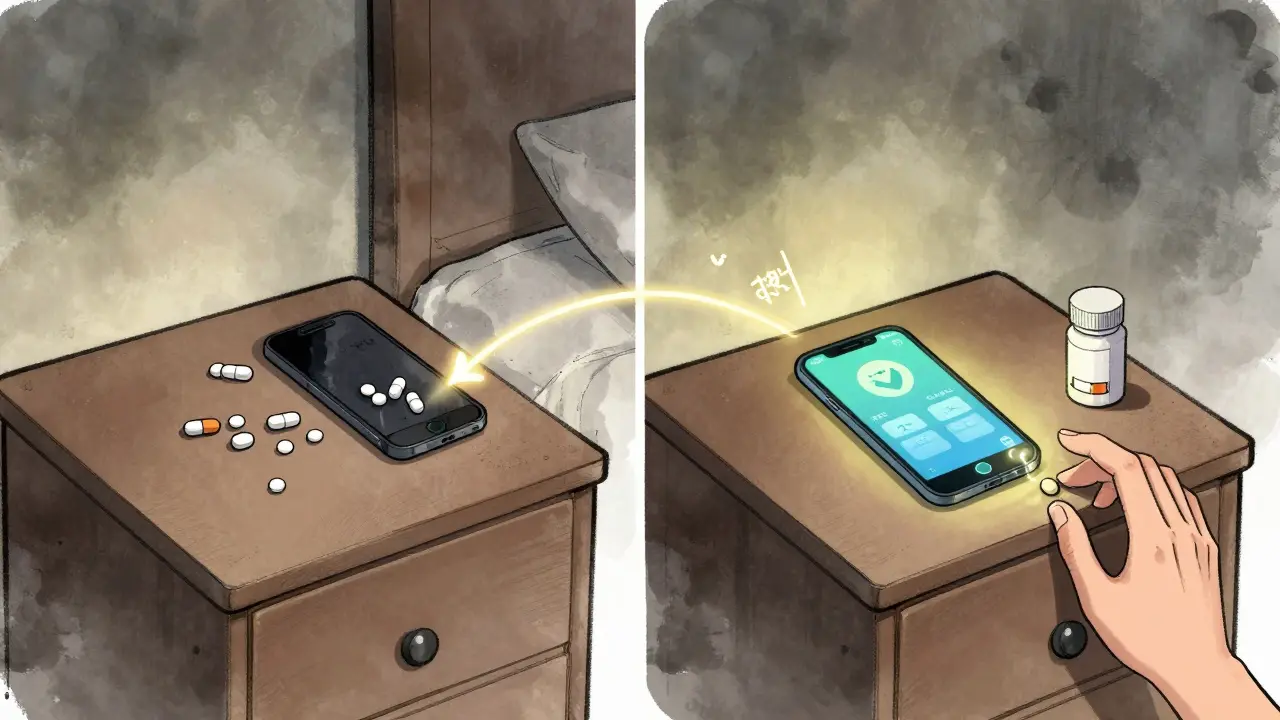
- Not testing the system. Ask for a test message before going live. Make sure it arrives, is readable, and doesn’t get blocked by spam filters.
- Ignoring opt-out rates. About 15-20% of people stop receiving texts after six months. If you notice you’re not reading them anymore, it’s time to reset or switch methods.
What Comes Next
The future of medication reminders isn’t just texts. New systems use AI to predict when you’re likely to miss a dose based on your refill history, phone usage, or even weather patterns (yes, rain has been linked to missed doses in some studies). Some clinics now combine texts with automated refill requests and pharmacy delivery.
But for now, the simplest tool still works best: a clear, timely, personalized text. If you’re struggling to stay on track, ask your doctor or pharmacist to set up a custom reminder. Don’t wait until you’re sick. Start today. One text can change your health trajectory.
Can I use text message reminders if I don’t have a smartphone?
Yes. Text messages work on any mobile phone that can receive SMS, even basic flip phones. You don’t need internet, an app, or a smartphone. As long as you have a working phone number and signal, you’ll get the reminder. Many clinics and pharmacies offer SMS-only services for seniors and people without smartphones.
Are text reminders HIPAA compliant?
They can be, but it depends on how they’re sent. If your doctor or pharmacy uses a secure health platform that encrypts messages and requires patient consent, it’s compliant. But if you’re using a personal text thread or a non-medical app, it’s not. Always ask your provider if their system is HIPAA-approved. Never share your medication details via unsecured text.
How often should I get text reminders?
Daily for most medications-especially if you take them once a day. For drugs taken less frequently (like weekly statins or monthly injections), weekly reminders are enough. Too many texts (like 3-4 per day) can lead to fatigue. Start with one per day and adjust based on your routine and response.
What if I miss a dose and the text reminder doesn’t help?
Text reminders only notify you-they don’t enforce action. If you keep missing doses, talk to your doctor. You might need a pill organizer, a pill dispenser with alarms, or a family member to help. Some clinics offer automated calls or nurse check-ins for patients who struggle. Texts are a tool, not a cure.
Can text reminders help with multiple medications?
Yes, but they need to be clearly organized. Instead of one message with all meds, it’s better to send separate texts for each drug at its specific time. For example, “Take your Metformin” at breakfast, then “Take your Lisinopril” at dinner. Apps like Medisafe can handle this automatically. If using SMS, ask your provider to schedule staggered reminders.
Text message reminders aren’t magic. But when they’re personalized, timely, and consistent, they’re one of the most powerful tools we have to help people stay healthy. If you’re struggling to take your meds, don’t assume it’s your fault. It might just be the system that needs fixing.


Been using this for my mom’s blood pressure meds for over a year now. The key is timing-send it 20 minutes before her usual time, not at the exact moment. She’ll forget if it hits right on the dot. Also, adding ‘You got this’ at the end makes a weird difference. Not sure why, but she says it feels less robotic.