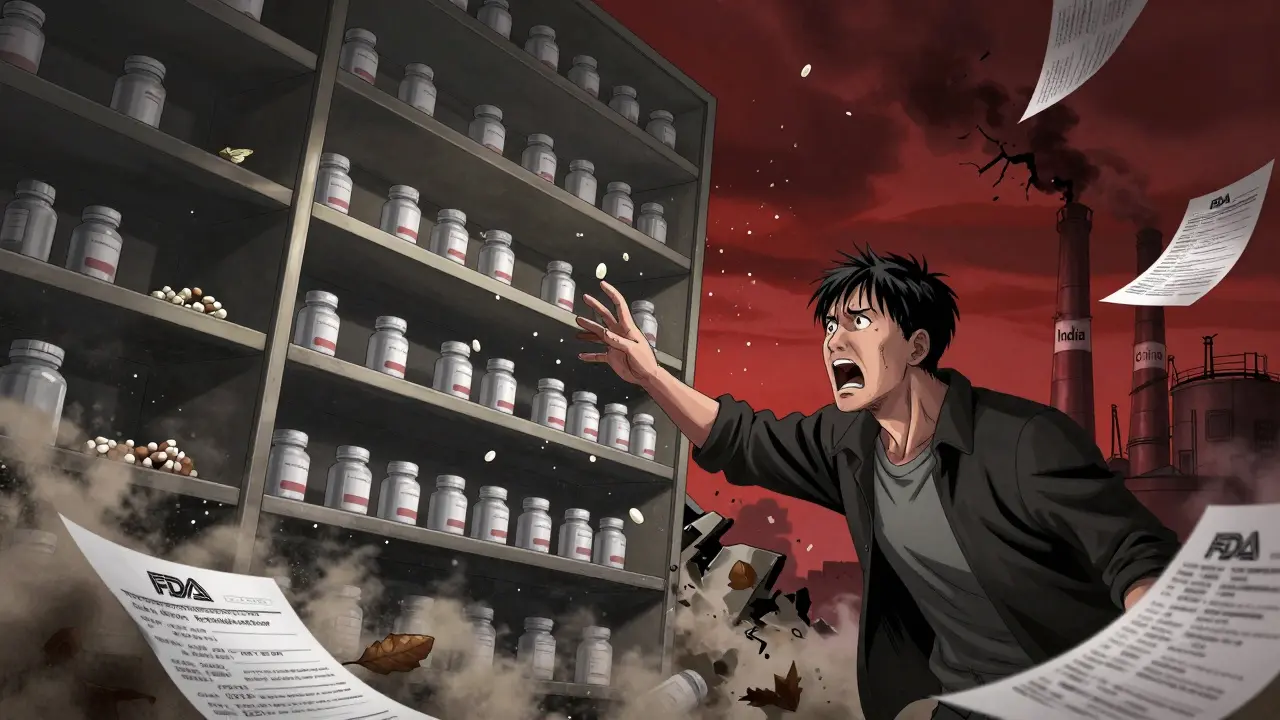
By 2026, more than 1 in 5 Americans will have experienced a drug shortage that directly affected their treatment. It’s not just a headline-it’s a daily reality for patients, pharmacists, and doctors. The problem isn’t getting better. It’s getting worse. And the predictions for the next five years paint a picture no one can afford to ignore.
Why Drug Shortages Are Getting Worse
Drug shortages aren’t random. They’re the result of deep, interconnected systems breaking down. The global supply chain for generic drugs is built on a fragile foundation: 80% of active pharmaceutical ingredients (APIs) come from just two countries-India and China. When a single factory in Hyderabad shuts down for regulatory noncompliance, or a port in Shanghai halts exports due to environmental inspections, the ripple effect hits U.S. hospitals within weeks.
In 2024, the FDA recorded 312 active drug shortages. By October 2025, that number had jumped to 421. Why? Because the same forces that are reshaping global trade are now squeezing medicine supplies. Tariffs, export controls, and geopolitical tensions are turning supply chains into bottlenecks. The World Bank estimates that global trade volume for pharmaceuticals fell 9% in 2025-the steepest drop in 15 years.
Top 5 Drivers of Future Drug Scarcity
Here’s what’s really behind the shortages-not just now, but through 2030:
- Manufacturing consolidation: Over 70% of generic drug production is now handled by just 12 companies. One failure can take out dozens of medications. In 2025, a single facility in Pennsylvania that made IV fluids and antibiotics shut down for six months, triggering shortages of over 40 drugs.
- Raw material delays: APIs require complex chemical processes. A shortage of one precursor-like benzene or chloroform-can halt production of entire drug classes. The price of key precursors rose 38% in 2025 alone.
- Regulatory backlogs: The FDA’s approval timeline for generic drugs has stretched from 18 months to over 30 months. Meanwhile, companies are rushing to file new applications, creating a logjam. In 2025, 147 pending generic applications sat untouched for more than two years.
- Profit-driven production: Generic drugs have thin margins. Companies prioritize high-margin drugs (like injectables or oncology meds) over low-margin essentials like penicillin or furosemide. Between 2023 and 2025, 89% of new shortages were in drugs with profit margins under 5%.
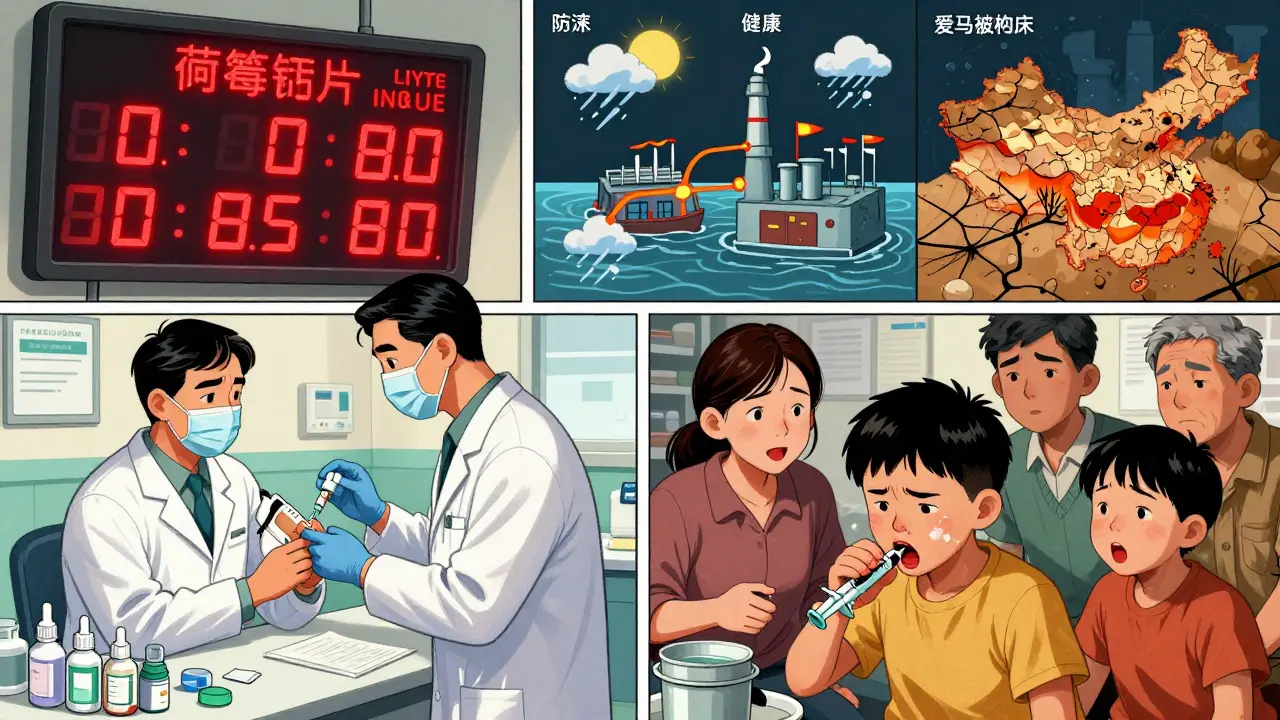
- Climate disruption: Floods in India’s pharmaceutical hubs in 2024 destroyed 11 manufacturing units. Droughts in China reduced water availability for chemical processing by 22%. These aren’t one-off events-they’re becoming the new normal.
Who Gets Hurt the Most?
It’s not just patients. It’s the people who rely on daily meds: diabetics without insulin, cancer patients without chemo, heart failure patients without furosemide. But the impact isn’t equal.
Low-income patients are hit hardest. A 2025 study by the Kaiser Family Foundation found that 61% of uninsured patients skipped doses or switched to less effective alternatives during a shortage. Medicare Part D enrollees saw a 40% increase in out-of-pocket costs when their drug was replaced with a more expensive alternative.
Children are especially vulnerable. Many pediatric formulations (like liquid amoxicillin or seizure meds) aren’t made in bulk. When they go missing, hospitals scramble to compound doses manually-increasing risk of dosing errors. In 2025, the CDC reported a 19% spike in pediatric medication errors linked to shortages.
The AI and Data Revolution in Forecasting
Forecasting shortages used to mean watching inventory levels and waiting for panic calls from hospitals. Now, it’s about data.
Companies like Medidata and Redwood Analytics use machine learning models that pull in real-time data from:
- Manufacturing plant sensor logs (temperature, pressure, yield rates)
- Shipping delays from port authorities
- Regulatory inspection records from the FDA and EMA
- Raw material commodity prices
- Weather patterns affecting production regions
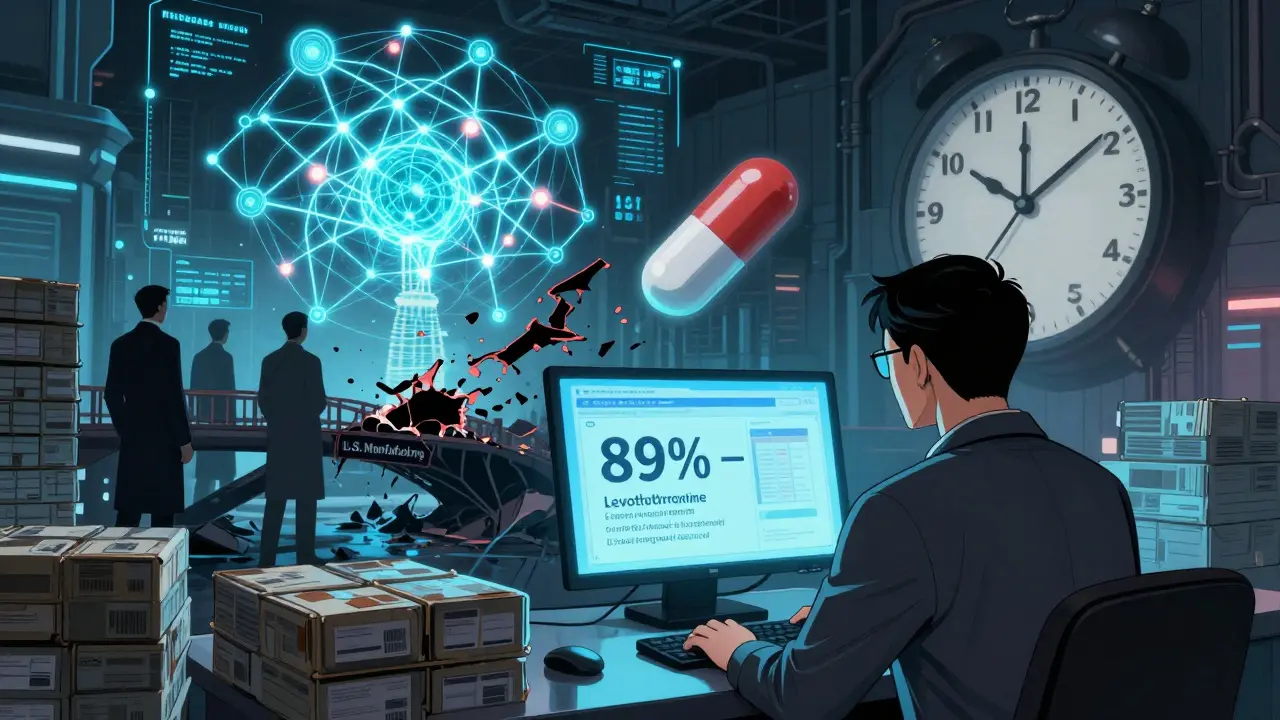
One model developed by the University of Michigan predicted a shortage of levothyroxine (a thyroid med) with 89% accuracy six months before it happened. The FDA started using similar tools in 2024. By 2026, the agency plans to require all major manufacturers to feed real-time data into a public dashboard.
But here’s the catch: data alone doesn’t fix the problem. It just makes it visible. And visibility doesn’t equal action.
What’s Being Done? (And Why It’s Not Enough)
The U.S. government passed the Drug Supply Chain Security Act in 2013. It helped. But it didn’t solve the root causes.
Current efforts include:
- Strategic stockpiling: The CDC now maintains a 90-day reserve of 12 critical drugs. But that’s less than 3% of total annual U.S. demand.
- Domestic manufacturing incentives: The Inflation Reduction Act offers tax credits for U.S.-based API production. But only 3 new plants opened in 2025-and none are large enough to replace imports.
- Foreign supplier diversification: The FDA is pushing manufacturers to source APIs from Vietnam, Brazil, and Poland. But these countries lack the scale and infrastructure to fill the gap.
Meanwhile, the FDA’s inspection capacity hasn’t kept up. In 2025, 42% of overseas drug plants were not inspected due to budget constraints. That’s like leaving your car’s engine unchecked while driving through a storm.
The Coming Crisis: 2027-2030
By 2027, experts predict:
- Over 600 drugs will be in active shortage
- 30% of hospitals will have no backup for at least one life-saving medication
- Insulin, heparin, and critical antibiotics will be chronically unavailable for 3+ months per year
Why? Because the pressure points are multiplying:
- Population aging: 10,000 Americans turn 65 every day. They need more drugs.
- Chronic disease rise: Diabetes, heart failure, and kidney disease are climbing. All require complex drug regimens.
- Climate migration: As regions become uninhabitable, displaced populations flood into urban centers, increasing demand for care and meds.
And here’s the most alarming part: there is no plan to scale production fast enough to meet demand.
What Patients Can Do Now
You can’t control the supply chain. But you can protect yourself.
- Ask your pharmacist: If your drug is on shortage, ask if there’s a therapeutically equivalent alternative. Don’t assume the next brand is better-ask for the generic name.
- Get a 90-day supply: If your insurance allows it, ask for a 3-month fill. Many insurers will approve this for chronic meds.
- Sign up for FDA alerts: The FDA has a public drug shortage list updated weekly. Bookmark it: fda.gov/drugshortages.
- Advocate: Tell your representative. Demand funding for domestic API manufacturing. Support legislation that penalizes manufacturers who hoard stock.
The Hard Truth
Drug shortages aren’t going away. They’re becoming a permanent feature of modern healthcare. The question isn’t whether we’ll face them-it’s whether we’ll act before it’s too late.
Forecasting tools are getting smarter. But forecasting without action is just prediction. And prediction without policy change? That’s just waiting for the next crisis.
Why are generic drugs so hard to make?
Generic drugs are cheaper to buy, but harder to make profitably. The active ingredients often require complex chemical processes, and the factories that make them are aging, underfunded, and located overseas. Companies focus on high-margin drugs because low-margin generics don’t justify the investment. When one factory shuts down, there’s no backup-because no one else is making it.
Can the U.S. make its own drugs?
Yes-but not at scale. The U.S. has the technical ability, but not the infrastructure. Only 12% of API production happens domestically. Building new plants takes 5-7 years and $200 million minimum. Even with government incentives, progress is slow. The real bottleneck isn’t technology-it’s political will and long-term funding.
Are drug shortages getting worse every year?
Yes. Since 2018, the number of active drug shortages has increased by 140%. The FDA recorded 146 shortages in 2018. In 2025, it was 421. The trend isn’t cyclical-it’s linear and accelerating. Climate events, geopolitical instability, and supply chain consolidation are all making shortages more frequent and longer-lasting.
What’s the difference between a drug shortage and a drug recall?
A recall happens when a drug is unsafe-like contaminated batches or labeling errors. A shortage means the drug is safe but unavailable because of production, supply, or distribution problems. You can’t replace a shortage with a recall-you need more supply, not less.
How can I find out if my medication is in short supply?
Check the FDA’s public Drug Shortages page at fda.gov/drugshortages. It’s updated weekly and lists all active shortages, expected resolution dates, and alternatives. Your pharmacist should also be able to tell you if your drug is affected. Don’t wait until you can’t fill your prescription.
Next Steps: What Needs to Happen
Here’s what’s missing:
- Minimum stockpile requirements: Hospitals and insurers should be required to keep 6 months of critical drug inventory.
- Fast-track domestic manufacturing: Fast-track permitting, tax breaks, and low-interest loans for U.S.-based API plants.
- Global cooperation on supply chains: Treat drug production like a public health infrastructure-like water or electricity.
- Transparency laws: Require manufacturers to report production disruptions within 48 hours.
Without these changes, the next five years won’t just be about shortages. They’ll be about rationing care. And that’s a future we can’t afford.


Man, I’ve been watching this unfold for years. It’s not just about factories shutting down or ports closing-it’s about how we’ve outsourced the very foundation of health to places we can’t control. I remember when my dad couldn’t get his blood pressure med for three months. They told him to split pills. Split. Pills. I’m not even kidding. And now? Now we’re just waiting for the next crisis because no one wants to pay for the infrastructure. We built this system on cheap labor and zero foresight. And now it’s cracking. Not because of bad luck. Because we chose to ignore it until it was too late.