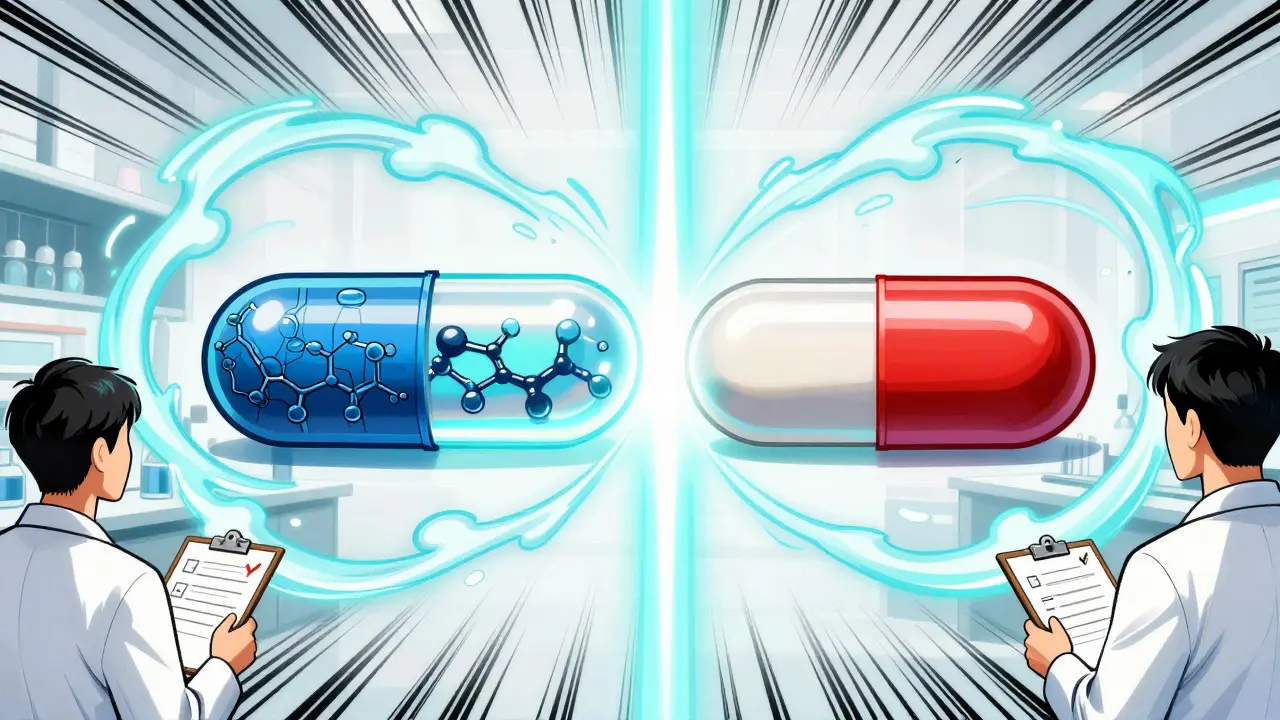
Every time you pick up a generic pill instead of the brand-name version, you are benefiting from a specific regulatory shortcut. It is not magic; it is the Abbreviated New Drug Application (ANDA), a submission pathway that lets manufacturers prove their drug works just like an already-approved original without running full clinical trials. This system was created by the Hatch-Waxman Act in 1984 and remains the backbone of the U.S. generic drug market. Today, about 90% of prescriptions filled in America are generics, saving the healthcare system roughly $373 billion annually. Understanding how this process works helps explain why some drugs see price drops quickly while others stay expensive for years.
Key Takeaways
- The ANDA process allows generic makers to skip safety and efficacy trials by proving "bioequivalence" to an existing reference drug.
- Approval takes an average of 30 months, though the FDA aims for a 10-month review under current fee agreements.
- Costs for an ANDA range from $1 million to $5 million, a fraction of the $2.3 billion needed for a new drug.
- Patent certifications and exclusivity periods are the biggest hurdles preventing immediate approval.
- Complex products like inhalers or injectables face stricter scrutiny than simple tablets.
What Is the ANDA Pathway?
At its core, an ANDA is a promise to the Food and Drug Administration (FDA) that your product is identical to the Reference Listed Drug (RLD). The RLD is the original brand-name medicine that has already been vetted for safety and effectiveness. Instead of repeating those costly studies, the generic manufacturer must demonstrate that the active ingredient, strength, dosage form, and route of administration match exactly. The label can differ slightly, but the core chemistry must be the same.
This pathway is managed by the FDA’s Office of Generic Drugs (OGD), part of the Center for Drug Evaluation and Research (CDER). In fiscal year 2022, the OGD processed over 1,100 original ANDAs with a 91% approval rate on first-cycle reviews. This high success rate reflects a mature system where most applicants know what is expected. However, getting there requires rigorous preparation, particularly in manufacturing quality and laboratory testing.
How the Review Process Works
The journey from application to approval follows a structured timeline. It does not happen overnight, and delays are common if issues arise during inspection or data review. Here is how the stages typically unfold:
- Filing Acceptance: The FDA checks if the paperwork is complete. This usually happens within 60 days of submission via the Electronic Submission Gateway (ESG).
- Discipline Reviews: Teams look at chemistry, manufacturing, microbiology, labeling, and bioequivalence data separately. Each team sends out Information Requests (IRs) if they need more details.
- Response Phase: Applicants answer IRs. If problems are too big, the FDA may issue a Complete Response Letter (CRL), pausing the clock until fixes are made.
- Final Decision: If all science checks pass and no legal barriers exist, the drug gets Final Approval (AP). If patents block it, it gets Tentative Approval (TA), meaning it is ready to launch as soon as the patent expires.
Most applicants receive multiple IRs. One industry leader noted that their first submission triggered 17 separate requests across different departments, adding 14 months to their timeline. This highlights why early communication with the FDA is critical for keeping schedules on track.
ANDA vs. NDA: Why Generics Are Cheaper
To understand the value of the ANDA, you have to compare it to the standard New Drug Application (NDA). An NDA is required for new molecular entities-drugs that have never been sold before. That process involves years of preclinical animal tests and large-scale human clinical trials to prove both safety and efficacy. The cost? Approximately $2.3 billion per drug, according to Tufts University research.
An ANDA skips the heavy lifting. Because the FDA already knows the drug is safe and effective, the generic maker only needs to prove bioequivalence. Bioequivalence means the generic releases the same amount of drug into the bloodstream at the same speed as the brand name. This single focus reduces development costs to between $1 million and $5 million. It also shortens the time to market significantly. While NDAs take 10-12 years on average, ANDAs often move through the pipeline in 3-5 years, depending on patent timelines.
| Feature | ANDA (Generic) | NDA (Brand/New) |
|---|---|---|
| Clinical Trials Required | No (only bioequivalence) | Yes (Phase I-III) |
| Average Cost | $1M - $5M | ~$2.3B |
| Review Focus | Equivalence & Manufacturing | Safety & Efficacy |
| Time to Market | 3-5 Years (post-patent) | 10-12 Years |
The Role of Patents and Exclusivity
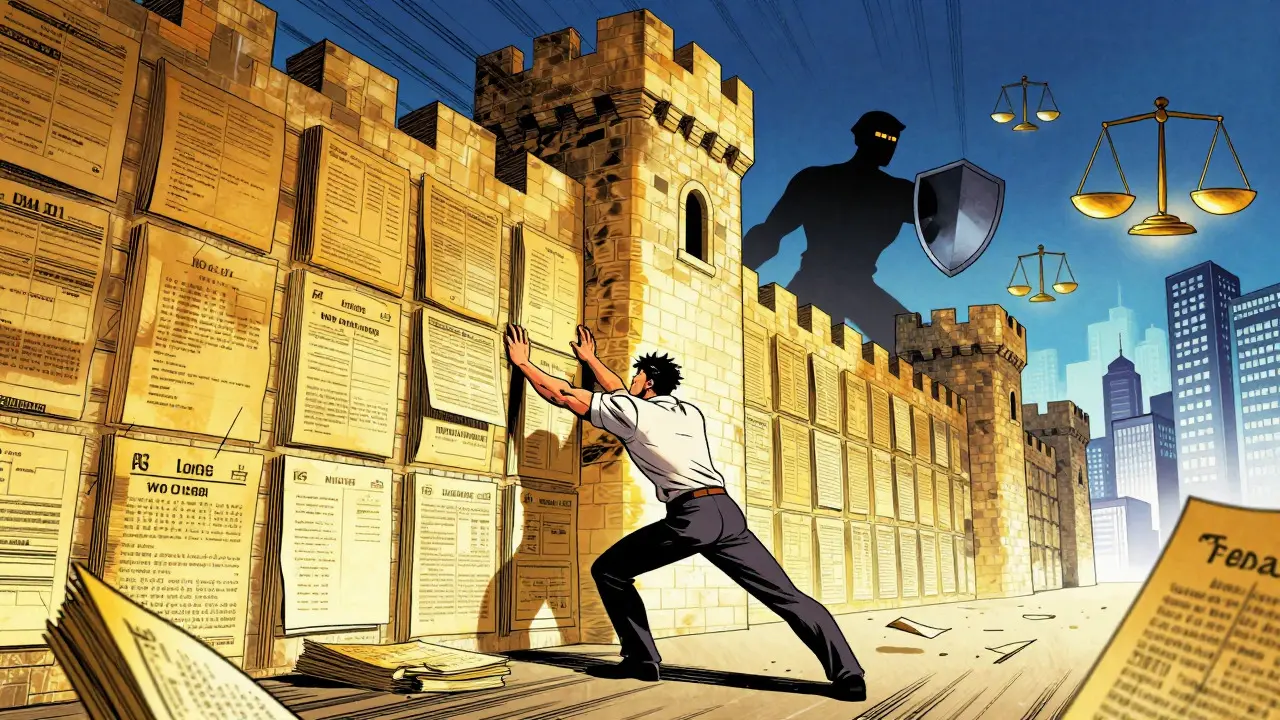
Science is only half the battle. The other half is law. Before an ANDA can be fully approved, the applicant must file a certification regarding the patents held by the brand-name owner. This is known as the Paragraph IV certification, which asserts that the patent is invalid, unenforceable, or will not be infringed. If the brand company disagrees, they can sue, triggering a 30-month stay period where the FDA cannot approve the generic.
This legal dance is why some generics wait years after a patent expires to hit shelves. There are also exclusivity periods granted for new formulations or pediatric studies that block competition regardless of patents. For example, a drug might have a 5-year exclusivity period for a new delivery mechanism. During this time, even if the base molecule is off-patent, no generic can enter the market. Understanding these legal layers is essential for predicting when prices will drop.

Challenges with Complex Generics
Not all drugs are simple pills. Complex generics include inhalers, eye drops, nasal sprays, and injectables. These products rely heavily on their delivery device or formulation to work correctly. Proving equivalence here is much harder because small changes in particle size or spray pattern can affect how the drug behaves in the body.
In 2022, complex generics made up 35% of pending ANDAs. They account for a significant portion of Complete Response Letters, with 35% citing inadequate bioequivalence protocols. Manufacturers often need to run multiple study iterations to satisfy reviewers. One company reported spending $1.2 million on three separate studies just to get a topical cream approved. To help, the FDA publishes over 2,000 product-specific guidances, offering detailed instructions on how to test these tricky products. Using Quality by Design (QbD) principles in manufacturing has become a standard best practice, adopted by nearly 70% of leading generic firms, to reduce variability and improve approval odds.
Recent Changes and Future Trends
The regulatory landscape is shifting. The Generic Drug User Fee Amendments (GDUFA III), effective October 2022, set a goal for the FDA to review 90% of original ANDAs within 10 months. This pushes both the agency and applicants to be more efficient. Additionally, the FDA is increasingly using artificial intelligence tools to assist reviewers, with 78% of chemistry reviewers now relying on AI-assisted software to check data consistency.
There is also a growing focus on real-world evidence for complex products, moving beyond traditional lab-based comparisons. As the U.S. generic market grows toward $189 billion by 2027, the pressure to streamline approvals will only increase. Companies that master the interplay between scientific rigor and legal strategy will continue to dominate this space, ensuring that affordable alternatives remain available for patients nationwide.
How long does the FDA ANDA process take?
The average timeline from submission to final approval is about 30 months. However, the FDA aims to complete the initial review within 10 months under GDUFA III. Delays often occur due to Information Requests, facility inspections, or legal holds related to patents.
What is the difference between Final Approval and Tentative Approval?
Final Approval means the drug can be marketed immediately. Tentative Approval means the science is accepted, but legal barriers like patents prevent immediate sales. The drug becomes available automatically once those barriers expire.
Do generic drugs require clinical trials?
No, they do not require full safety and efficacy clinical trials. Instead, they must undergo bioequivalence studies to prove they deliver the same amount of medication to the body as the brand-name reference drug.
Why are some generics still expensive?
High prices can result from limited competition, complex manufacturing challenges, or remaining patent protections. If only one or two companies hold the ANDA approval, they have more pricing power than in a crowded market with five or more competitors.
What is a Reference Listed Drug (RLD)?
An RLD is the original brand-name drug approved by the FDA that serves as the benchmark for generic comparison. All ANDAs must demonstrate equivalence to a specific RLD listed in the FDA's Orange Book.