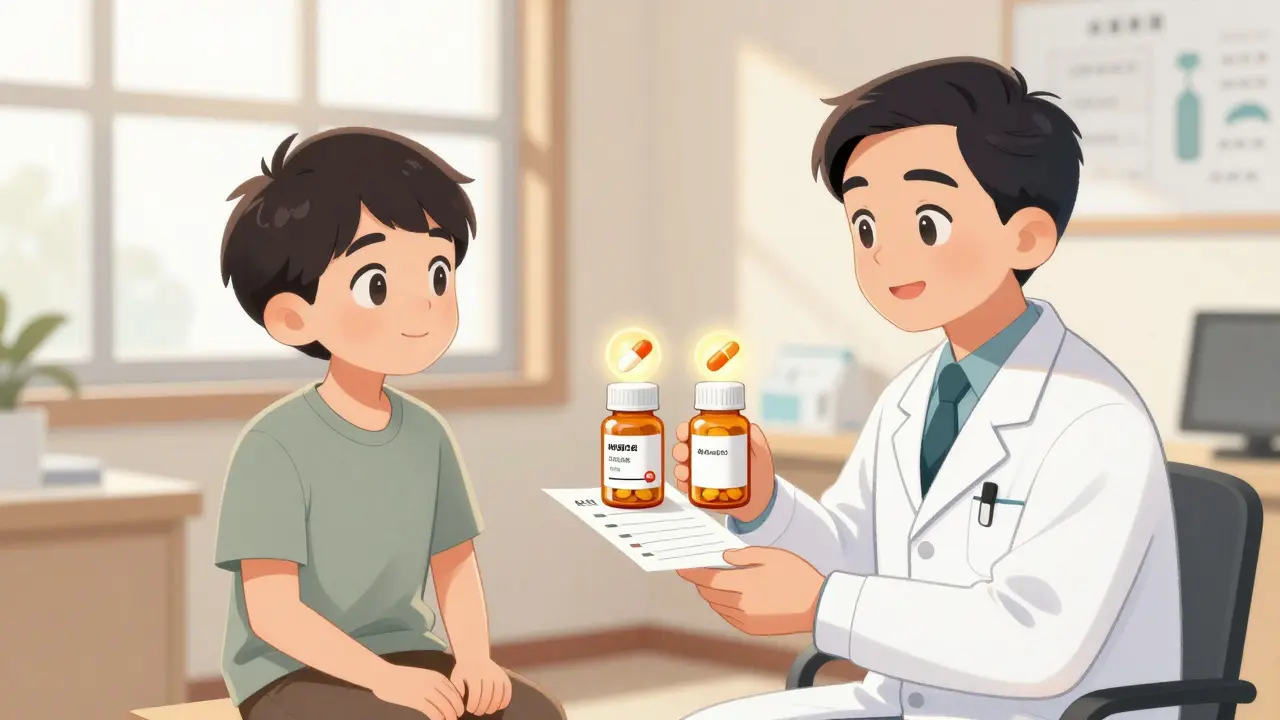
When your doctor hands you a prescription, you might notice something different: the pill looks smaller, the name on the bottle is unfamiliar, and the price is way lower. That’s a generic medication. And if you’ve ever wondered whether it’s just as good as the brand-name version you’ve heard about on TV, you’re not alone. Many people worry that cheaper means weaker. But here’s the truth: generic drugs work the same way. They contain the exact same active ingredient, in the same strength, and work the same way in your body. The difference? They cost 80-85% less.
Why Your Doctor Might Suggest a Generic
Your doctor doesn’t suggest generics just to save you money-though that’s a big part of it. They suggest them because they’re proven to work. The U.S. Food and Drug Administration (FDA) requires every generic drug to meet the same strict standards as brand-name drugs. That means the same active ingredient, same dosage, same way of taking it-whether it’s a pill, injection, or inhaler. The only differences are in the inactive ingredients, like color, shape, or filler. These don’t affect how the medicine works. They’re just there to make the pill easier to swallow or to distinguish it from others on the shelf. In fact, 90% of all prescriptions filled in the U.S. are for generics. For common conditions like high blood pressure, diabetes, or high cholesterol, generics make up 95% or more of prescriptions. Studies show people who take generics stick with their treatment longer. One analysis of 11 million patients found that those on generics were 8-12% more likely to keep taking their medicine as prescribed. That’s because they can afford it. If you skip doses because the cost is too high, the medicine won’t work-even if it’s the best one on the market.Common Concerns-and the Facts Behind Them
Most worries about generics come from myths. Let’s clear up the top three.- “Generics aren’t as strong.” False. The FDA requires generics to deliver the same amount of medicine into your bloodstream as the brand name. The difference in absorption must be within 80-125% of the brand. That’s a tight range. If it’s outside that, the FDA won’t approve it.
- “They’re made in unsafe factories.” Not true. Generic manufacturers must follow the same quality rules as brand-name companies. The FDA inspects every facility-whether it’s in the U.S., India, or elsewhere-and 98.7% passed inspections in 2023. The same factories that make brand-name drugs often make generics too.
- “The different color or shape means it’s different.” No. The color and shape come from inactive ingredients. Think of it like two different brands of aspirin. One is white and round, another is blue and oval. They both contain acetaminophen. The outside doesn’t change how it works inside your body.
When Generics Might Need Extra Care
There are rare cases where switching can matter. These are drugs with a narrow therapeutic index-meaning the difference between the right dose and a harmful one is very small. Examples include levothyroxine (for thyroid), warfarin (a blood thinner), and some seizure medications. For these, the FDA requires even stricter bioequivalence testing (within 90-110%). Still, most patients switch without issue. If you’ve been stable on a brand-name version and your doctor suggests switching, ask: “Is this safe for me?” They’ll check your history and may start you on the same generic you’ve used before.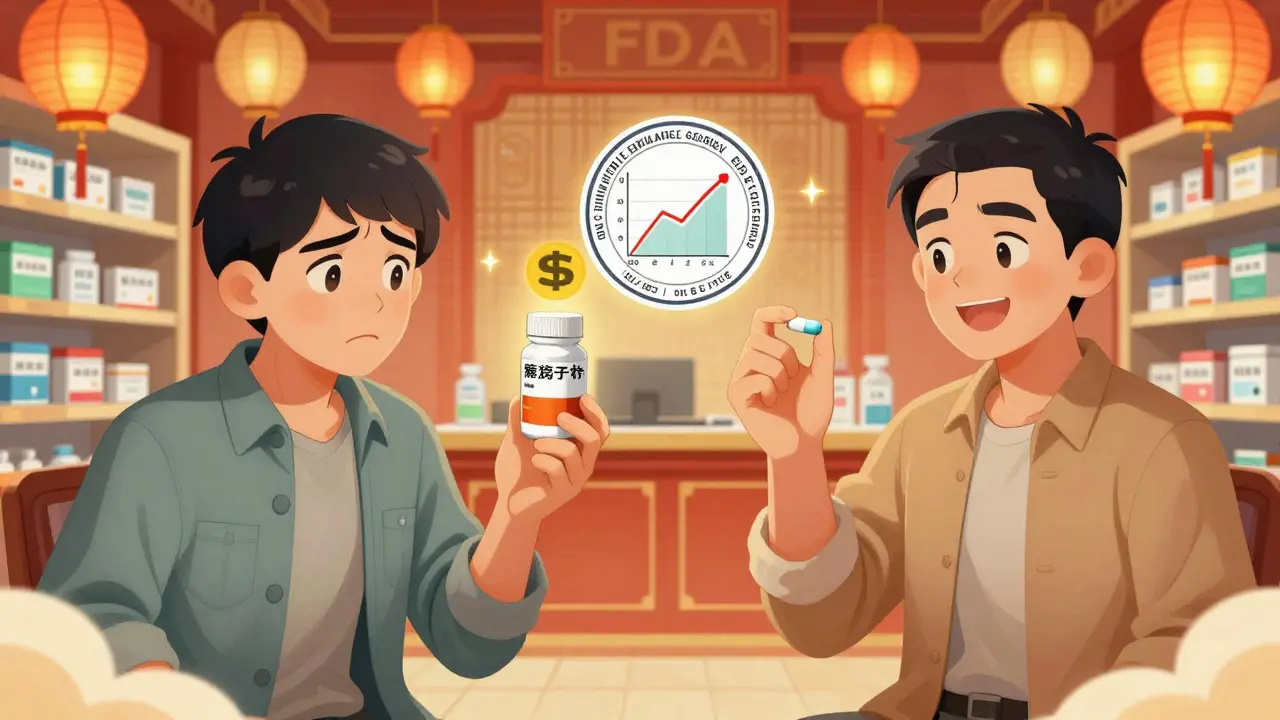
How to Start the Conversation
You don’t need to wait for your doctor to bring it up. You can start the conversation yourself. Here’s how:- Ask what options you have. Say: “Is there a generic version of this medicine?” or “I’ve heard generics are cheaper-do they work just as well?”
- Share your concerns. Be honest. “I’m worried the generic won’t work the same.” or “I had a bad reaction to a different brand before.”
- Ask for clarification. “Can you explain how you know it’s the same?” or “What’s the difference between this and the brand name?”
- Use the ‘Ask-Tell-Ask’ method. Ask what they know, tell them the facts, then ask them to repeat it back. “So, to make sure I understand-you’re saying the active ingredient is the same, and the only difference is the color?”
What to Do After the Prescription
When you get your prescription filled, check the label. If it’s a generic, the pharmacy will list the brand name in parentheses. For example: “Metformin (Glucophage).” That’s normal. If you’re unsure, ask the pharmacist: “Is this the generic version?” Pharmacists are trained to explain the difference. In fact, 83% of patient questions about generics are resolved right at the counter. If you notice a change in how you feel after switching-like new side effects or the medicine not working as well-don’t assume it’s the generic. Keep a note: when the change started, what symptoms you’re feeling, and whether you changed anything else (like diet, sleep, or other meds). Bring that to your doctor. Sometimes, the issue isn’t the drug-it’s something else.Cost Matters More Than You Think
Let’s say you’re on a statin for cholesterol. The brand name costs $675 a month. The generic? Around $16. That’s not just a savings. It’s a lifeline. A 2020 study found patients on generics saved $2,847 per year on average. For someone on a fixed income, that’s rent money. That’s groceries. That’s not skipping meals to pay for medicine. By 2025, Medicare Part D will cover many generics with $0 out-of-pocket cost. That’s huge. But if you don’t know it’s available, you won’t ask for it. The same goes for private insurance. Always ask your pharmacist: “Is there a lower-cost generic?”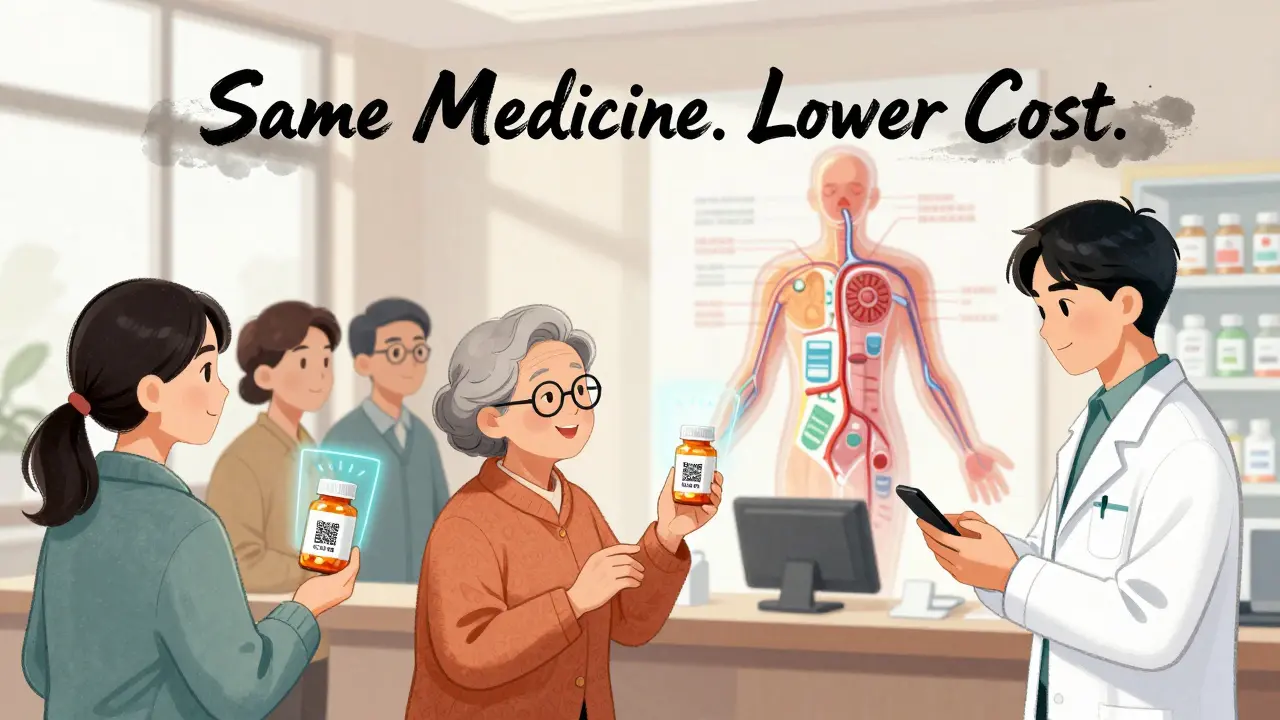
What You Should Know About Inactive Ingredients
About 0.8% of patients report issues with inactive ingredients-things like dyes, fillers, or coatings. These can rarely cause allergic reactions or stomach upset. For example, some people are sensitive to lactose, which is sometimes used as a filler. If you have known allergies or intolerances, tell your doctor or pharmacist. They can check the ingredients list or switch you to a version without it. But this is rare. Most people never notice a difference.What to Do If You’re Still Unsure
If you’re still hesitant, ask for the FDA’s Medication Guide. By law, your pharmacy must give you one for certain drugs-especially those with serious risks. These guides are written in plain language (5th to 7th grade level), so you can understand them. They explain what the drug does, what side effects to watch for, and how the generic compares to the brand. You can also ask your pharmacist for a printed fact sheet. Many pharmacies now include QR codes on labels that link to short videos explaining the medicine. These are especially helpful if English isn’t your first language.Final Thought: You’re Not Alone
You’re not the only one who’s had doubts. In a 2023 survey of over 12,000 people, 79% said they noticed no difference after switching to generics. And 68% said they chose generics because they couldn’t afford the brand name. The fear isn’t about the science-it’s about trust. But the science is solid. The system is monitored. The savings are real. The next time your doctor offers a generic, don’t say yes out of pressure. Say yes because you understand it. Ask the questions. Get the facts. And know this: choosing a generic isn’t settling. It’s smart.Are generic medications really as effective as brand-name drugs?
Yes. The FDA requires generic drugs to have the same active ingredient, strength, dosage form, and route of administration as the brand-name version. They must also prove they work the same way in the body by matching the brand’s absorption rate within a tight scientific range (80-125%). Studies of over 47 clinical trials found no meaningful difference in effectiveness for heart medications, diabetes drugs, and other common treatments.
Why do generic pills look different from brand-name ones?
The difference in color, shape, or size comes from inactive ingredients-like dyes, fillers, or coatings-that don’t affect how the medicine works. These are changed to avoid trademark issues. The active ingredient-the part that treats your condition-is identical. Think of it like two different brands of aspirin: one is white and round, another is blue and oval. Both contain the same pain-relieving ingredient.
Can generic drugs cause more side effects?
For most people, no. Side effects come from the active ingredient, which is the same in both versions. Rarely, someone might react to an inactive ingredient (like lactose or a dye), but this affects less than 1% of users. If you notice new symptoms after switching, write them down and talk to your doctor. It’s not usually the generic-it could be another change in your routine or health.
Are generic drugs made in unsafe factories?
No. All generic drug manufacturers-whether in the U.S., India, or elsewhere-must follow the same strict quality rules (cGMP) as brand-name companies. The FDA inspects every facility, and 98.7% passed inspections in 2023. Many brand-name companies actually produce generics too, under different labels.
Should I avoid generics for chronic conditions like high blood pressure or diabetes?
No. In fact, studies show people with chronic conditions are more likely to stick with their treatment when they take generics, because they can afford them. For high blood pressure, cholesterol, and diabetes, generics make up over 95% of prescriptions. They’re just as safe and effective. The only exceptions are a few narrow therapeutic index drugs like levothyroxine, where extra care is taken-but even then, most patients switch without issues.
Will my insurance cover generics?
Almost always-and usually at a much lower cost. Most insurance plans, including Medicare Part D, require you to try generics first. By 2025, many generics will be covered with $0 out-of-pocket cost under new Medicare rules. Always ask your pharmacist: “Is there a lower-cost generic version?” You might be surprised how much you save.
What if I’ve been on a brand-name drug for years and my doctor wants to switch me?
It’s okay to ask questions. Say: “I’ve been stable on this. Is switching safe?” For most drugs, yes. But for a few like blood thinners or thyroid meds, your doctor may monitor you more closely at first. They might start you on the same generic you’ve used before, or check your blood levels after a few weeks. You don’t have to switch right away-just make sure you understand why they’re suggesting it.


Bro, generics are the real MVPs. I was on brand-name Lipitor for years, paid $500/month, then switched to atorvastatin-$12 at Walmart. Same pill, same results, no weird side effects. My wallet cried tears of joy. 🙌