
When a blockbuster drug’s core patent expires, you might expect generic copies to flood the market immediately. That is what happens with most consumer products. But in the pharmaceutical world, the end of one protection often marks the beginning of another. Companies rarely let their monopoly die quietly. Instead, they rely on a complex web of market exclusivity extensions that operate independently from standard patents.
These mechanisms allow manufacturers to keep competitors at bay long after the original invention date has passed. For patients and payers, this means higher prices persist for years. For developers, it is the financial lifeline needed to recoup billions in research costs. Understanding how these extensions work requires looking past the patent office and into the regulatory frameworks of agencies like the FDA and EMA.
The Foundation: Hatch-Waxman and Patent Term Extension
To understand where we are today, we have to look back at 1984. The Drug Price Competition and Patent Term Restoration Act, commonly known as the Hatch-Waxman Act, created the current balance between innovation and access. It acknowledged that while developing a new drug takes a decade or more, the standard 20-year patent term starts ticking from the day of filing, not approval. By the time a drug gets FDA approval, much of that patent life is already gone.
The solution was Patent Term Extension (PTE). This mechanism adds time back to the patent to compensate for the regulatory review period. However, it comes with strict limits. In the United States, PTE can add up to five years, but the total post-approval marketing exclusivity cannot exceed 14 years. Only one patent per new active ingredient qualifies, and it must be the first approval of that ingredient.
There is also Patent Term Adjustment (PTA), which compensates specifically for delays caused by the USPTO during the prosecution process. While PTA fixes administrative slowdowns, PTE addresses the clinical trial timeline. Together, they form the baseline protection, but they are just the starting point for modern strategies.
Regulatory Exclusivity: Protection Without Patents
This is where things get interesting. Regulatory exclusivity is distinct from patent law. It is granted directly by health authorities based on the type of data submitted or the population served. These protections can exist even if there is no valid patent, or they can stack on top of existing patents to extend the monopoly further.
In the US, several types of regulatory exclusivity are available:
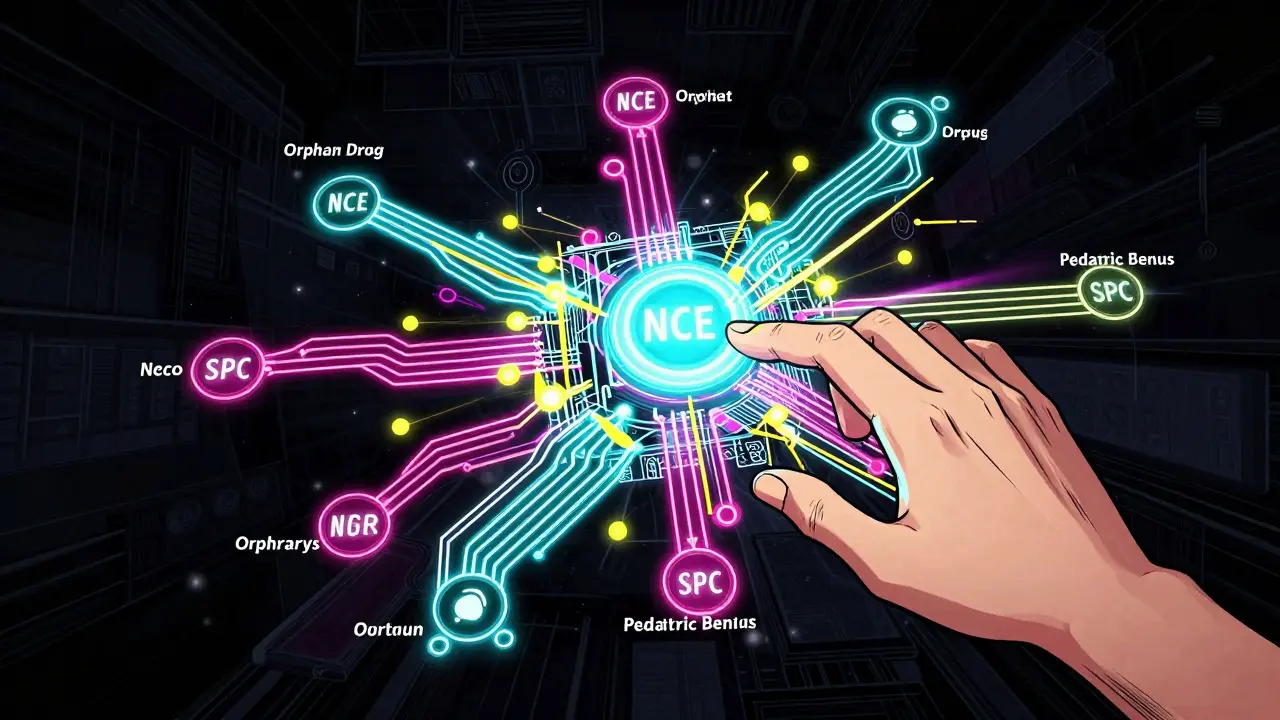
- New Chemical Entity (NCE) Exclusivity: Grants five years of protection for drugs containing a new molecular entity. During this time, generic manufacturers cannot even file an Abbreviated New Drug Application (ANDA).
- Orphan Drug Exclusivity: Provides seven years of market exclusivity for drugs treating rare diseases affecting fewer than 200,000 people in the US. This is critical because many orphan drugs lack strong patent portfolios due to smaller development budgets.
- New Clinical Investigation Exclusivity: Offers three years of protection for new indications, dosages, or formulations, provided they involve new clinical investigations demonstrating effectiveness.
- Pediatric Exclusivity: Adds six months to all existing exclusivities and patents if the company completes agreed-upon pediatric studies. This is a powerful tool for extending the "patent cliff" by half a year.
The European Union uses a different structure. Instead of NCE exclusivity, they rely on Supplemental Protection Certificates (SPCs). An SPC extends the effective patent term to ensure a minimum of five years of market protection after authorization, up to a maximum of 15 years from the first EU marketing authorization. For orphan medicines, the EU grants ten years of market exclusivity, extendable to twelve if pediatric data requirements are met. They also offer the Pediatric-Use Marketing Authorization (PUMA), which provides eight plus two years of data and market protection for pediatric-specific medicines without patent protection.
Comparing US and EU Systems
If you are developing drugs for global markets, the differences between these systems matter immensely. The US system is more fragmented, offering multiple shorter exclusivity periods that can sometimes be stacked. The EU system is more unified around the SPC framework but offers longer potential durations for specific categories like orphan drugs.
| Mechanism | United States | European Union |
|---|---|---|
| Primary Extension Tool | Patent Term Extension (PTE) | Supplemental Protection Certificate (SPC) |
| Max Post-Approval Protection | 14 years (strict cap) | 15 years (from first EU MA) |
| New Indication Protection | 3 years (if new clinical data) | Up to 1 additional year on SPC |
| Orphan Drug Exclusivity | 7 years | 10 years (12 with pediatric compliance) |
| Pediatric Bonus | +6 months to all exclusivities/patents | +1 year to SPC; PUMA for non-patented |
A key strategic difference is the "stacking" potential. In the US, adding six months of pediatric exclusivity to a drug nearing its patent expiration can delay generics significantly. In the EU, the SPC calculation is more rigid, though the PUMA pathway offers a unique route for pediatric-only versions of off-patent drugs.
The Strategy of "Evergreening"
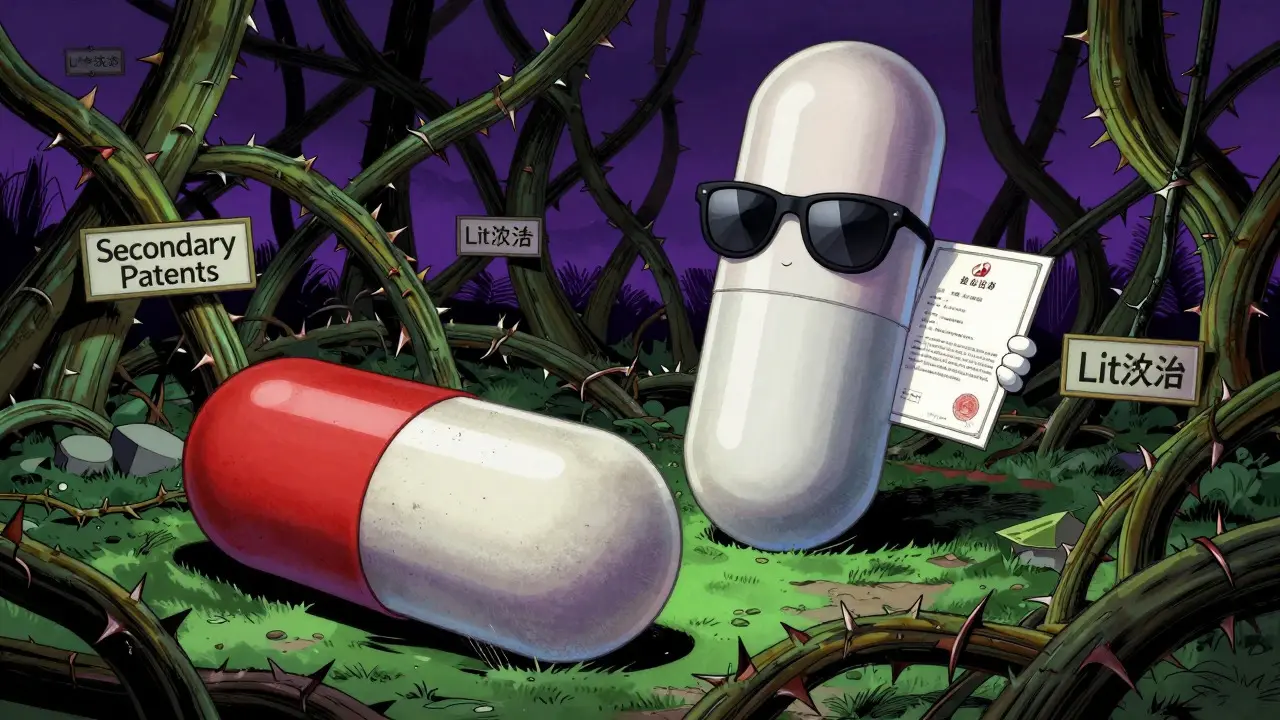
Critics argue that these mechanisms are often used not to encourage true innovation, but to engage in "evergreening." This involves making minor modifications to a drug-changing the dosage form, adding a new indication, or creating a combination therapy-to secure new exclusivity periods.
For example, a company might hold the patent for a pill, but once that expires, they introduce a liquid version or a once-daily formulation instead of twice-daily. If this new formulation requires new clinical trials, it may qualify for three years of new clinical investigation exclusivity in the US. Meanwhile, they file secondary patents covering the manufacturing process, the specific salt form, or the delivery device.
Data shows this is highly effective. A study published in the Yale Law and Policy Review found that 91% of drugs receiving patent term extensions continued their monopolies well beyond those extensions through secondary patents and regulatory exclusivities. One documented case involved a single drug accumulating 48 additional patents beyond the core compound patent. This creates a "patent thicket" that generic manufacturers must navigate, often leading to costly litigation and delayed market entry.
Economic Impact and Industry Reality
Why do companies go to such lengths? The economics are brutal. The average cost to develop a new drug is estimated at $2.3 billion. Without extended market exclusivity, the window to recover these costs would be too narrow for many high-risk therapies.
A JAMA Health Forum study calculated that for just four top-selling drugs, extended market exclusivity resulted in $3.5 billion in additional spending over a two-year period following generic competition. This highlights the massive revenue at stake. For biotech startups, these protections are vital. A survey by the Biotechnology Innovation Organization (BIO) found that 68% of startups consider market exclusivity extensions critical for securing venture capital funding. Investors need assurance that there will be a protected period to generate returns before generics erode margins.
However, the gap between intention and reality is widening. While the Hatch-Waxman Act intended for about nine years of post-approval protection, strategic use of extensions now pushes the average effective exclusivity period much higher. Evaluate Pharma predicts that by 2028, the average effective market exclusivity period for new drugs will reach 16.3 years, up from 12.7 years in 2018.
Navigating the Future
Regulators are aware of the tension. The Federal Trade Commission (FTC) has increased scrutiny on "product hopping," where companies switch patients to new formulations just before patent expiry to disrupt generic substitution. In June 2023, the FTC filed an amicus brief arguing such tactics violate antitrust laws. Similarly, the FDA tightened guidance in April 2023, requiring more substantial evidence of clinical benefit for three-year new indication exclusivity.
For pharmaceutical professionals, the lesson is clear: relying solely on the core patent is no longer sufficient. Successful IP strategy requires integrating regulatory affairs early in clinical development. Decisions made during Phase II trials regarding pediatric studies or new indications can determine whether you gain an extra six months or three years of protection later.
As we move forward, the debate will likely intensify. Patient advocacy groups demand lower prices and faster generic access, while industry leaders argue that robust exclusivity is the only way to fund the next generation of breakthrough therapies. The mechanisms themselves aren't changing rapidly, but the enforcement and interpretation are becoming stricter. Understanding the nuances of PTE, SPCs, and orphan designations is no longer optional-it is central to business survival in the pharma sector.
What is the difference between a patent and market exclusivity?
A patent is a legal right granted by the government to exclude others from making, using, or selling an invention for a set period (usually 20 years from filing). Market exclusivity is a regulatory privilege granted by health agencies (like the FDA or EMA) that prevents competitors from marketing equivalent products, regardless of patent status. Exclusivity can exist without a patent, and it often runs concurrently with or after patent expiration.
How long does Pediatric Exclusivity last in the US?
In the United States, Pediatric Exclusivity adds six months to all existing periods of non-patent exclusivity and any applicable patent term. This bonus is awarded if the manufacturer completes pediatric studies as agreed upon in a Written Request to the FDA within specified timelines.
Can you stack multiple exclusivity periods?
Yes, in many cases. For example, a drug might have New Chemical Entity (NCE) exclusivity, which can be extended by Pediatric Exclusivity. Additionally, if a new indication is approved with new clinical data, it may trigger a separate three-year exclusivity period. Strategic planning allows companies to layer these protections to maximize market protection.
What is a Supplemental Protection Certificate (SPC)?
An SPC is a mechanism used in the European Union (and some other regions) to extend the duration of a patent for medicinal products. It compensates for the time lost during the regulatory approval process. An SPC can extend the effective patent term to a maximum of 15 years from the first marketing authorization in the EU, ensuring a minimum of five years of protection after approval.
Why do pharmaceutical companies use "evergreening" strategies?
Companies use evergreening to delay generic competition and maintain high revenues. By obtaining secondary patents or regulatory exclusivities for minor modifications (like new formulations or dosages), they create legal barriers that prevent generics from entering the market immediately after the core patent expires. This helps recoup the high costs of initial research and development.
How does Orphan Drug Exclusivity differ from standard exclusivity?
Orphan Drug Exclusivity is specifically for treatments of rare diseases (affecting fewer than 200,000 people in the US). It grants seven years of market exclusivity in the US, regardless of patent status. This is crucial because many orphan drugs are developed with limited resources and may not have strong patent portfolios. The EU offers ten years of exclusivity for orphan drugs, extendable to twelve with pediatric compliance.